
About the Crowned Eagle
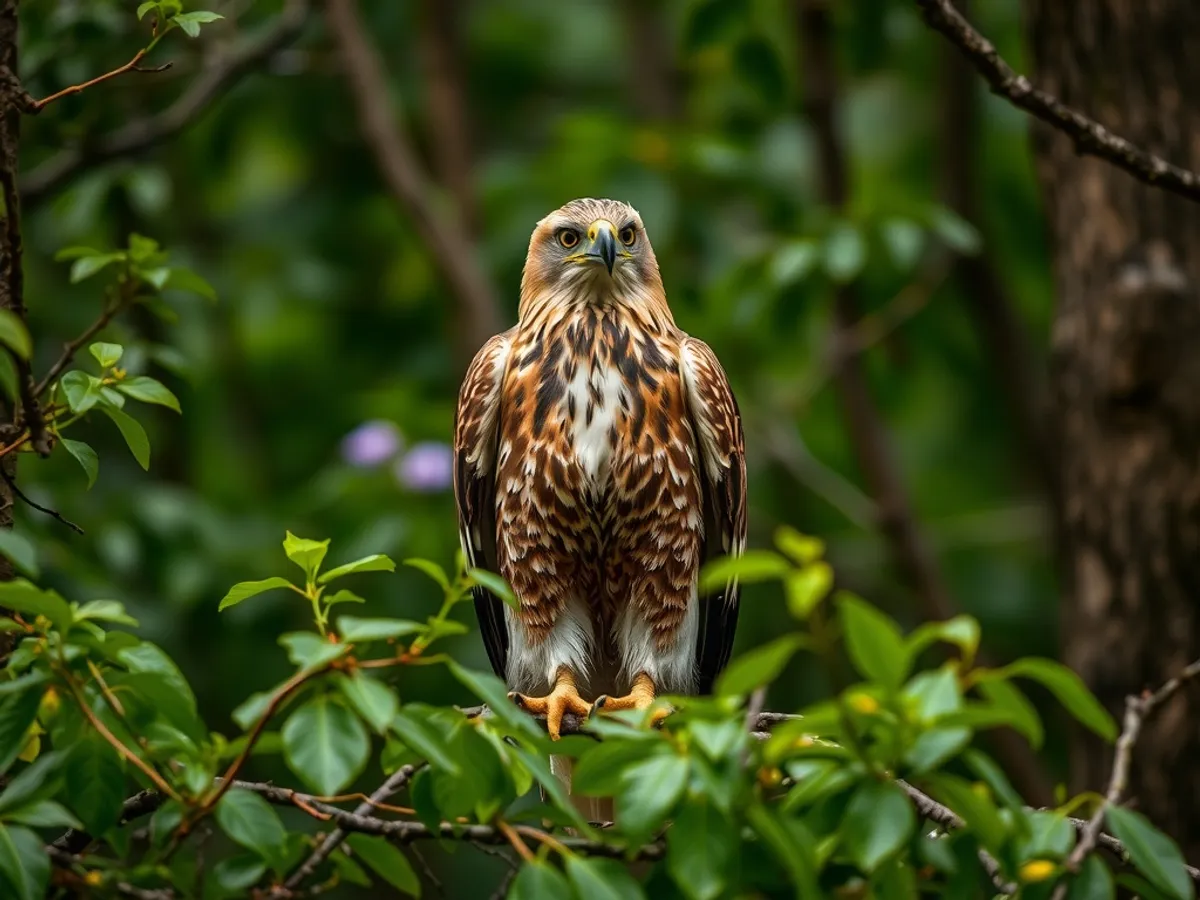
Stephanoaetus coronatus is Africa's most powerful eagle in the only sense that matters — the size of what it can kill. It weighs only 3-4 kg, less than a martial eagle, but it routinely takes monkeys, small antelope and bushbuck fawns, with confirmed prey up to around 20 kg, several times its own mass. It kills by driving its rear talon through the skull or spine, and its legs and feet are proportionally the heaviest of any African raptor. Because it hunts inside closed forest, it has short, broad wings and a long rudder-like tail, the same design as a goshawk scaled up, letting it accelerate through gaps rather than soar. Prey too heavy to carry is dismembered and cached in branches over several days. Its most remarkable claim is archaeological: the Taung Child, the Australopithecus skull that helped establish human origins in Africa, carries puncture marks in the eye sockets and damage to the skull base that match the feeding traces crowned eagles leave on modern monkeys, which means our early relatives were prey for this bird. Breeding is extraordinarily slow, with the chick dependent on its parents for up to eleven months, so a pair can usually only raise one youngster every two years.
Fascinating facts
Formidable Hunter
The Crowned Eagle primarily preys on mammals such as monkeys and small antelopes, using stealth and power to ambush its targets from the forest canopy.
Distinctive Crest
This eagle's name comes from its striking crown of long feathers, which it can raise to display during courtship or when threatened.
Forest Dweller
Unlike many eagles, the Crowned Eagle is highly adapted to life in dense forests, relying on tall trees for nesting and hunting.
Detailed description
The Crowned Eagle (Stephanoaetus coronatus) is a robust, medium-to-large raptor, measuring 80–99 cm (31–39 in) in length with a wingspan of 1.5–2.0 meters (4.9–6.6 ft), and weighing between 2.5–4.7 kg (5.5–10.4 lbs), with females significantly larger than males. Its plumage is striking: upperparts are dark brown to blackish, while underparts are white with bold black barring, and the chest is rufous. The head is adorned with a prominent, erectile black-and-white crest, giving the species its name. The legs are heavily feathered and equipped with exceptionally powerful talons—among the strongest of any eagle relative to body size—capable of dispatching prey much larger than itself. Crowned Eagles are highly secretive and adapted to dense, primary forests, but can also be found in gallery forests, riparian woodlands, and occasionally in secondary forests or plantations. Their eyesight is acute, enabling them to spot prey from great distances beneath the canopy. The species is primarily solitary outside of the breeding season, maintaining large territories (up to 16–20 km²). They are apex predators within their range, exerting significant influence on local mammal populations, especially primates and small antelopes. Vocalizations are loud and far-carrying, consisting of repeated, high-pitched whistles, particularly during courtship or territorial displays.
Did you know?
The Crowned Eagle is strong enough to hunt prey weighing over 30 kg (66 lbs), often several times its own body weight.
Research & sources
Wikipedia summary
The crowned eagle, also known as the African crowned eagle or the crowned hawk-eagle, is a large bird of prey found in sub-Saharan Africa; in Southern Africa, it is restricted to more easterly areas. Its preferred habitats are principally riparian woodlands and various forests. The crowned eagle is the only extant member of the genus Stephanoaetus. A second species, the Malagasy crowned eagle, went extinct after early humans settled on Madagascar.
Behaviour & social structure
Crowned Eagles are predominantly diurnal and highly territorial, with pairs maintaining and defending exclusive hunting ranges. They are ambush predators, relying on stealth and surprise, often perching motionless for long periods before launching rapid, powerful attacks. Their diet is unique among African eagles, consisting mainly of medium-sized mammals such as monkeys (Cercopithecus spp., Colobus spp.), small antelopes (duikers), hyraxes, and occasionally large birds or monitor lizards. Prey is typically captured on the ground or in the lower canopy, killed instantly by the eagle's immense grip strength. After a kill, eagles may dismember large prey and transport pieces to the nest or a feeding perch. Socially, Crowned Eagles are monogamous, with pairs often remaining together for many years. They communicate through a range of calls, aerial displays, and mutual preening, especially during the breeding season. Juveniles are dependent on adults for up to 11 months, one of the longest post-fledging dependency periods among raptors.
Reproduction & life cycle
Breeding occurs throughout the year but peaks vary regionally, often coinciding with the end of the dry season. Pairs construct massive stick nests, up to 2 meters (6.5 ft) wide and 1.5 meters (5 ft) deep, high in the main fork of large trees, sometimes reused and refurbished for many years. The female lays 1–2 eggs (usually one chick is raised due to siblicide or competitive exclusion), which she incubates for about 49–51 days. During incubation, the male provides food for the female. After hatching, the chick is brooded and fed by both parents, with the female taking the primary role. Fledging occurs at 90–115 days, but juveniles remain dependent on parental provisioning for up to 9–11 months, gradually learning to hunt. Crowned Eagles typically breed every two years due to the extended care required for each offspring.
Adaptations & survival
Crowned Eagles possess several adaptations for hunting in dense forests: relatively short, broad wings and a long tail provide exceptional maneuverability among trees. Their legs are muscular and equipped with massive, curved talons, allowing them to subdue large, struggling prey. Cryptic plumage and silent flight aid in stalking. Their vision is highly developed for detecting movement in dim forest light. Behaviorally, they exhibit patience and strategic use of perches to ambush prey. Evolutionarily, their specialization in hunting primates and ungulates sets them apart from other African eagles, filling a unique ecological niche as a top forest predator.
Cultural significance
Crowned Eagles hold significant roles in the folklore and mythology of several African cultures. They are often regarded with awe and respect due to their power and predatory prowess. In some traditions, they are associated with royalty, strength, or as messengers of the spirit world. Their feathers and body parts have occasionally been used in traditional medicine or ceremonial attire. Conversely, they have sometimes been persecuted due to beliefs that they threaten livestock or children, although such incidents are rare.
Recent research
Recent research has focused on the Crowned Eagle's ecological role as a keystone predator, particularly its influence on primate behavior and population dynamics. Studies using satellite telemetry have revealed extensive home ranges and the importance of contiguous forest tracts for their survival. Genetic analyses have confirmed the species' distinctiveness and its close relationship to the extinct Malagasy crowned eagle (Stephanoaetus mahery). Ongoing research addresses the impacts of habitat fragmentation and human encroachment, as well as the species' adaptability to secondary forests and agroforestry landscapes. Conservationists are also studying the effectiveness of community-based forest management in sustaining eagle populations.
Videos
Habitat
Dense forest
 Africa
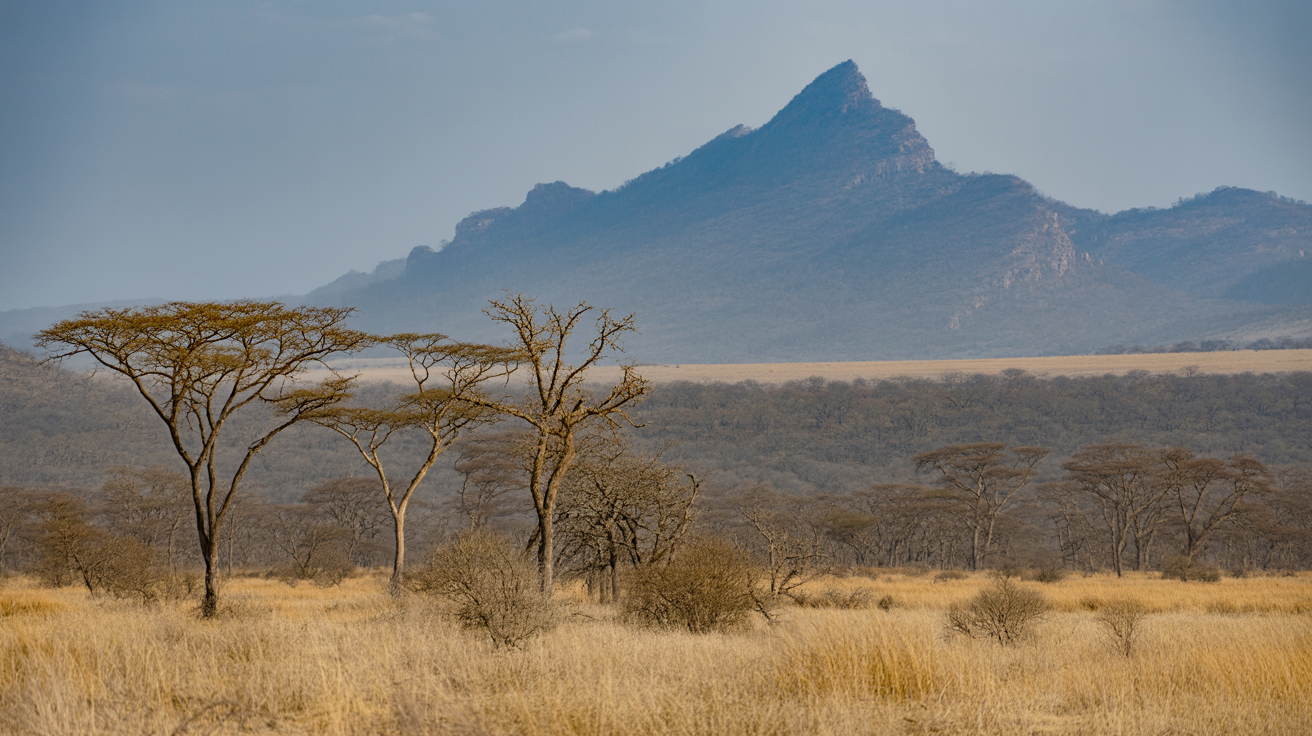
Savanna
Grasslands with scattered trees, characterized by seasonal rainfall and home to diverse grazing animals and predators.
 Tropical Regions
Rainforest
Dense, wet forests with the highest biodiversity on Earth, containing more than half of the world's plant and animal species.
 Global
Forest
Wooded areas with significant tree cover and diverse plant and animal communities.
Conservation
The Crowned Eagle is currently classified as Near Threatened on the IUCN Red List.
Threats & challenges
The main threats to Crowned Eagles are habitat loss and fragmentation due to deforestation, agricultural expansion, and urbanization, especially in West and East Africa. Persecution by humans, who may view them as threats to livestock or as competitors for bushmeat, also contributes to local declines. They are sensitive to disturbance and require large, undisturbed territories for breeding. Although still widespread, population trends are decreasing, leading to their Near Threatened status on the IUCN Red List. Conservation challenges include protecting remaining forest habitats, mitigating human-wildlife conflict, and raising awareness of their ecological importance.
Taxonomy
Scientific name
Stephanoaetus coronatus
- Kingdom
- Animalia
- Phylum
- Chordata
- Class
- Aves
- Order
- Accipitriformes
- Family
- Accipitridae
- Genus
- Stephanoaetus
- Species
- coronatus
Where to see a crowned eagle
2 zoos and aquariums in 1 country are recorded as keeping this species.

Community notes
Share your observations about the Crowned Eagle.
No community notes yet. Be the first!
Discover more wildlife
More fascinating animals from the encyclopedia.