
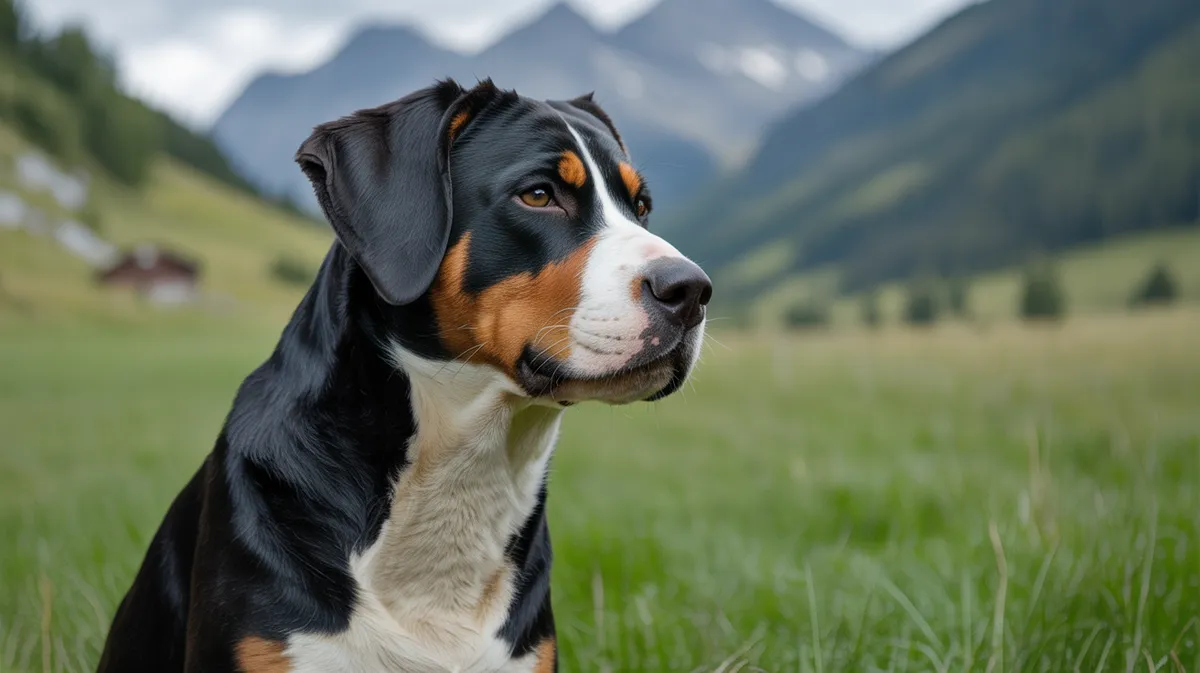
About the Entlebucher Mountain Dog
The Entlebucher Mountain Dog is the smallest of the four Swiss Mountain Dogs, renowned for its agility, intelligence, and energetic personality. Originally bred in the Entlebuch region of Switzerland, this breed was primarily used as a herding and cattle-driving dog in the Alpine meadows. Characterized by its muscular build, tricolor coat (black, white, and rust), and expressive almond-shaped eyes, the Entlebucher is an attentive and loyal companion. It thrives on activity and mental stimulation, making it an excellent choice for active families or those with working dog experience. With proper training and socialization, Entlebuchers are affectionate, protective, and highly devoted to their families.
Fascinating facts
Swiss Heritage
The Entlebucher Mountain Dog originated in the Entlebuch valley in Switzerland and was traditionally used for herding cattle in the Swiss Alps.
High Energy
This breed requires a great deal of daily exercise and mental stimulation to stay happy and healthy, thriving in active households or with dedicated working roles.
Loyal Companion
Entlebuchers are known for their strong bonds with their families and make excellent watchdogs thanks to their alertness and protective nature.
Detailed description
The Entlebucher Mountain Dog is a robust, medium-sized working breed, typically standing 42–50 cm (16.5–19.5 in) at the shoulder and weighing 20–30 kg (44–66 lbs). It is distinguished by its compact, muscular frame, well-developed chest, and slightly elongated body, which provide both power and agility essential for herding livestock in rugged Alpine terrain. The breed’s tricolor coat—glossy black with symmetrical white and rust markings—is dense and weather-resistant, offering protection against harsh mountain climates. Entlebuchers exhibit keen intelligence, high trainability, and a pronounced work ethic, often forming strong bonds with their human handlers. Their almond-shaped, dark brown eyes convey alertness and warmth, while their triangular, close-set ears enhance their acute sense of hearing. Socially, they are known for their loyalty and protective instincts, often serving as vigilant guardians of both livestock and family. In terms of behavior, Entlebuchers are energetic and require substantial physical and mental stimulation, thriving in environments where they have a job or regular tasks. They are generally healthy, with a lifespan of 11–15 years, though some lines may be prone to hereditary conditions such as hip dysplasia and progressive retinal atrophy. Their adaptability and resilience have made them valued companions in both rural and active urban settings.
Did you know?
The Entlebucher Mountain Dog is one of Switzerland’s four native Sennenhund breeds, but it is the rarest and least known outside its homeland.
Research & sources
Wikipedia summary
The Entlebucher Sennenhund or Entlebucher Mountain Dog is a medium-sized herding dog, it is the smallest of the four regional breeds that constitute the Sennenhund dog type. The name Sennenhund refers to people called Senn, herders in the Swiss Alps. Entlebuch is a region in the canton of Lucerne in Switzerland.
Behaviour & social structure
Entlebucher Mountain Dogs display pronounced herding instincts, often attempting to 'herd' children, other pets, or even adults through gentle nipping or circling. They are highly alert and responsive, making them excellent watchdogs, though not typically aggressive without provocation. Their daily routine is characterized by bursts of high activity—running, playing, or working—interspersed with periods of calm attentiveness. They are known for their problem-solving abilities and enjoy tasks that challenge their intelligence, such as agility, obedience, and advanced trick training. Socially, Entlebuchers are affectionate with their families but may be reserved or cautious with strangers, requiring early and consistent socialization. They form strong social bonds and can experience separation anxiety if left alone for extended periods. While not natural hunters, they may chase small animals due to their herding background. Feeding behavior is typical of domestic dogs, with a preference for high-quality, protein-rich diets to support their active metabolism.
Reproduction & life cycle
Entlebucher Mountain Dogs reach sexual maturity at around 12–18 months of age. The breed is monoestrous, with females coming into heat approximately twice a year. Mating typically occurs during the female’s estrus phase, lasting 9–14 days. The gestation period averages 58–63 days, after which litters of 4–8 puppies are born. Neonates are altricial, requiring intensive maternal care, including nursing and thermoregulation. Both dam and, in some cases, sire may participate in early socialization of the pups. Breeders emphasize careful selection to avoid hereditary health issues, and responsible breeding practices often include genetic screening for hip dysplasia and eye disorders. Puppies are generally weaned at 6–8 weeks and benefit from early exposure to varied environments and gentle handling to foster confident, well-adjusted adults.
Adaptations & survival
The Entlebucher Mountain Dog’s physical adaptations include a dense, double-layered coat that insulates against cold and wet conditions prevalent in the Swiss Alps. Its muscular, agile build and strong, compact paws enable efficient movement over uneven, rocky terrain. The breed’s keen senses—particularly hearing and sight—facilitate effective herding and vigilance. Behaviorally, Entlebuchers exhibit high energy, endurance, and an innate drive to work cooperatively with humans, traits honed by generations of selective breeding for herding and guarding. Their intelligence and trainability are evolutionary specializations that have allowed them to excel in complex tasks and adapt to diverse roles beyond traditional herding, including search and rescue, therapy, and competitive dog sports.
Cultural significance
The Entlebucher Mountain Dog holds a respected place in Swiss rural culture, historically serving as a vital partner to the Senn, or Alpine herders, in the Entlebuch region. Its image is associated with Swiss agricultural heritage and the rugged, self-reliant spirit of the Alps. Today, the breed is celebrated in regional festivals and is a symbol of Swiss canine excellence. While not prominent in mythology, the Entlebucher’s reputation for loyalty and diligence has made it a favored companion and working dog in Switzerland and among enthusiasts worldwide.
Recent research
Recent genetic studies have clarified the Entlebucher’s close relationship to the other Sennenhund breeds, confirming a shared ancestry with the Appenzeller, Bernese Mountain Dog, and Greater Swiss Mountain Dog. Ongoing research focuses on reducing the incidence of hereditary diseases through DNA testing and international breed registries. Behavioral studies have highlighted the breed’s advanced problem-solving skills and suitability for therapy and assistance work. Conservation efforts are coordinated by breed clubs and the Fédération Cynologique Internationale (FCI), with emphasis on maintaining genetic health and promoting responsible ownership.
Sources
FCI Breed Standard No. 47: Entlebucher Sennenhund
Fédération Cynologique Internationale (2019)
scientificBreed Health and Population Management in Entlebucher Mountain Dogs
Entlebucher Mountain Dog Club of America
conservationVideos
Habitat
Mountain pastures, rural farms
 Various Continental Regions
Grassland
Open areas dominated by grasses rather than trees, supporting numerous herbivores and their predators.
 Elevated Terrain
Mountain
High-altitude environments with varying climates and specialized wildlife adapted to rugged terrain and thin air.
 Global
Forest
Wooded areas with significant tree cover and diverse plant and animal communities.
Conservation
The Entlebucher Mountain Dog is currently classified as Least Concern on the IUCN Red List.
Threats & challenges
While the Entlebucher Mountain Dog is not currently at risk of extinction, the breed faces challenges related to a limited gene pool, particularly outside Switzerland. Hereditary health issues, such as hip dysplasia and progressive retinal atrophy, are of concern and require vigilant breeding practices. Urbanization and the decline of traditional pastoral lifestyles have reduced demand for working herding dogs, potentially impacting population trends. Responsible breeding, health screening, and breed advocacy are essential to maintain genetic diversity and overall health. There are no significant wild population threats, as the breed exists solely in domestic contexts.
Taxonomy
Scientific name
Canis lupus familiaris
- Kingdom
- Animalia
- Phylum
- Chordata
- Class
- Mammalia
- Order
- Carnivora
- Family
- Canidae
- Genus
- Canis
- Species
- lupus familiaris
Community notes
Share your observations about the Entlebucher Mountain Dog.
No community notes yet. Be the first!
Discover more wildlife
More fascinating animals from the encyclopedia.