
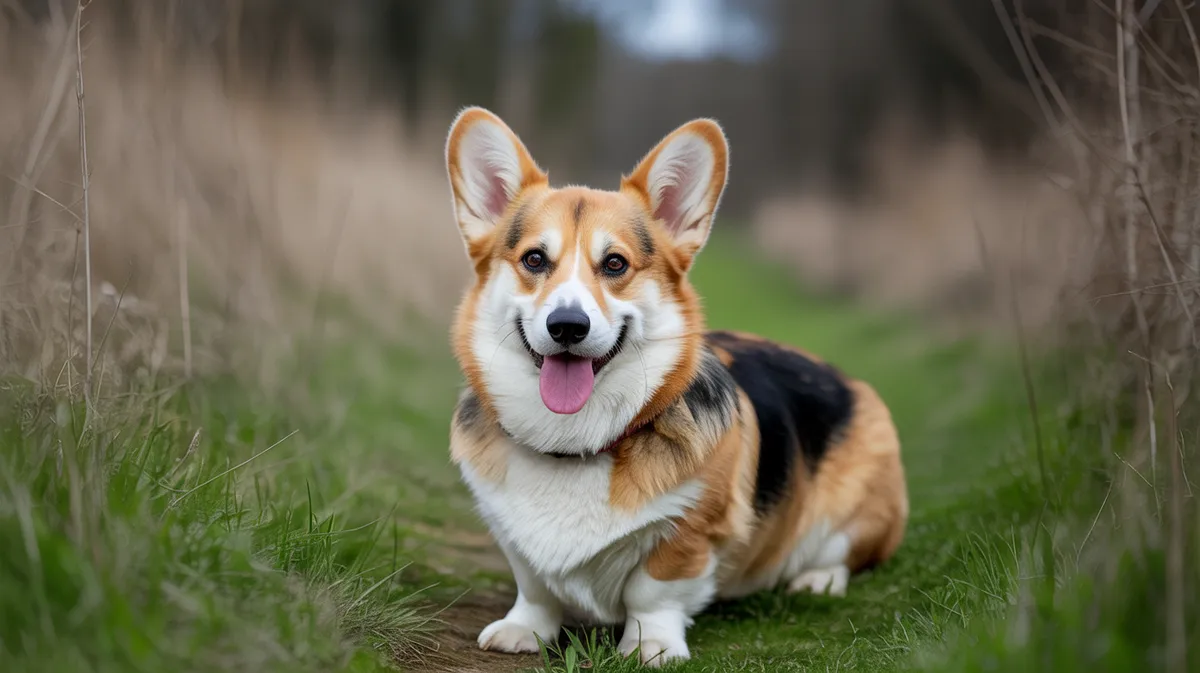
About the Pembroke Welsh Corgi
The Pembroke Welsh Corgi is a small, sturdy herding dog breed originating from Wales, United Kingdom. Recognized for its short legs, elongated body, and distinctive fox-like face, the Pembroke is famous for its intelligence, agility, and affectionate nature. Traditionally used as a cattle herder, this breed is now popular as a companion animal, known for being alert, friendly, and highly trainable. Its characteristic ‘bobtail’ distinguishes it from the closely related Cardigan Welsh Corgi.
Fascinating facts
Royal Favorite
The Pembroke Welsh Corgi is renowned for being the preferred breed of Queen Elizabeth II, who helped popularize them around the world.
Herding Heritage
Originally bred to herd cattle, these dogs use their low stature to nip at the heels of livestock, demonstrating agility and boldness.
Foxy Appearance
Pembrokes are known for their fox-like face, upright ears, and expressive features, giving them a distinctive and charming look.
Detailed description
The Pembroke Welsh Corgi is a compact, low-set herding dog, typically standing 25–30 cm (10–12 in) at the shoulder and weighing between 11–14 kg (24–31 lb) for males and 11–13 kg (24–28 lb) for females. Its body is elongated relative to its height, with a deep chest and well-sprung ribs, contributing to its agility and stamina in herding livestock. The head is fox-like, with erect, medium-sized ears and expressive, oval-shaped eyes that convey alertness and intelligence. The breed is characterized by a naturally short or 'bobbed' tail, a trait that distinguishes it from the Cardigan Welsh Corgi. The coat is double-layered, with a dense, weather-resistant undercoat and a coarser outer coat, typically in shades of red, sable, fawn, black and tan, or black and white, often with white markings. Pembrokes are highly intelligent, quick learners, and possess a strong work ethic, making them adept at obedience, agility, and herding trials. Socially, they are affectionate and loyal to their families, often forming strong bonds with children and other pets. Their herding ancestry is evident in their tendency to 'heel' or nip at ankles, a behavior that can be managed with proper training. Lifespan averages 12–15 years, with some individuals living longer under optimal care. The breed is generally robust, though prone to certain genetic conditions such as degenerative myelopathy and hip dysplasia.
Did you know?
Unlike the Cardigan Welsh Corgi, most Pembroke Welsh Corgis are born with a naturally short or docked tail.
Research & sources
Wikipedia summary
The Pembroke Welsh Corgi is a cattle herding dog breed that originated in Pembrokeshire, Wales. The name Corgi is of Welsh origin, and is a compound of the words cor and ci, meaning "dwarf" and "dog", respectively. It is one of two breeds known as a Welsh Corgi, the other being the Cardigan Welsh Corgi. Pembroke Welsh Corgis are descended from the Spitz family of dog.
Behaviour & social structure
Pembroke Welsh Corgis are energetic and alert, requiring regular mental and physical stimulation. Their herding instincts manifest as a tendency to chase and control movement, sometimes directed at people or other animals. They are known for their vocalizations, using barking to communicate excitement, alertness, or to warn of unfamiliar activity. Socially, they are highly people-oriented, thriving on companionship and often displaying a strong desire to be involved in household activities. Corgis typically establish a clear social hierarchy within groups, displaying confidence and assertiveness. They are food-motivated, which aids in training but also predisposes them to obesity if not managed. Daily routines should include structured exercise, interactive play, and training sessions to prevent boredom-related behaviors such as excessive barking or destructive chewing. While generally friendly, early socialization is important to prevent wariness toward strangers or other dogs.
Reproduction & life cycle
Pembroke Welsh Corgis reach sexual maturity between 6–12 months, though responsible breeding is recommended after 18 months of age. The breed is monoestrous, with females coming into heat twice a year. Mating is typically managed by breeders to ensure genetic health and minimize hereditary disorders. Gestation lasts approximately 63 days, with litters averaging 6–8 puppies. Neonatal care is intensive, as puppies are born blind and deaf, relying on maternal warmth and nutrition. Mothers exhibit strong parental care, nursing and grooming their young until weaning at 6–8 weeks. Breeders often perform early neurological stimulation to promote resilience and adaptability. Responsible breeding practices include genetic screening for common disorders such as von Willebrand’s disease and progressive retinal atrophy.
Adaptations & survival
The Pembroke Welsh Corgi’s low stature and elongated body are evolutionary adaptations for herding cattle, allowing them to nip at the heels of livestock while avoiding kicks. Their double coat provides insulation against the damp, cool climate of Wales, and their weather-resistant fur enables them to work outdoors year-round. The breed’s intelligence and problem-solving ability are behavioral adaptations that facilitate complex herding tasks and responsiveness to human commands. Their acute hearing and keen sense of smell aid in detecting changes in their environment, making them effective watchdogs as well as herders. The naturally short tail (bobtail gene) is thought to have been selected to reduce injury risk during herding.
Cultural significance
The Pembroke Welsh Corgi holds a prominent place in British and Welsh culture, famously favored by Queen Elizabeth II, who has owned more than 30 Corgis during her reign. The breed is often associated with Welsh folklore, where Corgis are said to have been the steeds of fairy warriors, with markings on their coats attributed to fairy saddles. Historically, Corgis were integral to rural Welsh farming communities, valued for their herding ability and versatility. In modern times, they are celebrated in popular media, art, and as national symbols of Wales. Their image is frequently used in British memorabilia and royal iconography.
Recent research
Recent genetic studies have clarified the relationship between Pembroke and Cardigan Welsh Corgis, confirming distinct lineages despite superficial similarities. Research into the bobtail gene (T-box transcription factor T gene) has provided insight into natural tail length variation and associated health implications. Studies on canine cognition have highlighted the breed’s problem-solving skills and social intelligence, supporting anecdotal reports of trainability and responsiveness. Ongoing research focuses on identifying genetic markers for degenerative myelopathy and other breed-specific diseases, with the aim of improving screening and prevention. Behavioral studies continue to explore the impact of early socialization and environmental enrichment on temperament and adaptability.
Videos
Habitat
Domesticated; originally rural farmlands and grasslands

Conservation
The Pembroke Welsh Corgi is currently classified as Least Concern on the IUCN Red List.
Threats & challenges
As a domesticated breed, Pembroke Welsh Corgis are not threatened in the wild, but they face challenges related to genetic health due to selective breeding and popularity-driven overbreeding. Common health issues include intervertebral disc disease, hip dysplasia, and degenerative myelopathy. Obesity is a significant risk due to their food motivation and relatively small size. Ethical breeding practices and genetic screening are essential to maintain breed health. There is also concern about loss of working traits as the breed becomes more popular as a companion animal rather than a herding dog. Population trends remain stable, with the breed classified as 'Least Concern,' but ongoing vigilance is needed to prevent hereditary health decline.
Taxonomy
Scientific name
Canis lupus familiaris
- Kingdom
- Animalia
- Phylum
- Chordata
- Class
- Mammalia
- Order
- Carnivora
- Family
- Canidae
- Genus
- Canis
- Species
- lupus familiaris
Community notes
Share your observations about the Pembroke Welsh Corgi.
No community notes yet. Be the first!
Discover more wildlife
More fascinating animals from the encyclopedia.