

Search the encyclopedia
28 animals
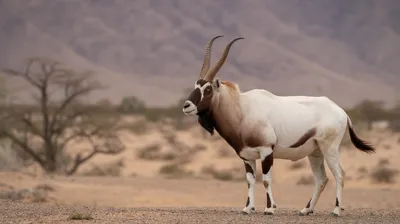
Addax
Addax nasomaculatus
The Addax, also known as the white antelope or screwhorn antelope, is a critically endangered desert-dwelling ungulate native to the Sahara. It is easily recognized by its long, twisted horns and pale coat, which helps it reflect the harsh desert sun. The Addax is highly adapted to arid environments, able to survive with minimal water and feed on tough desert grasses and herbs. Once widespread across northern Africa, its population has dramatically declined due to overhunting and habitat loss. Today, only a few wild individuals remain, with most existing in protected reserves and captivity.
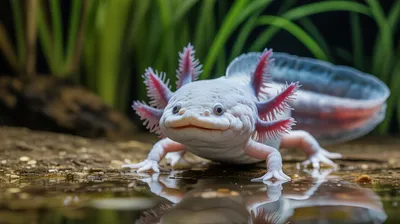
Axolotl
Ambystoma mexicanum
The axolotl is a unique species of salamander native to the freshwater lakes of central Mexico, most notably Lake Xochimilco. Unlike most amphibians, axolotls retain their larval features throughout their lives, a condition known as neoteny, which includes feathery external gills and a finned tail. They are capable of regenerating entire limbs, spinal cord, heart, and other organs, making them a subject of extensive scientific research. Axolotls are critically endangered in the wild due to habitat loss, pollution, and the introduction of invasive species.
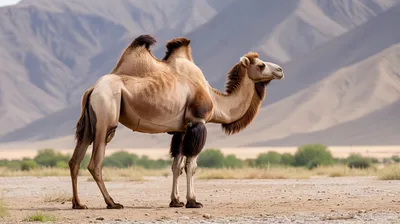
Bactrian Camel
Camelus bactrianus
The Bactrian camel is a large, even-toed ungulate native to the steppes of Central Asia. Distinguished by its two humps, it is well-adapted to harsh desert and semi-desert environments, enduring extreme temperatures from scorching heat to freezing cold. Its thick fur, bushy eyebrows, and double-layered eyelashes protect it from sandstorms and cold winds. Bactrian camels are highly valued as pack animals and for their milk, meat, and wool. Despite their resilience, wild populations are critically endangered, while domesticated Bactrian camels are more numerous.
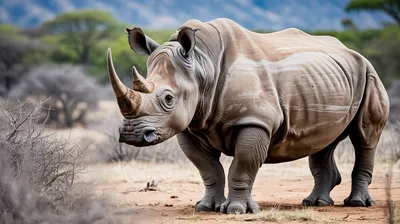
Black Rhinoceros
Diceros bicornis
The Black Rhinoceros is a large, thick-skinned herbivore native to eastern and southern Africa. Despite its name, its skin color varies from brown to gray, and it is distinguished from the white rhinoceros by its pointed upper lip, which is adapted for grasping leaves and twigs. Black rhinos are generally solitary and have a reputation for their unpredictable and sometimes aggressive behavior. They play an essential ecological role by browsing woody plants and shaping the landscapes of the savannas and scrublands they inhabit.
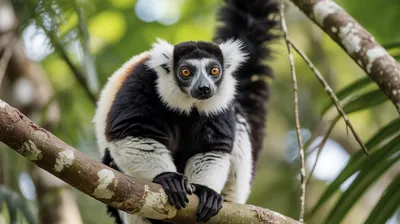
Black-and-white Ruffed Lemur
Varecia variegata
The Black-and-white Ruffed Lemur is a striking primate native to the rainforests of eastern Madagascar, known for its distinctive black and white fur pattern and luxurious ruff around its neck. This lemur is arboreal and highly agile, spending most of its life in the forest canopy, where it leaps from tree to tree in search of fruit, nectar, and pollen. Social and vocal, these lemurs live in small, matriarchal groups and are recognized for their loud, barking calls that can be heard over long distances. Due to habitat destruction and hunting, they are critically endangered in the wild.
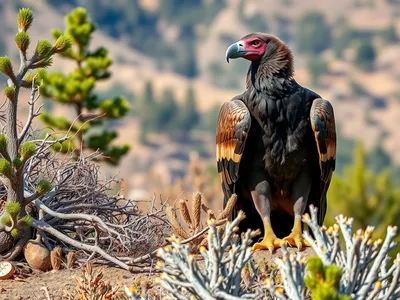
California Condor
Gymnogyps californianus
The California Condor is the largest North American land bird, boasting an impressive wingspan of up to 3 meters (nearly 10 feet). This critically endangered vulture is known for its striking black plumage with white patches under its wings and a bald head that changes color with emotional state. California Condors are scavengers, soaring over canyons, mountains, and forests in search of carrion. Once on the brink of extinction, intensive conservation efforts have slowly increased their population, though they remain one of the rarest birds in the world.
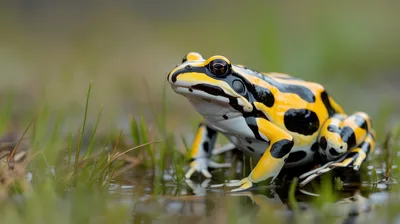
Corroboree Frog
Pseudophryne corroboree
The Corroboree Frog is a small, vividly colored amphibian native to the alpine and subalpine regions of southeastern Australia. Known for its striking yellow and black striped pattern, this frog is highly recognizable and unique among Australian fauna. Corroboree Frogs spend most of their lives on land, only returning to pools and bogs to breed during the summer months. Their populations have dramatically declined due to habitat loss, disease, and climate change, making them one of Australia's most endangered amphibians.
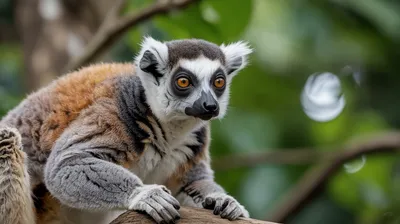
Frilled-necked Lemur
Eulemur macaco flavifrons
The Frilled-necked Lemur, also known as the Blue-eyed Black Lemur, is a medium-sized primate native to northwestern Madagascar. Distinguished by its striking blue eyes and the frilled fur around its neck, this lemur exhibits sexual dimorphism, with males having black fur and females sporting a reddish-brown coat. It inhabits humid forests, where it is mostly arboreal and agile, moving adeptly through the canopy. This species is social, living in small groups and communicating with a variety of vocalizations and facial expressions. Unfortunately, the Frilled-necked Lemur is critically endangered due to habitat destruction and hunting.
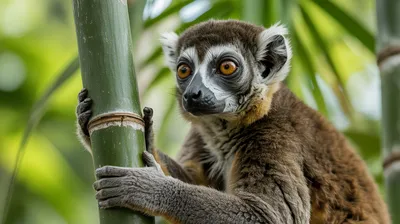
Greater Bamboo Lemur
Prolemur simus
The Greater Bamboo Lemur is one of the largest lemurs and is endemic to the rainforests of Madagascar. Distinguished by its robust build, greyish fur, and prominent white ear tufts, this lemur is uniquely adapted to feed almost exclusively on bamboo. It is critically endangered due to habitat loss and its specialized diet, which makes it highly vulnerable to environmental changes. Living in small social groups, the Greater Bamboo Lemur plays a critical role in its ecosystem by dispersing seeds and maintaining bamboo forest health.
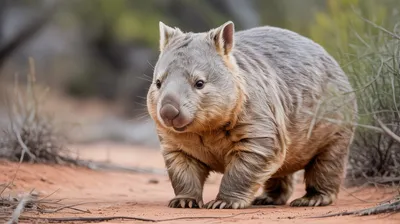
Hairy-nosed Wombat
Lasiorhinus
The hairy-nosed wombat is a robust, burrowing marsupial native to Australia, recognized for its distinctive hairy snout and strong, stocky build. There are two species: the Southern Hairy-nosed Wombat (Lasiorhinus latifrons) and the critically endangered Northern Hairy-nosed Wombat (Lasiorhinus krefftii), both adapted to arid and semi-arid environments. These wombats are nocturnal, spending daylight hours in elaborate burrow systems to escape the harsh sun. Their powerful claws and muscular bodies allow them to dig extensive tunnels, which also provide protection from predators. Despite their tough appearance, hairy-nosed wombats are gentle herbivores with specialized teeth for grinding tough grasses.
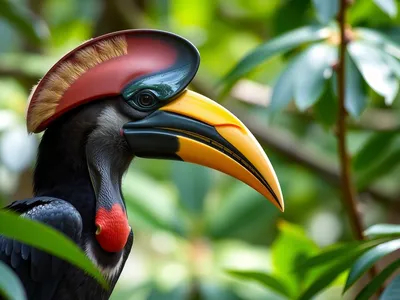
Helmeted Hornbill
Rhinoplax vigil
The Helmeted Hornbill is a striking and large bird native to the forests of Southeast Asia. Distinguished by its unique solid casque, or helmet, on top of its bill, this hornbill uses its prominent structure in aerial jousting contests with other males. Its impressive size, long central tail feathers, and loud, resonant calls make it a memorable sight and sound in its rainforest habitat. Sadly, this species faces severe threats from hunting for its casque, which is highly valued in illegal trade, and from habitat loss, making it one of the most endangered hornbills in the world.
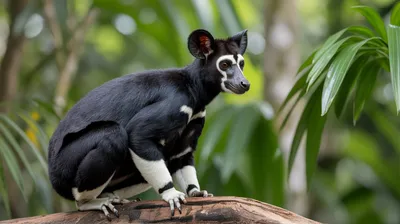
Indri
Indri indri
The Indri is the largest living lemur, native exclusively to the eastern rainforests of Madagascar. It is known for its striking black-and-white coloration, long limbs, and lack of a visible tail. Indris are famous for their loud, eerie calls that echo through the forest, serving both to mark territory and communicate with other groups. These highly social primates live in small family groups and are strictly arboreal, rarely descending to the ground. Indris play an important ecological role as seed dispersers within their forest habitat.
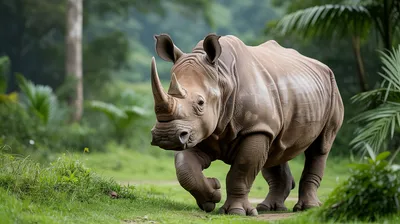
Javan Rhinoceros
Rhinoceros sondaicus
The Javan Rhinoceros is one of the world’s rarest large mammals, native to the dense tropical forests of Southeast Asia. It is characterized by its single horn, greyish skin that forms loose folds, and relatively small size compared to other rhino species. Once widespread across much of Southeast Asia, today the Javan Rhinoceros survives in only one known population in Ujung Kulon National Park, Indonesia. Extremely shy and solitary, these rhinos are elusive and rarely seen, making them challenging to study and protect. Poaching and habitat loss have pushed the species to the brink of extinction.
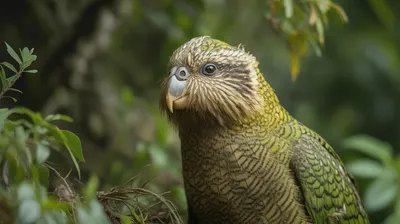
Kakapo
Strigops habroptilus
The kakapo, also known as the night parrot or owl parrot, is a large, nocturnal, flightless parrot native to New Zealand. It is distinguished by its moss-green, mottled plumage, owl-like facial disc, and robust, stocky build. The kakapo is the world’s only flightless parrot and the heaviest parrot species, using its wings for balance and support rather than flight. It is renowned for its unique booming courtship calls, which can be heard over great distances during breeding season. Due to predation and habitat loss, the kakapo is critically endangered, with only a small managed population remaining.
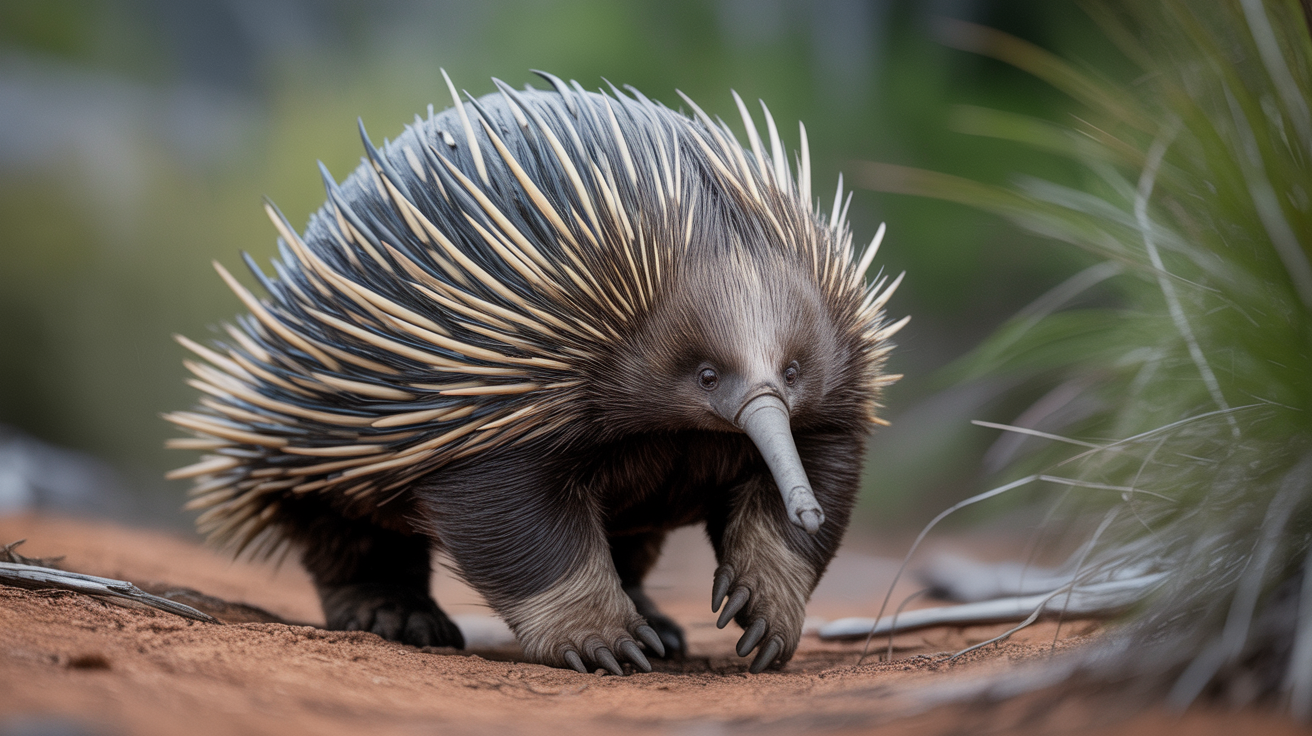
Long-beaked Echidna
Zaglossus bruijni
The Long-beaked Echidna is a spiny, egg-laying mammal native to the rugged highland forests of New Guinea. Unlike its Australian short-beaked cousin, it has an elongated, downward-curving snout, perfectly adapted for probing soil and rotten logs in search of earthworms and insects. Covered in coarse hair and spines, this elusive animal is primarily nocturnal and rarely seen by humans due to its secretive habits. The Long-beaked Echidna also possesses powerful claws for digging and is one of only five extant species of monotremes, a group of mammals that lay eggs instead of giving birth to live young.
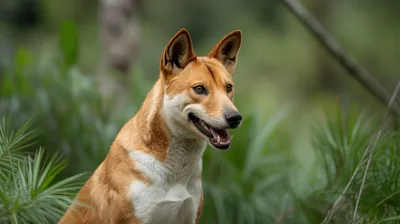
New Guinea Singing Dog
Canis lupus dingo
The New Guinea Singing Dog is a rare, small wild canid native to the highlands of New Guinea. Renowned for its unique and melodious vocalizations, this dog exhibits a wide range of harmonic sounds that are unlike those of any other canine. It has a fox-like appearance with a reddish-gold coat, erect ears, and a bushy tail, and is highly agile, able to climb and navigate rugged terrain with ease. Once thought extinct in the wild, a few individuals have been rediscovered in remote areas, though they remain critically endangered.
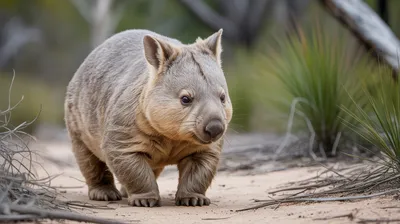
Northern Hairy-nosed Wombat
Lasiorhinus krefftii
The Northern Hairy-nosed Wombat is one of the world's rarest large mammals, known for its distinctive soft, silky fur and prominent hairy muzzle. This burrowing marsupial is robust and powerful, capable of digging extensive tunnel systems in sandy soils. Once widespread across eastern Australia, it is now restricted to a single protected population in Epping Forest National Park, Queensland. The species is highly nocturnal and elusive, making direct observation in the wild extremely rare.
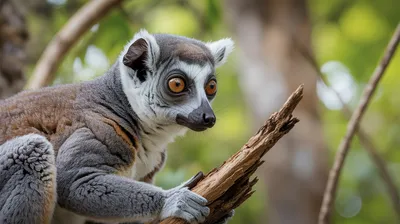
Northern Sportive Lemur
Lepilemur septentrionalis
The Northern Sportive Lemur is a small, nocturnal primate native to the dry forests of northern Madagascar. Distinguished by its large, round eyes and woolly gray-brown fur, this lemur is highly adapted to an arboreal lifestyle, leaping between branches with agility. It is solitary by nature, spending daylight hours resting in tree hollows and emerging at night to feed. Due to severe habitat loss and fragmentation, the Northern Sportive Lemur is considered one of the world’s most endangered primates.
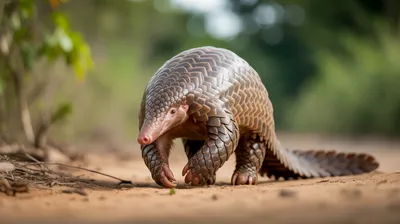
Pangolin
Manis spp.
Pangolins are unique, scale-covered mammals known for their shy nature and impressive defense mechanisms. Found across parts of Asia and Africa, these nocturnal creatures are the only mammals wholly covered in protective keratin scales, which they use to shield themselves from predators by curling into a tight ball. Pangolins are specialized insectivores, feeding primarily on ants and termites, which they extract from nests using their long, sticky tongues. Despite their ecological importance, pangolins are critically threatened due to illegal wildlife trade and habitat loss. Conservation efforts are ongoing to protect these fascinating animals from extinction.
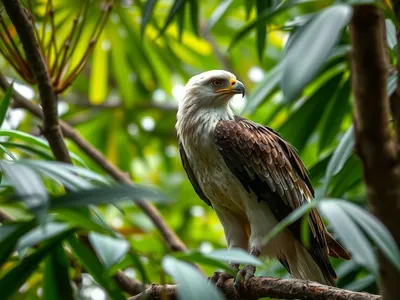
Philippine Eagle
Pithecophaga jefferyi
The Philippine Eagle is a critically endangered bird of prey endemic to the forests of the Philippines. Renowned for its impressive size, it is one of the largest and most powerful eagles in the world, sporting a distinctive shaggy crest and piercing blue-gray eyes. This raptor is an apex predator, primarily hunting monkeys, flying lemurs, and other small mammals and birds. Due to extensive habitat loss and hunting, its population is alarmingly low, making it one of the rarest eagles on the planet.
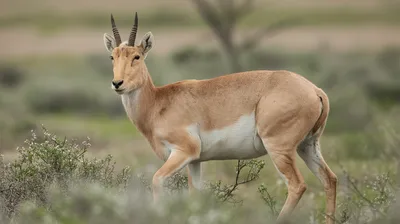
Saiga Antelope
Saiga tatarica
The Saiga Antelope is a critically endangered antelope recognized for its distinctive, bulbous nose that hangs over its mouth. Native to the semi-arid steppes and grasslands of Central Asia, this unique mammal plays a vital role in its ecosystem. Its large, flexible nose helps filter dust during summer migrations and warm cold air during harsh winters. Saiga herds undertake long migrations in search of food and water, facing numerous threats including poaching, disease, and habitat loss.

Spoon-billed Sandpiper
Calidris pygmaea
The Spoon-billed Sandpiper is a small, migratory wader renowned for its distinctive spatula-shaped bill. Breeding in the remote northeastern tundra of Russia, it undertakes one of the world’s most perilous migrations, traveling thousands of kilometers to wintering grounds in Southeast Asia. Its unique bill helps it forage for small invertebrates in mudflats and shallow coastal lagoons. The population has declined dramatically in recent decades due to habitat loss and disturbance along its migratory route, making it one of the rarest and most threatened shorebirds in the world.
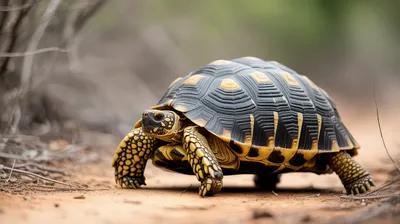
Sri Lankan Star Tortoise
Geochelone elegans
The Sri Lankan Star Tortoise is a strikingly patterned terrestrial reptile native to the dry forests and scrublands of Sri Lanka. It is known for its high-domed shell adorned with vibrant, radiating yellow star patterns on a dark brown or black background. This tortoise is relatively small but robust, and its beautiful shell makes it a target for the illegal pet trade. Its shy, slow-moving nature and strict herbivorous diet have made it vulnerable to habitat loss and exploitation, resulting in a steep population decline in the wild.
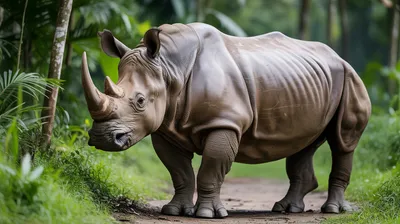
Sumatran Rhinoceros
Dicerorhinus sumatrensis
The Sumatran rhinoceros is the smallest and hairiest of all rhino species, distinguished by its reddish-brown fur and two small horns. Native to dense mountain and lowland forests in Southeast Asia, it is critically endangered due to habitat loss and poaching. This elusive mammal is solitary by nature and is rarely seen in the wild. Its population has declined drastically, and only a few individuals survive in isolated pockets of Sumatra and Borneo.