

Search the encyclopedia
83 animals
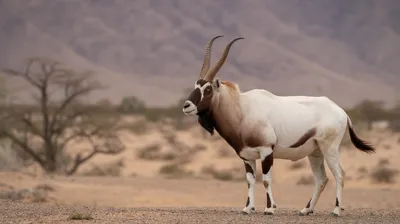
Addax
Addax nasomaculatus
The Addax, also known as the white antelope or screwhorn antelope, is a critically endangered desert-dwelling ungulate native to the Sahara. It is easily recognized by its long, twisted horns and pale coat, which helps it reflect the harsh desert sun. The Addax is highly adapted to arid environments, able to survive with minimal water and feed on tough desert grasses and herbs. Once widespread across northern Africa, its population has dramatically declined due to overhunting and habitat loss. Today, only a few wild individuals remain, with most existing in protected reserves and captivity.
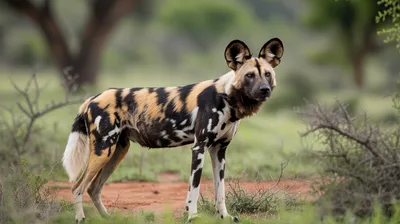
African Wild Dog
Lycaon pictus
The African Wild Dog, also known as the painted wolf or Cape hunting dog, is a highly social and intelligent carnivorous mammal native to sub-Saharan Africa. It is easily recognized by its mottled fur, large rounded ears, and long legs, which help it cover vast distances while hunting. Living in packs of up to 30 individuals, these dogs have a complex social hierarchy and are renowned for their cooperative hunting strategies, achieving some of the highest hunting success rates among African predators. Sadly, their populations have drastically declined due to habitat loss, human conflict, and disease, making them one of Africa's most endangered large carnivores.

Amazon River Dolphin
Inia geoffrensis
The Amazon River Dolphin, also known as the Pink Dolphin, is a freshwater cetacean native to the river systems of the Amazon and Orinoco basins in South America. Its most distinctive feature is its pink coloration, which intensifies with age and during periods of excitement. These dolphins have long, slender beaks and flexible necks, allowing them to navigate through flooded forests with ease. Exceptionally intelligent, they use echolocation to hunt for fish, crustaceans, and even small turtles. Despite their mystical reputation among local cultures, Amazon River Dolphins face threats from habitat loss, pollution, and accidental capture in fishing gear.
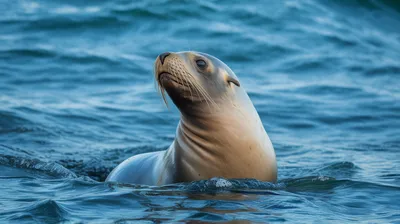
Australian Sea Lion
Neophoca cinerea
The Australian Sea Lion is a rare and charismatic marine mammal native to the southern and western coasts of Australia. It has a robust body, short fur, and is easily identified by its creamy to yellowish coloring on the face and underparts, contrasted with a dark brown back. Known for their playful behavior, Australian Sea Lions are also strong swimmers, often seen surfing waves close to shore. Their breeding colonies are found on isolated sandy beaches and rocky coasts, and they have a very unusual 17-18 month breeding cycle, one of the longest among pinnipeds.
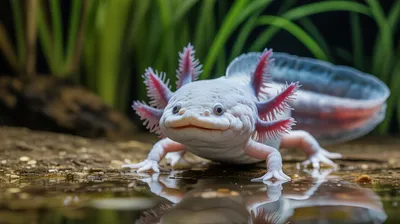
Axolotl
Ambystoma mexicanum
The axolotl is a unique species of salamander native to the freshwater lakes of central Mexico, most notably Lake Xochimilco. Unlike most amphibians, axolotls retain their larval features throughout their lives, a condition known as neoteny, which includes feathery external gills and a finned tail. They are capable of regenerating entire limbs, spinal cord, heart, and other organs, making them a subject of extensive scientific research. Axolotls are critically endangered in the wild due to habitat loss, pollution, and the introduction of invasive species.
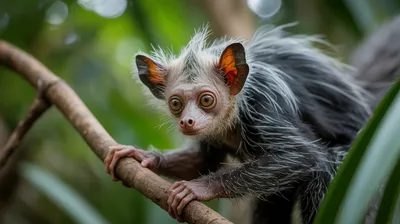
Aye-aye
Daubentonia madagascariensis
The aye-aye is a unique nocturnal primate native to the rainforests of Madagascar. It is distinguished by its large eyes, bushy tail, and especially its elongated, thin middle finger, which it uses to tap on wood and extract insects—a method called percussive foraging. With rodent-like incisors that grow continuously, the aye-aye gnaws into wood to access insect larvae, making it the only primate known to use echolocation-like techniques for finding food. Despite its unusual appearance, the aye-aye plays a crucial ecological role in controlling insect populations. Its secretive and solitary lifestyle, combined with habitat loss, has contributed to its rarity and threatened status.
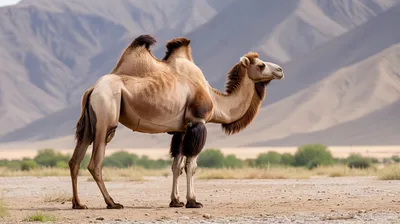
Bactrian Camel
Camelus bactrianus
The Bactrian camel is a large, even-toed ungulate native to the steppes of Central Asia. Distinguished by its two humps, it is well-adapted to harsh desert and semi-desert environments, enduring extreme temperatures from scorching heat to freezing cold. Its thick fur, bushy eyebrows, and double-layered eyelashes protect it from sandstorms and cold winds. Bactrian camels are highly valued as pack animals and for their milk, meat, and wool. Despite their resilience, wild populations are critically endangered, while domesticated Bactrian camels are more numerous.
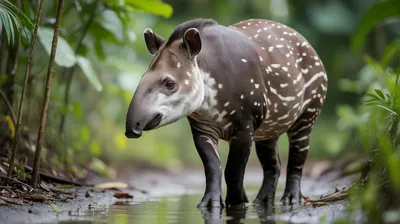
Baird's Tapir
Tapirus bairdii
Baird's Tapir is the largest indigenous terrestrial mammal in Central America, recognized by its distinctive prehensile snout, which it uses to grab foliage and fruit. This shy, mostly nocturnal herbivore is found in dense forests and swamps from southern Mexico through Central America to northwestern Colombia. Its thick, dark brown fur is complemented by a pale cream-colored patch on its face and throat. Baird's Tapir plays a crucial ecological role as a seed disperser, helping sustain the health and diversity of tropical forests.
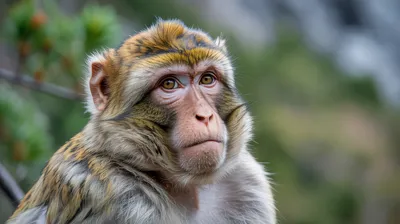
Barbary Macaque
Macaca sylvanus
The Barbary macaque is a medium-sized, tailless primate native to the mountainous forests of North Africa, particularly in Morocco and Algeria. This highly social monkey is easily recognizable by its golden-brown fur, expressive face, and lack of a tail, a rare trait among macaques. Barbary macaques live in large, complex groups and exhibit strong social bonds, with both males and females participating in the care of young. They are highly adaptable and spend a significant amount of time both on the ground and in trees, foraging for a variety of foods. Once widespread, their populations have declined due to habitat loss and illegal pet trade.
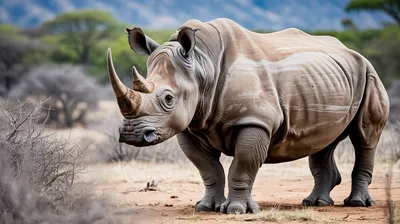
Black Rhinoceros
Diceros bicornis
The Black Rhinoceros is a large, thick-skinned herbivore native to eastern and southern Africa. Despite its name, its skin color varies from brown to gray, and it is distinguished from the white rhinoceros by its pointed upper lip, which is adapted for grasping leaves and twigs. Black rhinos are generally solitary and have a reputation for their unpredictable and sometimes aggressive behavior. They play an essential ecological role by browsing woody plants and shaping the landscapes of the savannas and scrublands they inhabit.
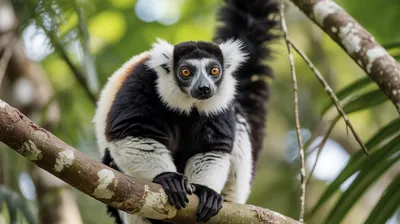
Black-and-white Ruffed Lemur
Varecia variegata
The Black-and-white Ruffed Lemur is a striking primate native to the rainforests of eastern Madagascar, known for its distinctive black and white fur pattern and luxurious ruff around its neck. This lemur is arboreal and highly agile, spending most of its life in the forest canopy, where it leaps from tree to tree in search of fruit, nectar, and pollen. Social and vocal, these lemurs live in small, matriarchal groups and are recognized for their loud, barking calls that can be heard over long distances. Due to habitat destruction and hunting, they are critically endangered in the wild.
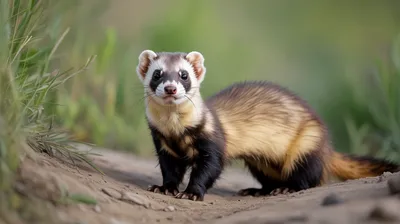
Black-footed Ferret
Mustela nigripes
The Black-footed Ferret is a slender, nocturnal mammal native to the grasslands of North America. Characterized by its pale yellowish fur, black markings on its feet, legs, tail tip, and a distinctive mask across its eyes, it is the only ferret species native to North America. Once thought extinct, intensive conservation efforts have reintroduced it to parts of its former range. Black-footed Ferrets are highly specialized predators, relying predominantly on prairie dogs for food and shelter.
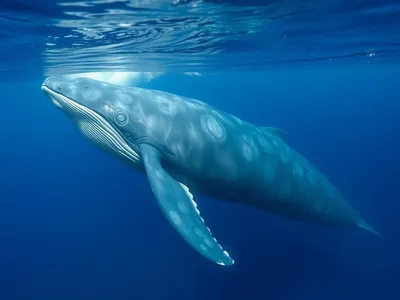
Blue Whale
Balaenoptera musculus
The blue whale is the largest animal known to have ever existed, reaching lengths of up to 30 meters (98 feet) and weighing as much as 180 metric tons. Its long, slender body is bluish-grey with lighter spots, and it is equipped with a massive mouth that contains baleen plates for filter-feeding. Blue whales are found in all the world's oceans except the Arctic, typically migrating between feeding and breeding grounds. These gentle giants feed primarily on tiny shrimp-like creatures called krill, consuming up to 4 tons per day during peak feeding season. Despite their immense size and power, blue whales are vulnerable to various threats, and their populations remain endangered.
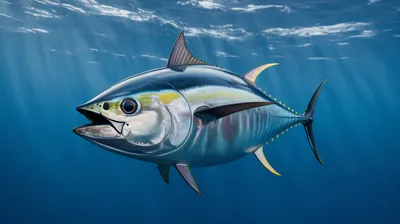
Bluefin Tuna
Thunnus thynnus
The Bluefin Tuna is a large, powerful fish known for its streamlined body and incredible speed in the open ocean. Recognized by its metallic blue top and silver underside, it is one of the most commercially valuable fish species due to its prized flesh, especially for sushi and sashimi. Bluefin Tuna are highly migratory, traveling thousands of kilometers between spawning and feeding grounds in the Atlantic Ocean and Mediterranean Sea. These apex predators can dive to great depths and regulate their body temperature, allowing them to thrive in a variety of marine environments.
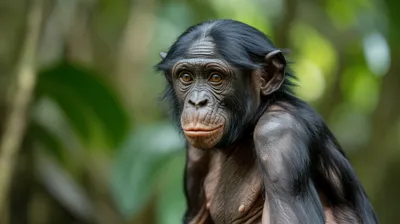
Bonobo
Pan paniscus
The bonobo is a highly intelligent and social great ape native to the dense lowland rainforests of the Democratic Republic of the Congo. Bonobos are known for their matriarchal societies, peaceful social interactions, and intricate forms of communication. They are closely related to chimpanzees, sharing about 98.7% of their DNA with humans, but differ in their more cooperative and less aggressive behaviors. Bonobos are arboreal and terrestrial, spending time both in trees and on the forest floor, and are recognized for their strong sense of empathy and complex social bonding.
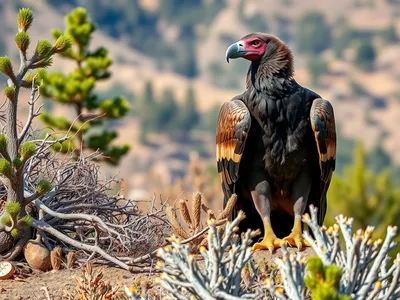
California Condor
Gymnogyps californianus
The California Condor is the largest North American land bird, boasting an impressive wingspan of up to 3 meters (nearly 10 feet). This critically endangered vulture is known for its striking black plumage with white patches under its wings and a bald head that changes color with emotional state. California Condors are scavengers, soaring over canyons, mountains, and forests in search of carrion. Once on the brink of extinction, intensive conservation efforts have slowly increased their population, though they remain one of the rarest birds in the world.
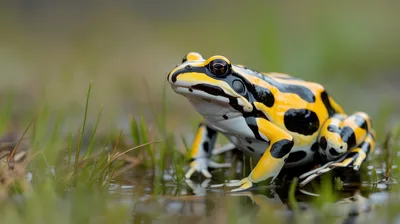
Corroboree Frog
Pseudophryne corroboree
The Corroboree Frog is a small, vividly colored amphibian native to the alpine and subalpine regions of southeastern Australia. Known for its striking yellow and black striped pattern, this frog is highly recognizable and unique among Australian fauna. Corroboree Frogs spend most of their lives on land, only returning to pools and bogs to breed during the summer months. Their populations have dramatically declined due to habitat loss, disease, and climate change, making them one of Australia's most endangered amphibians.
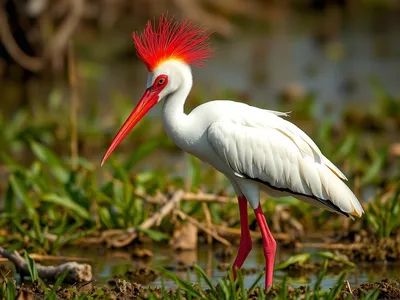
Crested Ibis
Nipponia nippon
The Crested Ibis is a striking, medium-sized wading bird recognized by its pure white plumage, long down-curved bill, and elegant, wispy crest of white feathers on its head. During breeding season, its face and legs turn a vivid red, adding to its distinctive appearance. Once widespread across East Asia, it is now critically endangered, with wild populations surviving almost exclusively in central China due to habitat loss and overhunting. Crested Ibises prefer wetland habitats, feeding in rice paddies, shallow rivers, and marshes, where they use their sensitive bills to probe for prey. Intensive conservation efforts have helped stabilize and slowly increase their numbers, but they remain one of the world’s rarest birds.
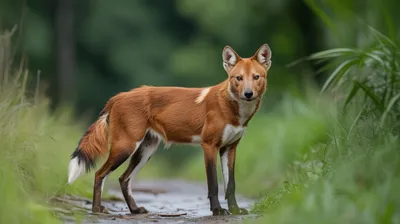
Dhole
Cuon alpinus
The dhole, also known as the Asiatic wild dog, is a highly social and intelligent canid native to Central, South, and Southeast Asia. Distinguished by its reddish coat, bushy black-tipped tail, and lean build, the dhole is an agile hunter that lives and hunts in packs, often taking down prey much larger than itself. Unlike other wild canids, dholes are known for their unique whistling communication calls and cooperative pack behavior. Their populations are declining due to habitat loss, disease, and competition with other predators.
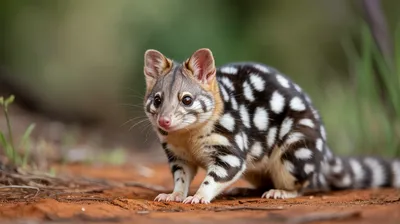
Eastern Quoll
Dasyurus viverrinus
The Eastern Quoll is a small to medium-sized carnivorous marsupial native to Australia, particularly Tasmania. It has a pointed snout, sharp teeth, and a bushy tail, with a coat that ranges from black to fawn and is dotted with distinctive white spots. Once widespread on the Australian mainland, the species is now extinct there and survives mainly in Tasmania. Eastern Quolls are solitary, nocturnal hunters, feeding on insects, small mammals, and birds. Their populations are threatened by habitat loss, introduced predators, and disease.
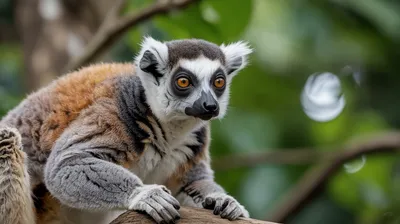
Frilled-necked Lemur
Eulemur macaco flavifrons
The Frilled-necked Lemur, also known as the Blue-eyed Black Lemur, is a medium-sized primate native to northwestern Madagascar. Distinguished by its striking blue eyes and the frilled fur around its neck, this lemur exhibits sexual dimorphism, with males having black fur and females sporting a reddish-brown coat. It inhabits humid forests, where it is mostly arboreal and agile, moving adeptly through the canopy. This species is social, living in small groups and communicating with a variety of vocalizations and facial expressions. Unfortunately, the Frilled-necked Lemur is critically endangered due to habitat destruction and hunting.
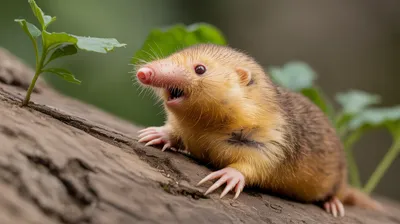
Giant Golden Mole
Chrysospalax trevelyani
The Giant Golden Mole is a rare, subterranean mammal endemic to the forests of South Africa. Characterized by its dense, iridescent fur that shimmers with golden to bronze hues, this species is highly adapted for a fossorial lifestyle, with powerful forelimbs and reduced eyesight. Unlike true moles, golden moles are not closely related to other mole species and belong to their own order, Afrosoricida. The Giant Golden Mole plays a crucial ecological role in aerating the soil and controlling insect populations, but it is increasingly threatened by habitat loss and fragmentation.
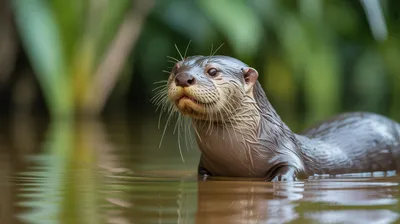
Giant Otter
Pteronura brasiliensis
The Giant Otter is the largest member of the otter family, reaching lengths of up to 1.7 meters (5.6 feet) and noted for its sleek, chocolate-brown fur and conspicuous throat markings. Native to the rivers and lakes of South America's Amazon, Orinoco, and La Plata river systems, it is a highly social species, living in tight-knit family groups. Giant otters are aquatic carnivores, known for their agility, powerful tails, and webbed feet, which aid in catching fish and crustaceans. Vocal and playful, they communicate with a variety of sounds and are recognized as one of the most vocal otter species.
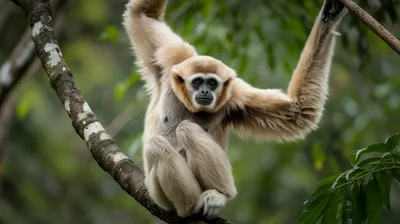
Gibbon
Hylobates lar
Gibbons are small, arboreal apes native to the forests of Southeast Asia. Known for their remarkable agility and acrobatic swinging through trees, gibbons use their elongated arms for brachiation, allowing them to travel rapidly high in the forest canopy. These highly social primates typically live in monogamous family groups and communicate through loud, elaborate songs that echo across the jungle. Gibbons play a crucial ecological role as seed dispersers, contributing to the health and diversity of their forest habitats.