

Search the encyclopedia
66 animals
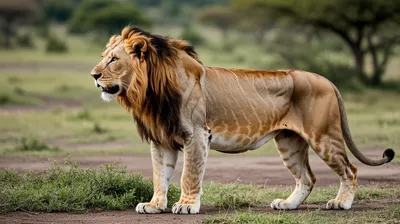
African Lion
Panthera leo
The African Lion is a large, muscular carnivorous mammal native to the grasslands, savannas, and open woodlands of sub-Saharan Africa. Known for their majestic manes and powerful build, male lions can be distinguished by their impressive hair around the head and neck, while females are more streamlined. Lions are highly social animals, living in prides that can include up to 30 individuals, which is unusual among big cats. As apex predators, they play a crucial role in maintaining the health and balance of their ecosystem.
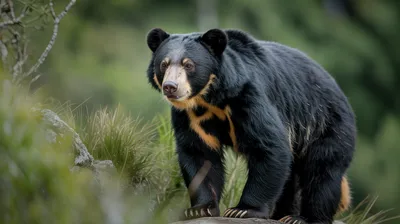
Andean Bear
Tremarctos ornatus
The Andean bear, also known as the spectacled bear, is South America's only bear species and is distinguished by its shaggy black fur and unique facial markings, which often resemble eyeglasses. This elusive mammal inhabits the remote cloud forests and mountainous regions of the Andes, ranging from Venezuela to Bolivia. Andean bears are excellent climbers and spend much of their time in trees, where they search for fruits, bromeliads, and occasionally small animals. Their solitary and secretive nature, combined with habitat loss, makes them one of the lesser-seen large mammals of their range.
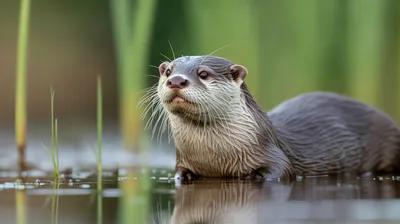
Asian Small-clawed Otter
Aonyx cinereus
The Asian Small-clawed Otter is the smallest otter species in the world, recognized by its short, dexterous claws that do not extend beyond the tips of its fingers and toes. Native to South and Southeast Asia, it inhabits wetlands, marshes, and mangrove swamps, often near slow-moving rivers and coastal areas. This otter is highly social, living in family groups and displaying complex vocal communications. Its diet mainly consists of crustaceans, mollusks, and small fish, which it skillfully manipulates with its nimble paws.
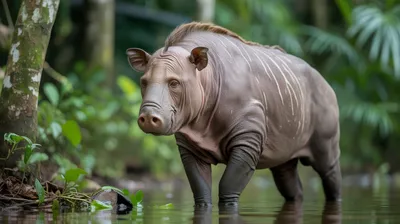
Babirusa
Babyrousa celebensis
The Babirusa is a unique wild pig native to the Indonesian islands of Sulawesi, Togian, Sula, and Buru. It is instantly recognizable by the remarkable upward-curving tusks of the males, which can grow through the skin of the snout and curve back toward the forehead. Babirusas inhabit tropical rainforests, swamps, and riverine forests, often near water sources. They are omnivorous, feeding on a mix of fruits, leaves, roots, and small animals. Due to habitat loss and hunting, their populations are declining, and many species are classified as vulnerable or endangered.
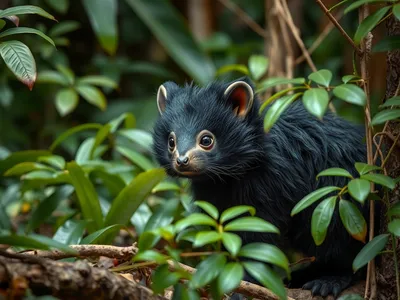
Binturong
Arctictis binturong
The Binturong, also known as the bearcat, is a large, arboreal mammal native to the dense forests of Southeast Asia. Despite its nickname, it is neither a bear nor a cat, but a member of the Viverridae family, related to civets and genets. Binturongs have thick, coarse black fur, a prehensile tail, and a distinctively musky scent reminiscent of buttered popcorn. These nocturnal omnivores spend much of their time in the treetops, using their tails for balance and grasping branches. Due to habitat loss and hunting, Binturongs are classified as Vulnerable in the wild.
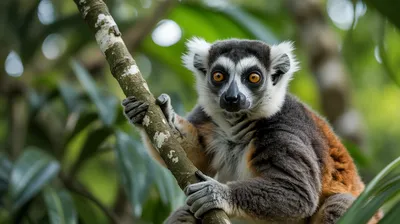
Black Lemur
Eulemur macaco
The Black Lemur is a striking primate endemic to the northwestern tip of Madagascar and neighboring islands. Males are entirely black, while females are brown with white ear tufts, making them easily distinguishable by sex. These medium-sized lemurs are highly social and live in groups, primarily inhabiting tropical forests. Black Lemurs are arboreal, spending most of their lives in the tree canopy, and are known for their playful and curious nature. Their populations are threatened by habitat loss and hunting, rendering them vulnerable in the wild.
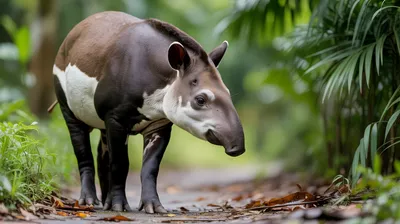
Brazilian Tapir
Tapirus terrestris
The Brazilian Tapir, also known as the South American Tapir or lowland tapir, is the largest terrestrial mammal in South America. It has a robust, barrel-shaped body, short legs, and a distinctive prehensile snout that it uses for grasping leaves and fruit. Brazilian Tapirs are mostly nocturnal and are excellent swimmers, often taking to water to escape predators or cool off. They play an essential role in their ecosystem as seed dispersers, helping to maintain forest diversity.
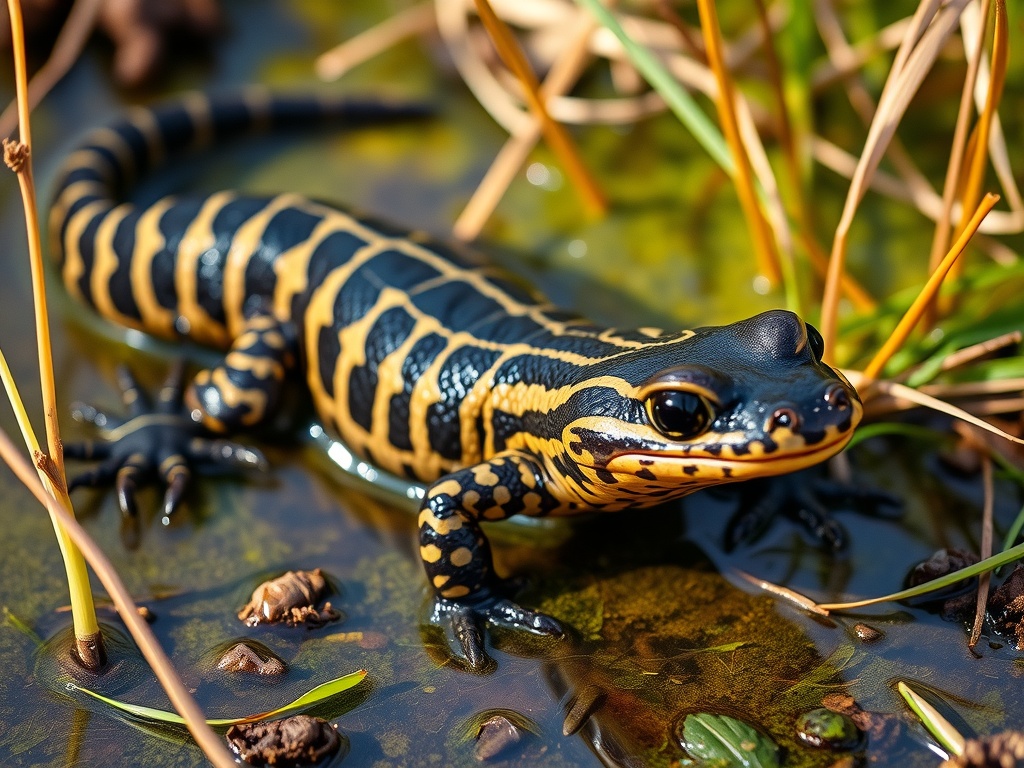
California Tiger Salamander
Ambystoma californiense
The California Tiger Salamander is a large, secretive amphibian native to California's grasslands and vernal pool ecosystems. Characterized by its robust body, broad head, and striking black coloration adorned with bright yellow or white spots, this salamander spends most of its life underground in burrows created by small mammals. It emerges primarily during the rainy season to breed in temporary ponds. Due to habitat loss and fragmentation, its populations have declined, and it is now considered a vulnerable species.
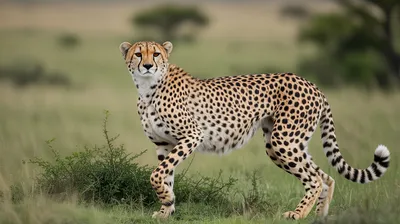
Cheetah
Acinonyx jubatus
The cheetah is the fastest land animal, renowned for its incredible acceleration and top speeds that can reach up to 120 km/h (75 mph) over short distances. It is a large felid with a slender, aerodynamic body, long legs, and distinctive black spots scattered across its golden-yellow coat. Cheetahs primarily inhabit open savannas and grasslands, where their keen eyesight helps them spot prey from a distance. Unlike other big cats, cheetahs rely on speed and agility rather than stealth or strength to hunt, using short, explosive sprints to capture antelopes and other small to medium-sized mammals.

Chinese Water Deer
Hydropotes inermis
The Chinese Water Deer is a small, unusual deer native to the river valleys and wetlands of China and Korea. Unlike most deer, it lacks antlers and instead has prominent downward-pointing tusks, which are elongated canine teeth used during territorial disputes. It has a compact body, short tail, and a thick, brownish coat that provides camouflage in reed beds and marshes. This species is highly adept at swimming and is often found near water, where it feeds primarily on grasses and aquatic plants. Adapted to wet habitats, it is shy and elusive, making it difficult to observe in the wild.
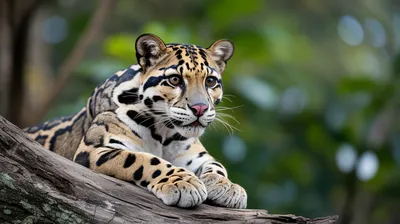
Clouded Leopard
Neofelis nebulosa
The clouded leopard is a medium-sized wild cat native to the dense forests and foothills of Southeast Asia. Renowned for its striking cloud-like markings on its golden-yellow coat, the clouded leopard is an agile climber and often spends much of its time in trees. Its unusually long canine teeth, proportionally the longest of any living feline, give it a prehistoric appearance. This elusive predator is mostly solitary and is rarely seen in the wild, contributing to its mystique among big cats.
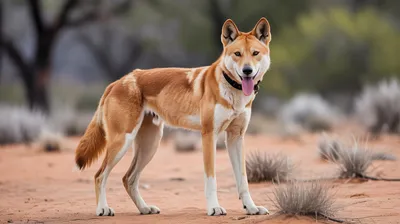
Dingo
Canis lupus dingo
The dingo is a wild dog native to Australia, recognized by its lean body, pointed ears, and bushy tail. Dingoes are highly adaptable predators found across a variety of Australian habitats, from deserts to forests. They play an important ecological role as apex predators, helping to control populations of prey animals. Dingoes are known for their intelligence, social structure, and complex vocalizations. While they can interbreed with domestic dogs, pure dingoes are increasingly rare due to hybridization.
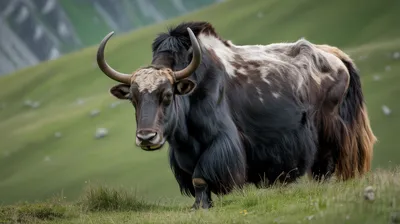
Domestic Yak
Bos grunniens
The domestic yak is a large, long-haired bovine native to the high-altitude regions of the Himalayas and Central Asia. Adapted to cold mountainous environments, yaks possess a thick woolly coat and large lungs that help them thrive at elevations above 3,000 meters. They are integral to the livelihoods of people living in Tibet, Nepal, Mongolia, and surrounding areas, providing milk, meat, wool, and serving as pack animals. Yaks are known for their gentle temperament and impressive stamina, allowing them to navigate rugged terrain with ease.
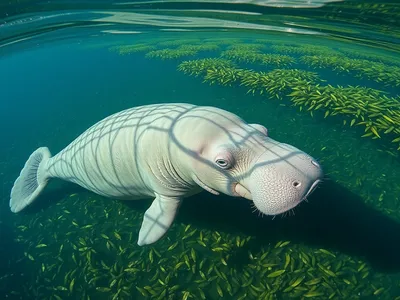
Dugong
Dugong dugon
The dugong is a large, fully aquatic marine mammal known for its gentle demeanor and distinctive fusiform body shape. Sometimes called a 'sea cow,' it grazes on seagrass meadows in warm coastal waters throughout the Indo-West Pacific region. Dugongs have paddle-like flippers, a fluked tail similar to that of a whale, and a downturned snout specialized for foraging on the ocean floor. They are the only extant species in the family Dugongidae and are closely related to manatees. Due to habitat loss, hunting, and entanglement in fishing gear, dugong populations are declining, making them vulnerable to extinction.
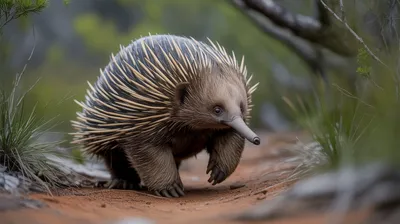
Eastern Long-beaked Echidna
Zaglossus bartoni
The Eastern Long-beaked Echidna is a spiny, egg-laying mammal native to the montane forests of New Guinea. Unlike its short-beaked Australian relatives, it is larger and characterized by its elongated snout, which it uses to forage for earthworms and insects in the soil. Covered in coarse hair and sharp spines, this echidna is adept at digging and can curl into a ball for protection. Remarkably, it is one of the few monotremes, a primitive group of mammals that lay eggs instead of giving birth to live young.
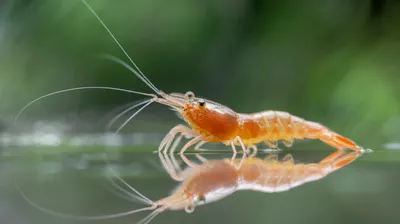
Fairy Shrimp
Branchinecta lynchi
The fairy shrimp is a small, delicate freshwater crustacean found primarily in vernal pools and temporary ponds. They have elongated bodies, large stalked eyes, and swim gracefully upside down with the aid of their 11 pairs of leaf-like legs. Fairy shrimp are highly adapted to ephemeral environments, completing their entire lifecycle in just a few weeks before their pools dry up. Their eggs can survive extreme drought and remain dormant for years until favorable conditions return, ensuring the species' ongoing survival.
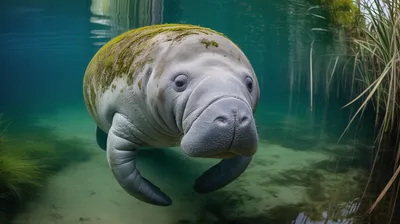
Florida Manatee
Trichechus manatus latirostris
The Florida manatee is a large, slow-moving aquatic mammal native to the warm coastal waters and rivers of Florida and the southeastern United States. Recognizable by its rounded, paddle-shaped tail and wrinkled, grayish skin, it can grow up to 13 feet in length. These gentle herbivores spend most of their day grazing on aquatic vegetation and are known for their calm, docile nature. Manatees are highly vulnerable to human activities, especially boat collisions, and rely on warm-water refuges during colder months.
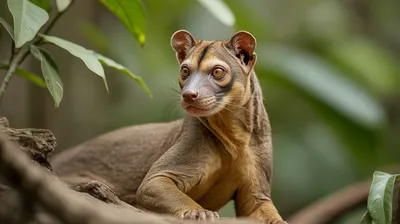
Fossa
Cryptoprocta ferox
The fossa is a carnivorous mammal endemic to Madagascar, resembling a small cougar but more closely related to mongoose. It has a slender, muscular body, retractable claws, and a long tail that aids in balance while navigating the forest canopy. The fossa is the island's top predator, known for its agility in hunting lemurs and other small animals. Despite its cat-like appearance, it belongs to the Eupleridae family, unique to Madagascar's evolutionary history.
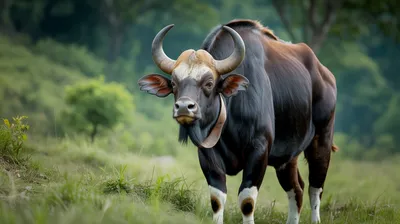
Gaur
Bos gaurus
The gaur is the largest extant species of wild cattle, native to South and Southeast Asia. Recognized by its massive, muscular build, dark brown coat, and distinctive white 'stockings' on its lower legs, the gaur is an iconic denizen of forests and hilly terrain. Males are significantly larger than females and can weigh over a ton. Gaurs are shy and primarily crepuscular, grazing in herds and playing a vital role in shaping the forest ecosystem. Despite their impressive size and strength, they face threats from habitat loss, hunting, and disease transmission from domestic cattle.
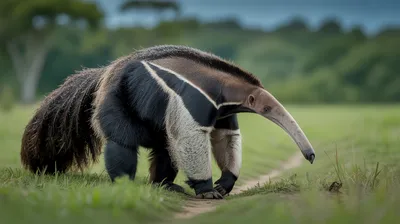
Giant Anteater
Myrmecophaga tridactyla
The giant anteater is a large, terrestrial mammal native to Central and South America, recognized for its elongated snout and distinctive bushy tail. It has a specialized tongue that can extend up to 60 cm (24 inches) to extract ants and termites from nests. Covered in long, coarse fur with bold black and white markings, the giant anteater walks on its knuckles to protect its sharp claws. This unique mammal can be found in a variety of habitats, including grasslands, savannas, and forests. Despite its specialized diet, it is an adaptable species but faces threats from habitat loss and road mortality.
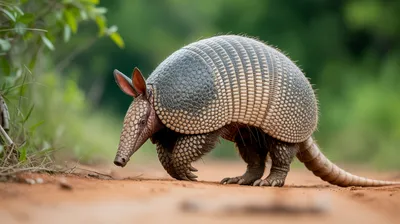
Giant Armadillo
Priodontes maximus
The Giant Armadillo is the largest living species of armadillo and is native to South America. Recognizable by its massive, armored shell and large claws, it can reach up to 1.5 meters (5 feet) in length when including its tail. Primarily nocturnal and solitary, the giant armadillo spends much of its time digging for food and constructing extensive burrows. Its powerful forelimbs and claws allow it to access ant and termite mounds, which constitute the bulk of its diet. Despite its size and protective armor, the species faces threats from habitat loss and hunting, making it increasingly rare in the wild.
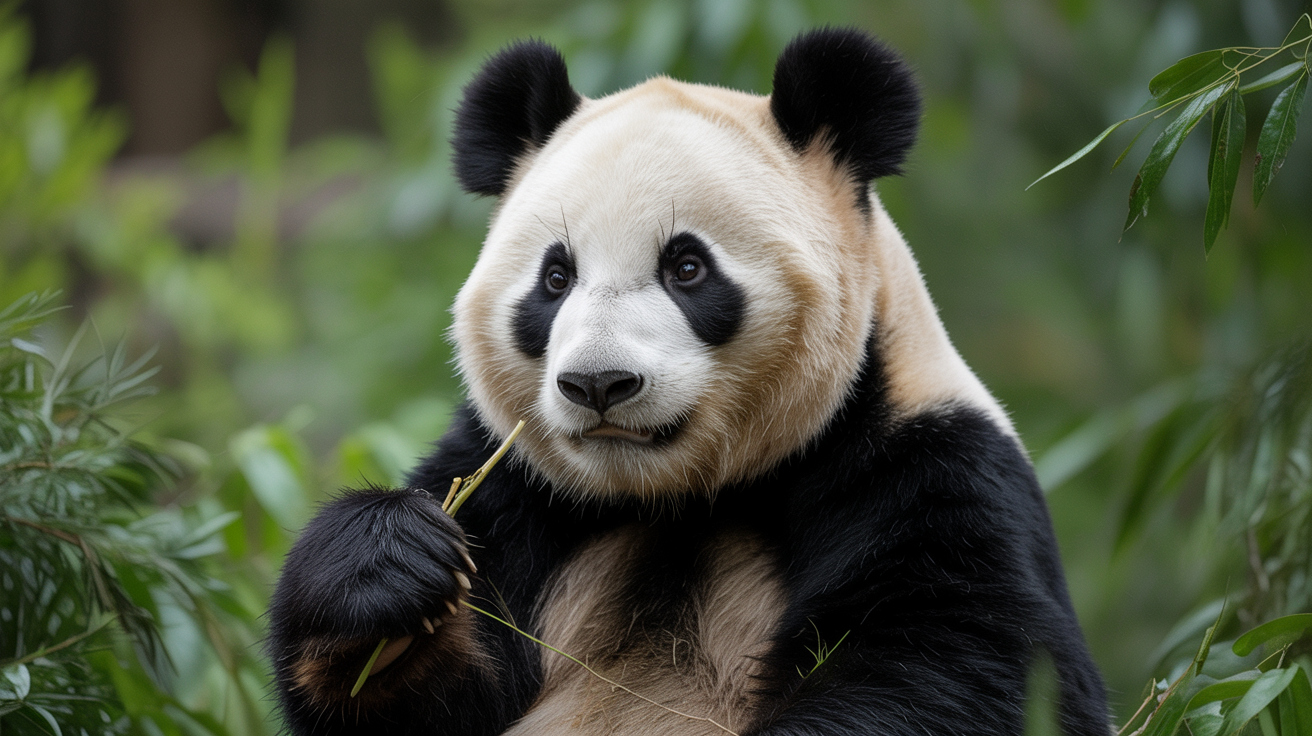
Giant Panda
Ailuropoda melanoleuca
The giant panda is a large, iconic bear native to the mountainous forests of central China. Renowned for its distinctive black-and-white fur, the giant panda primarily feeds on bamboo, consuming up to 99% of its diet from this plant. Although classified as a carnivore, it is almost entirely herbivorous and plays a crucial role in forest ecosystem health by spreading seeds and maintaining bamboo populations. Solitary by nature, giant pandas are elusive animals that spend most of their time foraging in dense bamboo thickets.
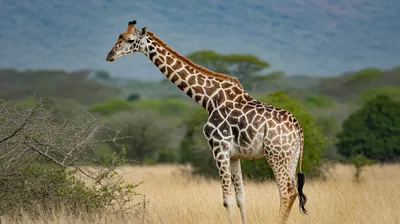
Giraffe
Giraffa camelopardalis
The giraffe is the world's tallest land animal, easily recognized by its extremely long neck and legs, as well as its distinctive spotted coat. Native to the savannas and open woodlands of sub-Saharan Africa, giraffes use their height to browse leaves and shoots high up in trees, especially from acacias. Their long, prehensile tongues help them strip leaves from thorny branches. Giraffes live in loosely structured herds and communicate using a variety of vocalizations and body language. Despite their size and height, they are surprisingly graceful and capable of running at speeds up to 35 miles per hour.
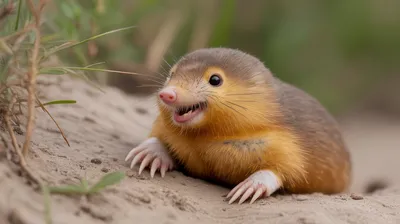
Golden Mole
Chrysochloris asiatica
Golden moles are small, burrowing mammals native to southern Africa, renowned for their iridescent, metallic fur that shimmers in golden, bronze, or green hues. Despite their name and appearance, golden moles are not true moles and are more closely related to tenrecs. They possess powerful, spade-like forelimbs for digging and have vestigial eyes covered by skin and fur, rendering them functionally blind. Golden moles spend most of their lives underground, navigating sandy soils and searching for invertebrates and small vertebrates to eat.