1 animals
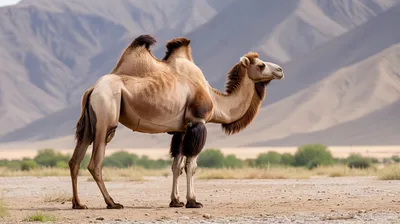
Camelus bactrianus
The two humps of a Bactrian camel are fat, not water — a strategic decision to store the body's insulation in two lumps on the back rather than spread beneath the skin, so that the rest of the body can radiate heat freely. A well-fed camel's humps stand firm; a starved one's flop over. The camel's water tricks are elsewhere. It can lose up to about 30 percent of its body water, a level that would kill most mammals through blood thickening, because its red blood cells are oval rather than round and unusually elastic — they resist rupturing when the animal rehydrates and can swell enormously. That is what lets a camel drink over 100 litres in a few minutes without its cells bursting. Nostrils close against blowing sand, double rows of eyelashes screen the eyes, and the woolly winter coat sheds in great hanging sheets in spring. The domestic Bactrian is common, but the wild Bactrian camel is now recognised as a separate species with only around a thousand individuals left in the Gobi.