
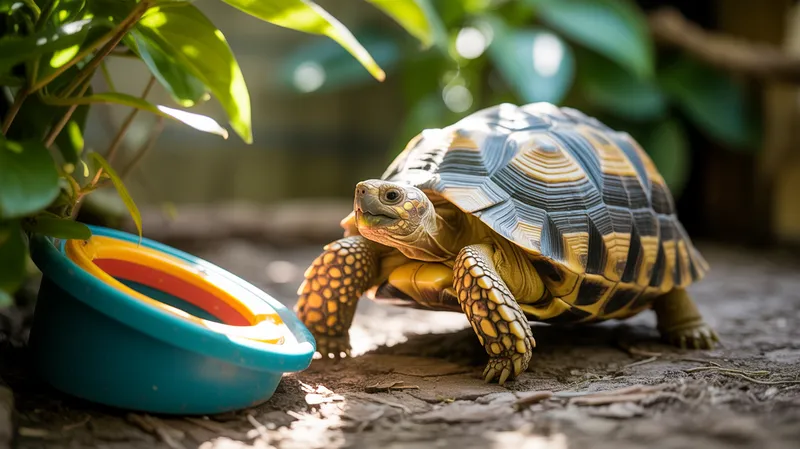
For centuries, reptiles like tortoises have been regarded as stoic, unemotional creatures—more likely to bask in the sun or munch on greens than to feel joy, sadness, or mood swings. But a wave of new scientific research is upending this notion, revealing that tortoises may experience emotions in ways remarkably similar to mammals and birds. This discovery not only transforms our understanding of reptile behavior, it also sparks deeper questions about animal consciousness and welfare.
The Old View: Reptiles as Emotionless Beings
Traditionally, scientists and animal lovers alike have tended to believe that complex emotions—like happiness, sadness, or optimism—were the domain of mammals, such as the loyal Bernese Mountain Dog or the intelligent Korean Jindo Dog. Birds, too, have shown signs of intricate emotional lives, as observed in species like the Superb Fruit Dove and the enigmatic Kakapo.
Reptiles, however, were long thought to act mostly on instinct, with little to no emotional depth. Their slow movements and impassive faces didn’t help their reputation—but recent discoveries are challenging these old assumptions.
New Research: Tortoises and the Science of Emotion
Groundbreaking Studies from the University of Lincoln
In a landmark study published just last month, researchers from the University of Lincoln set out to answer a bold question: Can tortoises, specifically red-footed tortoises (Chelonoidis carbonarius), experience feelings similar to those of mammals and birds?
Using behavioral experiments designed to assess optimism and pessimism, scientists presented tortoises with ambiguous cues to see how they would respond. The results were striking. Tortoises exhibited long-term mood states—what scientists call "affective states"—that lasted well beyond the immediate situation. In other words, tortoises could be in a "good mood" or a "bad mood," influencing how they approached new experiences (SciTechDaily, 2024).
"Our research demonstrates that tortoises can experience long-lasting emotional states, similar to those seen in mammals and birds. This challenges the traditional view that reptiles lack such complexity."
– Dr. Anna Wilkinson, University of Lincoln
What Do Tortoise Emotions Look Like?
The study revealed that tortoises could show signs of optimism—approaching ambiguous cues with curiosity and anticipation—or pessimism, avoiding them altogether. These prolonged mood states resemble the emotional responses seen in many mammals, including domestic dogs like the Sealyham Terrier and Schipperke. Mood not only shaped behavior in the moment, but also influenced how tortoises responded to new challenges hours or even days later (Earth.com, 2024).
- Optimistic tortoises explored their environment more readily and engaged with novel objects.
- "Pessimistic" tortoises were more cautious, often retreating or ignoring new stimuli.
These findings suggest that tortoises possess an emotional life that is both richer and more persistent than previously believed.
Animal Consciousness: A Broader Revolution
The implications of these discoveries extend far beyond tortoises. For decades, the scientific consensus held that only mammals and birds could feel or think in complex ways. But mounting evidence now points to sentience in reptiles, fish, and even insects (The Brighter Side of News, 2025). This shift is forcing scientists to rethink the boundaries of animal consciousness.
- Birds like the Eurasian Eagle-owl have already demonstrated remarkable intelligence and emotional capacity.
- Research on primates, such as the Western Lowland Gorilla, has paved the way for a broader understanding of animal emotions.
- Now, reptiles are joining the ranks of complex, feeling animals.
How Do Scientists Measure Animal Emotions?
Unlike humans, animals can’t tell us how they feel. Instead, researchers use behavioral experiments, cognitive bias tests, and physiological measurements to infer emotional states. In the University of Lincoln study, for example, tortoises’ approach or avoidance of ambiguous cues was interpreted as evidence of optimism or pessimism.
This method has been used in mammals and birds for years—showing, for instance, that dogs can become depressed or birds can be optimistic. Now, with reptiles, these tests are revealing a hidden emotional world.
Why Does Tortoise Emotion Matter?
Welfare and Conservation
Understanding that tortoises and other reptiles can experience enduring emotions has major implications for their care and conservation. If tortoises can feel stress, boredom, or even joy, then their welfare needs are far more complex than once assumed.
This knowledge urges zoos, conservationists, and pet owners to provide enriched environments, mental stimulation, and opportunities for positive experiences. A tortoise that is curious and optimistic may benefit from toys, varied foods, and new scents—much like a dog or parrot.
Ethical Considerations
The recognition of reptile emotions also raises ethical questions about their treatment in captivity, research, and the wild. Should tortoises be entitled to the same welfare considerations as mammals? Can we justify keeping them in barren enclosures if we know they experience mood and emotion?
"If reptiles are sentient, our responsibilities toward them increase. Their welfare must be given serious consideration, just as we do for mammals and birds."
Surprising Facts About Tortoise Emotions
- Some tortoises enjoy gentle shell rubs and may seek out interaction with familiar humans, showing preference and even excitement.
- Studies have observed tortoises interacting socially, sharing basking spots, or following each other—behaviors once thought rare in reptiles.
- Red-footed tortoises have been seen using tools and solving simple puzzles, suggesting cognitive abilities linked to emotional states.
- Their mood can be influenced by environmental factors such as enclosure complexity, presence of companions, and quality of diet.
What About Other Reptiles and Animals?
Tortoises are not alone in this emotional revolution. Other reptiles, including lizards and snakes, are being studied for signs of mood and sentience. As science advances, we may soon discover that the emotional lives of cold-blooded animals are far warmer than we ever imagined.
In comparison, birds such as the playful Superb Fruit Dove and the endearing Kakapo have long shown signs of affection, curiosity, and even grief. Mammals like the Bernese Mountain Dog and Korean Jindo Dog are famous for their loyalty and emotional intelligence, further illustrating the vast spectrum of animal feelings across the tree of life.
Actionable Insights: How Can We Support Tortoise Welfare?
- Enrichment: Provide varied environments, objects to explore, and sensory stimulation to support mental health and positive moods.
- Social Opportunities: When appropriate, allow tortoises to interact with conspecifics, as socialization can influence emotional well-being.
- Observation: Pay attention to individual personality and changing behaviors—mood swings may signal health or environmental issues.
- Advocacy: Support organizations working to protect tortoise habitats and ensure ethical treatment in captivity and research.
Conservation Message: Protecting Emotional Lives
As we learn more about the emotional capacities of tortoises, our approach to conservation must evolve. Habitat destruction, illegal pet trade, and climate change threaten tortoise populations worldwide. By valuing their sentience, we strengthen the case for protecting these remarkable reptiles and the ecosystems they call home.
Recognizing that tortoises can feel joy, hope, and perhaps even affection reminds us of the interconnectedness of all life—and the responsibility we share to safeguard it.
Further Exploration
- Discover how Eurasian Eagle-owl parents care for their young and display emotional intelligence.
- Learn about the gentle nature of the Bernese Mountain Dog and the complex emotions of domestic dogs.
- Explore the world of Western Lowland Gorilla family bonds and their uncanny emotional expressions.
Conclusion: Rethinking Reptile Feelings
The science is clear: tortoises are far more emotionally complex than we ever imagined. From optimistic mood swings to lasting bonds, these ancient reptiles remind us that emotional life is not exclusive to mammals or birds. By expanding our understanding—and our compassion—we can create a world where all creatures, no matter how slow or scaly, are valued for their inner lives.
Interested in learning more about animal intelligence, emotions, and conservation? Explore Creature Atlas for deep dives into the lives of birds, mammals, and reptiles from around the globe.