
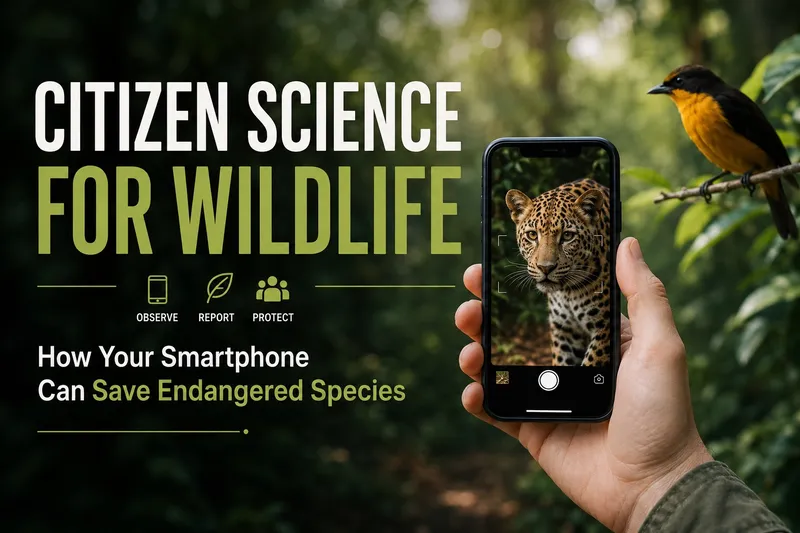
In an era where technology connects us like never before, a quiet revolution is taking shape in the world of wildlife conservation. It’s called citizen science, and it empowers ordinary people to make extraordinary contributions to saving our planet’s most vulnerable creatures—all with the device in your pocket. Whether you’re strolling through a city park or exploring remote forests, your smartphone can become a vital tool in the fight to protect endangered species.
What Is Citizen Science?
Citizen science involves public participation in scientific research and data collection, often in collaboration with professional scientists. In the context of wildlife conservation, it enables people from all walks of life to observe, record, and share data on animal sightings, behaviors, and habitats. This vast network of observers provides scientists with real-time, large-scale data that would be impossible to collect alone.
Why Is Citizen Science So Powerful?
- Scale: Millions of eyes around the globe provide a broader, more detailed picture of biodiversity than any research team could manage.
- Speed: Rapid data collection can alert conservationists to emerging threats before it’s too late.
- Community Engagement: Involving the public fosters a culture of stewardship and environmental awareness.
"The collective effort of citizen scientists has transformed how we monitor wildlife, enabling faster and more effective conservation responses." — Dr. Jane Goodall, primatologist and conservationist
How Your Smartphone Turns You Into a Wildlife Hero
Today’s smartphones are equipped with high-quality cameras, GPS, and easy internet connectivity, making them perfect tools for recording wildlife observations. Hundreds of apps and platforms—like iNaturalist, eBird, and Zooniverse—allow you to upload photos, log sightings, and contribute to global biodiversity databases.
Real-World Impact: Conservation Success Stories
Citizen science has already played a crucial role in protecting endangered species and their habitats. Here are just a few examples of how smartphone-powered data collection is making a difference:
- Rediscovery of Lost Species: In 2023, a citizen scientist in New Zealand photographed a Kakapo—a critically endangered, flightless parrot—on Stewart Island, providing researchers with vital data about the species’ range and breeding activity. This information helped conservationists refine their protection strategies for this remarkable nocturnal bird.
- Mapping Migration Routes: Birdwatchers armed with smartphones have contributed millions of data points, helping track the migratory journeys of species such as the Royal Albatross. These insights enable scientists to identify key feeding and nesting sites, which can then be prioritized for protection.
- Monitoring Invasive Species: In Australia, citizen reports are helping researchers track the spread of aggressive birds like the Noisy Miner, whose expansion into new habitats threatens native bird diversity. Timely data can trigger conservation interventions to restore ecosystem balance.
How to Get Involved: A Step-by-Step Guide
You don’t need a degree in biology or a fancy camera to make a difference. Here’s how you can become a citizen scientist for wildlife—starting today:
- Choose Your Platform: Download a trusted citizen science app like iNaturalist, eBird, or Seek by iNaturalist.
- Observe Wildlife: Whether in your backyard or on a hike, keep your eyes open for animals, plants, and signs of wildlife activity.
- Document and Upload: Take clear photos, record sounds, and note your location. The more detail, the better!
- Share and Connect: Upload your findings. Many platforms have communities where you can learn from experts and fellow nature enthusiasts.
- Stay Curious: Contribute regularly and explore projects focused on specific species or regions.
Tips for Effective Wildlife Observations
- Always respect animals and their habitats—observe from a distance and avoid disturbing wildlife.
- Pay attention to the time, weather, and environment when making observations.
- Be as accurate as possible; even common species data is valuable!
Spotlight: Endangered Species That Need Your Help
Many species around the world are teetering on the brink of extinction, and your observations can make a real difference. Here are a few that have benefited from citizen science:
- Northern Bald Ibis: Once widespread across Europe, this striking bird is now critically endangered. Citizen-reported sightings help conservationists pinpoint remaining populations and direct protection efforts to key habitats in North Africa and the Middle East.
- Superb Fruit Dove: These vibrantly colored birds inhabit rainforests in Australasia. Recent community-driven surveys have helped map their distribution and identify threats from habitat loss and climate change.
- Yellow Mongoose: Native to southern Africa, this small mammal’s burrowing habits are being studied through citizen-submitted camera trap images, shedding light on their role in grassland ecosystems and responses to environmental changes.
Recent Advances: AI Meets Citizen Science
Artificial intelligence is supercharging citizen science. Modern apps can now identify species instantly from photos, helping beginners contribute valuable data even if they aren’t experts. In 2023, a study published in Nature Ecology & Evolution found that AI-aided citizen science platforms increased the accuracy of species identification by up to 30% compared to manual submissions. This means your smartphone—aided by AI—can help document rare sightings or track population changes faster and more reliably than ever before.
Case Study: Urban Wildlife Monitoring
In cities around the world, citizen scientists are documenting how animals adapt to urban environments. For example, the Superb Fairywren, a small, brilliantly colored songbird native to Australia, has been the subject of urban ecology studies thanks to thousands of citizen observations. These data are helping scientists understand how city gardens and parks can serve as vital refuges for native wildlife.
How Your Data Helps Conservation
- Informing Policy: Large-scale, real-time data helps governments and NGOs prioritize funding and craft effective conservation policies.
- Detecting Emerging Threats: Early signals of disease outbreaks, invasive species, or habitat loss can prompt rapid responses to protect vulnerable species.
- Tracking Population Trends: Long-term data collected by citizen scientists helps researchers monitor population health, breeding success, and migration patterns.
Encouraging the Next Generation
Engaging young people in citizen science fosters curiosity, environmental stewardship, and STEM learning. Many schools now include citizen science projects in their science curriculum, giving students hands-on experience in conservation biology and ecology.
"Every observation counts. Even a single photo of an endangered species in an unexpected place can change how we protect it." — Dr. Chris Sanderson, Wildlife Ecologist
Making Conservation Personal: What You Can Do
Even if you only have a few minutes a week, your observations can help save species. Here’s how to maximize your impact:
- Join local or global citizen science projects focused on endangered species.
- Encourage friends and family to participate, amplifying your collective impact.
- Share your experiences on social media to raise awareness for wildlife conservation.
- Support organizations that use citizen science data to inform conservation action.
The Future of Wildlife Conservation Is in Your Hands
The challenges facing wildlife are immense, but so is the potential of community-driven science. With your smartphone, you can become part of a global movement that’s rewriting the story of conservation—one observation at a time. By participating in citizen science, you’re not just watching nature; you’re helping to safeguard it for generations to come.
Ready to Start?
Download a citizen science app, head outside, and see what creatures you can find. Your next wildlife sighting could be the key to protecting an endangered species.
Explore more about the species mentioned in this article, and discover how you can contribute to their conservation at Creature Atlas.