
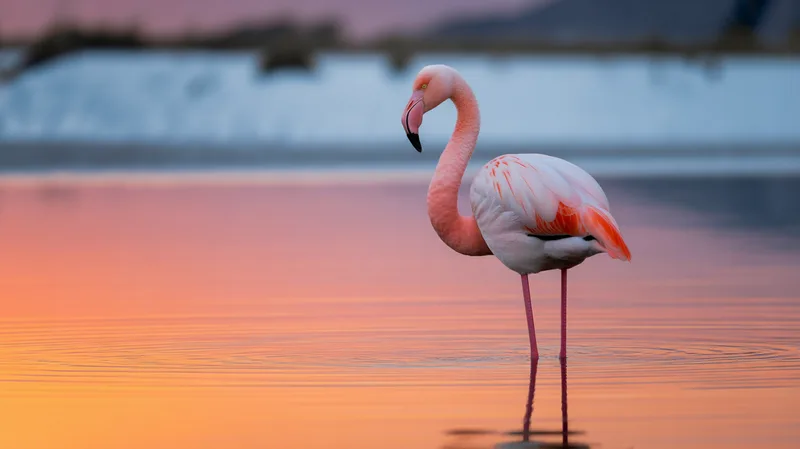
The flamingo is one of the most recognisable birds on the planet, its candy-pink plumage practically a symbol of the tropics. But here is the twist: flamingos are not born pink at all. Their famous colour is something they have to earn, quite literally, by eating it. The explanation is a beautiful little lesson in how diet shapes an animal's appearance.
Born Grey
Flamingo chicks hatch covered in dull grey or white down, with no hint of pink anywhere (Smithsonian National Zoo). The vivid colour develops gradually over the first couple of years of life, and it comes entirely from what the bird eats.
You Really Are What You Eat
The secret ingredients are carotenoids, the same family of natural pigments that make carrots orange and tomatoes red. Flamingos feed on algae and on small creatures like brine shrimp that have themselves eaten that algae, concentrating carotenoids up the food chain. Enzymes in the flamingo's liver then break those pigments down and convert them (chiefly into a compound called canthaxanthin), depositing the colour into the bird's growing feathers, skin, and beak (Britannica). Change the diet and you change the bird: poorly fed flamingos fade toward pale pink or white.
Pink as a Status Symbol
That dietary link makes colour meaningful. A deep, vivid pink signals that a flamingo is a skilled forager in good health, and studies suggest brighter birds can have an edge in competition and mate choice. Some flamingos even appear to apply extra pigment from a gland during preening to look their best in the breeding season. In the flamingo world, colour is a résumé.
Not Just Flamingos
This carotenoid trick shows up across the animal kingdom. The pink of wild salmon, the red of a male house finch, and the orange of many fish and crustaceans all trace back to pigments gathered from diet rather than made from scratch. It is a widespread reminder that an animal's colours often tell the story of what, and how well, it has been eating.
The Upside-Down Filter Feeder
The flamingo's colour is inseparable from the extraordinary way it eats. It lowers its head into the water and holds its beak upside down, then pumps water through using its thick, muscular tongue.
Fine comb-like plates inside the bill, called lamellae, strain out algae and tiny crustaceans such as brine shrimp — precisely the foods that carry the carotenoid pigments the bird needs.
The beak, in other words, is a purpose-built filter, and the famous colour is a direct by-product of the diet it captures. Change what the filter catches and you change the bird.
Feeding Chicks with Blood-Red "Milk"
Flamingo parenting hides one of the strangest facts in the bird world. Both mothers and fathers feed their chick a substance known as crop milk, produced in the upper digestive tract.
This milk is a startling deep red, loaded with the very carotenoids that colour the adults, along with fat and protein to fuel a fast-growing chick.
Producing it comes at a real cost: parents can visibly fade toward pale pink or even white as they pour their pigment into their offspring, regaining their colour only after the chick is weaned.
Life on the Harshest Lakes
Flamingos thrive where almost nothing else can. Many gather on caustic soda lakes such as Tanzania's Lake Natron, whose water is alkaline enough to burn the skin of most animals.
Tough skin on their legs and scaly feet let them wade in safely, and the near-total absence of predators makes these hostile lakes superb, if unlikely, nurseries.
There they gather in colonies that can number in the hundreds of thousands, performing extraordinary synchronised courtship displays in which thousands of birds march, turn, and flag their heads in perfect unison.
Why Do They Stand on One Leg?
The flamingo's one-legged pose is as iconic as its colour, and for years it was a genuine puzzle. The leading explanation is heat conservation: standing in cool water drains body heat, and tucking one leg up into the plumage halves that loss.
There is a mechanical reason too. Research has shown that a flamingo's leg can lock passively into position, letting the bird balance on one leg with essentially no muscular effort — it is actually less tiring than standing on two.
Remarkably, tests have found that flamingos are more stable on one leg than two, and they can hold the pose while fast asleep.
Six Species, One Icon
There are six flamingo species, and they are not interchangeable. The greater flamingo is the tallest and most widespread, ranging across Africa, southern Europe, and Asia.
The lesser flamingo is the most numerous of all, gathering in African colonies over a million strong, while the American flamingo of the Caribbean is the most intensely coloured — the deep orange-pink most people picture.
The James's and Andean flamingos are specialists of the high Andes, feeding on salt lakes at altitudes above 4,000 metres, where the water freezes at night and the sun is brutal by day. Few birds live in a harsher place.
That "Backwards Knee" Isn't a Knee
Look at a standing flamingo and its leg appears to bend the wrong way, as though the knee were installed backwards. It is one of the most widely misread pieces of anatomy in the animal kingdom.
That joint is not the knee at all — it is the ankle. What looks like the bird's lower leg is really an elongated foot, and the flamingo is effectively standing on tiptoe on enormously stretched toes.
The actual knee sits much higher up, tucked out of sight beneath the body feathers. Once you know that, the flamingo's leg stops looking bizarre and starts looking exactly like yours — just stretched to an extraordinary degree.
Key Takeaways
- Flamingo chicks hatch grey or white, not pink.
- Their colour comes from carotenoid pigments in algae and brine shrimp.
- The liver converts these pigments (e.g. canthaxanthin) and deposits them in feathers and skin.
- Brighter pink signals a healthier, better-fed bird and helps in mating.
Frequently Asked Questions
Are flamingos born pink? No, chicks are grey or white and develop colour over a year or two from their diet.
What makes them pink? Carotenoid pigments from algae and shrimp, processed by the liver into pink and red compounds.
Would a flamingo turn white without those foods? Largely yes, without dietary carotenoids the colour fades.
A flamingo's pink is a story you can see, written in everything it eats. Discover more colourful creatures in the Creature Atlas encyclopedia.