
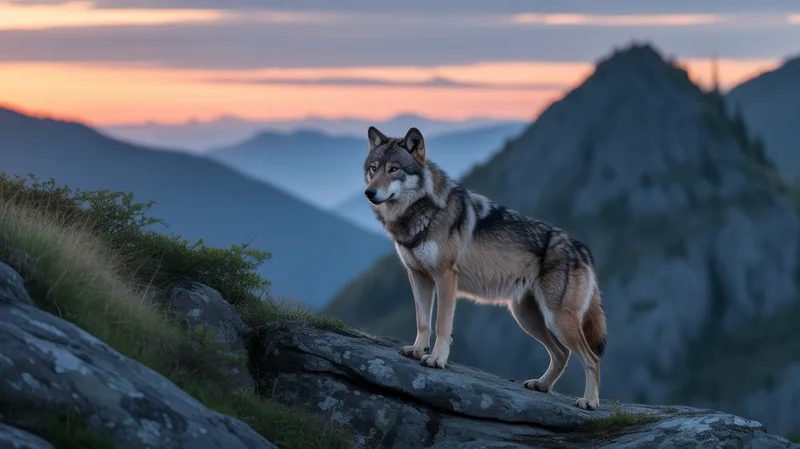
It's easy to cast predators as the villains of nature — the threat lurking at the edge of the herd. But decades of ecological research tell a startlingly different story. Take the top predators away, and entire ecosystems can unravel from the top down. The fiercest animals, it turns out, are often the ones holding everything together.
The Ripple Effect: Trophic Cascades
Ecologists call it a trophic cascade. When an apex predator vanishes, the herbivores it once controlled multiply unchecked, overgraze the vegetation, and trigger a chain reaction that ripples down through every level of the food web. The most famous example is the return of the grey wolf to Yellowstone: as wolves reappeared, overabundant elk moved differently, streamside trees recovered, beavers and birds returned, and even the behaviour of rivers changed. One predator reshaped an entire landscape.
Guardians of Land and Sea
The same principle plays out in the ocean. The shark sits atop many marine food webs, and where sharks decline, mid-level predators boom and the smaller species and habitats beneath them collapse. From big cats on the savanna to sea otters in kelp forests, apex predators act as keystone species — animals whose influence on their ecosystem is far greater than their numbers alone would suggest.
Fear Itself Is a Force of Nature
Predators do more than kill — they shape behaviour. Just the presence of a hunter changes where prey graze, drink, and rest, creating what scientists call a "landscape of fear." Nervous herbivores avoid risky open areas, giving plants a chance to recover there. In this way a predator sculpts the land without ever making a kill, simply by existing. It's one of nature's most powerful and invisible forces.
What Happens When They're Gone
- Herbivore populations explode and overgraze, stripping habitats bare.
- Smaller "mesopredators" surge, wiping out birds, reptiles, and insects.
- Plant diversity collapses, taking soil stability and water quality with it.
- The whole system becomes simpler, poorer, and far less resilient.
Rewilding: Putting the Pieces Back
Understanding cascades has sparked a global movement to rewild — reintroducing lost predators to heal broken ecosystems. It isn't always simple, and it must balance the needs of people who live alongside these animals. But again and again, restoring the top of the food chain has revived the whole.
Sea Otters and the Kelp Forest
One of the clearest cascades of all plays out in the cold Pacific. Sea otters eat sea urchins, and sea urchins eat kelp. Where otters were hunted out for their fur, urchin numbers exploded.
The urchins mowed down the kelp forests until nothing remained but bare rock — desolate stretches known as "urchin barrens" — and with the kelp went the fish, invertebrates, and birds that depended on it.
Where otters returned, the kelp came back, and an entire ecosystem returned with it. Kelp forests also lock away significant amounts of carbon, so a single furry predator turns out to matter for the climate too.
Living Alongside Predators
The hardest part of protecting predators is rarely the ecology — it is the people. Wolves, big cats, and bears kill livestock, and the communities that bear that cost understandably resent being told simply to tolerate it.
Practical solutions work remarkably well. Guard dogs, electric fencing, fladry (lines of flapping flags), and prompt compensation for losses all sharply reduce conflict.
Coexistence, not exclusion, is the realistic goal. Where local people share in the benefits of predator tourism and stewardship, predators are far more likely to survive.
A Word of Caution: Cascades Are Complicated
It would be dishonest to present trophic cascades as a tidy, guaranteed formula. The famous Yellowstone story has been challenged by ecologists who argue its effects were overstated, or driven partly by drought, hunting pressure, and the return of bears alongside the wolves.
Real ecosystems have many moving parts, and adding or removing a predator does not always produce a neat chain reaction.
The core insight still stands, though: top predators exert an outsized influence, and their loss tends to simplify and destabilise the systems they once shaped. The details are messier than the headline, but the direction is clear.
Mesopredator Release
When apex predators disappear, the vacancy is filled from below. Mid-sized predators — coyotes, raccoons, foxes, feral cats — surge in numbers, a phenomenon ecologists call mesopredator release.
Because these smaller hunters prey heavily on birds, reptiles, and small mammals, their boom can be devastating. Songbird and small-mammal populations often collapse far faster after a top predator is lost than the herbivore explosion alone would explain.
Australia offers a natural experiment: on one side of the long dingo fence, where dingoes are killed, foxes and cats are more abundant and small native mammals are scarcer. On the other side, with dingoes present, native species fare better.
The Overlooked Half: Scavengers
Predators do not just kill — they provide. Every carcass a hunter leaves behind feeds a whole second community of vultures, eagles, foxes, beetles, and countless microbes.
Remove that reliable supply, or remove the scavengers themselves, and the consequences ripple outward. When vulture numbers crashed across South Asia, carcasses lay rotting, feral dog populations exploded, and rabies deaths rose sharply.
A healthy predator population is therefore also a healthy scavenger population, and a functioning system for recycling death back into life. It is one more reason the top of the food chain matters far beyond the animals at the top.
Frequently Asked Questions
What is a trophic cascade? A chain reaction triggered when a top predator is added to or removed from an ecosystem, rippling down through every level.
What is a keystone species? A species whose impact on its ecosystem is disproportionately large relative to its abundance — often an apex predator.
Are predators dangerous to humans? Genuine attacks are extremely rare; the ecological cost of losing predators far outweighs the risk they pose.
Far from being villains, apex predators are the architects of balance. Explore the hunters that keep nature whole in the Creature Atlas encyclopedia.