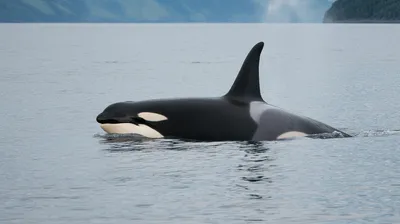
Orca (Killer Whale)
Orcinus orca
Orcas, or killer whales (Orcinus orca), are the largest members of the dolphin family, Delphinidae, with adult males reaching lengths of up to 9 meters and weighing over 5,400 kilograms. These apex predators are distributed across all of the world's oceans, from the frigid Arctic and Antarctic regions to tropical seas. Orcas exhibit remarkable adaptability, with distinct populations, known as ecotypes, that have evolved unique hunting strategies and prey preferences. For instance, the North Pacific's 'transient' orcas primarily hunt marine mammals, while 'resident' groups focus on fish, particularly salmon. Their striking black and white coloration serves as a form of disruptive camouflage, breaking up their outline in the water and aiding in stealth during hunting. Socially, orcas live in matrilineal pods, where offspring remain with their mothers for life, enhancing cooperative hunting and caregiving. Their complex vocalizations, which vary significantly between pods, suggest a sophisticated level of communication and cultural transmission.
Mammal Ocean
Learn more