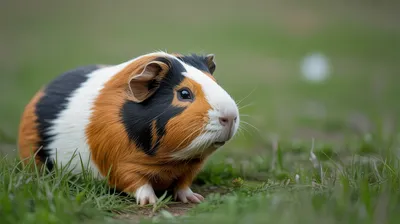
Guinea Pig
Cavia porcellus
Cavia porcellus is a fully domesticated animal with no wild population anywhere - it was bred from wild cavies in the Andes at least 3,000 years ago, primarily as food, and cuy remains an everyday meat in Peru, Ecuador and Bolivia, where an estimated tens of millions are eaten each year and where a colonial-era painting of the Last Supper in Cusco Cathedral shows a roasted guinea pig on the table. It is neither a pig nor from Guinea; the name is likely a corruption of Guiana or a reference to the ships that carried them, and "pig" to the squealing and the shape. Guinea pigs share a rare handicap with humans, other primates and a few bats: a broken GULO gene, meaning they cannot synthesise vitamin C and must get it from their diet or develop scurvy - which is precisely why they became a laboratory staple, and why the phrase "guinea pig" entered English at all. They are highly social, hyper-vocal - the wheek, the purr, the tooth-chatter each carry distinct meaning - and precocial to a striking degree: newborns arrive furred, eyes open, teeth in, and are running and nibbling solids within hours. Their teeth grow continuously and must be worn down on fibrous hay.
Mammal Grasslands (ancestral), domesticated environments
Learn more