
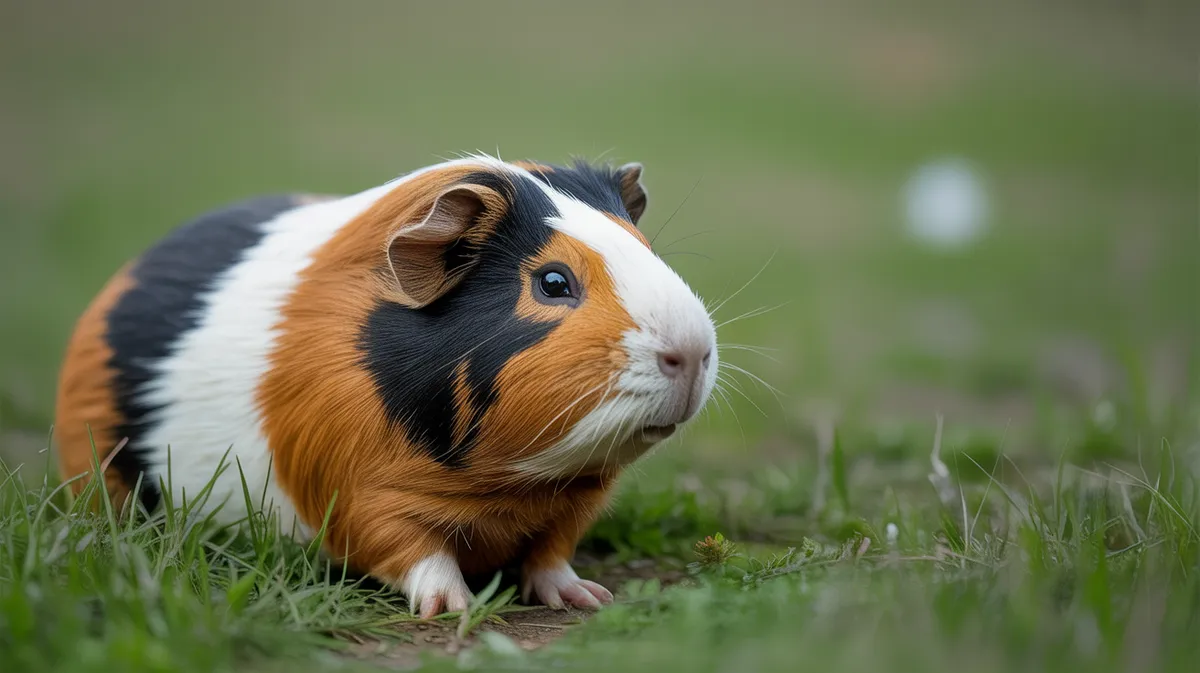
About the Guinea Pig
Cavia porcellus is a fully domesticated animal with no wild population anywhere - it was bred from wild cavies in the Andes at least 3,000 years ago, primarily as food, and cuy remains an everyday meat in Peru, Ecuador and Bolivia, where an estimated tens of millions are eaten each year and where a colonial-era painting of the Last Supper in Cusco Cathedral shows a roasted guinea pig on the table. It is neither a pig nor from Guinea; the name is likely a corruption of Guiana or a reference to the ships that carried them, and "pig" to the squealing and the shape. Guinea pigs share a rare handicap with humans, other primates and a few bats: a broken GULO gene, meaning they cannot synthesise vitamin C and must get it from their diet or develop scurvy - which is precisely why they became a laboratory staple, and why the phrase "guinea pig" entered English at all. They are highly social, hyper-vocal - the wheek, the purr, the tooth-chatter each carry distinct meaning - and precocial to a striking degree: newborns arrive furred, eyes open, teeth in, and are running and nibbling solids within hours. Their teeth grow continuously and must be worn down on fibrous hay.
Fascinating facts
Social Animals
Guinea pigs are highly social and thrive in groups, often developing close bonds with other guinea pigs and humans.
Herbivorous Diet
Their natural diet consists primarily of grasses, hay, and leafy greens, and they require a constant supply of vitamin C to stay healthy.
Ever-Growing Teeth
Guinea pigs' teeth never stop growing, so they need to chew on fibrous materials to keep them properly worn down.
Detailed description
The guinea pig (Cavia porcellus) is a robust, tailless rodent measuring 20–25 cm (8–10 inches) in length and weighing between 700–1200 grams (1.5–2.6 lbs) as adults. Its body is compact and cylindrical, with short limbs and a large, blunt head featuring prominent, continuously growing incisors adapted for gnawing fibrous plant material. The ears are small and rounded, and the eyes are large, positioned laterally for a wide field of view. Guinea pigs possess a dense, soft coat that varies greatly in color and texture due to selective breeding, ranging from smooth, short hair to long, flowing locks and rosetted patterns. They are highly social animals, naturally forming stable groups (herds) in the wild, which influences their strong need for companionship in captivity. Their vocal repertoire is notably complex, including a variety of whistles, purrs, and squeals used for communication. Guinea pigs are crepuscular, being most active during dawn and dusk, and exhibit foraging and exploratory behaviors during these periods. Their digestive system is specialized for a high-fiber, herbivorous diet, featuring hindgut fermentation and coprophagy (re-ingestion of fecal pellets) to maximize nutrient absorption. Unlike many rodents, guinea pigs lack a tail and have a relatively long lifespan for small mammals, typically living 4–7 years, with some individuals reaching 8 years or more under optimal care.
Did you know?
Despite their name, guinea pigs are neither pigs nor from Guinea—they are rodents originally from the Andes mountains of South America.
Research & sources
Wikipedia summary
The guinea pig or domestic guinea pig, also known as the cavy or domestic cavy, is a species of rodent belonging to the genus Cavia, family Caviidae. Breeders tend to use the name "cavy" for the animal, but "guinea pig" is more commonly used in scientific and laboratory contexts. Despite their name, guinea pigs are not native to Guinea, nor are they closely related to pigs. Instead, they originated in the Andes region of South America, where wild guinea pigs can still be found today. Studies based on biochemistry and DNA hybridization suggest they are domesticated animals that do not exist naturally in the wild, but are descendants of a closely related cavy species such as C. tschudii. Originally, they were domesticated as livestock in the Andean region and are still consumed in some parts of the world.
Behaviour & social structure
Guinea pigs are gentle, non-aggressive rodents that display a range of social behaviors, including grooming, huddling, and vocal communication. In groups, they establish loose dominance hierarchies, with males (boars) sometimes displaying mild aggression to assert rank, especially during breeding. They are obligate herbivores, feeding primarily on grasses, hay, and leafy greens; their feeding behavior involves frequent, small meals throughout the day and night. Guinea pigs do not dig burrows but may use natural shelters or constructed hides for protection. They exhibit thigmotaxis, preferring to stay close to walls or objects, and are highly sensitive to sudden movements or loud noises, often responding with a characteristic 'freeze' or rapid dash to cover (known as 'popcorning' in juveniles). Daily routines include periods of rest, grooming, social interaction, and foraging. They communicate using a rich array of vocalizations: 'wheeking' for food anticipation, 'purring' when content, 'chutting' during exploration, and 'teeth chattering' as a warning sign.
Reproduction & life cycle
Guinea pigs are polyestrous, capable of breeding year-round under suitable conditions. Females (sows) reach sexual maturity at 4–6 weeks, while males mature at 8–10 weeks. Courtship involves vocalizations and circling, with copulation occurring after the female enters estrus, which lasts 8–11 hours every 15–17 days. Gestation is unusually long for rodents, averaging 59–72 days, resulting in precocial young that are fully furred, open-eyed, and mobile at birth. Litter sizes range from 1–6 pups, typically 2–4. Sows provide minimal nest building, and pups begin eating solid food within hours, though they nurse for 2–3 weeks. Parental care is limited; pups are relatively independent, and the mother’s main role is nursing. Breeding is best managed carefully, as sows older than 7–8 months risk life-threatening dystocia due to pelvic fusion if bred for the first time after this age.
Adaptations & survival
Guinea pigs have evolved several adaptations for survival in open grassland habitats. Their laterally placed eyes provide a wide field of vision to detect predators. The absence of a tail reduces injury risk in dense vegetation. Their digestive tract is specialized for processing fibrous plant material, with a large cecum for microbial fermentation and coprophagy to recover B vitamins and other nutrients. Social living enhances predator detection and provides thermoregulation benefits. Their vocal communication system allows rapid transmission of alarm signals and social cues. Guinea pigs are also highly sensitive to vitamin C deficiency due to a genetic mutation that disables endogenous synthesis, necessitating dietary supplementation—a trait shared with humans and some other primates.
Cultural significance
Guinea pigs have been integral to Andean cultures for over 3,000 years, serving as a traditional food source (cuy), in folk medicine, and in ritual sacrifice. They appear in pre-Columbian art and iconography, symbolizing fertility and prosperity. In Western societies, guinea pigs became popular pets in the 16th century and have since been bred for show and companionship. The term 'guinea pig' has entered the English language as a metaphor for a test subject, reflecting their extensive use in biomedical research, notably in studies of nutrition, immunology, and infectious disease. Their gentle nature and ease of handling have made them valuable in educational and therapeutic contexts.
Recent research
Recent genetic studies have clarified the domestication process, confirming Cavia tschudii as the primary wild ancestor. Research on guinea pig vocalizations has revealed sophisticated communication abilities and individual recognition. Their inability to synthesize vitamin C has made them a key model for studying scurvy and nutritional deficiencies. Ongoing studies focus on their microbiome, social cognition, and the effects of environmental enrichment on welfare. Advances in laboratory animal welfare have led to improved housing standards and recognition of their complex behavioral needs. Genomic sequencing projects are underway to better understand their physiology and disease susceptibility.
Sources
Videos
Habitat
Grasslands (ancestral), domesticated environments


Conservation
The Guinea Pig is currently classified as Domesticated (Not Evaluated); wild relatives Least Concern on the IUCN Red List.
Threats & challenges
As a fully domesticated species, Cavia porcellus does not face natural predation or habitat loss, but welfare concerns arise from improper husbandry, such as inadequate diet (especially vitamin C deficiency leading to scurvy), solitary housing, and lack of environmental enrichment. In some regions, feral populations have been reported but generally do not persist. Their wild relatives, such as Cavia tschudii, are classified as Least Concern by the IUCN, though local populations may be affected by habitat alteration. In the Andes, guinea pigs are still raised for food, and selective breeding for meat production continues. In laboratory settings, ethical considerations and replacement with alternative models are ongoing challenges.
Taxonomy
Scientific name
Cavia porcellus
- Kingdom
- Animalia
- Phylum
- Chordata
- Class
- Mammalia
- Order
- Rodentia
- Family
- Caviidae
- Genus
- Cavia
- Species
- porcellus
Where to see a guinea pig
11 zoos and aquariums in 4 countries are recorded as keeping this species.
 Dudley Zoo & Castle🇬🇧 Dudley, United Kingdom
 Honolulu Zoo🇺🇸 Honolulu, United States
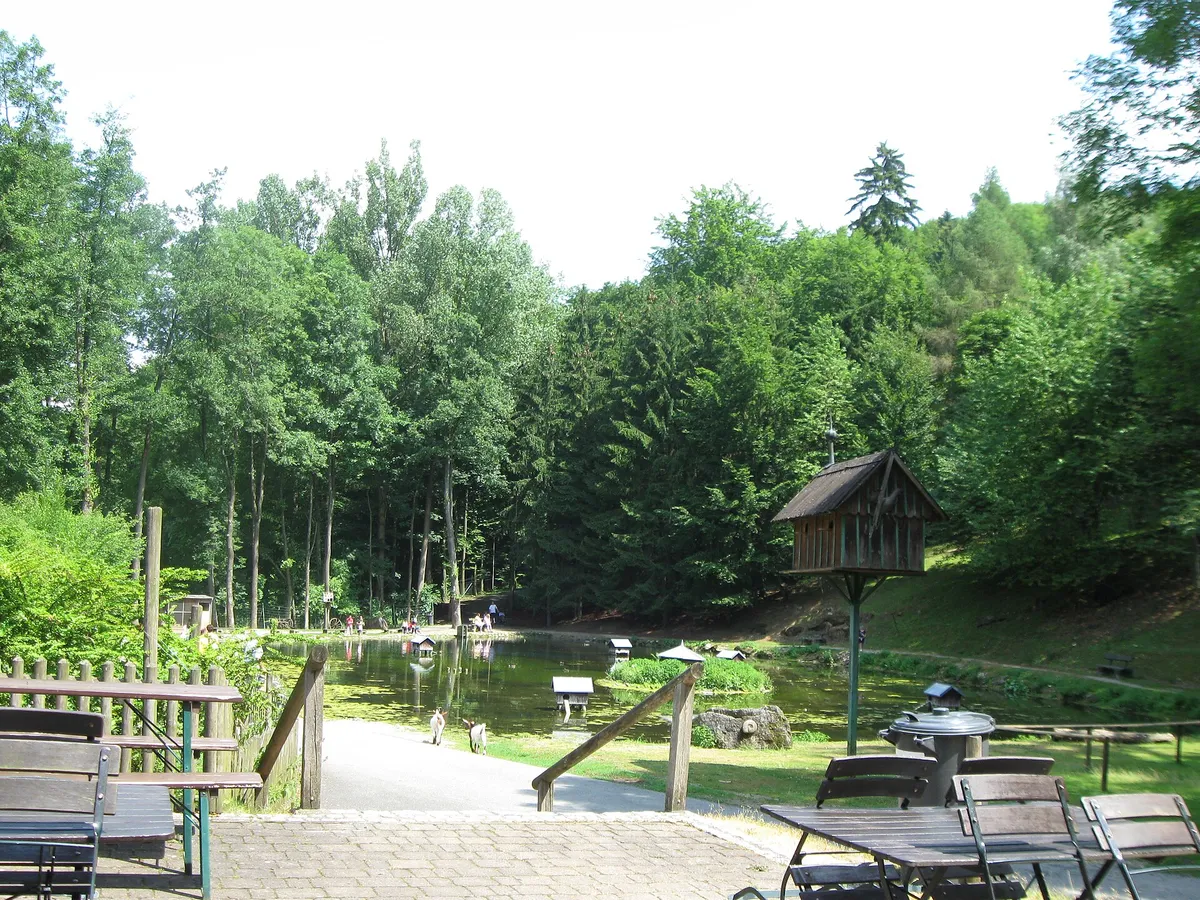 Wildpark Hundshaupten🇩🇪 Egloffstein, Germany
 Karlsruhe Zoo🇩🇪 Germany
- 🦁Cheyenne Mountain Zoo🇺🇸 United States
Community notes
Share your observations about the Guinea Pig.
No community notes yet. Be the first!
Discover more wildlife
More fascinating animals from the encyclopedia.