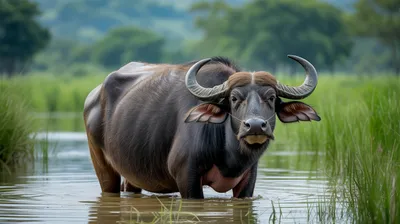
Water Buffalo
Bubalus bubalis
The domestic water buffalo (Bubalus bubalis) numbers around 200 million animals and quietly underpins agriculture across Asia. It comes in two distinct types that are usually lumped together but are genetically well separated: the river buffalo of India, Pakistan and the Mediterranean, kept mainly for milk, and the swamp buffalo of Southeast Asia and China, kept mainly for draught. They even differ in chromosome number, 50 in the river type and 48 in the swamp type, and hybrids carry 49 and have reduced fertility, so the two are close to being separate species. Buffalo milk supplies a substantial share of the world's milk, most of it in South Asia, and it is far richer than cow's milk at 7 to 8 per cent fat, which is exactly why authentic mozzarella di bufala is made from it. The animal has very few functional sweat glands, roughly a tenth the density found in cattle, and so it cannot cool itself by sweating; wallowing is not a luxury but a physiological necessity, and a coat of drying mud also shields it from biting flies and from sunburn on its thinly haired black skin. Wide, splayed hooves and unusually flexible pastern joints let it work in deep mud where a bullock would founder. Its wild ancestor, the endangered wild water buffalo Bubalus arnee, now numbers only a few thousand animals.
Mammal Wetlands, swamps, marshes, and river valleys
Learn more