
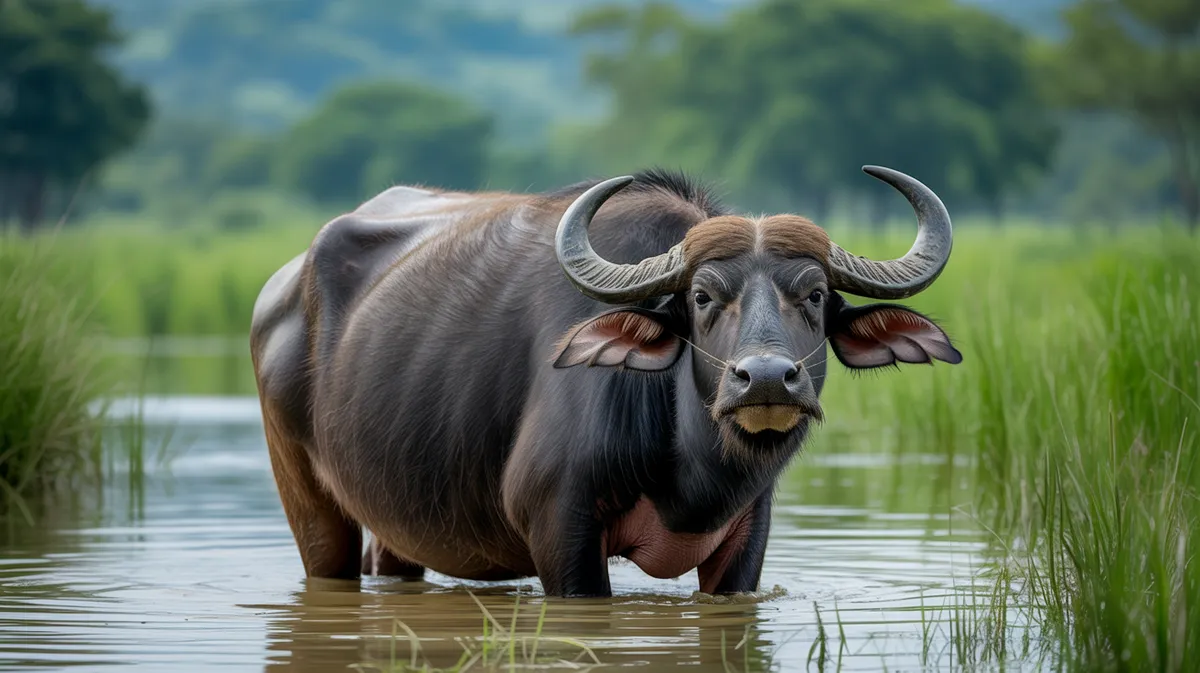
Water Buffalo
Bubalus bubalis
About the Water Buffalo
The domestic water buffalo (Bubalus bubalis) numbers around 200 million animals and quietly underpins agriculture across Asia. It comes in two distinct types that are usually lumped together but are genetically well separated: the river buffalo of India, Pakistan and the Mediterranean, kept mainly for milk, and the swamp buffalo of Southeast Asia and China, kept mainly for draught. They even differ in chromosome number, 50 in the river type and 48 in the swamp type, and hybrids carry 49 and have reduced fertility, so the two are close to being separate species. Buffalo milk supplies a substantial share of the world's milk, most of it in South Asia, and it is far richer than cow's milk at 7 to 8 per cent fat, which is exactly why authentic mozzarella di bufala is made from it. The animal has very few functional sweat glands, roughly a tenth the density found in cattle, and so it cannot cool itself by sweating; wallowing is not a luxury but a physiological necessity, and a coat of drying mud also shields it from biting flies and from sunburn on its thinly haired black skin. Wide, splayed hooves and unusually flexible pastern joints let it work in deep mud where a bullock would founder. Its wild ancestor, the endangered wild water buffalo Bubalus arnee, now numbers only a few thousand animals.
Fascinating facts
Mozzarella Maker
Traditional mozzarella cheese is made from the rich, creamy milk of water buffalo, prized for its high fat content.
Agricultural Ally
Water buffalo have been used as draft animals for plowing rice paddies and fields for over 5,000 years in Asia.
Natural Swimmers
They are adept swimmers and often wallow in water or mud to regulate their body temperature and avoid biting insects.
Detailed description
The water buffalo (Bubalus bubalis) is a large, robust bovid distinguished by its massive, barrel-shaped body, relatively short legs, and broad, splayed hooves that aid in traversing muddy terrain. Adult males typically weigh between 700 and 1,200 kg, while females are smaller, averaging 400 to 800 kg. Their skin is thick and sparsely haired, ranging in color from dark gray to nearly black, with some individuals exhibiting lighter markings. The horns are prominent, crescent-shaped, and can span up to 2 meters in length in river buffalo, while swamp buffalo have shorter, more laterally extended horns. Water buffalo possess a large head with wide-set eyes and a broad muzzle, well-adapted for grazing aquatic vegetation. Socially, they are gregarious, forming herds that can number from a few individuals to several dozen, often led by a dominant female. Their behavior is strongly influenced by water availability, as they spend significant time wallowing in mud or water to regulate body temperature and deter parasites. Water buffalo are crepuscular, being most active during the cooler hours of dawn and dusk. Their digestive system is highly specialized for processing coarse, fibrous plant material, with a four-chambered stomach facilitating fermentation. Reproductively, they exhibit seasonal breeding in some regions, with a gestation period of approximately 10 to 11 months, and calves are typically born singly. Their longevity can exceed 25 years under optimal conditions.
Did you know?
The wild ancestor of the domestic water buffalo, the wild water buffalo (Bubalus arnee), is now classified as Endangered, with fewer than 4,000 individuals remaining in the wild.
Research & sources
Wikipedia summary
The water buffalo, also called domestic water buffalo, Asian water buffalo and Asiatic water buffalo, is a large bovid originating in the Indian subcontinent and Southeast Asia. Today, it is also kept in Italy, the Balkans, Australia, North America, South America and some African countries. Two extant types of water buffalo are recognized, based on morphological and behavioural criteria: the river buffalo of the Indian subcontinent and further west to the Balkans, Egypt and Italy; and the swamp buffalo from Assam in the west through Southeast Asia to the Yangtze Valley of China in the east.
Behaviour & social structure
Water buffalo are primarily grazers, feeding on a wide variety of grasses, aquatic plants, and occasionally agricultural crops. They exhibit a strong preference for wet, marshy environments, often submerging themselves in water or mud for hours to thermoregulate and avoid biting insects. Herds are usually matriarchal, with females and their offspring forming stable groups, while males may be solitary or form bachelor groups, especially outside the breeding season. Social interactions involve vocalizations, body postures, and mutual grooming. Dominance hierarchies are established through displays and occasional sparring, particularly among males during the rut. Daily routines include grazing during early morning and late afternoon, resting and wallowing during the hottest parts of the day, and returning to shelter at night. Water buffalo are non-territorial and generally exhibit docile behavior, though they can become aggressive when threatened or during mating competitions.
Reproduction & life cycle
Water buffalo reach sexual maturity at 18 to 36 months, with river buffalo maturing slightly later than swamp types. Breeding can occur year-round in tropical climates, but in temperate regions, it often peaks during the rainy season. Courtship involves vocalizations, scent marking, and physical displays by males. After successful mating, the gestation period lasts about 310 to 320 days (10–11 months). Females typically give birth to a single calf, though twins are rare. Calves are precocial, standing and suckling within hours of birth, and are nursed for 6 to 9 months. Maternal care is pronounced, with mothers fiercely protective of their young. Interbirth intervals are generally 15 to 18 months, depending on nutritional status and management in domestic herds.
Adaptations & survival
Water buffalo exhibit several key adaptations for their semi-aquatic lifestyle. Their wide, splayed hooves prevent sinking in soft, marshy ground, while their thick skin and sparse hair reduce heat absorption and facilitate wallowing. Their large, flexible nostrils can close underwater, allowing them to graze submerged vegetation. The digestive system is highly efficient at fermenting fibrous, low-quality forage, enabling them to thrive on coarse grasses and aquatic plants. Behaviorally, their strong affinity for water helps regulate body temperature and minimizes parasite loads. The species also displays remarkable endurance and strength, making them ideal draft animals in flooded rice paddies. Swamp and river buffalo have diverged morphologically and behaviorally, with swamp buffalo better adapted to heavy, waterlogged soils and river buffalo more suited to drier, open environments.
Cultural significance
Water buffalo have immense cultural and economic importance across Asia and beyond. They are revered in Hinduism and Southeast Asian folklore, symbolizing strength, fertility, and prosperity. In India, the buffalo is associated with the god Yama and features in religious festivals such as Dasara. Water buffalo milk is the primary source for traditional dairy products like mozzarella cheese in Italy and paneer in South Asia. Their role as draft animals remains vital in rice cultivation, and they are also valued for meat, hides, and dung (used as fuel and fertilizer). In some cultures, buffalo races and ceremonial sacrifices are integral to local traditions. The animal's image appears in art, literature, and national symbols, reflecting its deep-rooted significance.
Recent research
Recent genomic studies have clarified the domestication history of water buffalo, revealing two distinct domestication events corresponding to river and swamp types. Advances in reproductive biotechnology, such as artificial insemination and embryo transfer, are being applied to improve genetic diversity and productivity. Studies on water buffalo milk have highlighted its high fat and protein content, as well as unique bioactive compounds with potential health benefits. Research into disease resistance and adaptation to climate change is ongoing, particularly as water buffalo are increasingly introduced to non-native regions for sustainable agriculture. Conservation genetics is a growing field, aiming to preserve the genetic integrity of wild and traditional domestic populations.
Sources
The Water Buffalo: New Prospects for an Underutilized Animal
National Research Council (1981)
scientificGenomic diversity and the origin of domesticated water buffalo (Bubalus bubalis)
Zhang, Y. et al. (2020)
scientificVideos
Habitat
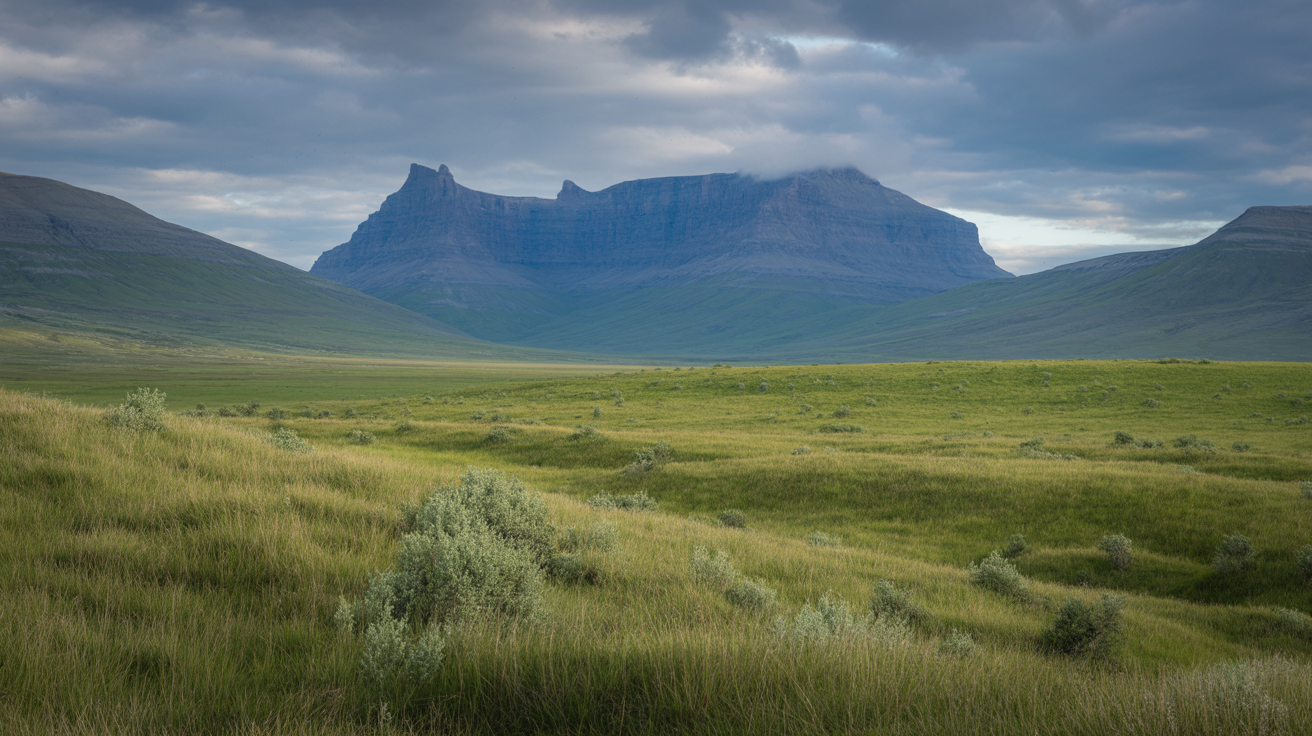
Wetlands, swamps, marshes, and river valleys

Conservation
The Water Buffalo is currently classified as Endangered (wild populations); Domesticated are not threatened on the IUCN Red List.
Threats & challenges
While domesticated water buffalo are widespread and not threatened, their wild ancestors (Bubalus arnee) are classified as Endangered due to habitat loss, hybridization with domestic forms, hunting, and competition with livestock. Domesticated populations face challenges such as disease (notably foot-and-mouth disease, hemorrhagic septicemia, and parasitic infestations), loss of traditional grazing lands, and genetic erosion from uncontrolled crossbreeding. In some regions, mechanization of agriculture has reduced their economic importance, leading to declining populations. Climate change and wetland degradation also pose long-term threats to their preferred habitats. Conservation efforts for wild populations focus on habitat protection, genetic management, and prevention of hybridization.
Taxonomy
Scientific name
Bubalus bubalis
- Kingdom
- Animalia
- Phylum
- Chordata
- Class
- Mammalia
- Order
- Artiodactyla
- Family
- Bovidae
- Genus
- Bubalus
- Species
- bubalis
Community notes
Share your observations about the Water Buffalo.
No community notes yet. Be the first!
Discover more wildlife
More fascinating animals from the encyclopedia.