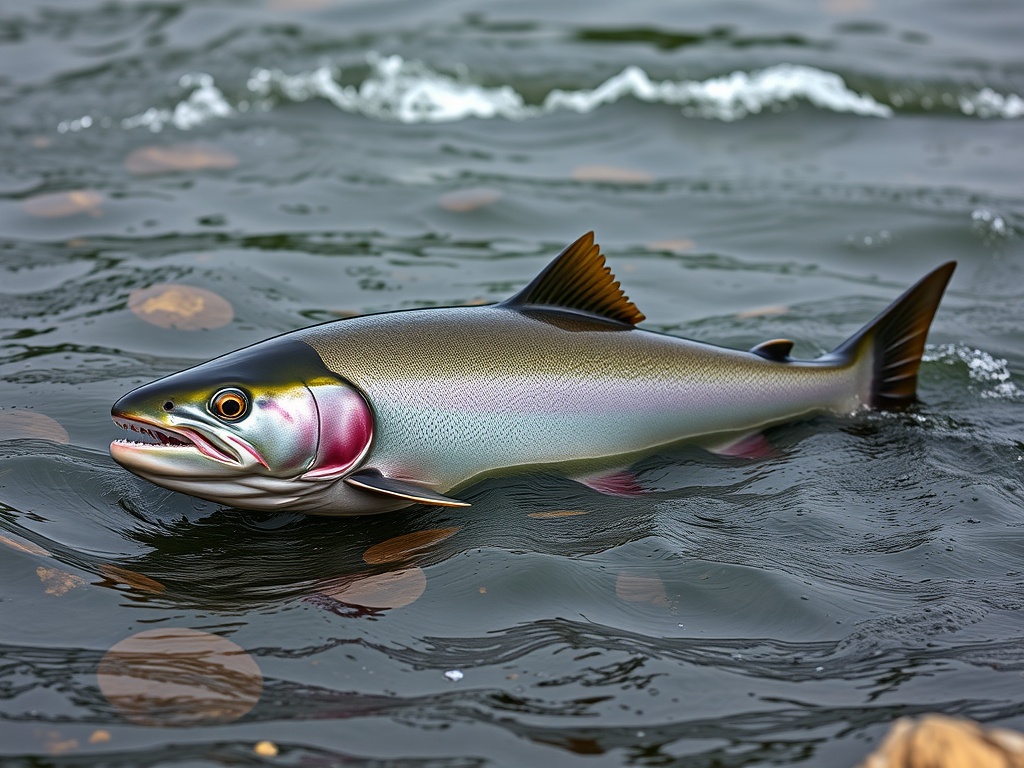
Atlantic salmon
Salmo salar
Atlantic salmon breaks the rule everyone learns from Pacific salmon: it does not have to die after spawning. A spent fish, called a kelt, can drop back to sea, feed, recondition and return to spawn again, and repeat spawners — usually large females — are disproportionately valuable to a population. The migration involves a full physiological rebuild. A parr living in fresh water turns into a smolt: it silvers, its gill cells switch from retaining salt to excreting it, its kidneys change function, and its behaviour flips from territorial to schooling, all within weeks. It finds its way home with what appears to be a magnetic map for the ocean crossing, then switches to olfaction, homing on the specific chemical signature of the stream it was imprinted on as a juvenile. Small male parr that never went to sea at all can sneak into a redd and fertilise eggs while a large sea-run male is fighting off rivals — and in some rivers those tiny males fertilise a serious share of the eggs.
Fish Freshwater rivers and coastal North Atlantic Ocean
Learn more