
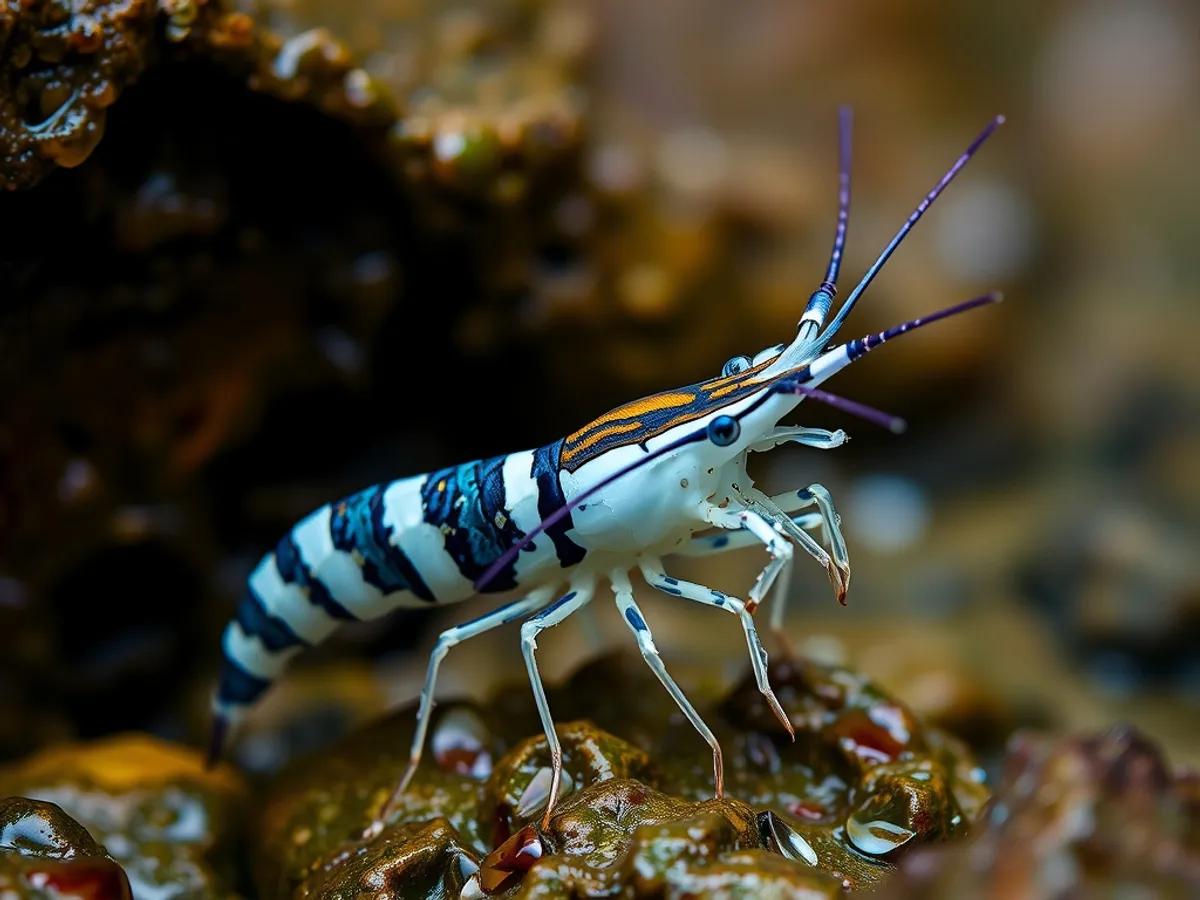
About the Blue Tiger Shrimp
The Blue Tiger Shrimp is a striking freshwater invertebrate known for its vivid blue coloration and distinctive black tiger-like stripes. Native to streams and rivers in Southeast Asia, these shrimp are highly sought after in the aquarium hobby for their unique appearance and active behavior. They are relatively small and thrive in clean, well-oxygenated water with stable parameters. Blue Tiger Shrimp are peaceful and social, often seen grazing on biofilm and algae, and can coexist well with other non-aggressive tank mates. Due to their specific care requirements and rarity, they are best suited for experienced aquarists.
Fascinating facts
Selective Breeding
Blue Tiger Shrimp are not found in the wild in their iconic blue form; their coloration is a result of careful selective breeding from wild Caridina cantonensis.
Sensitive to Water
These shrimp are sensitive to changes in water quality and require stable, clean, and soft water to thrive.
Bright Orange Eyes
Blue Tiger Shrimp are known for their intense orange eyes, which stand out vividly against their blue bodies.
Detailed description
The Blue Tiger Shrimp (Caridina cantonensis var. 'Blue Tiger') is a selectively bred freshwater shrimp renowned for its vibrant sapphire to deep blue exoskeleton, accentuated by bold, vertical black stripes reminiscent of a tiger's pattern. Adult individuals typically reach a size of 2.5–3.0 cm (1–1.2 inches) in length, with females generally larger and more robust than males. Their semi-transparent appendages and orange to golden eye coloration further distinguish them from other Caridina varieties. The species possesses five pairs of pereiopods (walking legs) and specialized chelae (claws) adapted for grazing on biofilm and detritus. Blue Tiger Shrimp are benthic, spending most of their time foraging along substrate surfaces and aquatic vegetation. They exhibit a gregarious nature, often forming loose aggregations, which enhances their foraging efficiency and provides some protection from predators. Their exoskeleton is periodically shed through molting, a process essential for growth and reproduction. Blue Tiger Shrimp are highly sensitive to water quality, requiring stable parameters—pH 6.2–6.8, temperature 20–24°C (68–75°F), and low levels of nitrates and heavy metals. In the wild, their ancestors inhabit cool, oxygen-rich mountain streams with soft, mineral-poor water. Their striking coloration is a result of selective breeding in captivity, and does not occur naturally in wild populations. Lifespan averages 1.5–2 years under optimal conditions, with stress and poor water quality being primary factors in mortality.
Did you know?
Despite their exotic appearance, Blue Tiger Shrimp are a selectively bred variety of the wild Caridina cantonensis and do not occur naturally in their current form.
Research & sources
Behaviour & social structure
Blue Tiger Shrimp are primarily crepuscular, exhibiting peak activity during dawn and dusk when they emerge to forage. Their feeding behavior is characterized by constant grazing on biofilm, algae, decaying plant matter, and micro-organisms, using their chelae to scrape surfaces. They are opportunistic omnivores and will also scavenge on uneaten fish food or organic detritus. Socially, they are peaceful and non-territorial, often seen in small groups but without complex hierarchical structures. During molting, individuals may hide to avoid predation, as their new exoskeleton is soft and vulnerable. They communicate through tactile and chemical cues, especially during courtship and when sensing danger. Blue Tiger Shrimp exhibit a startle response, rapidly darting backward via tail flips if threatened. They are known to clean each other and their environment, contributing to the overall health of the aquatic ecosystem.
Reproduction & life cycle
Reproduction in Blue Tiger Shrimp is sexual, with external fertilization occurring shortly after the female molts and releases pheromones to attract males. Mating typically takes place at night. Females carry fertilized eggs under their abdomen (pleopods) for 28–35 days, depending on temperature. Clutch sizes range from 20–40 eggs, which are greenish to dark in color. There is no larval stage; upon hatching, juveniles are miniature versions of adults and are fully aquatic, requiring no migration to brackish water. Parental care is limited to the female aerating and cleaning the eggs until hatching. Breeding is continuous in stable environments, with no defined breeding season in captivity. Selective breeding for the blue tiger phenotype requires careful management to maintain color intensity and genetic health.
Adaptations & survival
Blue Tiger Shrimp possess several adaptations for survival in freshwater habitats. Their gill structures are highly efficient at extracting oxygen from well-oxygenated streams. The blue pigmentation, while striking, is a result of artificial selection; in the wild, cryptic coloration aids in camouflage among rocks and leaf litter. Their exoskeleton provides physical protection and is periodically renewed through molting, which also allows for growth and regeneration of lost limbs. Behavioral adaptations include nocturnal foraging to avoid diurnal predators and rapid escape responses. Their chelae are adapted for scraping biofilm and detritus, enabling them to exploit a wide range of food sources. The ability to detect chemical cues in water helps them locate food, mates, and avoid threats.
Cultural significance
While Blue Tiger Shrimp have no significant role in traditional mythology or folklore, they have become symbols of rarity and prestige in the global aquarium hobby. Their unique coloration and patterning have made them highly prized among aquarists, often commanding high prices and inspiring dedicated breeding programs. In some East Asian cultures, ornamental shrimp are associated with good fortune and prosperity, leading to their popularity in aquascaping and ornamental fish exhibitions.
Recent research
Recent research on Caridina cantonensis and its varieties has focused on genetics, color morph inheritance, and optimal husbandry practices. Studies have identified the genetic basis for blue pigmentation and stripe formation, aiding breeders in producing stable lines. Ongoing research is examining the effects of water parameters on health and reproductive success, as well as the impact of selective breeding on immune function and disease resistance. Environmental DNA (eDNA) techniques are being developed to monitor wild Caridina populations and assess biodiversity in their native habitats. There is also interest in the microbiome of ornamental shrimp and its role in digestion and disease prevention.
Videos
Habitat
Freshwater streams and rivers

Conservation
The Blue Tiger Shrimp is currently classified as Not Evaluated on the IUCN Red List.
Threats & challenges
In the wild, Caridina cantonensis faces threats from habitat degradation, pollution, and water extraction, particularly in Southeast Asia's rapidly developing regions. For the Blue Tiger variety, which is a captive-bred morph, primary challenges include inbreeding depression, loss of genetic diversity, and susceptibility to disease due to limited gene pools. Over-collection for the aquarium trade can impact wild Caridina populations if not managed sustainably. Changes in water chemistry, introduction of invasive species, and climate change also pose risks. There is currently no IUCN assessment for this variety, but related wild populations are considered vulnerable in some locales due to habitat loss.
Taxonomy
Scientific name
Caridina cantonensis
- Kingdom
- Animalia
- Phylum
- Arthropoda
- Class
- Malacostraca
- Order
- Decapoda
- Family
- Atyidae
- Genus
- Caridina
- Species
- cantonensis
Community notes
Share your observations about the Blue Tiger Shrimp.
No community notes yet. Be the first!
Discover more wildlife
More fascinating animals from the encyclopedia.