

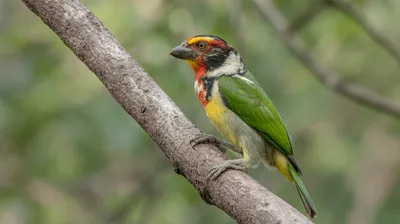
African Barbet
Lybiidae
Barbets are plump, colorful birds found throughout tropical regions of Africa and Asia, known for their stout bills and bristle-fringed faces. Members of the family Lybiidae, African barbets are particularly noted for their bright plumage, which often includes striking reds, yellows, and greens. They primarily inhabit forests and woodland environments, where they excavate nest holes in trees. Barbets are vocal birds, producing distinctive, repetitive calls that can be heard over long distances. Their diet consists mainly of fruit, but they will also eat insects and other small animals.
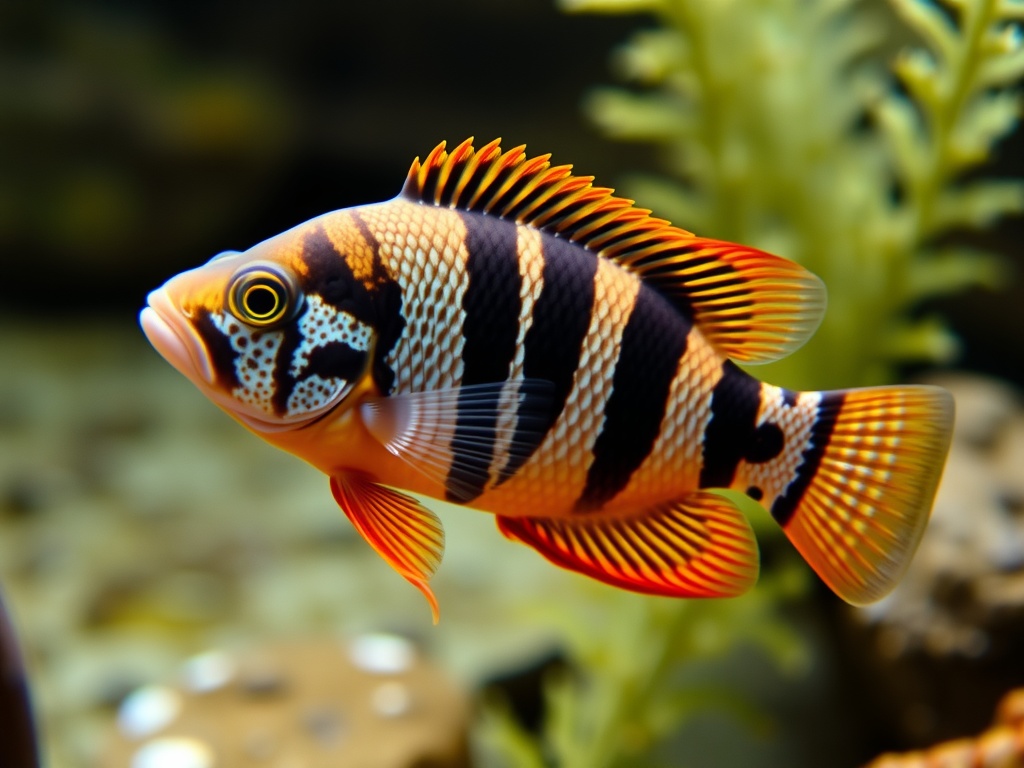
African cichlid
Various (notably Pseudotropheus zebra, Haplochromis burtoni, and others)
African cichlids are a diverse group of freshwater fish native primarily to the Great Rift Valley lakes of East Africa, especially Lakes Malawi, Tanganyika, and Victoria. They are renowned for their vivid coloration, complex social behaviors, and remarkable adaptability, with hundreds of species exhibiting a wide range of shapes and sizes. African cichlids are popular in the aquarium trade due to their striking appearance and active personalities, but they require specialized care. Their rapid speciation and ecological diversity make them a key subject in evolutionary biology studies. These fish play important roles in their native ecosystems, contributing to the unique biodiversity of African freshwater habitats.
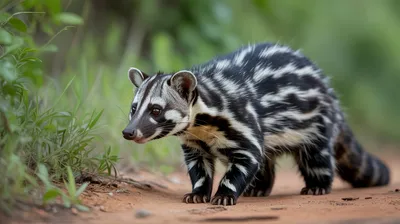
African Civet
Civettictis civetta
The African civet is a nocturnal, medium-sized mammal known for its distinctive black and white markings and a mane of long hair along its back. It is famous for the musky secretion called civetone, which is used in the perfume industry. The species is solitary and highly territorial, using scent marking to communicate with others. African civets are agile climbers and swimmers, inhabiting a wide range of environments across sub-Saharan Africa.
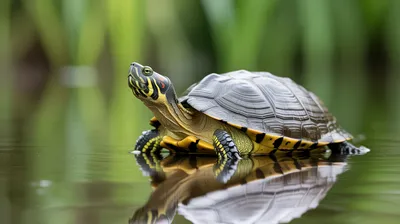
African Helmeted Turtle
Pelomedusa subrufa
The African Helmeted Turtle is a small to medium-sized freshwater turtle known for its distinctive domed shell and broad, flattened head. Found throughout much of sub-Saharan Africa and parts of the Middle East, it is highly adaptable and inhabits a variety of freshwater bodies, including ponds, lakes, and slow-moving rivers. This turtle is famous for its ability to survive in temporary water sources by burrowing into mud during dry periods, a behavior known as aestivation. It is an opportunistic feeder, consuming a wide range of animal and plant matter. African Helmeted Turtles are also known for their social basking behavior and occasional group hunting.
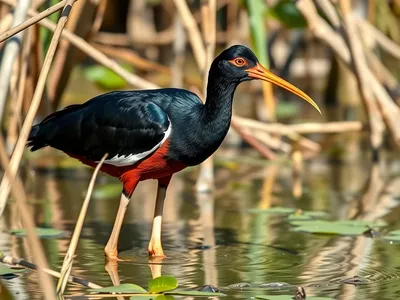
African Jacana
Actophilornis africanus
The African jacana runs the standard bird family upside down. Females are about 1.5 times heavier than males, hold a territory, and mate with up to four of them; the males build the nests, incubate the eggs, and raise the chicks alone. A father moves his brood by scooping the chicks up under his wings and walking off with four sets of tiny legs dangling from his flanks — one of the strangest silhouettes in African wetlands. The bird's most obvious feature is its feet: toes and claws so absurdly elongated that its weight is spread across floating lily pads, letting it stroll over open water and earning it the names lily-trotter and Jesus bird. Chicks can dive and hide beneath the surface, clamping onto submerged vegetation with only the bill tip exposed to breathe. It feeds on insects and snails picked from the undersides and surfaces of floating leaves, flipping pads over with the bill. Its range spans sub-Saharan floodplains, swamps and lagoons wherever water lilies persist.
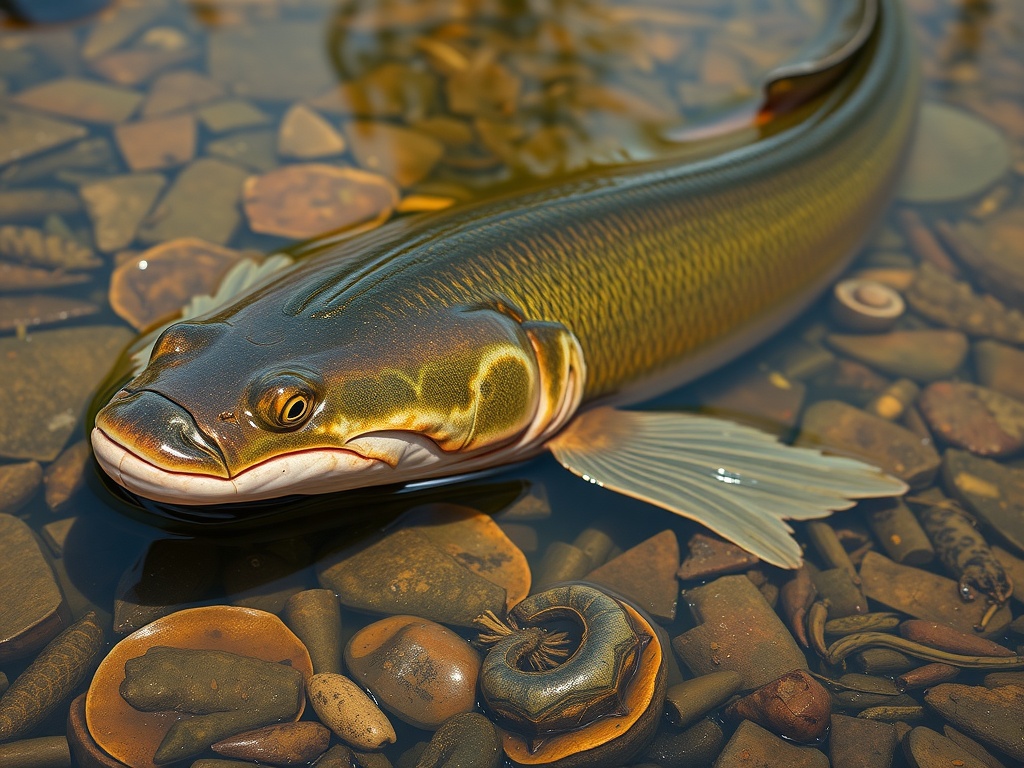
African lungfish
Protopterus annectens
An African lungfish will drown if you hold it underwater. Its gills are vestigial and it must surface to fill a pair of true lungs — an obligate air-breather among fish. When its swamp dries, it burrows into the mud, secretes a mucus cocoon that hardens around it leaving a breathing tube to the surface, converts its ammonia waste into far less toxic urea, and drops its metabolism as much as sixtyfold. In that state it can wait out drought for months, and there are records of individuals reviving after several years. Its heart has a partly divided atrium and a spiral valve in the outflow tract, keeping oxygenated and deoxygenated blood partly separate — an arrangement much closer to an amphibian's than to a typical fish's. The thin, filamentous pelvic fins are not decorative: laboratory work has shown Protopterus lifting its body off the bottom and "walking" on them with alternating strides, which reframes how tetrapod-style locomotion could have begun in water rather than on land. Lungfish are lobe-finned, and are more closely related to you than to a salmon.

Airedale Terrier
Canis lupus familiaris
The Airedale Terrier is the largest of all terrier breeds, known for its intelligence, versatility, and distinctive wiry coat. Originally bred in the Aire Valley of Yorkshire, England, this breed was designed to catch otters and rats between the Aire and Wharfe Rivers. Airedales have a dignified but lively temperament, making them excellent working dogs and family companions. They are highly trainable, energetic, and excel in various canine sports and working roles, including police and military service.

Akita Dog
Canis lupus familiaris
The Akita is a large and powerful dog breed originally from the mountainous regions of northern Japan. Renowned for their strength, courage, and unwavering loyalty, Akitas were historically used for guarding nobility and hunting large game such as bears and boars. They have a thick double coat, erect ears, and a curled tail, giving them a striking wolf-like appearance. Akitas are known for being reserved and dignified with strangers but affectionate and protective with their families. Their independent and intelligent nature requires consistent training and socialization.

Akita Inu
Canis lupus familiaris
The Akita Inu is a large, powerful dog breed originating from the mountainous regions of northern Japan. Renowned for its loyal and dignified temperament, the Akita Inu was historically bred for hunting large game such as bears, boar, and deer. With a thick double coat, erect ears, and curled tail, the breed is well-adapted to cold climates and harsh conditions. Akitas are intelligent and independent, requiring early socialization and consistent training, and are known for their reserved but deeply loyal nature towards their families.
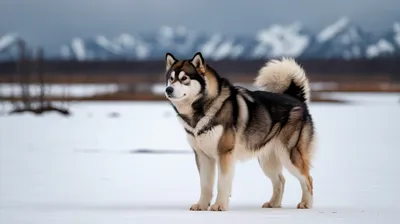
Alaskan Malamute
Canis lupus familiaris
The Alaskan Malamute is a large, powerful breed of domestic dog originally bred for its strength and endurance to haul heavy freight as a sled dog in the Arctic. With a thick double coat, erect ears, and distinctive facial markings, Malamutes are well-adapted to cold, harsh environments. They are known for their friendly disposition, intelligence, and loyalty, making them beloved companions as well as working dogs. While they resemble wolves in appearance, they are a distinct, domesticated breed with a gentle temperament. Their high energy and need for exercise make them best suited to active families and experienced owners.
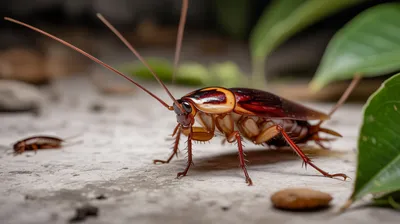
American cockroach
Periplaneta americana
The American cockroach is one of the largest and most common cockroach species found worldwide, particularly in warm and humid environments. Recognizable by its reddish-brown color and yellowish figure-eight pattern on the back of its head, this insect is highly adaptable and thrives in both natural and human-inhabited environments. Despite its name, the American cockroach is believed to have originated in Africa and was introduced to the Americas in the 17th century. It is an omnivorous scavenger, feeding on a wide variety of decaying organic matter, and is known for its rapid movements and impressive resilience.

American Eskimo Dog
Canis lupus familiaris
The American Eskimo Dog is a strikingly beautiful companion breed known for its white, fluffy double coat, erect ears, and expressive dark eyes. Despite its name, the breed was developed in the United States and is a member of the Spitz family, closely related to the German Spitz. Energetic, highly intelligent, and eager to please, American Eskimo Dogs excel at obedience, agility, and performing tricks. They are affectionate and loyal, making them excellent family pets, but they require regular exercise and mental stimulation to thrive.
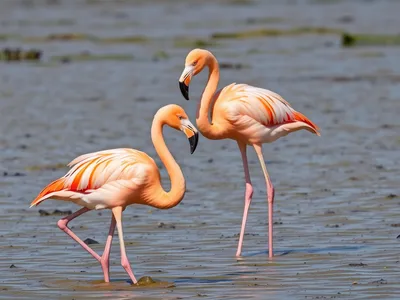
American Flamingo
Phoenicopterus ruber
The American flamingo is the most intensely coloured of all the flamingos, a deep and almost scarlet pink where its Old World relatives are pale, and the difference comes down entirely to diet. Flamingos are not born pink: chicks hatch grey-white, and the colour is assembled from carotenoid pigments extracted from the algae and brine shrimp they filter from the water, which means the richness of the colour is a direct, honest advertisement of how well a bird is feeding. It feeds with its head upside down, sweeping the downcurved bill through the shallows while comb-like plates strain food from the water — the same filter-feeding principle a baleen whale uses, at a fraction of the scale. Its choice of habitat is the whole strategy: it favours hypersaline lagoons and alkaline flats where almost nothing else can survive, trading a hostile chemistry for a food supply nothing competes for. It nests in dense colonies on cones of mud, and both parents feed the single chick a fat-rich crop milk secreted from the upper digestive tract.

American Foxhound
Canis lupus familiaris
The American Foxhound is a lean, athletic breed of dog known for its exceptional speed, stamina, and keen sense of smell. Originally bred for fox hunting in colonial America, this breed is highly energetic and requires plenty of exercise to stay healthy and happy. Friendly and gentle, American Foxhounds are good-natured companions, though they can be independent and occasionally stubborn. Their melodious baying and strong hunting instincts make them stand out among scent hounds. While they are still used for hunting, they also make affectionate family pets.
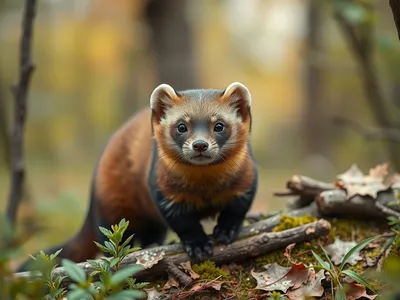
American Marten
Martes americana
The American Marten is a small, agile mammal native to the forests of North America. Characterized by its slender body, bushy tail, and silky brown fur, this elusive predator is well adapted for life among thick trees and snowy landscapes. Martens are solitary and primarily nocturnal, skillfully navigating the forest canopy in search of prey. They play an important role in their ecosystem by helping to control rodent populations and dispersing seeds from the fruits they eat.
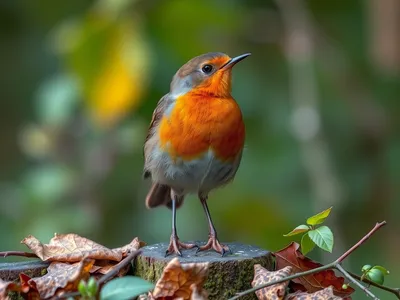
American Robin
Turdus migratorius
The American robin is not a robin. Homesick English colonists named it after the small European robin because of the red breast; it is in fact a thrush, and its nearest relatives are blackbirds and fieldfares. Its signature move — running a few steps, stopping, and cocking its head at the lawn — has been widely misread. Experiments in which auditory, visual and vibrational cues were manipulated showed that robins can genuinely hear worms moving underground, not merely see them, so the head-cock is doing more than it looks. The idea that a robin's return announces spring is also mostly a misunderstanding: many robins simply switch from earthworms to fruit in autumn, abandon lawns and territories, and roam in large nomadic flocks through winter, sometimes far north, only becoming conspicuous again when they return to the grass. Its blue eggs get their colour from biliverdin, a pigment derived from broken-down haemoglobin, and there is evidence that males feed chicks more when the eggs were more intensely blue.
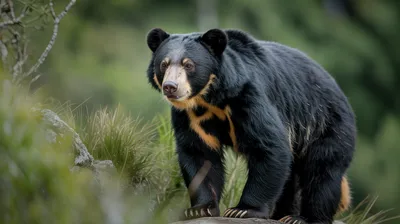
Andean Bear
Tremarctos ornatus
The Andean bear is South America's only bear, and it is the last survivor of the short-faced bears — the subfamily Tremarctinae, which also produced the enormous extinct Arctotherium and Arctodus. That ancestry shows in its face: a short, deep muzzle with powerful jaw muscles, but here it is used for crushing plant matter rather than bone. It is overwhelmingly a herbivore, working through bromeliads, palm hearts, orchid bulbs and unripe fruit — tough, fibrous material that requires exactly that bite. It is a superb climber and will build a platform of broken branches in a tree, part feeding stage, part daybed, and these platforms are often the easiest sign that a bear is present in cloud forest. Living in a climate with no hard winter, it does not hibernate, and females can give birth at almost any time of year. The pale markings around the eyes and muzzle are unique to each individual, which is what lets camera-trap researchers count them.
Andean Cock-of-the-rock
Rupicola peruvianus
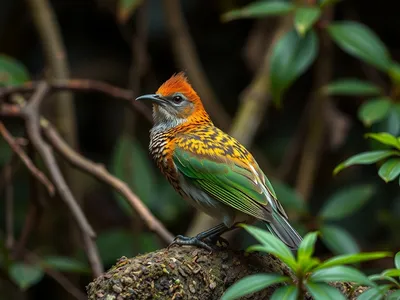
The male Andean cock-of-the-rock has a crest so extreme it is effectively a mask: a permanent, disc-shaped half-moon of feathers that projects forward over the top of the bill and hides most of it, nostrils included. It is not raised or lowered like an ordinary crest — it is simply always there, and the bird looks at the world past it. Males gather at leks, traditional display arenas in steep, humid Andean forest that can be used for decades, where a dozen or more birds bow, hop, flap and produce squealing, grunting calls at each other while females come, watch and choose. Once a female has mated she leaves, and the male contributes nothing further. She then builds a cup nest of mud and plant material glued to a shaded rock face or cave wall, often near a stream — the "rock" of the name — and raises the chicks alone. Females are a drab reddish-brown, an inevitable consequence of a system where only males are being chosen and only females need to be invisible on a nest.

Appenzeller Sennenhund
Canis lupus familiaris
The Appenzeller Sennenhund is a medium-sized, tricolored Swiss mountain dog originally bred for herding and guarding livestock in the Appenzell region of Switzerland. Known for its lively and agile nature, this breed possesses a muscular build, a thick double coat, and a distinctive curled tail. Appenzeller Sennenhunds are highly intelligent, energetic, and loyal, making them excellent working dogs and devoted family companions. Their alertness and strong territorial instincts also make them effective watchdogs.
Arctic char
Salvelinus alpinus
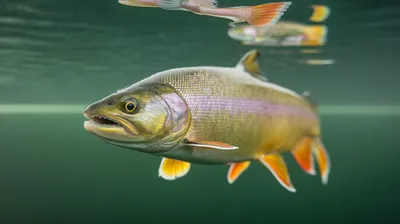
The Arctic char is the northernmost freshwater fish in the world, living in lakes above 80 degrees north where the ice never entirely leaves and the growing season is a few weeks long. It is also one of the most variable vertebrates known. A single lake can hold several distinct forms — a small bottom-feeding dwarf, a large fish-eating morph, a plankton-feeder — that differ in shape, size and jaw structure and that breed separately from one another. Thingvallavatn in Iceland, with four coexisting morphs, is a textbook case in the study of how species can split without any physical barrier between them. Some populations run to sea and back like salmon; others are landlocked, and those can grow with glacial slowness and live for forty years. It spawns in autumn or winter, often under ice, which for a fish is a very odd time to breed and only makes sense in water this cold. The spawning colours are extraordinary: the belly turns deep orange to blood-red, and the leading edges of the fins go white.
Arctic Fox
Vulpes lagopus
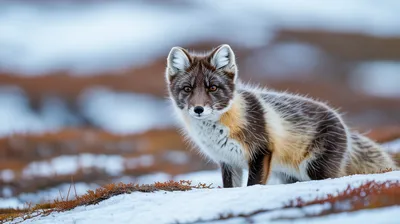
The Arctic Fox (Vulpes lagopus) is a small, resilient mammal adapted to the harsh conditions of the Arctic tundra. Measuring approximately 46 to 68 centimeters in body length, with an additional 30-centimeter bushy tail, this fox is well-equipped for survival in temperatures as low as -50 degrees Celsius. Its dense, multi-layered coat, which changes from white in winter to brown or gray in summer, provides exceptional insulation and camouflage against predators and while hunting. Unlike many other fox species, the Arctic Fox has fur-covered footpads, which prevent heat loss and allow it to traverse icy surfaces with ease. This species primarily inhabits regions such as Greenland, Iceland, and parts of North America, thriving on a diet of small mammals, birds, and carrion. In comparison to its relative, the Red Fox, the Arctic Fox has a more compact body, a trait that minimizes heat dissipation, an excellent example of Allen's rule in action.
Argentine ant
Linepithema humile
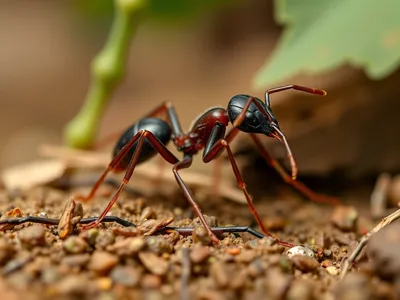
The Argentine ant is a small, light to dark brown ant species native to South America but now found on every continent except Antarctica. It is renowned for forming massive supercolonies, sometimes spanning hundreds of kilometers, due to its lack of aggression toward other colonies of the same species. Argentine ants are highly adaptable, thriving in urban, agricultural, and natural environments where they can outcompete native ant species. Their invasive nature has made them a significant ecological and agricultural pest in many regions. Despite their tiny size, their cooperative behavior and resourcefulness make them one of the most successful invasive insects globally.
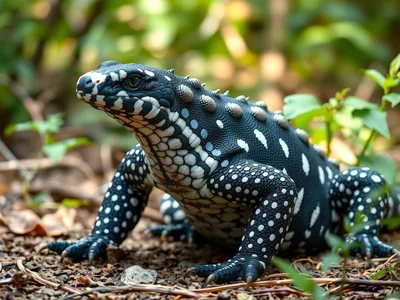
Argentine Black and White Tegu
Salvator merianae
The Argentine Black and White Tegu is the largest species of tegu lizard native to South America, particularly Argentina, Brazil, and surrounding countries. It is easily recognized by its distinct black and white banded pattern and robust, muscular build. Tegus are highly intelligent reptiles, capable of learning simple tasks and even recognizing their human caretakers. They are terrestrial, spending much of their time foraging on the ground, and are known for their docile temperament, making them increasingly popular in the exotic pet trade.
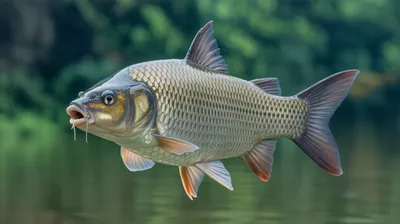
Asian Carp
Hypophthalmichthys molitrix, Hypophthalmichthys nobilis, Ctenopharyngodon idella, Mylopharyngodon piceus
Asian carp refers collectively to several species of freshwater fish native to East Asia, including the silver carp, bighead carp, grass carp, and black carp. These fish are known for their rapid growth rates and high reproductive capacity, making them highly invasive when introduced to non-native environments. Asian carp have become a significant concern in North America, where they disrupt local ecosystems by outcompeting native fish for food and habitat. They are filter feeders, consuming vast amounts of plankton, which can lead to reduced biodiversity in affected waterways. Asian carp are also notable for their tendency to leap out of the water when startled, posing risks to boaters.