
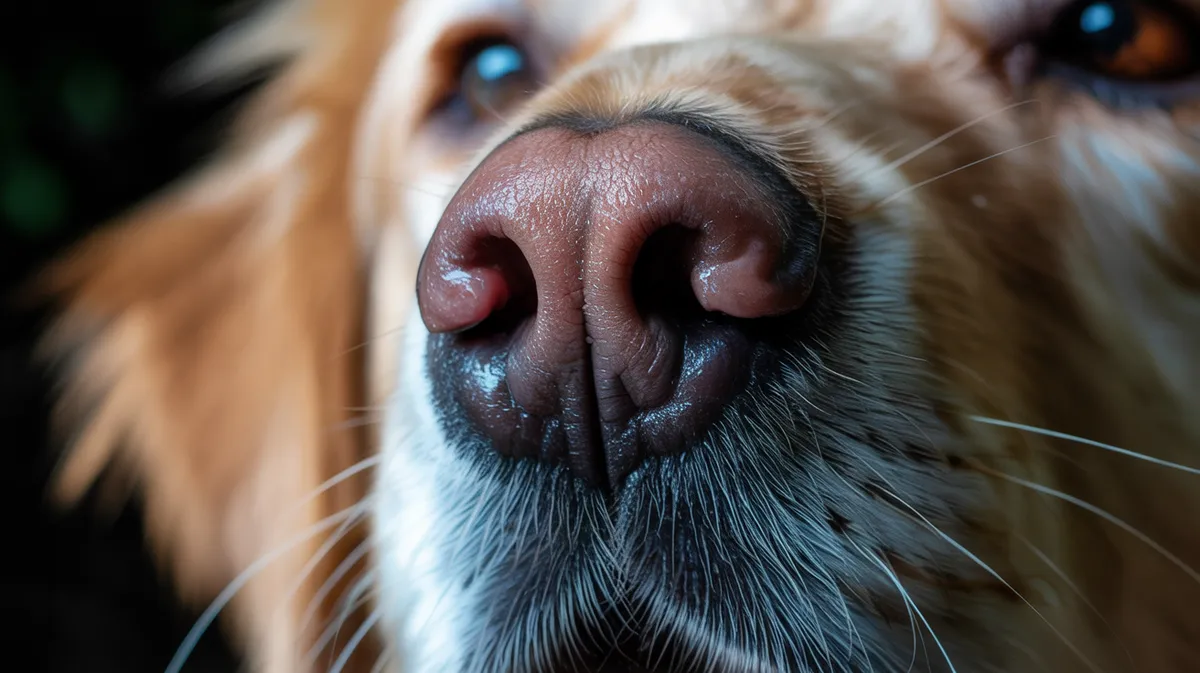
When your dog stops to sniff a lamppost, it isn't just smelling — it's reading. Where we experience the world mainly through our eyes, a dog experiences it through its nose, and the picture it builds is so detailed it borders on time travel. In this entry of our Through Animal Eyes series, we step inside the nose of the dog to sense the world the way it does.
It's a world made of layered, overlapping scents that tell a rich story of who, what, where, and even when. See also the hidden senses in how sharks sense electricity and how elephants hear with their feet.
A nose beyond imagining
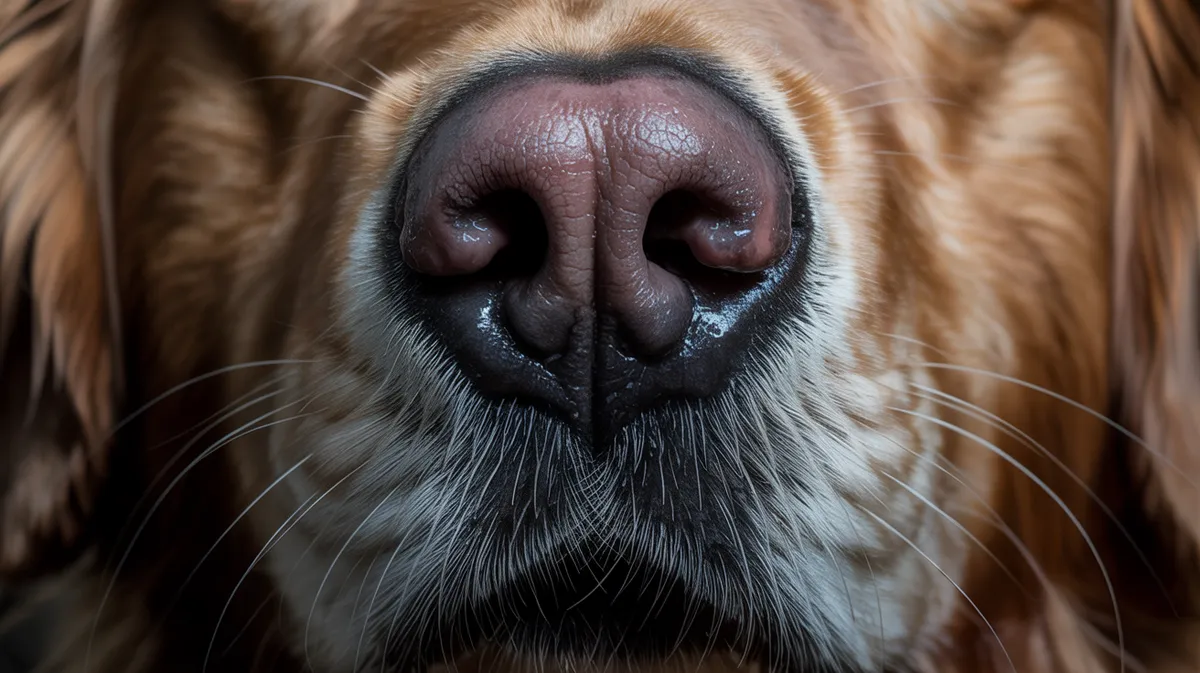
A dog's nose carries up to 300 million scent receptors, compared with our roughly six million. The part of its brain devoted to analysing smell is, proportionally, around forty times larger than ours.
The numbers translate into almost unbelievable sensitivity: dogs can detect some odours at concentrations of parts per trillion — the equivalent of a single drop of liquid in a small lake.
It's this raw power that lets trained dogs sniff out explosives, drugs, missing people, and even diseases like cancer long before any machine can.
Different breeds are tuned differently, too — a bloodhound's nose is so sensitive that the trails it follows have been accepted as evidence in court.
Smelling in stereo
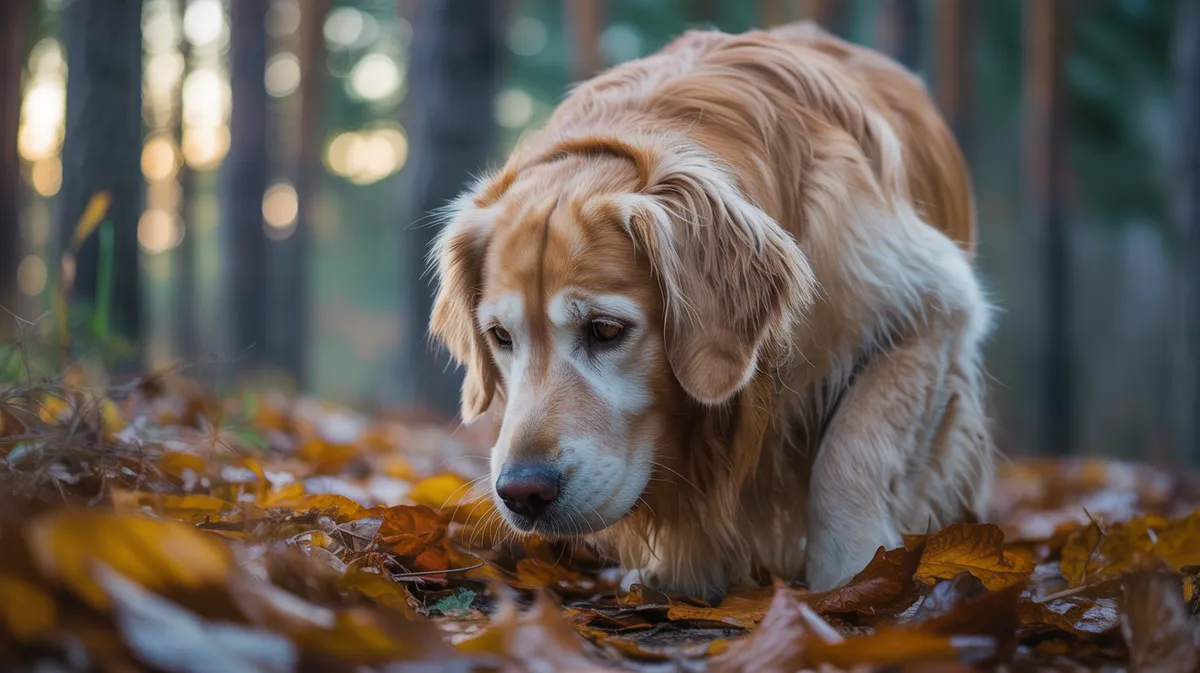
A dog doesn't just smell more — it smells in three dimensions. Each nostril samples the air slightly independently, so a dog can tell which side a scent is stronger on.
This "stereo" smelling lets it work out the direction a smell is coming from, much as our two ears help us locate a sound.
Watch a tracking dog swing its nose left and right across a trail and you're watching it triangulate, homing in on the path the way we'd follow a set of footprints.
Dogs can even wiggle each nostril independently, fine-tuning the comparison between the two sides as they close in on a source.
A second nose
Tucked above the roof of the mouth, dogs have a second smelling system — the vomeronasal, or Jacobson's, organ — dedicated to detecting pheromones, the chemical signals animals use to communicate.
Through it a dog reads an astonishing amount about another animal: its sex, its mood, its health, whether it's ready to mate, and more, all from a quick sniff.
That sniff of a lamppost is really a social media feed of the neighbourhood — a log of every dog that passed and what it was feeling.
This is why a dog will sometimes freeze and go still after a deep sniff, quietly processing a flood of chemical information we can't detect at all.
Reading scent across time
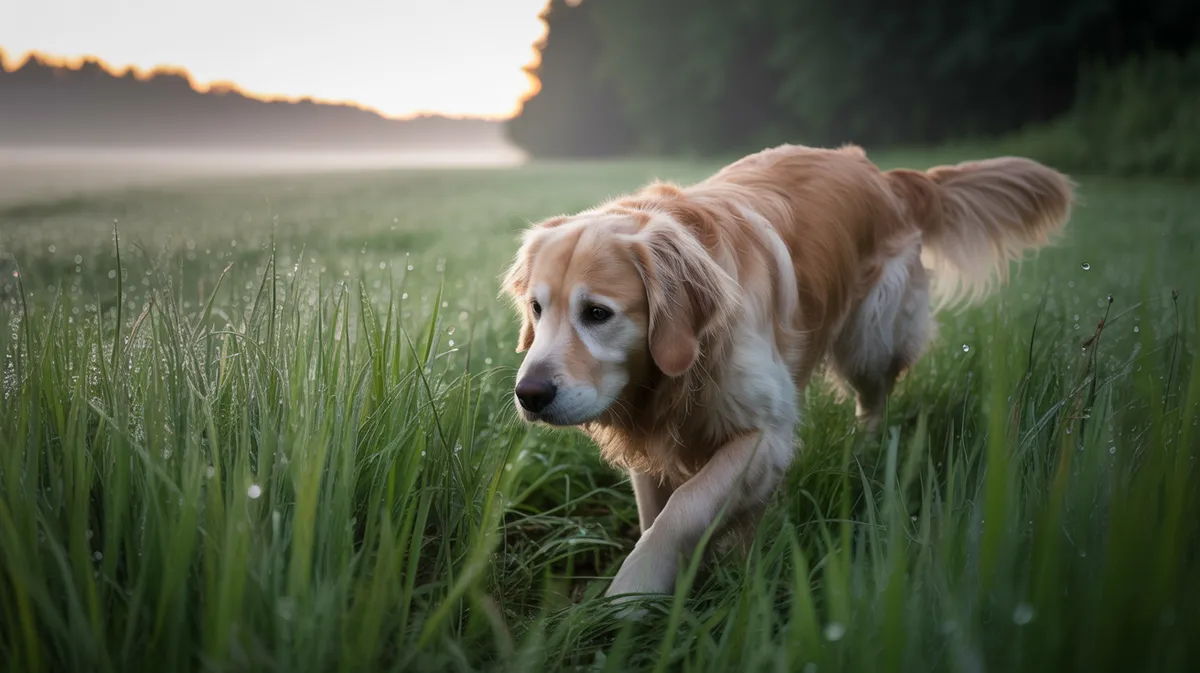
Perhaps the strangest part of a dog's smell-world is that it carries information about time. A scent fades in a predictable way, so a dog can tell a fresh smell from an old one.
Following a trail, it can sense which direction an animal travelled simply by reading whether the scent is getting stronger (more recent) or weaker (older) along the path.
In a real sense, a dog can smell the recent past and the immediate present at once, layered together in a single breath of air.
Some researchers think a dog can even sense whether a person or animal is approaching or moving away, just from how a scent shifts moment to moment.
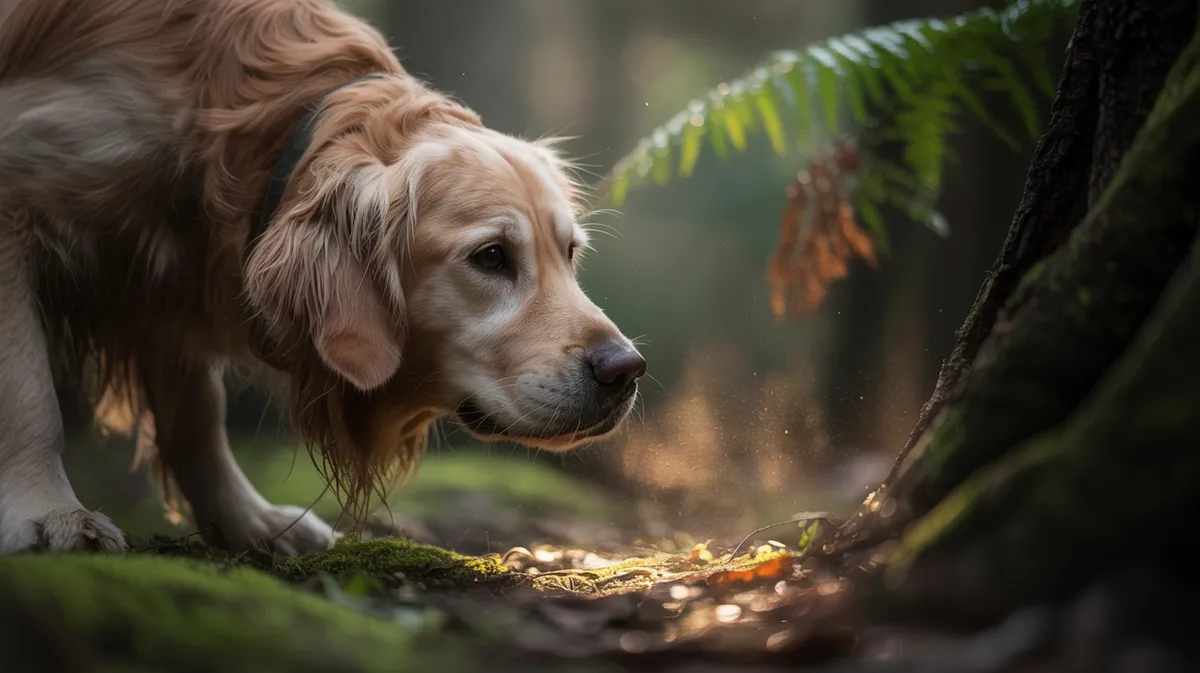
Built to sniff
A dog's whole nose is engineered for the job. It can separate the air it breathes for living from the air it draws in for smelling, so it keeps analysing odours even as it breathes normally.
When it exhales, the air rushes out through side slits in the nostrils, swirling fresh scent inward rather than blowing it away, and that famous wet nose helps trap odour molecules from the air.
A sniffing dog may take in air several times a second, constantly refreshing the rich scent-picture it's building of the world.
That brief pause to sniff is real mental work, and letting a dog stop and "read" on a walk can tire and satisfy it as much as the exercise itself.
Dogs on the Job
A dog's nose is not merely impressive — it has become genuine, life-saving technology, and no machine has yet matched it.
Detection dogs find explosives, drugs, firearms, and missing people, and search-and-rescue dogs locate survivors buried in rubble that no sensor can penetrate.
Most astonishing is the medical work. Dogs have been trained to detect certain cancers, to alert a diabetic to a dangerous drop in blood sugar before it happens, and to sense an oncoming seizure. They are smelling changes in body chemistry that we cannot yet reliably measure.
What it's like to be a dog
To experience the world as a dog does is to live awash in information we can't perceive — a landscape of overlapping stories told in scent, stretching back hours into the past. For a dog, a walk isn't just exercise; it's reading the daily news, written in smell across every surface it passes.
Frequently asked questions
How much better is a dog's sense of smell than ours? Dogs have up to 300 million scent receptors to our six million, and can detect some odours at parts per trillion.
Can dogs smell direction? Yes — each nostril smells slightly independently, letting a dog sense which way a scent is coming from.
Can dogs smell time? In effect, yes — they read how faded a scent is to tell old trails from fresh ones and which way an animal went.
How many scent receptors does a dog have? Up to around 300 million, against roughly 6 million in a human nose.
Why do dogs' noses stay wet? Moisture helps capture scent molecules from the air.
Can dogs smell fear? They detect chemical changes associated with stress — which is close enough to be uncanny.
Which breeds smell best? Bloodhounds are the classic, with beagles and shepherds also outstanding.
Next, a sense beyond smell entirely: how sharks sense electricity, and the ground-borne world of how elephants hear with their feet.