
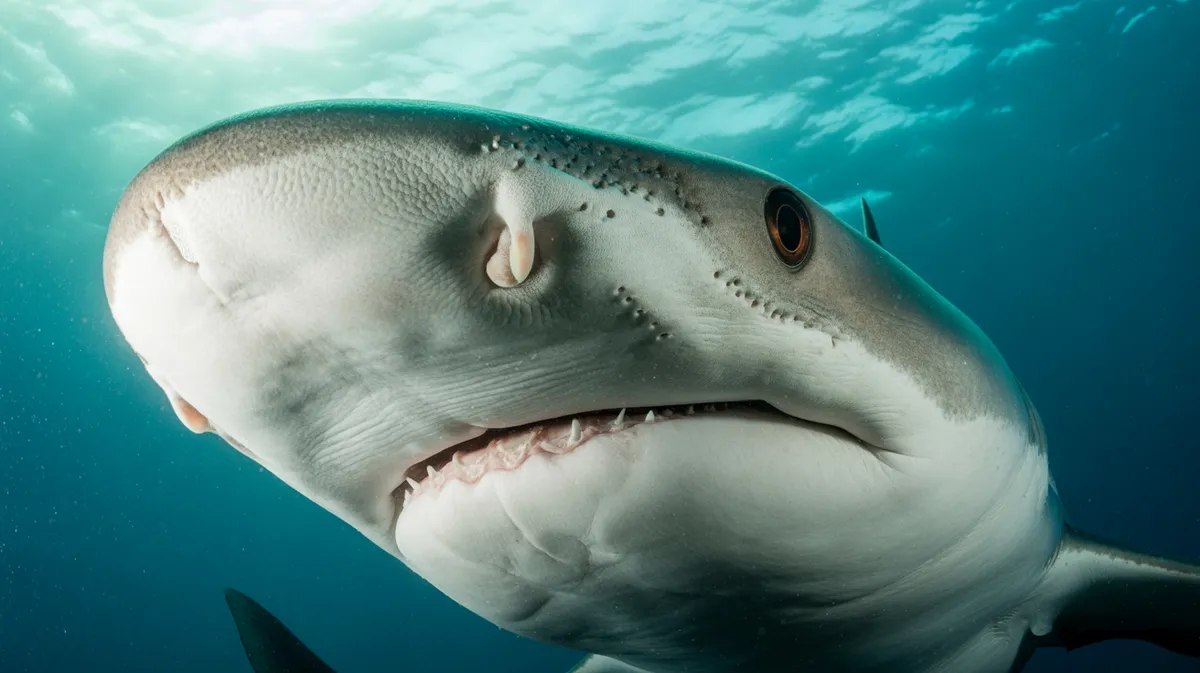
A shark gliding through dark, murky water doesn't need to see its prey — it can feel it. Every living creature gives off faint electrical signals, and sharks possess a sixth sense, found nowhere in the human body, that lets them detect this hidden electric world. In this entry of our Through Animal Eyes series, we explore how sharks sense electricity.
It's a sense so acute that a hidden, motionless fish might as well be ringing a bell. See also the scent-world of how dogs smell the world and the heat-vision in how snakes sense heat.
The ampullae of Lorenzini
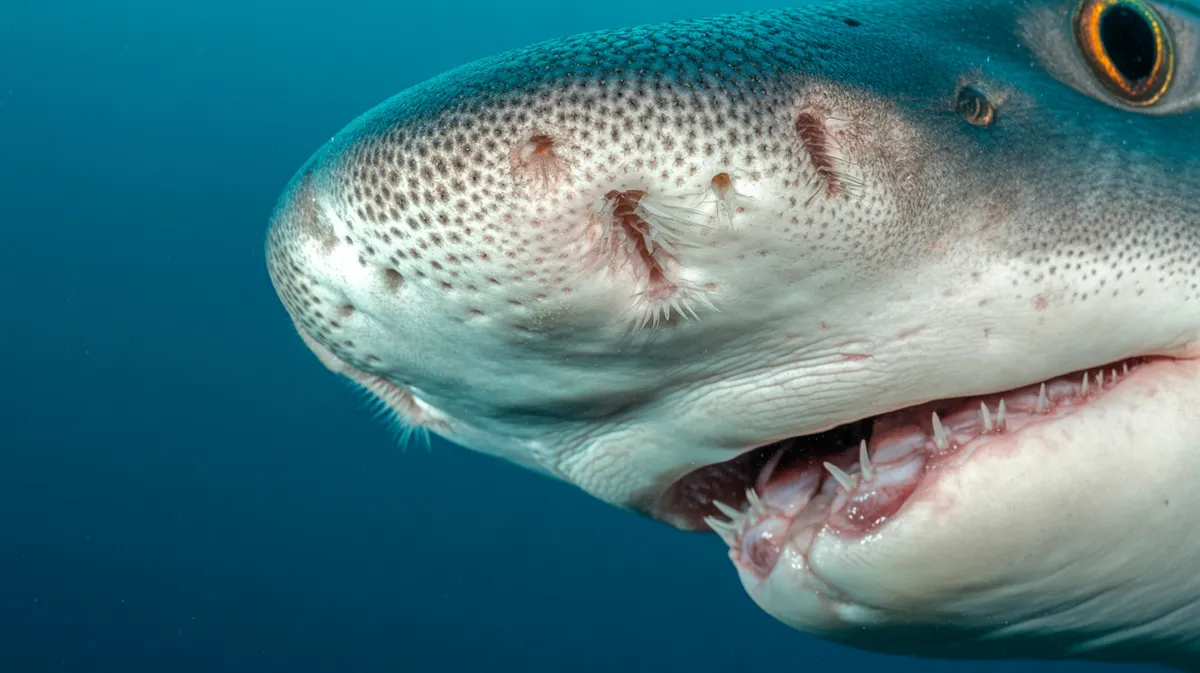
Dotted around a shark's snout are hundreds of tiny pores, each leading to a jelly-filled canal that ends in a cluster of sensory cells. These are the ampullae of Lorenzini, named for the scientist who described them centuries ago.
The jelly inside is one of the most electrically conductive substances known in nature, and it funnels even the faintest electric field down to the receptor cells.
Together these pores form an electrical sense organ of staggering sensitivity, tuned to the weak fields that surround living animals.
Some sharks have thousands of these pores, and the hammerhead spreads its across that famously wide head like a metal detector sweeping the seabed.
Feeling a heartbeat
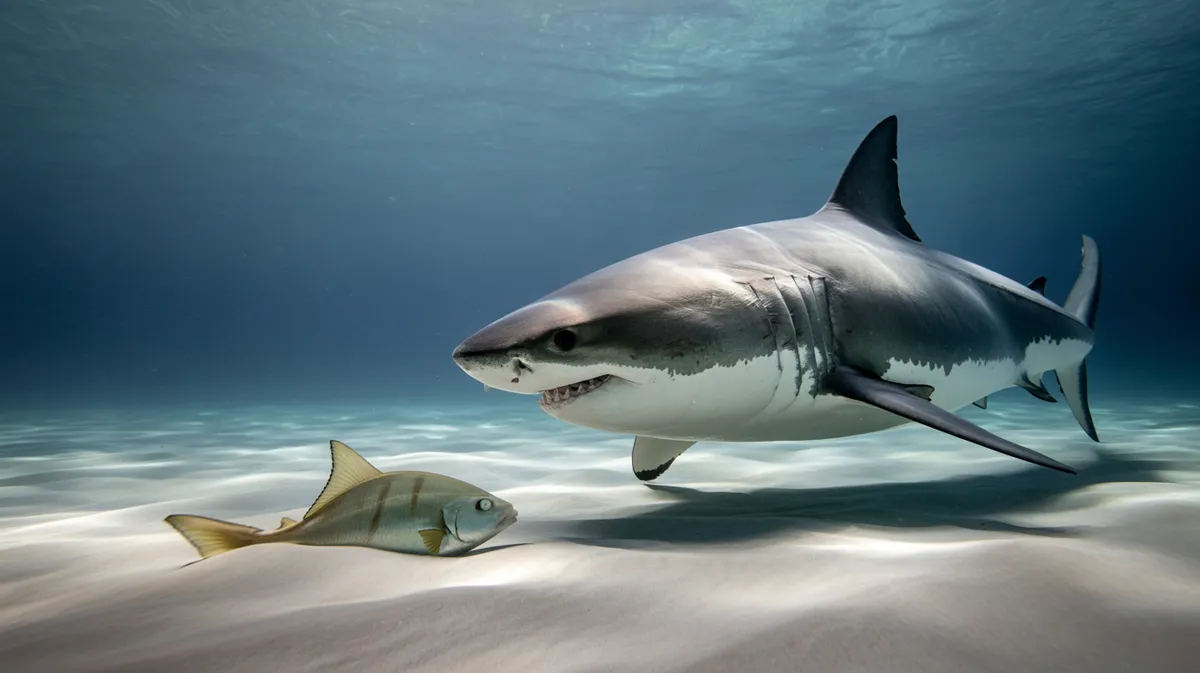
Every time a muscle contracts — including a heartbeat — it generates a tiny electrical signal in the surrounding water. A shark's electroreceptors can pick up these signals at almost unimaginably low strengths.
This means a shark can detect a flatfish lying perfectly still and completely buried in the sand, simply by sensing the electric pulse of its body.
To a hunting shark, no amount of hiding or holding still can switch off the electrical glow of a living heart.
The sense is so fine that sharks can reportedly detect fields measured in billionths of a volt — among the most sensitive electroreception known in any animal.
The final strike
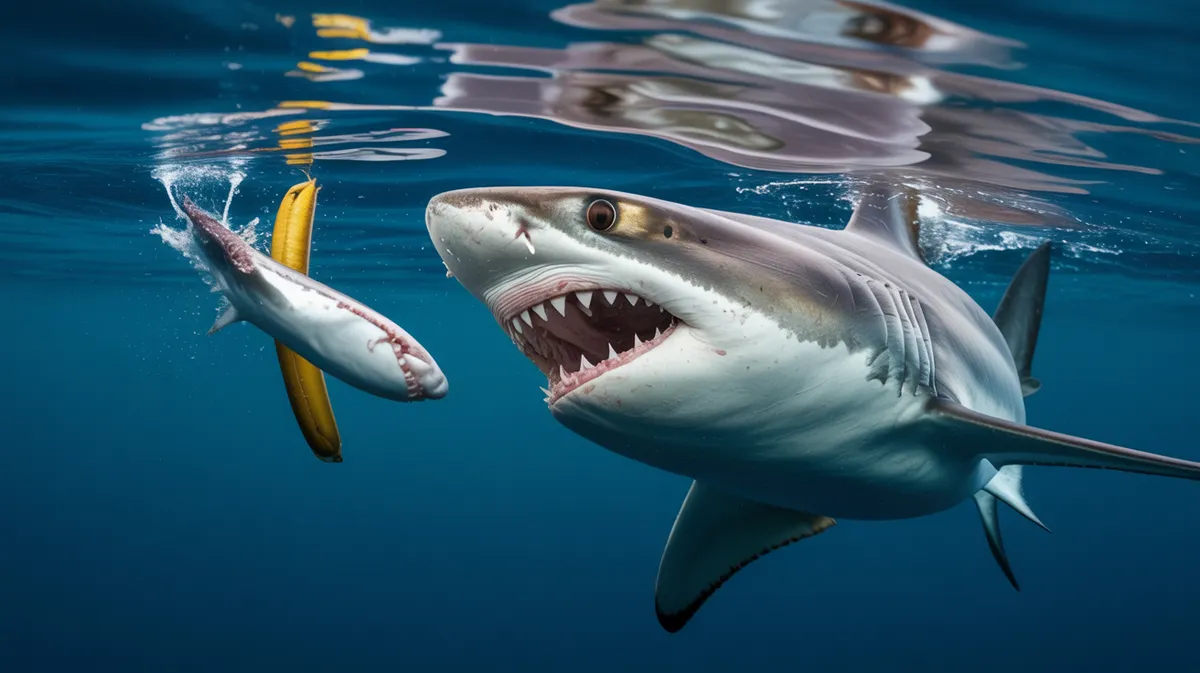
This sense becomes most important in the last moment of an attack. As a shark lunges, its eyes may roll back for protection and its own snout can block its view of the target.
In that final, blind instant, the shark relies on its electroreceptors to guide its jaws onto exactly the right spot.
It's a hunting system with a built-in backup: even when sight fails at the critical moment, the electric sense carries the strike home.
This is also why sharks sometimes mouth or bite metal cages and boat motors, drawn in by the electrical fields those objects give off.

A built-in compass
The same sense may help sharks find their way across entire oceans. As a shark swims through the Earth's magnetic field, that movement can induce faint electrical signals its receptors can detect.
Many scientists believe sharks use these cues like a compass, helping explain how some species navigate thousands of kilometres to the same feeding and breeding grounds year after year.
A sense evolved for hunting may double as one of nature's most reliable navigation tools.
Tagged sharks have been tracked swimming in remarkably straight lines across featureless open ocean, exactly as you'd expect of an animal steering by a magnetic sense.
An ancient, shared sense
Electroreception isn't unique to sharks. Their close relatives the rays and skates have it too, as do a scattering of other fish and a few oddities like the platypus.
It's an ancient sense, refined over hundreds of millions of years, and sharks are among its undisputed masters.
For them, the ocean is not a silent, dark void but a place quietly alive with electrical signals we can't begin to feel.
In the murk of a river mouth or the black of the deep sea, where eyes are nearly useless, this is often the sense a shark trusts most.
When the Sense Backfires
A sense this fine has an awkward side effect: the modern ocean is full of electrical signals that a shark was never evolved to interpret.
Metal boat hulls, outboard motors, and submarine cables all generate electrical fields, and sharks sometimes investigate — or bite — them. Shark cages and metal fittings can draw the same curiosity, which is why some encounters have nothing to do with hunger at all.
The flip side is that we can use it. Electrical deterrent devices, worn by surfers and divers or strung across beaches, generate fields strong enough to be unpleasant to a shark, offering a non-lethal alternative to nets that kill.
What it's like to be a shark
To sense the world as a shark does is to feel life itself as a kind of electricity — every heartbeat and muscle twitch a faint signal in the water, every hidden animal betrayed by its own body. It's a private sense we have no words for, turning the murkiest ocean into a map of living, glowing sparks.
Frequently asked questions
Can sharks really sense electricity? Yes — special organs called the ampullae of Lorenzini detect the faint electric fields all living animals produce.
How do sharks find hidden prey? They sense the bioelectric signals of a prey animal's muscles and heartbeat, even one buried in sand.
Do sharks use electricity to navigate? Likely — moving through Earth's magnetic field creates signals their receptors may use like a compass.
What are the ampullae of Lorenzini? Jelly-filled pores around a shark's snout that detect faint electric fields.
Can sharks smell a drop of blood from miles away? That is an exaggeration, though their sense of smell is genuinely excellent.
Do other animals sense electricity? Yes — rays, skates, some fish, and even the platypus.
Do sharks use it to navigate? Probably. Moving through Earth's magnetic field may give them a usable compass.
How sensitive is shark electroreception? Extraordinarily — they can detect fields measured in billionths of a volt.
Can sharks find prey buried in sand? Yes. A hidden flatfish is betrayed by the electrical pulse of its own body.
Which shark has the most receptors? Hammerheads spread theirs across that wide head, sweeping it like a metal detector.
Continue with how elephants hear with their feet, or revisit how dogs smell the world.