
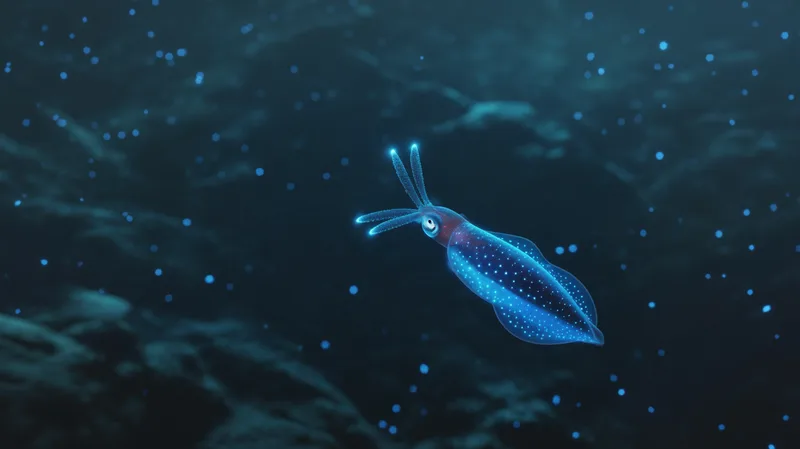
On a warm summer night, a meadow flickers with tiny green lights. Two hundred metres beneath the ocean's surface, a squid scatters blue sparks into the dark. In the crushing deep, a lonely point of light dances in front of a set of needle-sharp teeth. These are not tricks of reflection or leftover sunlight — they are living creatures making their own light. Scientists call it bioluminescence, and it is one of the most widespread and beautiful adaptations on Earth, found everywhere from forest floors to the deepest sea.
Living Light: How Animals Make Their Own Glow
Bioluminescence is, at heart, a chemical reaction. Most glowing animals carry a light-producing molecule called luciferin and an enzyme called luciferase. When the two combine in the presence of oxygen, the reaction releases energy as light rather than heat. That last part is what makes it so remarkable: this is "cold light", almost perfectly efficient, with hardly any wasted warmth — something no household bulb can match.
Some animals brew these ingredients themselves. Others take a shortcut, hosting colonies of light-producing bacteria inside special organs and effectively renting their glow. Either way, the result is the same: a private source of light an animal can switch on when it matters most.
The colour of that light is no accident. In the deep ocean, almost all bioluminescence is blue or blue-green — the wavelengths that travel furthest through seawater, and the ones most deep-sea eyes are tuned to see. On land, fireflies glow yellow-green instead, where it stands out best against grass and foliage in the dusk.
In the darkest places on the planet, life did not wait for the light. It learned to make its own.
1. A Glowing Conversation: Finding a Mate
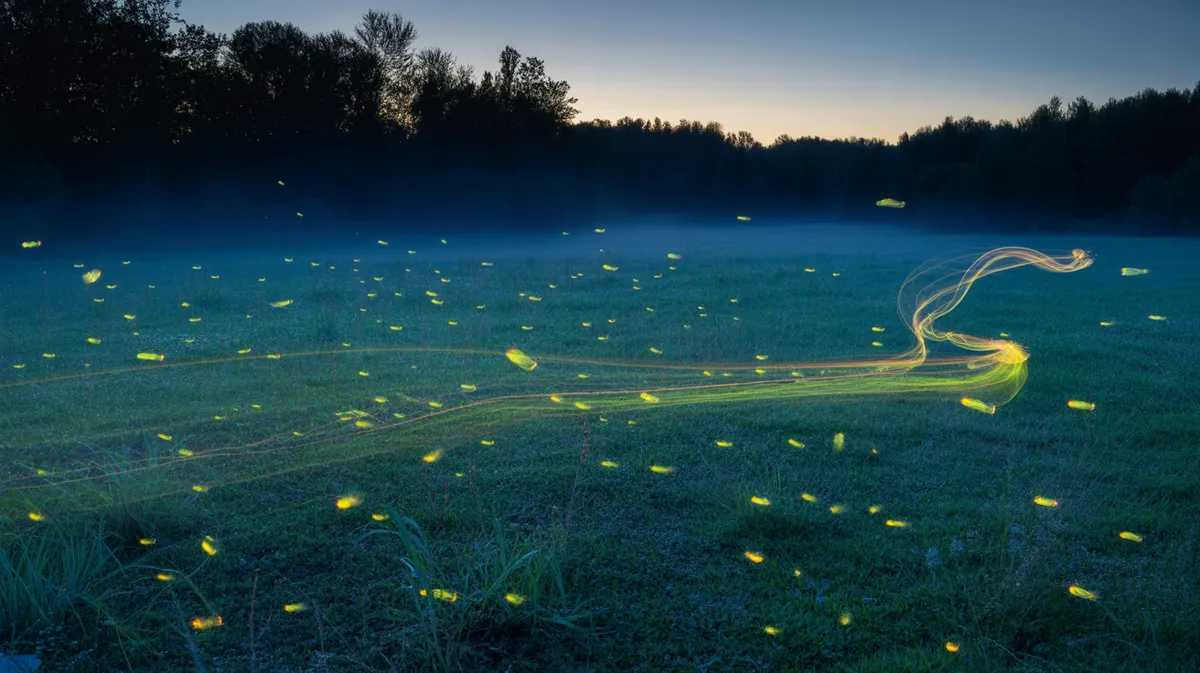
The most familiar glow of all belongs to the common firefly — the "lightning bug" of summer evenings. Despite the name, fireflies are beetles, and their flashes are a language. Each species has its own rhythm and timing, and males drift low over the grass flashing their signature code while females answer from below. It is courtship by light, precise enough that a firefly can pick out its own kind in a field full of rivals. Even their larvae glow, a quiet warning to predators that they would make an unpleasant meal.
2. Hiding in Plain Light: Counter-Illumination
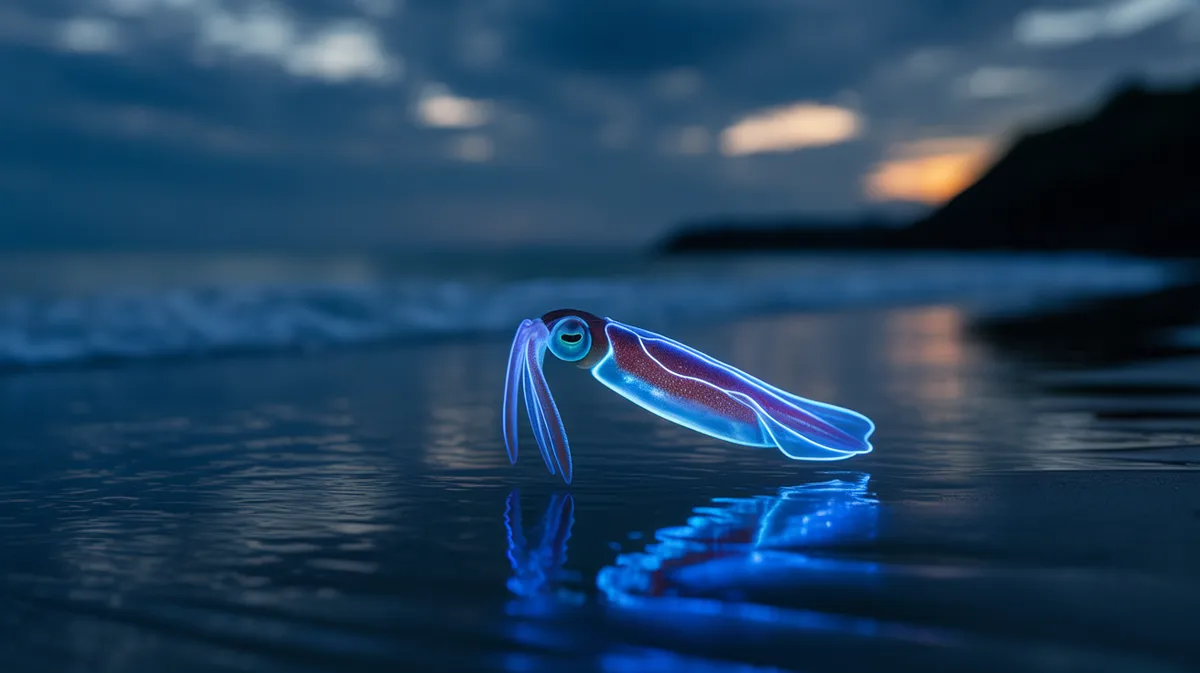
In the open ocean, light can also be a way to disappear. Looking up from below, a predator sees prey as a dark silhouette against the faint glow filtering down from the surface. The firefly squid of Japan erases that silhouette using thousands of tiny light organs called photophores, glowing just brightly enough to match the water above so its body melts into the background. Each spring, millions of them surge into Toyama Bay to spawn, turning the shoreline electric blue — one of the planet's great natural light shows.
3. A Deadly Lure: Fishing With Light
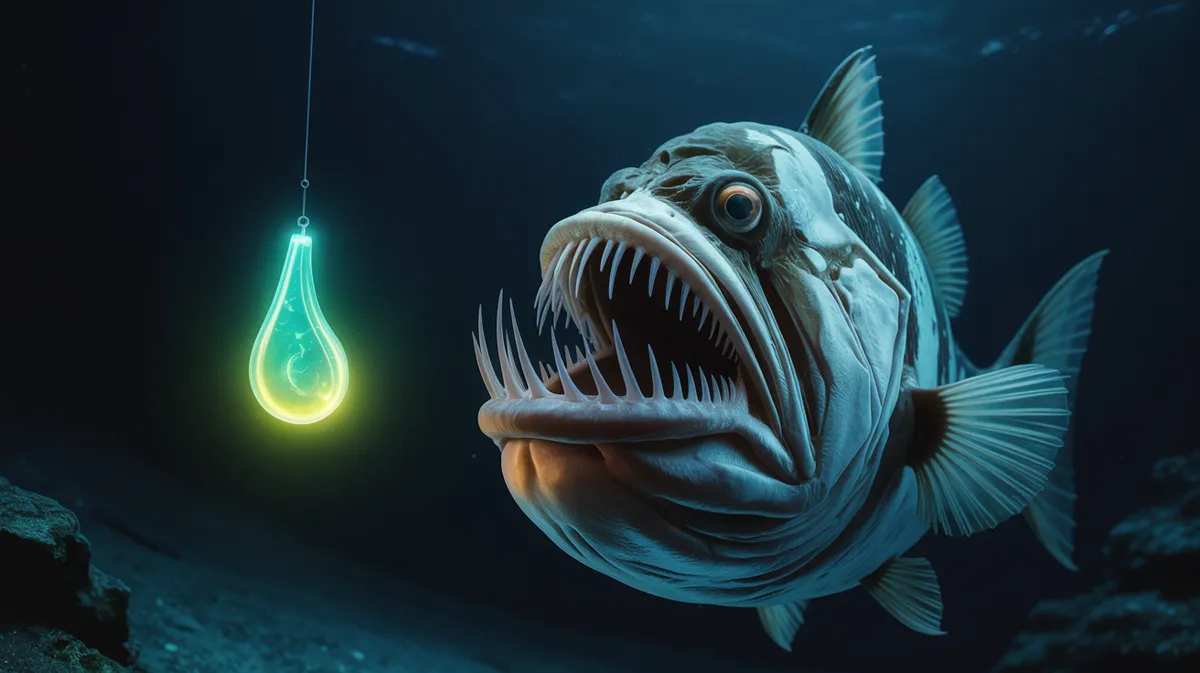
Far below the reach of sunlight, light becomes bait. The deep-sea anglerfish is famous for the glowing lure that dangles in front of its jaws, drawing curious prey straight into its mouth. That light isn't made by the fish at all — it comes from symbiotic bacteria living inside the lure. Interestingly, the deep-sea anglerfish in our atlas appears in its larval form: a tiny, translucent drifter near the surface that hasn't yet grown its lantern. The light — and the bacteria that power it — come later, as the young fish descends into the dark and transforms into the creature we picture.
4. A Burst of Defence: Startle and Alarm
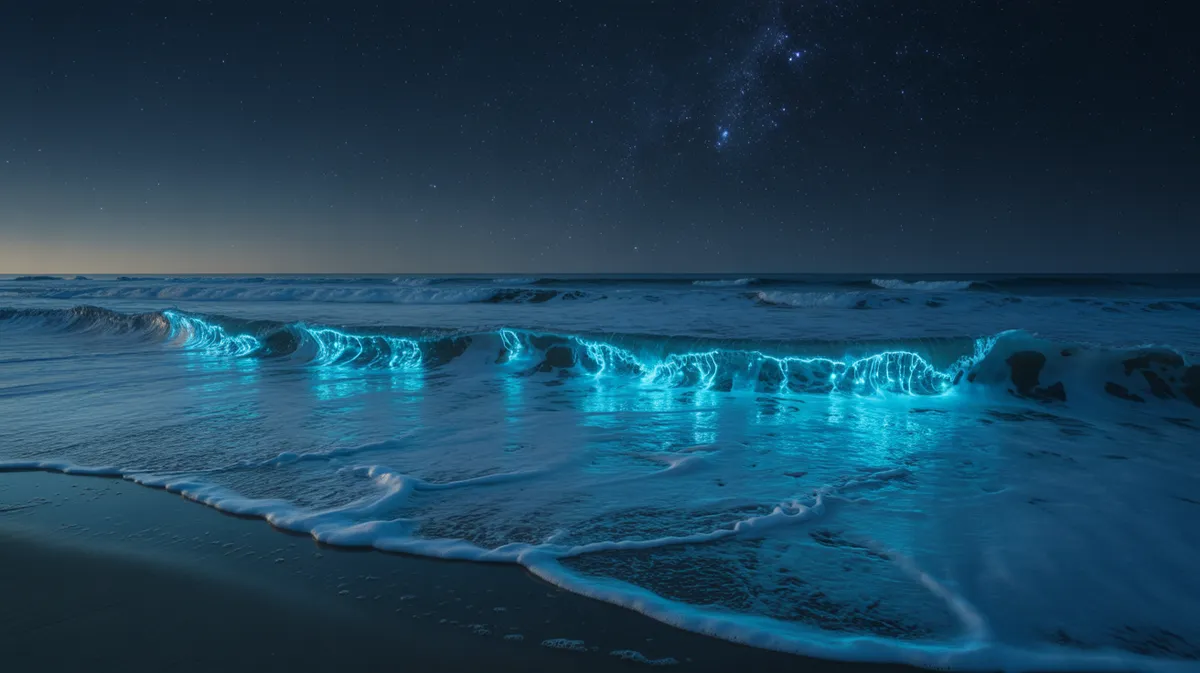
For many sea creatures, a sudden flash is a way to survive an attack. The bioluminescent comb jelly can produce ghostly light to startle a predator into hesitating — and a moment's hesitation is often all it takes to escape. Some plankton take this further with a "burglar alarm" strategy: when disturbed, they flash brightly enough to attract the attention of even larger predators, turning the tables on whatever was trying to eat them. It's the same chemistry behind those shimmering blue waves that sometimes light up a midnight shoreline.
Borrowed Light: Partnerships With Bacteria
That anglerfish trick — outsourcing your glow to bacteria — is surprisingly common in the ocean. By housing colonies of light-producing microbes in dedicated organs, animals get a reliable, controllable light source without having to evolve the full chemistry themselves. In return, the bacteria get a safe home and a steady supply of nutrients. It's one of nature's most elegant deals, and a reminder that even something as personal as an animal's own light can be a collaboration.
Where to See Living Light
- Fireflies on a summer night. Warm, humid evenings near meadows, forest edges, and water are your best chance — and a moonless night makes the flashes pop.
- Toyama Bay, Japan, in spring. The firefly squid spawning run lights the water a vivid blue, drawing scientists and tourists alike.
- Glowing waves. In the right conditions, bioluminescent plankton make breaking surf and footprints in wet sand shimmer — a free light show, no equipment needed.
From a beetle's love song to a squid's vanishing act, bioluminescence is proof that life finds a use for almost everything — even light itself. Explore more luminous and unusual creatures across the Creature Atlas encyclopedia, and the next time you see a glow in the dark, remember: something out there made that light on purpose.
Frequently Asked Questions
What is bioluminescence?
Bioluminescence is the production of light by a living organism through a chemical reaction. A molecule called luciferin reacts with oxygen, helped by the enzyme luciferase, and releases the energy as light instead of heat — a near-perfectly efficient "cold light".
Why do animals glow?
The reasons vary by species. Fireflies glow to attract mates, the firefly squid glows to camouflage itself against the light above, anglerfish use light as a lure to catch prey, and many sea creatures flash to startle or confuse predators.
What's the difference between bioluminescence and fluorescence?
Bioluminescence is light an organism generates through its own chemistry, even in total darkness. Fluorescence simply re-emits light that an organism has absorbed from another source — take the light away and the glow stops.
Is bioluminescence rare?
Not at all. It is rare on land but extremely common in the ocean, where a large share of deep-sea animals can produce light. In the deep, glowing is closer to the rule than the exception.
Are glowing waves at the beach dangerous?
The glow itself is harmless — it comes from tiny plankton lighting up when the water is disturbed. Some of the algae responsible can be linked to harmful blooms, though, so it's wise to check local advisories before swimming.