
About the Central American River Turtle
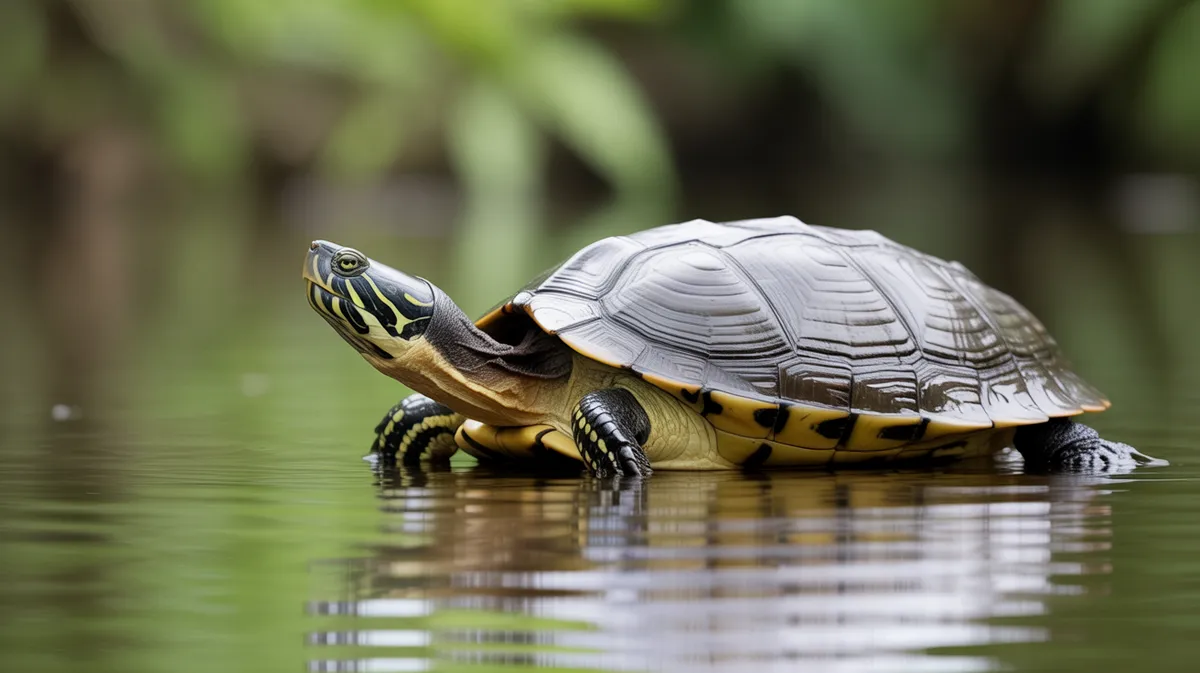
The Central American River Turtle, also known as 'hickatee,' is an aquatic turtle native to the freshwater rivers and lagoons of Central America. This species has a large, smooth, olive to brown carapace and a distinctive, streamlined head adapted for its aquatic lifestyle. Mainly nocturnal, it spends most of its time submerged, surfacing only to breathe or bask occasionally. As a critically endangered species, it faces serious threats from overhunting and habitat loss, making it one of the world's rarest turtles.
Fascinating facts
Ancient Lineage
Dermatemys mawii is the sole surviving member of the family Dermatemydidae, with fossil records dating back millions of years.
Fully Aquatic
Unlike many other turtles, this species rarely leaves the water and is adapted to a completely aquatic lifestyle.
Strict Herbivore
Its diet consists almost entirely of aquatic plants and fruits, with a preference for soft vegetation.
Detailed description
The Central American River Turtle (Dermatemys mawii) is a large, fully aquatic chelonian, with adults typically reaching carapace lengths of 40–60 cm (16–24 in) and weights up to 22 kg (48 lbs), making it one of the largest freshwater turtles in the region. Its carapace is smooth, oval, and ranges in color from olive to dark brown, often with a lighter plastron. The head is elongated and flattened, with a protruding snout and fleshy lips adapted for grazing on aquatic vegetation. Limbs are robust and fully webbed, facilitating strong swimming in slow-moving rivers and lagoons. D. mawii is primarily nocturnal, spending daylight hours concealed among submerged logs or dense aquatic vegetation. It is highly aquatic, rarely basking, and only surfaces briefly to breathe. The species is solitary outside of the breeding season, with little evidence of social structure. Reproduction occurs seasonally, with females emerging onto riverbanks to lay eggs in sandy or muddy nests. Hatchlings are highly vulnerable to predation and environmental fluctuations. Unique among Central American turtles, D. mawii lacks a hinged plastron and cannot retract its head fully, relying instead on its aquatic habits and cryptic coloration for protection.
Did you know?
Despite being able to grow quite large, the Central American River Turtle is almost never seen basking in the sun, preferring a fully aquatic life.
Research & sources
Behaviour & social structure
Dermatemys mawii exhibits largely crepuscular and nocturnal activity, foraging primarily at night for aquatic plants such as water hyacinth, grasses, and submerged leaves. Feeding involves cropping vegetation with its sharp, horny beak, and it may travel considerable distances along river systems in search of food. The species is generally solitary, with minimal social interactions except during the breeding season when multiple individuals may congregate in suitable nesting areas. Territoriality is not pronounced, and aggressive encounters are rare. During the day, individuals rest on river bottoms or among submerged debris, surfacing only briefly to breathe. Basking is infrequent, likely due to their cryptic lifestyle and the risk of predation. Seasonal movements are observed, with turtles migrating to deeper or more permanent water bodies during dry periods.
Reproduction & life cycle
Breeding in D. mawii typically occurs during the rainy season (May to November), when increased water levels facilitate movement and nesting. Courtship and mating take place in water, with males using tactile cues to stimulate females. Females lay 6–16 spherical, hard-shelled eggs per clutch in shallow nests dug on riverbanks or sandbars, often at night. Incubation lasts approximately 120–150 days, depending on temperature and humidity. There is no parental care after egg-laying; hatchlings emerge synchronously and instinctively make their way to water. Sexual maturity is reached relatively late, at 8–12 years of age, contributing to the species' vulnerability to overexploitation.
Adaptations & survival
Dermatemys mawii is highly specialized for an aquatic lifestyle. Its streamlined, flattened shell reduces drag, and fully webbed feet provide powerful propulsion in water. The nostrils are positioned dorsally, allowing the turtle to breathe while remaining mostly submerged. The species exhibits a reduced reliance on basking, which may help avoid predation. Its herbivorous diet is supported by a strong, serrated beak for cropping tough aquatic plants. Physiologically, D. mawii can remain submerged for extended periods, utilizing cloacal respiration to extract oxygen from water. The cryptic coloration of the carapace and plastron provides camouflage among submerged vegetation and muddy substrates.
Cultural significance
Dermatemys mawii, known locally as 'hickatee,' holds significant cultural and economic value in Belize, Guatemala, and southern Mexico. Its meat is considered a delicacy and is traditionally consumed during Lent and Easter, leading to increased hunting pressure during these periods. The turtle also features in local folklore and is sometimes associated with water spirits or fertility. Despite its protected status, traditional uses persist, complicating conservation efforts. Community-based conservation programs are increasingly engaging local people to promote sustainable practices and raise awareness of the species' plight.
Recent research
Recent research has focused on population genetics, revealing low genetic diversity across fragmented populations, which may impact long-term viability. Radio telemetry studies have provided insights into movement patterns, habitat preferences, and seasonal migrations. Conservation biologists are investigating head-starting and captive breeding programs to supplement wild populations. Studies on diet and digestive physiology have highlighted the species' strict herbivory and reliance on specific aquatic plants. Ongoing research aims to develop effective nest protection and community-based management strategies. The species is also a flagship for freshwater ecosystem conservation in Central America.
Sources
Dermatemys mawii (Central American River Turtle): Natural History, Ecology, and Conservation
A.G.J. Rhodin, C.B. Iverson, J.B. Iverson, and R. Vogt (2017)
scientificDermatemys mawii: The IUCN Red List of Threatened Species 2021
IUCN SSC Tortoise and Freshwater Turtle Specialist Group
conservationDermatemys mawii (Central American River Turtle): Natural History, Ecology, and Conservation
P. P. van Dijk, J. A. Ramos-Medina, et al. (2012)
scientificIUCN Red List of Threatened Species: Dermatemys mawii
IUCN SSC Tortoise and Freshwater Turtle Specialist Group
conservationVideos
Habitat
Freshwater rivers and lagoons


Conservation
The Central American River Turtle is currently classified as Critically Endangered on the IUCN Red List.
Threats & challenges
The Central American River Turtle faces severe threats from overhunting for its meat, which is highly prized in local cuisine, especially during religious festivals. Habitat loss and degradation due to deforestation, river modification, pollution, and agricultural runoff further reduce suitable environments. Illegal trade and unsustainable harvest rates have led to dramatic population declines, with some local extinctions reported. The species' slow growth, late maturity, and low reproductive output exacerbate its vulnerability. Conservation efforts are hindered by limited enforcement of protective regulations, lack of public awareness, and ongoing habitat destruction. Current population trends indicate continued decline, with the species now considered critically endangered by the IUCN.
Taxonomy
Scientific name
Dermatemys mawii
- Kingdom
- Animalia
- Phylum
- Chordata
- Class
- Reptilia
- Order
- Testudines
- Family
- Dermatemydidae
- Genus
- Dermatemys
- Species
- mawii
Community notes
Share your observations about the Central American River Turtle.
No community notes yet. Be the first!
Discover more wildlife
More fascinating animals from the encyclopedia.