
Herbivores
290 species in the encyclopedia
Plant-eaters that feed on leaves, grasses, fruit, and seeds.
Addax
Addax nasomaculatus
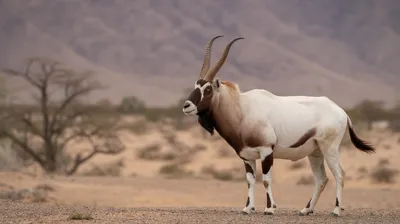
The addax is a desert antelope so committed to aridity that a wild individual may never drink standing water in its life, extracting all it needs from desert grasses, acacia and the dew that condenses on plants before dawn. Its kidneys concentrate urine to a syrup and it feeds mainly at night, when the sparse Sahelian vegetation has reabsorbed the most moisture. The coat performs a seasonal trick: greyish-brown for winter warmth, then bleaching to near-white in summer to reflect the sun. Broad, splayed hooves with flattened soles spread its weight across soft dunes where a hard-hoofed antelope would sink. That same dune-adapted build makes the addax a poor sprinter over firm ground, and this is precisely what destroyed it — once hunters had four-wheel-drive vehicles, an animal that could outlast a lion could not outrun a truck. Both sexes carry spiralling horns of two to three twists, up to about 80 cm long. Today it is one of the most endangered large mammals on Earth, with a wild population in the Termit and Tin Toumma region of Niger that has at times been counted in the dozens.
African Elephant
Loxodonta africana
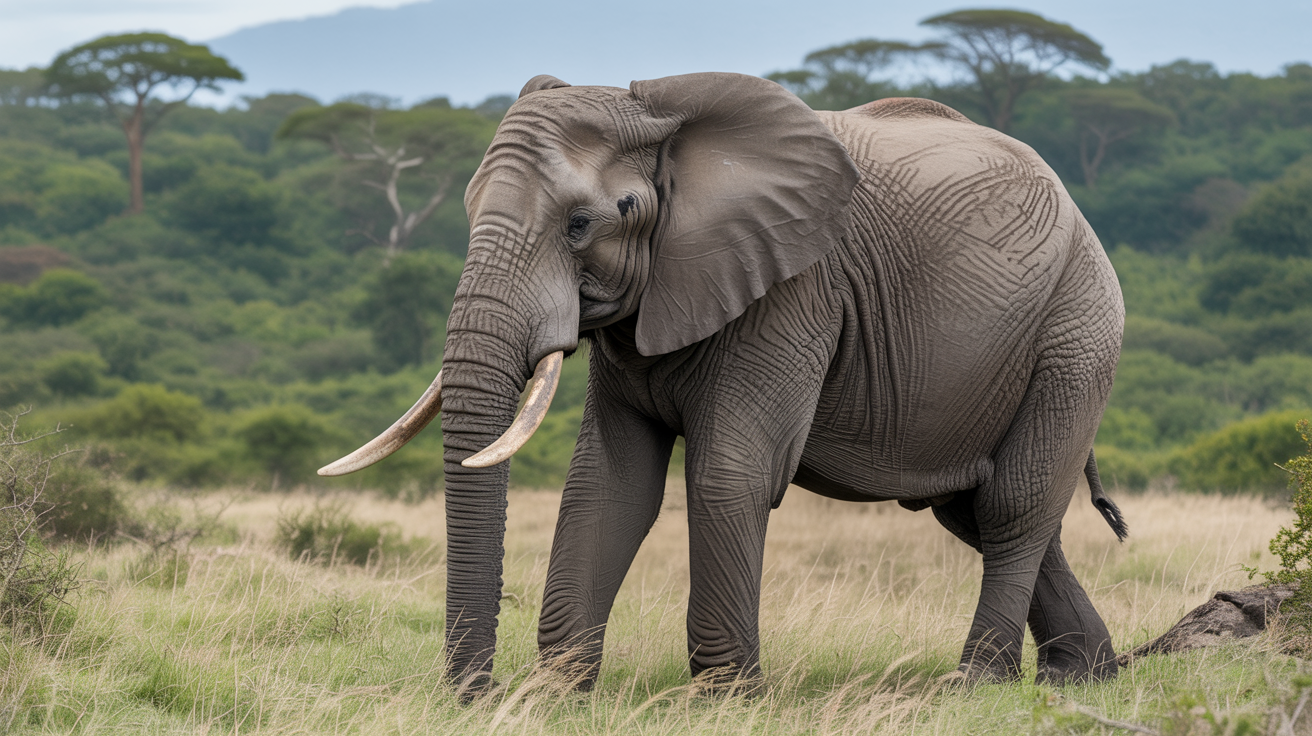
The African elephant, scientifically known as Loxodonta africana, is the largest land mammal on Earth, with bulls reaching up to 4 meters at the shoulder and weighing as much as 6,000 kilograms. These majestic creatures are divided into two species: the African bush elephant and the African forest elephant. The bush elephant, found in a variety of habitats from savannas to deserts, is distinguished by its larger size, broader ears, and curved tusks, which are adaptive traits for dissipating heat and foraging. In contrast, the forest elephant, which inhabits the dense rainforests of Central and West Africa, has straighter tusks and more rounded ears, adaptations that facilitate maneuvering through thick underbrush. Both species exhibit complex social structures, typically led by a matriarch, where females and their calves form tight-knit family groups. Their grey skin is not just a protective layer but also serves as a cooling mechanism, with mud baths providing sunscreen and pest protection.
African Grey Parrot
Psittacus erithacus
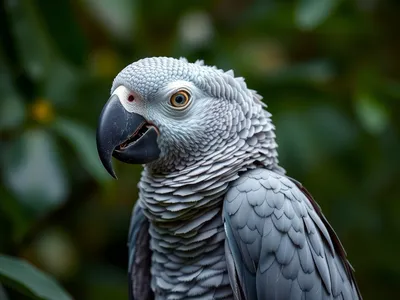
The African grey is the parrot that changed what science was prepared to say about animal minds. Over three decades, Irene Pepperberg's grey, Alex, learned to label around a hundred objects, colours, shapes and materials, and — crucially — to combine those categories: shown a tray, he could answer which object was both green and three-cornered, which requires holding two attributes in mind at once. He grasped same and different as abstract concepts, and he understood none, a functional zero, which he produced spontaneously when asked which colour differed among a set of identical objects. He is also the only non-human animal on record to have asked an existential question, when he saw himself in a mirror and asked what colour he was. Greys are long-lived, often past fifty, and intensely social, which is exactly why they suffer so badly alone: a bored grey plucks out its own feathers. The demand created by that intelligence has been ruinous, and trapping for the pet trade, combined with habitat loss, has pushed the species onto the endangered list.
African Pancake Tortoise
Malacochersus tornieri
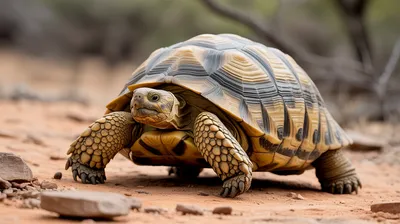
The pancake tortoise abandoned the one thing tortoises are famous for: armour. Its shell is flat, thin and riddled with large fenestrations — genuine holes in the underlying bone — so the whole carapace flexes like a stiff leather pad. Squeezed into a crack in a granite kopje, the tortoise inflates its lungs and braces outward with its legs, wedging itself so firmly that a predator cannot extract it; the flexible shell lets it exploit crevices far too narrow for a domed tortoise. It does not withdraw and sit tight, because it cannot — instead it is the fastest tortoise known, and will simply run for the nearest rock and disappear. The low mass that comes with a hollow shell also means that, unlike a heavy domed species, a flipped pancake tortoise can right itself with a flick of the neck and leg. It lives on rocky outcrops in Kenya and Tanzania, lays a single egg at a time several times a year, and was moved to CITES Appendix I in 2019 after collectors stripped whole kopjes for the pet trade.
African Spurred Tortoise
Centrochelys sulcata
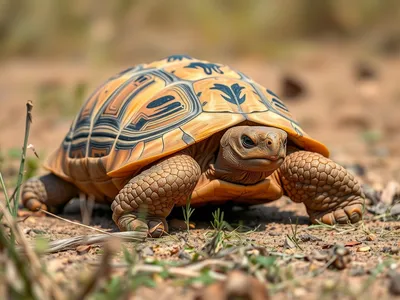
The sulcata is the largest mainland tortoise on Earth — outweighed only by the island giants of Aldabra and Galapagos — and it can pass 100 kg. It survives the Sahel by engineering its own climate: it excavates burrows that can run 3 m deep and over 10 m long, where humidity stays high and temperature stable, and it aestivates through the worst of the dry season inside. Those burrows are a keystone resource, sheltering rodents, snakes, lizards and invertebrates that would otherwise cook. The tortoise stores water in an enlarged bladder and reabsorbs it as needed, which is why it can go months without drinking, feeding on dry grasses that most herbivores cannot digest. The "spurs" of its name are the conical, horny scales on the back of each thigh. Its size is also its tragedy in captivity: sold as a hatchling the size of a golf ball, it grows into a burrowing, fence-flattening animal that outlives its owner, and reptile rescues across the United States are permanently overwhelmed with abandoned adults.
Aldabra Giant Tortoise
Aldabrachelys gigantea
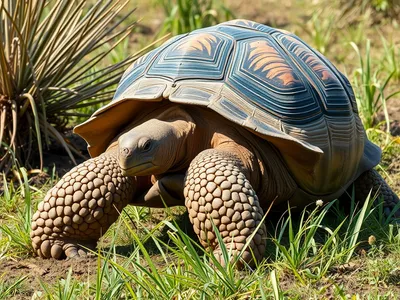
Aldabra Atoll in the Seychelles carries roughly 100,000 giant tortoises — many times the number in all of Galapagos, making it by far the largest population of giant tortoises on Earth, and one of the last places where a reptile is the dominant grazing herbivore. Their grazing has produced "tortoise turf": a dwarfed, low-growing sward of grasses and herbs that flower at ground level, plants that evolved under constant cropping in the same way that grasses coevolved with mammalian grazers elsewhere. The main killer on Aldabra is not predation but heat. A tortoise has no way to shed heat quickly, and on an atoll with little shade, animals caught out in the open at midday can die of hyperthermia; competition for shade is real and lethal. They will stand on their hind legs to reach higher browse, and populations differ in neck length accordingly. They are also opportunistic and unsentimental feeders, gnawing bones and eating carrion for calcium and protein.
Alpaca
Vicugna pacos
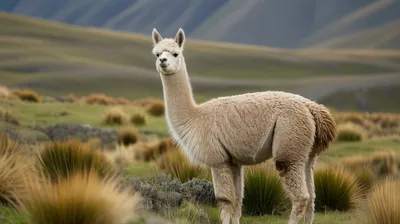
The alpaca is a domesticated species of South American camelid renowned for its soft and luxurious fleece, which is prized in the textile industry. Smaller than its close relative, the llama, alpacas are gentle, social animals that thrive in herds and are primarily kept for their wool. Originating from the high Andes mountains, they are well-adapted to cold, harsh environments at high altitudes. Alpacas have a calm temperament and communicate through body language and a variety of vocalizations. Their unique appearance, marked by long necks and large, expressive eyes, makes them a favorite among animal enthusiasts.
Amazonian Manatee
Trichechus inunguis
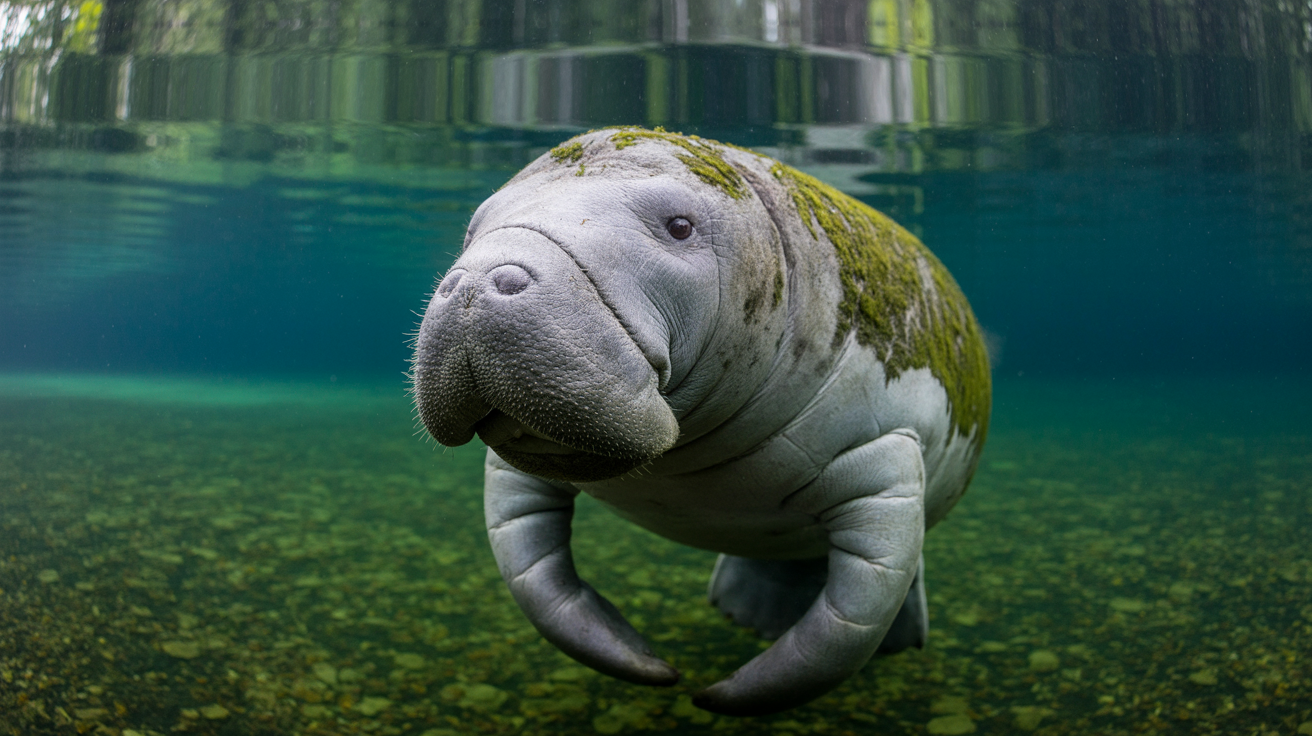
The Amazonian manatee is the only sirenian that lives exclusively in fresh water, never entering the sea, and it is the smallest and slimmest of the manatees. Its scientific name, Trichechus inunguis, means "without nails" — unlike its Caribbean cousin it has no nails on its flippers. Its survival strategy is extreme patience: when the Amazon's floodwaters retreat, animals are stranded in shrinking lakes with almost nothing left to eat, and a manatee may simply fast for months, living off fat laid down in the flood season and letting its metabolic rate fall. Individuals have been documented going without significant food through most of the dry season. The teeth solve the other problem: aquatic plants are loaded with abrasive silica, so manatee molars march forward along the jaw throughout life, worn ones dropping out at the front and new ones erupting at the back, a conveyor belt shared with elephants, their closest living relatives. Between the 1930s and 1950s hundreds of thousands were killed for their tough hide, which was made into machine belts and hoses.
Amber Snail
Succinea putris
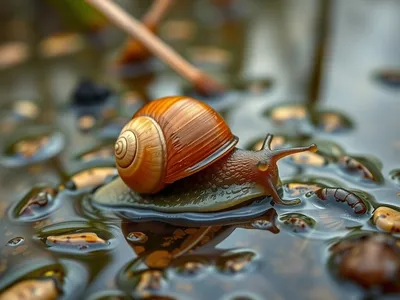
The Amber Snail is a small terrestrial gastropod mollusk recognized for its translucent, amber-colored shell. It is most commonly found in moist habitats near freshwater sources such as streams, rivers, and marshes. The snail prefers environments with abundant vegetation, where it feeds primarily on decaying plant matter and algae. Amber Snails play a role in nutrient cycling within wetland ecosystems and serve as prey for a variety of birds, amphibians, and insects.
American Beaver
Castor canadensis
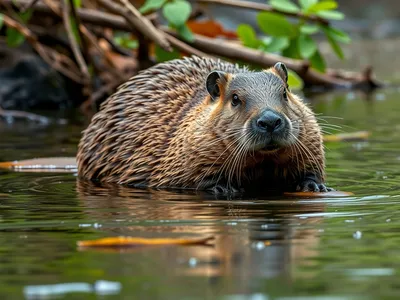
The American beaver is North America's largest rodent and one of the very few animals that remakes an entire landscape to suit itself. By felling trees and damming streams it converts running water into ponds, creating wetland that supports fish, amphibians, waterfowl and moose while recharging groundwater and trapping sediment. Its incisors are orange because the enamel is reinforced with iron; the softer dentine behind wears faster than the hard front face, so the teeth self-sharpen to a chisel edge with use — necessary, since they grow continuously and must be worn down. A beaver can stay submerged for around fifteen minutes, closing valve-like nostrils and ears and drawing a transparent third eyelid across each eye to see underwater, while its lips seal shut behind the incisors so it can gnaw wood while submerged. The dam is not the home — the lodge is, and its underwater entrances make it very hard for wolves and coyotes to reach the family inside. Beavers are monogamous and live in family groups, and the sound of running water alone is enough to set them building.
American Bison
Bison bison
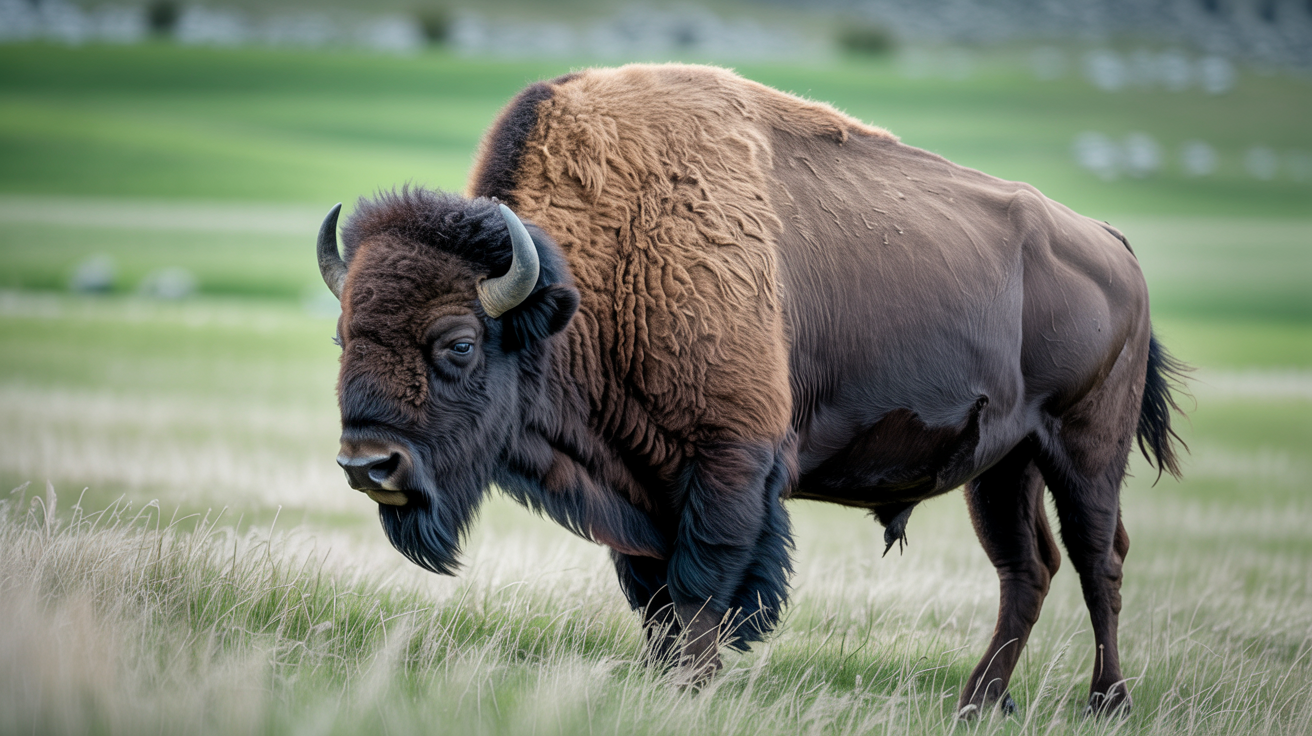
The American Bison (Bison bison), often misnamed as the buffalo, is a robust herbivore native to North America. Distinguished by its massive head, pronounced shoulder hump, and thick, shaggy mane, the bison is well-adapted to the continent's diverse climates. Historically, bison roamed the expansive 'great bison belt,' a vast grassland stretching from Alaska to the Gulf of Mexico and as far east as the Atlantic Seaboard. This range included diverse ecosystems, from the plains to woodlands, allowing bison to thrive in various habitats. Adult males, known as bulls, can weigh up to 2,000 pounds and stand over 6 feet tall at the shoulder, dwarfing their European counterparts. Their thick fur provides insulation against harsh winters, while their large heads and muscular necks enable them to plow through snow in search of forage. The bison's complex social structure includes matriarchal herds, which play a crucial role in maintaining genetic diversity and social learning among the species.
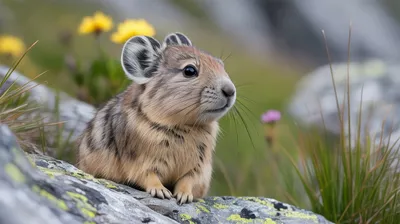
American Pika
Ochotona princeps
The pika is not a rodent — it is a lagomorph, a close relative of rabbits and hares, and it is one of the very few mammals that stays awake and active all winter in alpine talus without hibernating. It gets through by farming. Through summer it makes repeated dashes into the meadow, cutting vegetation and stacking it on rocks to cure in the sun, building a haypile that may contain dozens of plant species and can fill a wheelbarrow. The selection is not random: pikas deliberately include plants loaded with toxic phenolics, which act as preservatives and slow decay, and they eat those portions later in the winter once the toxins have degraded. Its constraint is heat, not cold. A pika's dense fur and high metabolism mean it can die after only a few hours' exposure at around 25.5 C, so it retreats into the cool interstices of the rock slope on hot days and cannot cross warm valleys — which is why populations in the Great Basin have been winking out at lower elevations as summers warm.
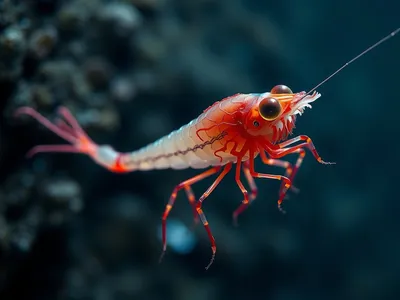
Antarctic Krill
Euphausia superba
Antarctic krill may be the most abundant single wild animal species on Earth by biomass: estimates put the standing stock in the hundreds of millions of tonnes, comparable to or exceeding the mass of all humans. They form swarms so dense — up to tens of thousands of animals per cubic metre — that they are visible from the air as reddish stains under the sea, and whole ecosystems from whales to penguins to crabeater seals rest on them. In winter they graze algae from the underside of sea ice, combing it off with rake-like thoracic legs, which is why the loss of winter ice is an existential threat to them. Their strangest ability is shrinking: a starving krill will moult into a smaller body, running its own growth backwards, and can do this repeatedly through a dark winter — extremely unusual among animals, and it means body size is a poor guide to age. They live five or six years, carry light-producing photophores, and migrate vertically hundreds of metres each day.
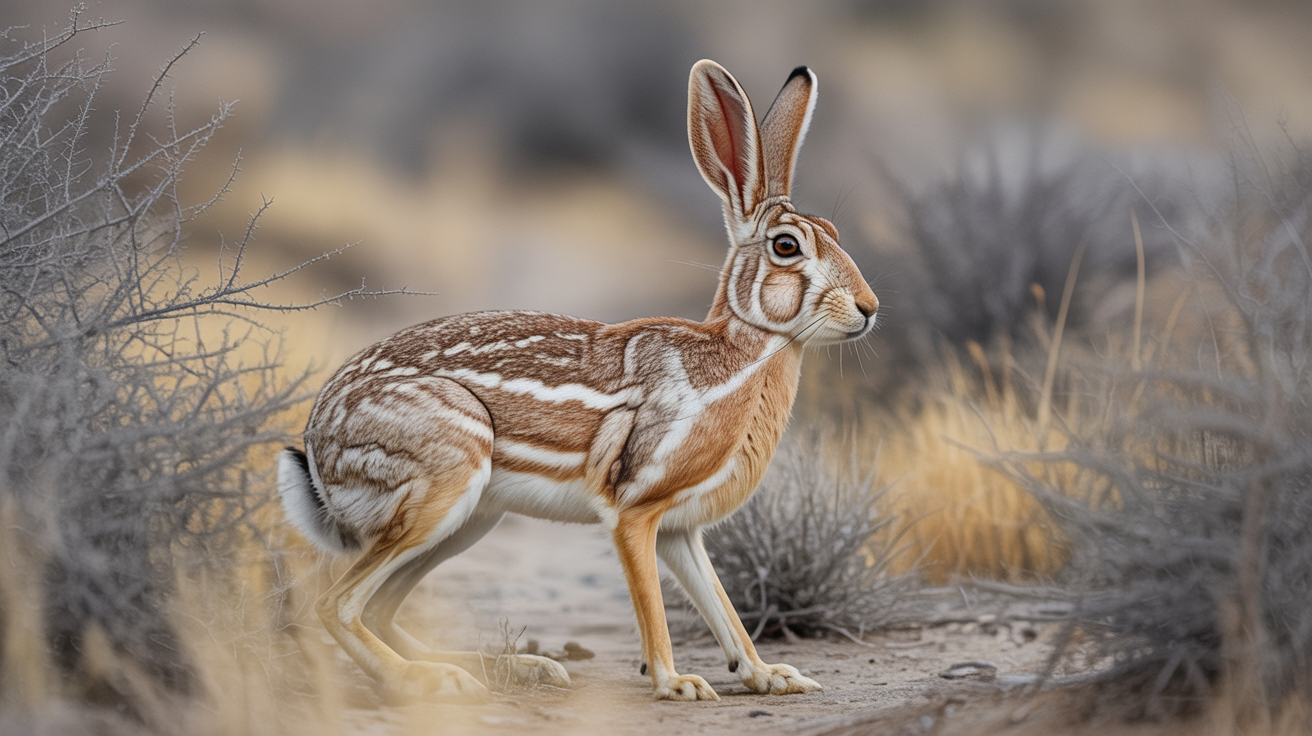
Antelope Jackrabbit
Lepus alleni
The antelope jackrabbit is a hare, not a rabbit, and the distinction is not pedantry: its young are born fully furred with their eyes open, able to run within hours, and there is no burrow anywhere in the story. It lives in the Sonoran Desert, where the problem is not finding food but shedding heat, and it solves that with the largest ears of any North American hare — up to 20 cm, thin, and richly vascularised. By dilating those vessels and holding the ears up into the shade or a breeze, it radiates heat straight into the air, which is a large part of why it can survive a desert summer without ever drinking; the rest of its water comes from cactus, mesquite and grasses. Its name comes from an evasion tactic: as it runs, it flashes a white patch on the flank facing the predator, and can shift the white from one side to the other as it changes direction, in the way a pronghorn flashes its rump. It bounds at over 45 km/h with long, high leaps that let it look back over the brush.
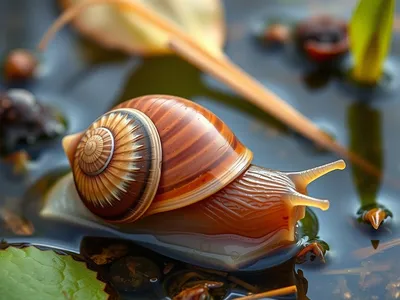
Apple Snail
Pomacea canaliculata
The Apple Snail is a large freshwater gastropod known for its rounded shell, which can range in color from golden yellow to dark brown. Native to South America, this snail is highly adaptable and has been introduced to many regions worldwide, often becoming an invasive species. Apple Snails are equipped with both gills and lungs, allowing them to survive in oxygen-poor waters and even on land for short periods. Their voracious appetite for aquatic plants can have significant impacts on local ecosystems and agriculture, particularly rice paddies.
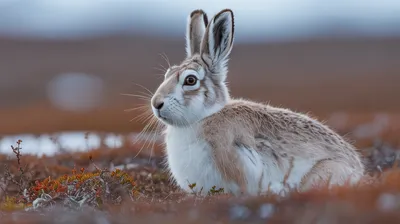
Arctic Hare
Lepus arcticus
The Arctic hare is built by subtraction. Its ears are short and its limbs are compact, minimising the surface area available to leak heat — the exact inverse of the huge-eared desert jackrabbits, and one of the cleanest field demonstrations of Allen's rule. In the far north it does not bother with a seasonal wardrobe at all: high-latitude populations stay white all year, because the ground is essentially never brown, while more southerly ones moult to blue-grey in summer. It has heavy claws on the forefeet used to dig through hard wind-packed snow to reach willow and saxifrage, and willow twigs, buds and bark make up most of its winter diet. It can hit 60 km/h, and when moving slowly through snow it will often rear up and bound along on its hind legs alone, kangaroo-fashion. Unusually for a hare, it aggregates: hundreds and occasionally thousands gather in loose groups, which may improve predator detection on terrain with no cover whatsoever.
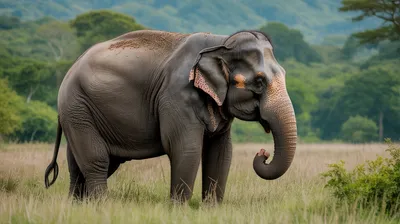
Asian Elephant
Elephas maximus
The Asian elephant differs from the African in more than ear size. Its trunk ends in a single finger-like process rather than two, so it grips by curling the tip around an object and pinning it, where an African elephant pinches with two lips. It has a twin-domed forehead, a more arched back, and — crucially — tusks that many individuals simply do not have. Females essentially never carry proper tusks, only small tushes, and a large proportion of males are tuskless too; in Sri Lanka the figure is around 90 percent, a legacy of centuries of selective removal of the tusked animals. The trunk itself contains on the order of 40,000 muscle fascicles and no bone, and it is simultaneously a nose, a hand, a hose, a snorkel and a loudspeaker. Elephants communicate with infrasonic rumbles below the range of human hearing, which travel for kilometres through air and ground, and they detect them partly through their feet. Adult males enter musth, a periodic state with testosterone levels up to sixty times baseline, marked by temporal gland secretion and dangerous aggression.
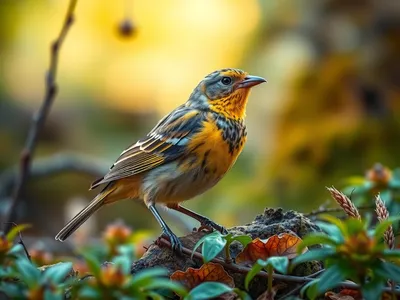
Atlantic Canary
Serinus canaria
The Atlantic Canary is a small, vibrant songbird native to the Macaronesian Islands, particularly the Canary Islands, Azores, and Madeira. Recognized for its bright yellow-green plumage and melodic singing, it has been widely bred in captivity, giving rise to the popular domestic canary. Wild Atlantic Canaries inhabit forests, shrublands, and gardens, where they feed mainly on seeds and small insects. Their pleasant song and adaptability make them a favorite among bird enthusiasts worldwide.
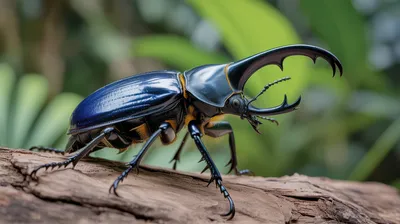
Atlas Beetle
Chalcosoma atlas
The Atlas Beetle is one of the largest and most impressive beetles in the world, recognized for its three prominent horns on males. Native to the tropical forests of Southeast Asia, this beetle is a member of the rhinoceros beetle group and exhibits strong sexual dimorphism, with males being much larger and more heavily armored than females. The Atlas Beetle spends the majority of its life as a larva, feeding on decaying wood, before emerging as an adult to search for mates. Adult beetles are known for their strength, capable of lifting objects up to several times their own body weight.
Atlas Moth
Attacus atlas
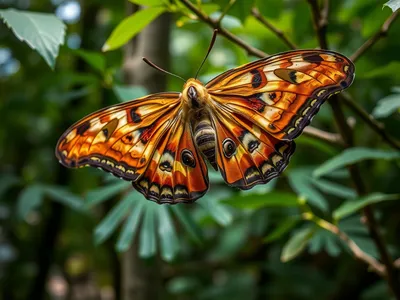
The atlas moth is among the largest insects in the world by wing area — and the adult has no functional mouth. It cannot eat. It emerges from the cocoon carrying every calorie it will ever have, banked as fat during its caterpillar stage, and it spends the week or two it has left doing one thing: finding a mate. The division of labour is total. The female barely moves, releasing pheromones and waiting; the male flies, sometimes for kilometres, guided by vast feathered antennae sensitive enough to detect a few molecules of her scent on the night air. The wingtips are the moth's other famous feature: each is patterned to resemble the head of a snake, complete with a suggestion of an eye and scales, and a disturbed moth will drop to the ground and slowly writhe its wings to sell the illusion. Its cocoon produces a coarse, durable silk called fagara, which is harvested commercially.
Bactrian Camel
Camelus bactrianus
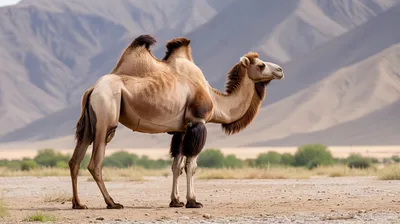
The two humps of a Bactrian camel are fat, not water — a strategic decision to store the body's insulation in two lumps on the back rather than spread beneath the skin, so that the rest of the body can radiate heat freely. A well-fed camel's humps stand firm; a starved one's flop over. The camel's water tricks are elsewhere. It can lose up to about 30 percent of its body water, a level that would kill most mammals through blood thickening, because its red blood cells are oval rather than round and unusually elastic — they resist rupturing when the animal rehydrates and can swell enormously. That is what lets a camel drink over 100 litres in a few minutes without its cells bursting. Nostrils close against blowing sand, double rows of eyelashes screen the eyes, and the woolly winter coat sheds in great hanging sheets in spring. The domestic Bactrian is common, but the wild Bactrian camel is now recognised as a separate species with only around a thousand individuals left in the Gobi.
Baird's Tapir
Tapirus bairdii
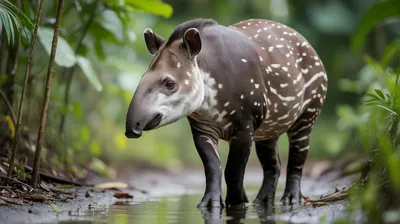
Baird's tapir is the largest native land mammal in Central America and one of the least often seen. It is shy, largely nocturnal, and keeps to dense forest and water, and its growing scarcity is a problem that extends far beyond the animal itself: like all tapirs it swallows large fruits whole and disperses the seeds intact over long distances, and there is nothing else in its range that can do the job at that size. Where the tapir vanishes, the composition of the forest changes with it. It is related to horses and rhinos rather than to pigs, and it carries the same short prehensile proboscis, used to grip and strip vegetation and as a snorkel while swimming — it takes to rivers readily and can walk submerged along the bottom. Calves are born with a striped and spotted coat that fades within a few months. It breeds very slowly, usually a single calf after a gestation of roughly thirteen months, which leaves it almost no capacity to absorb hunting or habitat loss, and it is endangered across its range.
Bamboo Worm
Omphisa fuscidentalis
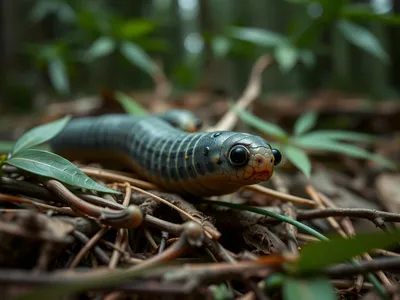
The bamboo worm is the larval stage of a moth species native to Southeast Asia, particularly found inside bamboo stems. These cream-colored, soft-bodied larvae are renowned for their nutritional value and are harvested as a delicacy in countries like Thailand, Laos, and Myanmar. Bamboo worms feed on the soft tissue inside bamboo, creating small tunnels, and can be found in clusters inside culms. Despite their humble appearance, they play an important ecological role in bamboo decomposition and nutrient cycling. Their popularity as an edible insect is growing due to their rich protein content and sustainable harvesting potential.
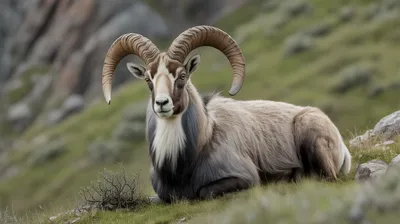
Bharal (Blue Sheep)
Pseudois nayaur
The bharal, or blue sheep, is neither a sheep nor a goat but sits genetically between them, closer to goats, and it has puzzled taxonomists for a century. Its slate-blue-grey coat is not camouflage in the usual sense: the bharal does not hide, it stands in the open on Himalayan cliffs and precipitous scree, matching the colour of the rock, and relies on terrain that a predator cannot cross safely. That defensive strategy is also why it is the primary prey of the snow leopard — the only large predator that can operate on those slopes at all — and bharal density is the single best predictor of where snow leopards persist. The horns of males curve outward and back, like a heavy moustache, and rams fight by rearing on their hind legs and dropping their full weight into a downward clash. Bharal range up to 5,500 m, grazing alpine grasses and, in winter, dropping to lower slopes where they come into direct conflict with village livestock.