
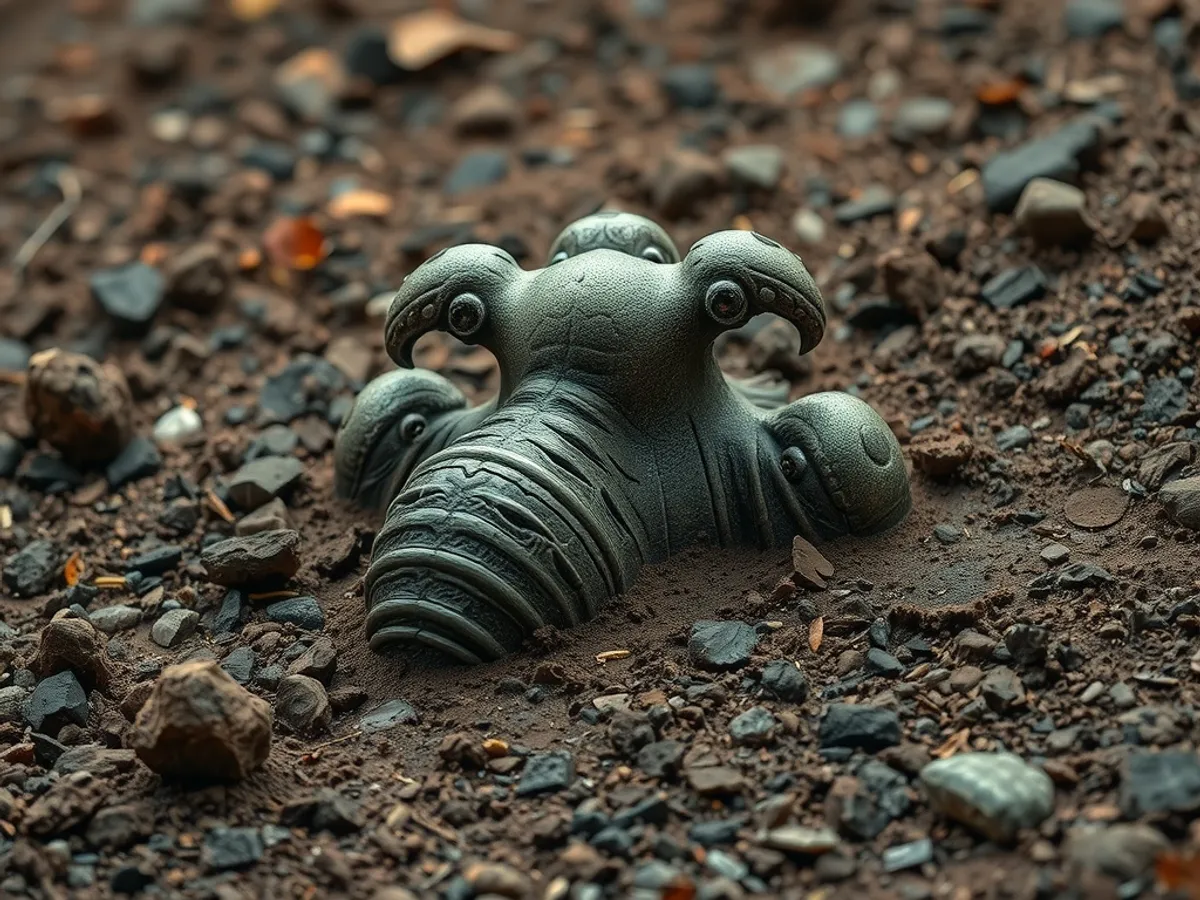
About the Conan the Bacterium
Deinococcus radiodurans, commonly nicknamed 'Conan the Bacterium,' is a remarkable microorganism celebrated for its extreme resistance to ionizing radiation, desiccation, and other environmental stresses. This spherical bacterium can survive doses of radiation thousands of times higher than what would be lethal for humans, making it one of the toughest known life forms. Its extraordinary DNA repair mechanisms and robust cellular structure enable it to thrive in environments that are otherwise considered inhospitable. D. radiodurans is often found in places like soil, sewage, and even nuclear waste sites.
Fascinating facts
Radiation Master
Deinococcus radiodurans can survive radiation levels 1,500 times greater than those that would kill a human.
DNA Repair Wizard
It possesses highly efficient DNA repair enzymes that allow it to reconstruct its genome even after severe fragmentation.
Bioremediation Helper
D. radiodurans is being used experimentally to clean up radioactive waste thanks to its resilience in toxic environments.
Detailed description
Deinococcus radiodurans, often called 'Conan the Bacterium,' is a spherical, Gram-positive bacterium typically 1.5–3.5 micrometers in diameter and often found in characteristic tetrads (groups of four cells). Its cell envelope is unusually thick, consisting of multiple layers including an outer membrane, a thick peptidoglycan wall, and an inner membrane, contributing to its resilience. The cytoplasm contains multiple copies (4–10) of its genome, a key factor in its extraordinary DNA repair capacity. D. radiodurans is non-motile and does not form spores, but it can enter a dormant state under extreme stress. It is an obligate aerobic heterotroph, deriving energy from organic compounds, and is commonly isolated from soil, dust, sewage, and even irradiated materials. The bacterium is notable for its ability to withstand acute doses of ionizing radiation up to 5,000 Gy (gray units) without loss of viability, and up to 15,000 Gy with some survivors, far exceeding the lethal dose for humans (5 Gy). It also tolerates prolonged desiccation, extreme cold (down to -79°C), acidic conditions (pH as low as 2), and vacuum, making it a polyextremophile. D. radiodurans forms reddish colonies due to carotenoid pigments, which also help protect against oxidative damage. Its robust DNA repair mechanisms, including efficient homologous recombination and unique protein complexes, allow it to reassemble shattered chromosomes within hours after damage. The bacterium reproduces by binary fission, and while it does not display complex social behaviors, it can form biofilms under certain conditions.
Did you know?
Deinococcus radiodurans can stitch its shattered DNA back together within hours after exposure to extreme radiation.
Research & sources
Wikipedia summary
Deinococcus radiodurans is a bacterium, an extremophile and one of the most radiation-resistant organisms known. It can survive cold, dehydration, vacuum, and acid, and therefore is known as a polyextremophile. The Guinness Book Of World Records listed it in January 1998 as the world's most radiation-resistant bacterium or lifeform.
Behaviour & social structure
Deinococcus radiodurans exhibits relatively simple behavioral patterns typical of non-motile bacteria. It does not actively hunt or move toward food sources but relies on diffusion to acquire nutrients from its environment. The bacterium is a chemoorganoheterotroph, metabolizing a wide range of organic substrates, including sugars, amino acids, and peptides. It can form biofilms, which may enhance its resistance to environmental stressors and facilitate communal survival. D. radiodurans displays coordinated DNA repair responses following exposure to radiation or desiccation, with rapid upregulation of repair enzymes and protective proteins. While it does not engage in social interactions in the animal sense, populations can communicate via quorum sensing molecules to regulate gene expression in response to cell density. Daily routines are dictated by environmental conditions, with metabolic activity slowing dramatically during periods of stress or nutrient scarcity.
Reproduction & life cycle
D. radiodurans reproduces asexually through binary fission, a process in which the cell duplicates its DNA and divides into two genetically identical daughter cells. There is no evidence of sexual reproduction or genetic exchange via conjugation under normal conditions, though natural transformation (uptake of environmental DNA) has been observed, contributing to genetic diversity. The bacterium does not form spores but can enter a dormant state during extreme desiccation or nutrient deprivation. There is no defined breeding season, as reproduction is continuous and governed by environmental factors such as temperature, nutrient availability, and moisture. Parental care is absent, as is typical for prokaryotes.
Adaptations & survival
D. radiodurans possesses several unique adaptations for survival in extreme environments. Its cell wall is highly structured, providing mechanical protection and resistance to chemical damage. The bacterium contains high levels of manganese and low levels of iron, which help prevent protein oxidation and preserve enzyme function under oxidative stress. Multiple genome copies allow for accurate DNA repair via homologous recombination, even after severe fragmentation. Specialized DNA repair proteins, such as RecA and PprA, rapidly reassemble broken chromosomes. Carotenoid pigments in the cell membrane act as antioxidants, shielding the cell from reactive oxygen species generated by radiation. The bacterium also accumulates compatible solutes and stress proteins to stabilize cellular structures during desiccation and freezing. Its ability to form biofilms provides additional communal protection against environmental hazards.
Cultural significance
D. radiodurans has become an icon in popular science and microbiology, often cited as the 'world's toughest bacterium.' Its nickname 'Conan the Bacterium' reflects its reputation for invincibility. The organism has inspired research into life’s potential on Mars and other planets, and its DNA repair mechanisms are studied for applications in medicine, biotechnology, and astrobiology. It has no traditional uses or roles in mythology, but its resilience has made it a symbol of survival and adaptability in scientific literature and media.
Recent research
Recent research has focused on the molecular mechanisms underlying D. radiodurans’ DNA repair, including the discovery of novel proteins such as DdrA and PprA that protect and rejoin DNA fragments. Studies have also explored the bacterium’s potential for bioremediation, engineering it to degrade toxic compounds or sequester heavy metals in radioactive waste sites. Genomic and proteomic analyses have revealed unique stress response pathways and antioxidant systems. Ongoing research investigates the potential for using D. radiodurans in synthetic biology, such as developing radiation-resistant probiotics or manufacturing biomolecules in harsh environments. Its survival in simulated Martian conditions has made it a model organism in astrobiology, informing the search for life beyond Earth.
Videos
Habitat
Soil and extreme environments

Conservation
The Conan the Bacterium is currently classified as Least Concern on the IUCN Red List.
Threats & challenges
Currently, Deinococcus radiodurans faces few natural threats due to its extreme resilience. It is not known to be pathogenic to humans, animals, or plants, and its populations are stable in natural environments. Human activities, such as soil pollution and habitat alteration, may affect local microbial communities, but D. radiodurans is often among the first colonizers of disturbed or contaminated sites. There are no significant conservation concerns, and the species is categorized as 'Least Concern.' Laboratory strains are widely used in research and biotechnology, and there is no evidence of population decline or significant ecological threats.
Taxonomy
Scientific name
Deinococcus radiodurans
- Kingdom
- Bacteria
- Phylum
- Deinococcota
- Class
- Deinococci
- Order
- Deinococcales
- Family
- Deinococcaceae
- Genus
- Deinococcus
- Species
- radiodurans
Community notes
Share your observations about the Conan the Bacterium.
No community notes yet. Be the first!
Discover more wildlife
More fascinating animals from the encyclopedia.