
About the Northern Dusky Salamander
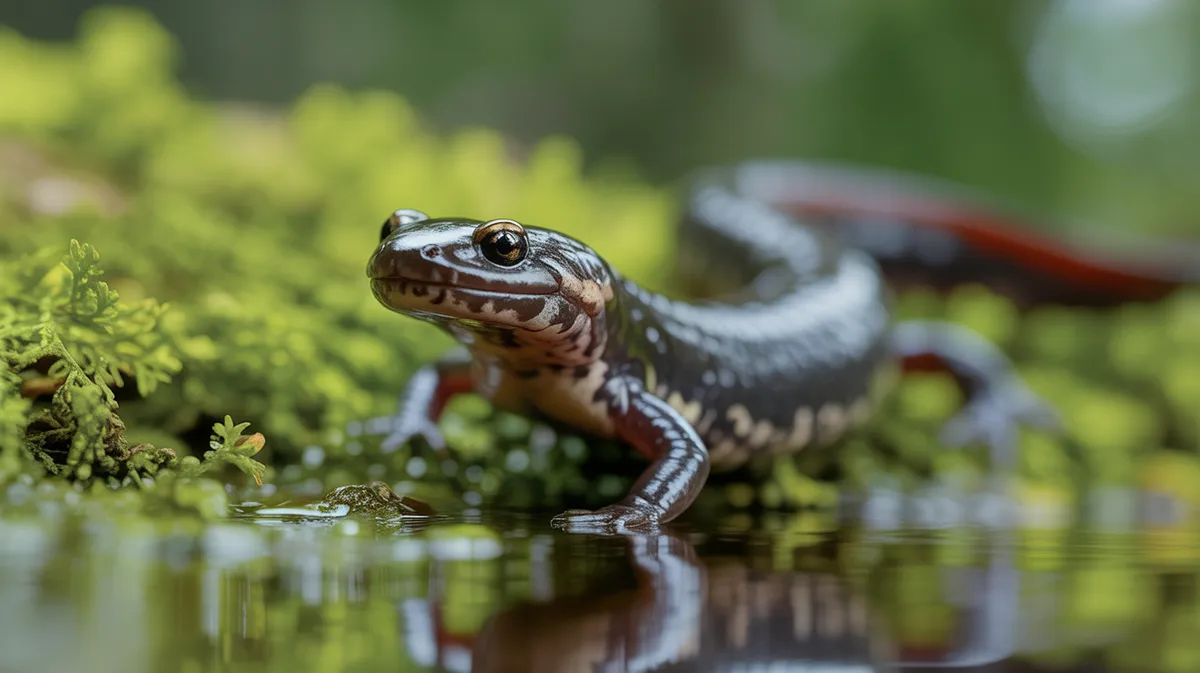
The Northern Dusky Salamander is a small, semi-aquatic amphibian native to eastern North America. It is characterized by its slender, somewhat flattened body, variable coloration ranging from brown to gray, and a pale line running from the eye to the jaw. This salamander is primarily nocturnal and prefers moist environments along the banks of streams, springs, and seepages in wooded areas. Its cryptic coloration provides excellent camouflage among leaf litter and rocks, making it difficult to spot in the wild.
Fascinating facts
Moisture Lovers
Northern Dusky Salamanders are highly dependent on moist environments and are typically found near clean, running streams or springs.
Tail Defense
When threatened by predators, these salamanders can detach their tails, which continue to wriggle and distract the predator while the salamander escapes.
Aquatic Larvae
Their larvae are fully aquatic, breathing through external gills and remaining in water for up to a year before transforming into terrestrial adults.
Detailed description
The Northern Dusky Salamander (Desmognathus fuscus) is a medium-sized plethodontid salamander, typically reaching adult lengths of 7–14 cm (2.75–5.5 in), with females generally larger than males. Its body is robust yet somewhat flattened dorsoventrally, aiding in movement under rocks and through leaf litter. Coloration is highly variable, ranging from brown, gray, or olive to reddish or yellowish hues, often with dark mottling or spotting along the sides and a pale, sometimes yellowish, line extending from the eye to the angle of the jaw—a key identification feature. The tail is laterally compressed and accounts for nearly half the total body length, facilitating swimming and rapid escape in aquatic environments. Unlike many other salamanders, D. fuscus lacks lungs and relies entirely on cutaneous (skin) and buccopharyngeal (mouth and throat) respiration, necessitating consistently moist habitats. The limbs are relatively short but strong, with four toes on the forelimbs and five on the hindlimbs. The species possesses a nasolabial groove, a chemosensory adaptation used to detect prey and conspecifics. Juveniles often exhibit brighter coloration and a more clearly defined dorsal stripe. This salamander is primarily nocturnal, emerging at dusk to forage, and is most often encountered under rocks, logs, or leaf litter near streams, springs, and seepages. Its cryptic coloration and secretive habits make it difficult to observe in the wild.
Did you know?
Unlike most salamanders, Northern Dusky Salamanders use a unique jaw-snapping technique to capture fast-moving prey.
Research & sources
Wikipedia summary
Desmognathus fuscus is a species of amphibian in the family Plethodontidae. The species is commonly called the dusky salamander or northern dusky salamander to distinguish it from populations in the southern United States which form several distinct species, the southern dusky salamanders. The northern dusky salamander is the most widespread representative of its genus in Canada. It can be found in eastern North America from extreme eastern Canada in New Brunswick south to South Carolina. The size of the species' total population is unknown, but is assumed to easily exceed 100,000. The species' habitat differs somewhat geographically; dusky salamanders in the northern part of the range prefer rocky woodland streams, seepages, and springs, while those in the south favor floodplains, sloughs, and muddy places along upland streams. They are most common where water is running or trickling. They hide under various objects, such as leaves or rocks, either in or near water. Alternatively, they may enter burrows for protection. The dusky salamander lays its eggs close to water under moss or rocks, in logs, or in stream-bank cavities. The larval stage which follows is normally aquatic.
Behaviour & social structure
Northern Dusky Salamanders are solitary and territorial, especially outside the breeding season. They are most active during humid nights or after rainfall, when they emerge to hunt for invertebrates such as earthworms, snails, small crustaceans, and insect larvae. D. fuscus uses a sit-and-wait predatory strategy, remaining motionless and ambushing prey that passes within striking distance. Chemosensory cues, detected via the nasolabial grooves, play a crucial role in prey detection and in recognizing conspecifics. When threatened, they exhibit rapid escape responses, often diving into water or burrowing into substrate. They may also autotomize (shed) their tails to distract predators. During the day and in dry conditions, they retreat to moist refuges to avoid desiccation. Social interactions are limited, but individuals may display aggressive behaviors, such as posturing and biting, when territories overlap. Home ranges are generally small, often less than 10 m², and individuals show strong site fidelity.
Reproduction & life cycle
Breeding in Desmognathus fuscus typically occurs from late spring to early summer, though timing can vary with latitude and elevation. Courtship involves a complex series of tactile and chemical cues, with the male depositing a spermatophore (a packet of sperm) on the substrate, which the female then picks up with her cloaca. Females lay clutches of 10–30 eggs in moist, concealed sites near water—commonly under moss, rocks, logs, or in stream-bank cavities. The eggs are attached to the substrate by gelatinous stalks. Females exhibit parental care by guarding the eggs throughout the incubation period, which lasts 6–10 weeks depending on temperature and humidity. Upon hatching, larvae are fully aquatic and possess external gills. The larval stage lasts 7–16 months, after which metamorphosis occurs and juveniles adopt a semi-terrestrial lifestyle. Sexual maturity is reached at 2–3 years of age.
Adaptations & survival
D. fuscus exhibits several adaptations for its semi-aquatic, streamside lifestyle. The absence of lungs and reliance on cutaneous respiration allow it to exploit oxygen-rich microhabitats in fast-flowing streams and seepages. The laterally compressed tail enhances swimming ability and quick escape responses. Cryptic coloration and patterning provide camouflage against predators and facilitate ambush predation. The nasolabial groove is a specialized chemosensory structure, enabling detection of prey and pheromones in a moist environment. Tail autotomy serves as an anti-predator defense, with the tail regenerating over time. Behavioral adaptations include nocturnality and moisture-seeking behaviors to minimize water loss and predation risk.
Cultural significance
The Northern Dusky Salamander holds limited direct cultural significance but is valued as an indicator species for healthy stream ecosystems, due to its sensitivity to environmental changes and pollutants. In some regions, it features in local environmental education programs and is used to promote conservation of freshwater habitats. There are no known traditional uses or significant roles in mythology or folklore, but its presence is often cited in ecological studies and conservation literature as emblematic of Appalachian and northeastern North American stream biodiversity.
Recent research
Recent research on D. fuscus has focused on its population genetics, revealing significant cryptic diversity and the potential for unrecognized species within the Desmognathus complex. Studies of microhabitat selection have shown that individuals preferentially occupy sites with stable moisture and temperature regimes, and that their abundance can serve as a bioindicator for stream health. Ongoing work is investigating the effects of climate change and habitat fragmentation on dispersal and genetic connectivity. Additionally, research into the species' cutaneous microbiome has implications for understanding resistance to chytrid fungal infections, a major threat to amphibians globally.
Videos
Habitat
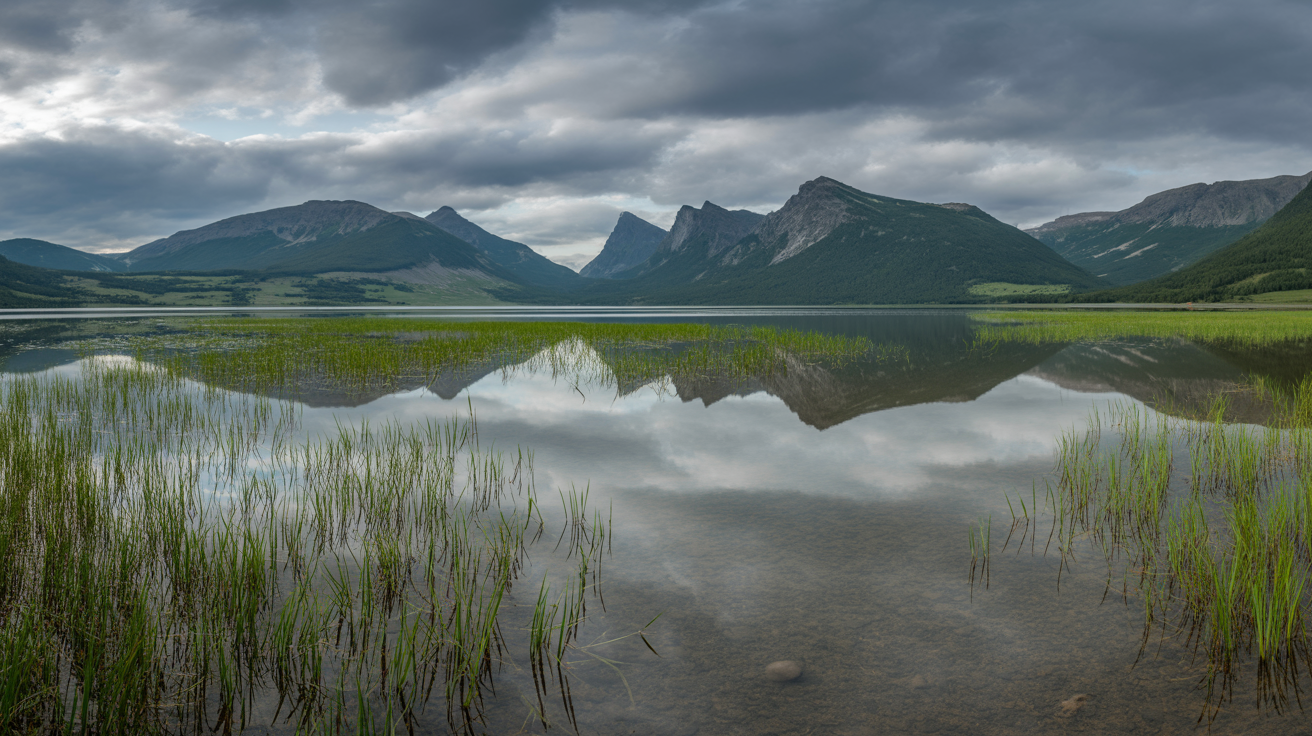
Moist forests near freshwater streams and springs

Conservation
The Northern Dusky Salamander is currently classified as Least Concern on the IUCN Red List.
Threats & challenges
Although currently listed as Least Concern by the IUCN, Northern Dusky Salamander populations face several localized threats. Habitat loss and fragmentation due to urbanization, agriculture, and logging are significant concerns, as these activities degrade streamside environments and reduce suitable refugia. Water pollution from agricultural runoff, acid rain, and sedimentation can negatively impact both adults and larvae, which are sensitive to changes in water quality and pH. Stream channelization and alteration disrupt breeding sites and larval habitats. Climate change poses additional risks by altering hydrological regimes and increasing the frequency of droughts. While the overall population is considered stable, declines have been documented in some areas, particularly at the periphery of the range or in heavily developed regions.
Taxonomy
Scientific name
Desmognathus fuscus
- Kingdom
- Animalia
- Phylum
- Chordata
- Class
- Amphibia
- Order
- Urodela
- Family
- Plethodontidae
- Genus
- Desmognathus
- Species
- fuscus
Community notes
Share your observations about the Northern Dusky Salamander.
No community notes yet. Be the first!
Discover more wildlife
More fascinating animals from the encyclopedia.