

Amphibians
170 species in the encyclopedia
Cold-blooded vertebrates that live both in water and on land, often beginning life with gills.
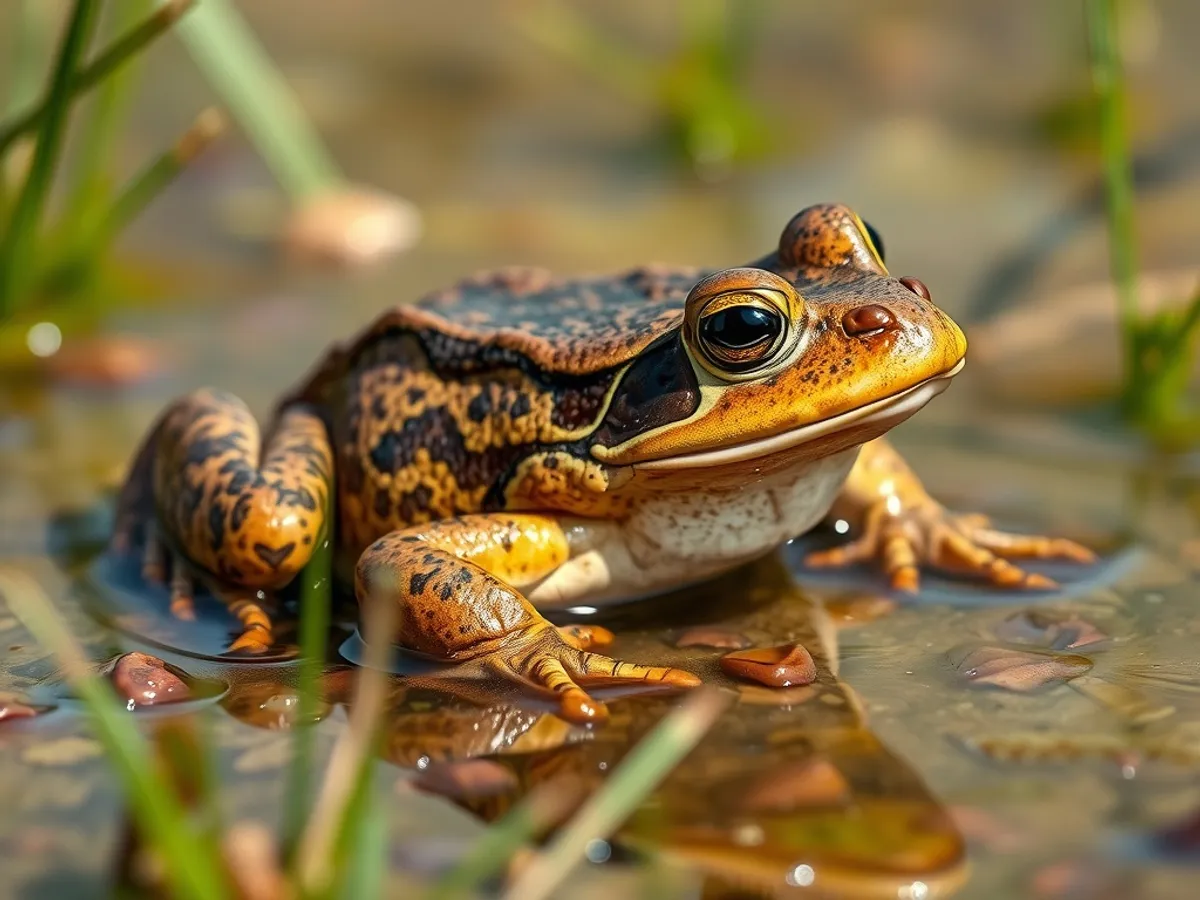
African Bullfrog
Pyxicephalus adspersus
The African bullfrog inverts the usual amphibian rule that females are the larger sex: males can exceed 2 kg and grow roughly twice the size of the females they mate with, because male-male combat over breeding pools rewards bulk. Along the lower jaw sit three odontoid projections — bony, tooth-like spikes that let it hold struggling prey, and give a bite that draws blood. It eats essentially anything it can cram down, including rodents, birds, other frogs, and famously young cobras. Its most remarkable behaviour is paternal: a male guards the tadpole mass, and when the puddle begins to evaporate he will excavate a channel with his hind legs to drain water from a shrinking pool into a larger one, saving the shoal. He is not sentimental about it — he also eats a share of the tadpoles he is guarding. Between rains the frog burrows down and encases itself in a cocoon built from layers of shed skin, sealing in moisture, and can wait out drought underground for a year or more.
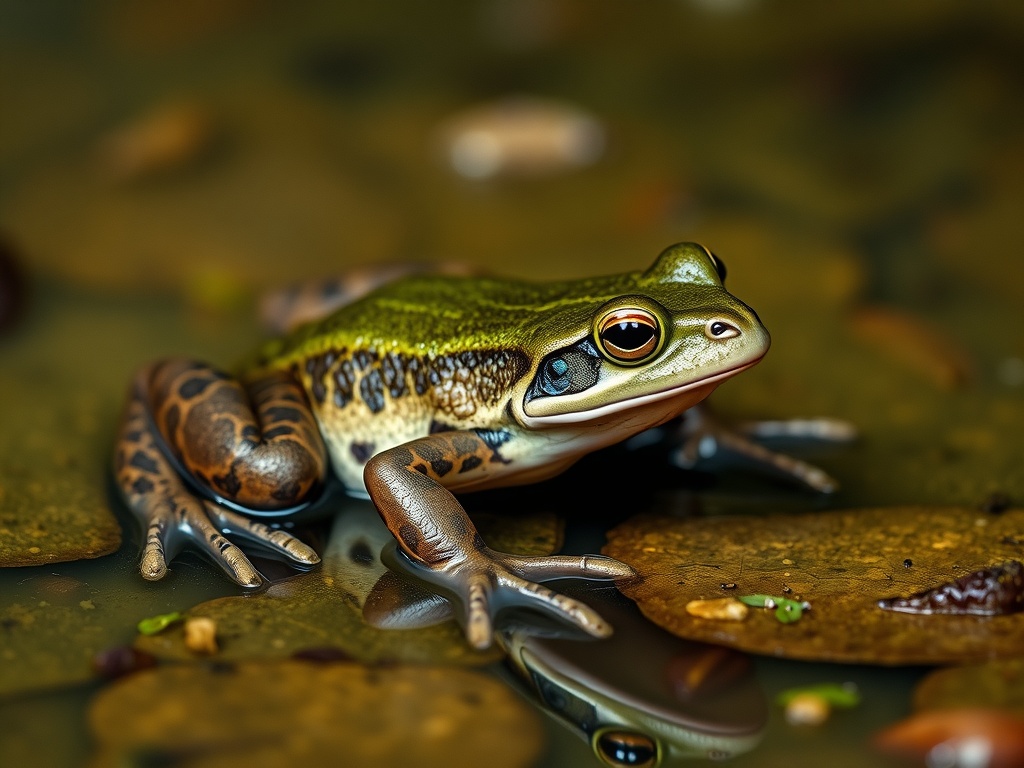
African Clawed Frog
Xenopus laevis
Xenopus laevis is a frog built for a life entirely in water: it has no tongue, no eardrum and no visible ears, and it shovels food into its mouth with its hands. Along its flanks run rows of stitch-like sensory organs — a lateral line retained into adulthood, which is unusual for a frog and lets it feel the water displaced by prey in muddy ponds. Its "claws" are three black keratinised toe tips on each hind foot, used to shred carrion. Males call underwater without moving air at all, clicking by snapping cartilage discs in the larynx. Its strangest cultural role came in the 1930s, when the Hogben test made it the world's pregnancy test: hormone in a woman's urine, injected into a female frog, made her lay eggs within hours, and hospitals kept tanks of them for three decades. That global trade in laboratory frogs is now strongly implicated in spreading the chytrid fungus that has since devastated amphibians on several continents — Xenopus carries it while largely resisting it.
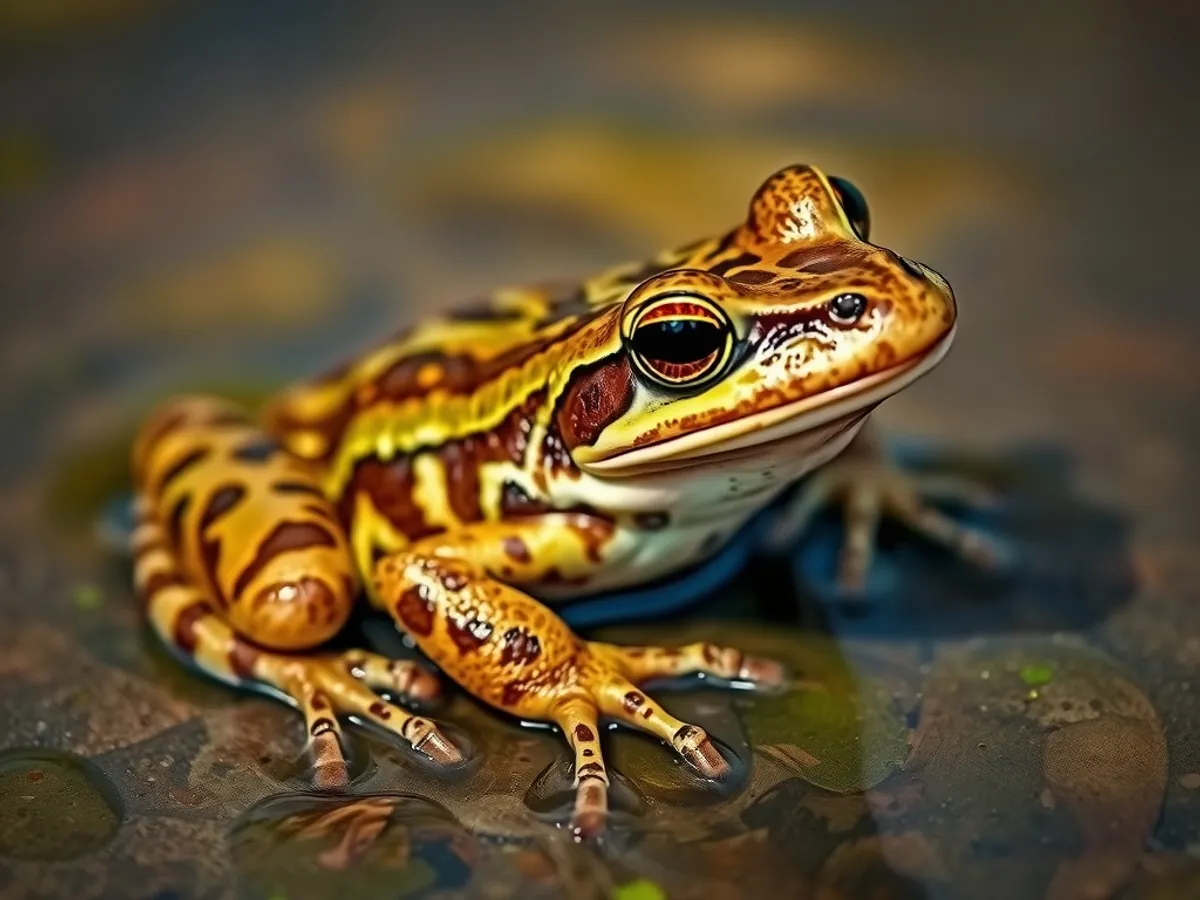
African Reed Frog
Hyperolius viridiflavus
The African Reed Frog is a small, agile amphibian known for its vibrant coloration and remarkable adaptability. These frogs are typically found in wetlands, marshes, and reed beds throughout sub-Saharan Africa, often displaying a variety of colors and patterns, ranging from greens and yellows to browns and even blues. Their skin secretes a waxy substance that helps prevent dehydration, enabling them to thrive in both permanent and temporary water bodies. African Reed Frogs are especially famous for their loud, distinctive calls during the breeding season, which can be heard echoing across wetlands at dusk and night.
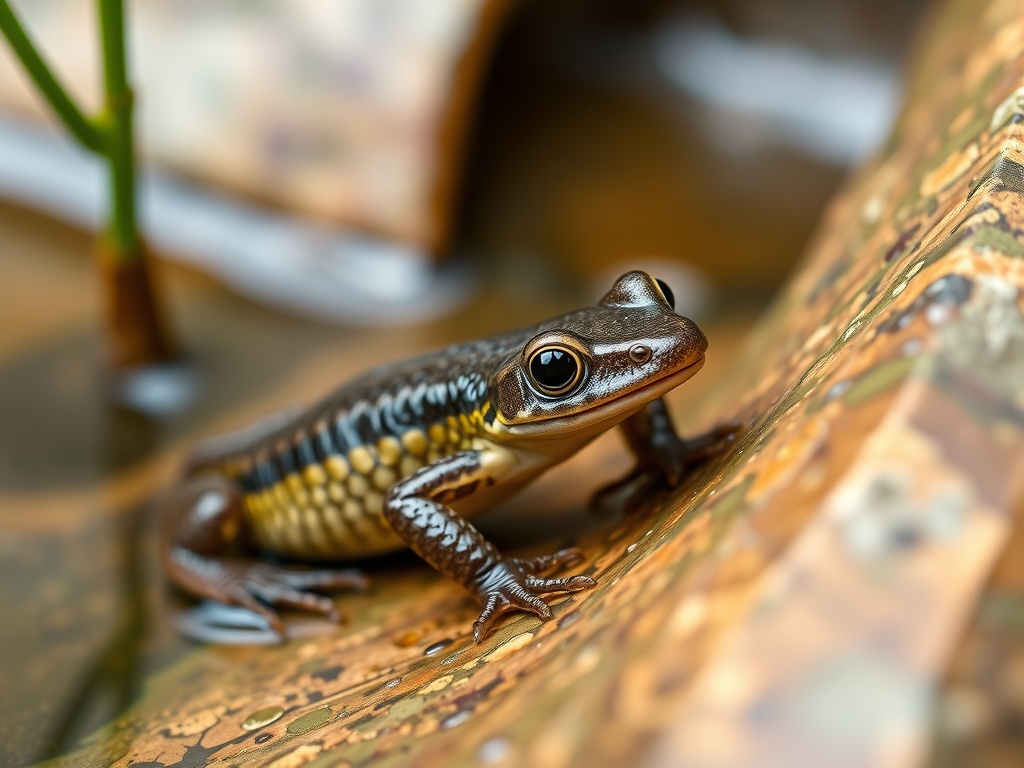
Alpine Newt
Ichthyosaura alpestris
The Alpine Newt is a striking amphibian native to central and southern Europe, particularly thriving in mountainous regions. It is recognized for its slender body, smooth skin, and vibrant breeding colors, with males displaying a bright orange belly and blue flanks during the mating season. Alpine Newts are semi-aquatic, spending part of their lives in freshwater ponds and part on land in moist, shaded habitats. They are known for their adaptability, often inhabiting high-altitude lakes, forest pools, and garden ponds. Despite facing localized threats, their populations remain stable across much of their range.
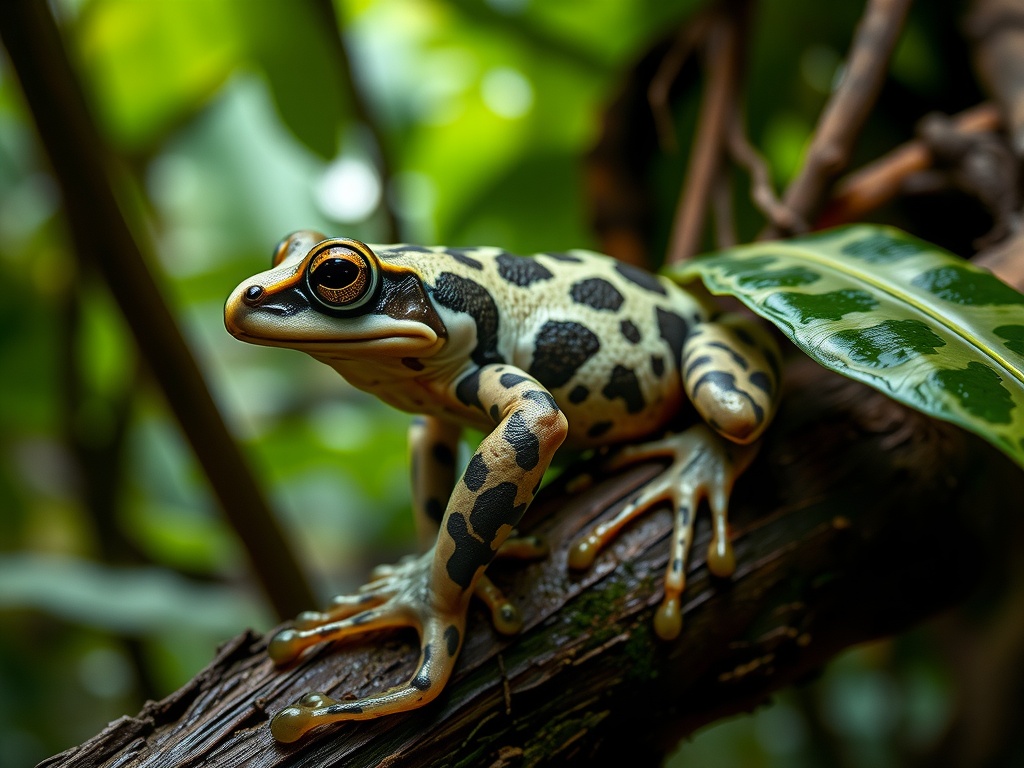
Amazon Milk Frog
Trachycephalus resinifictrix
The Amazon Milk Frog is a striking tree frog native to the Amazon Rainforest, easily recognized by its pale blue-gray body adorned with brown or black banding. This nocturnal amphibian gets its name from the milky, sticky secretion it produces when stressed, which serves as a defense against predators. They are arboreal, spending most of their life high in the rainforest canopy, and are known for their loud, distinctive calls during the rainy season. Amazon Milk Frogs thrive in humid, tropical environments and are popular in the pet trade due to their unique appearance and manageable size.
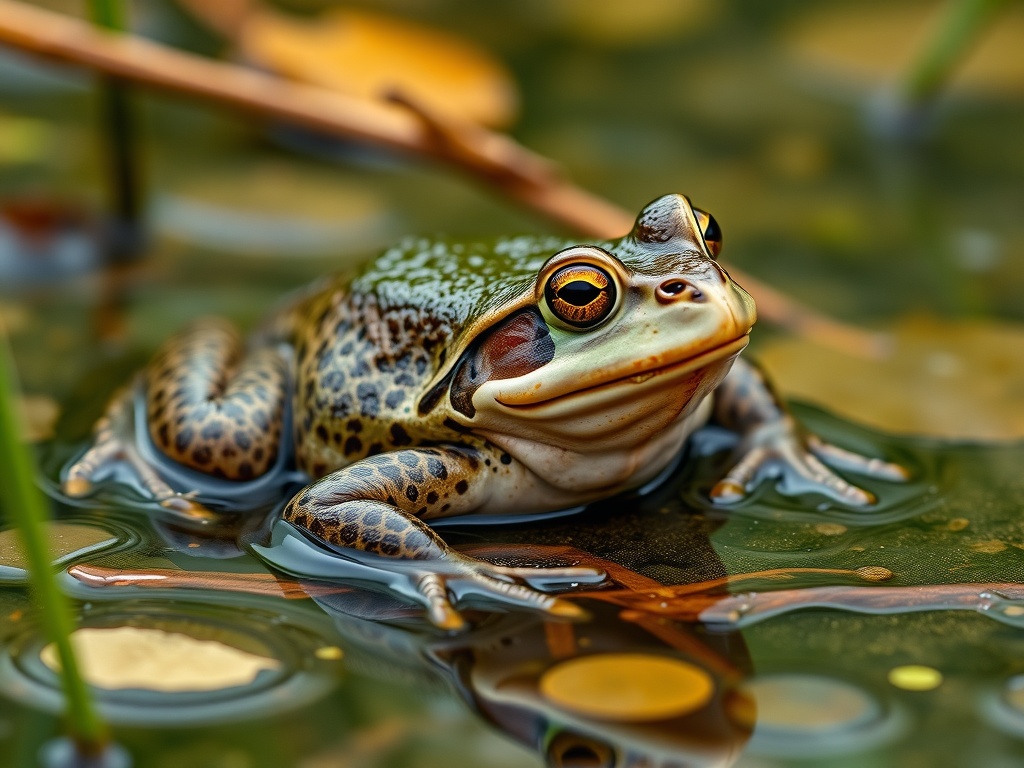
American Bullfrog
Lithobates catesbeianus
The American Bullfrog is the largest frog native to North America, recognized for its powerful legs and deep, resonant calls. It has smooth, olive-green skin with subtle bands on its legs and a pale underbelly. This highly adaptable amphibian thrives in a variety of freshwater habitats and is known for its voracious, opportunistic feeding behavior. American Bullfrogs can have significant ecological impacts, particularly in regions where they have been introduced outside their native range. Their loud croaks are a familiar sound in summer wetlands and ponds.
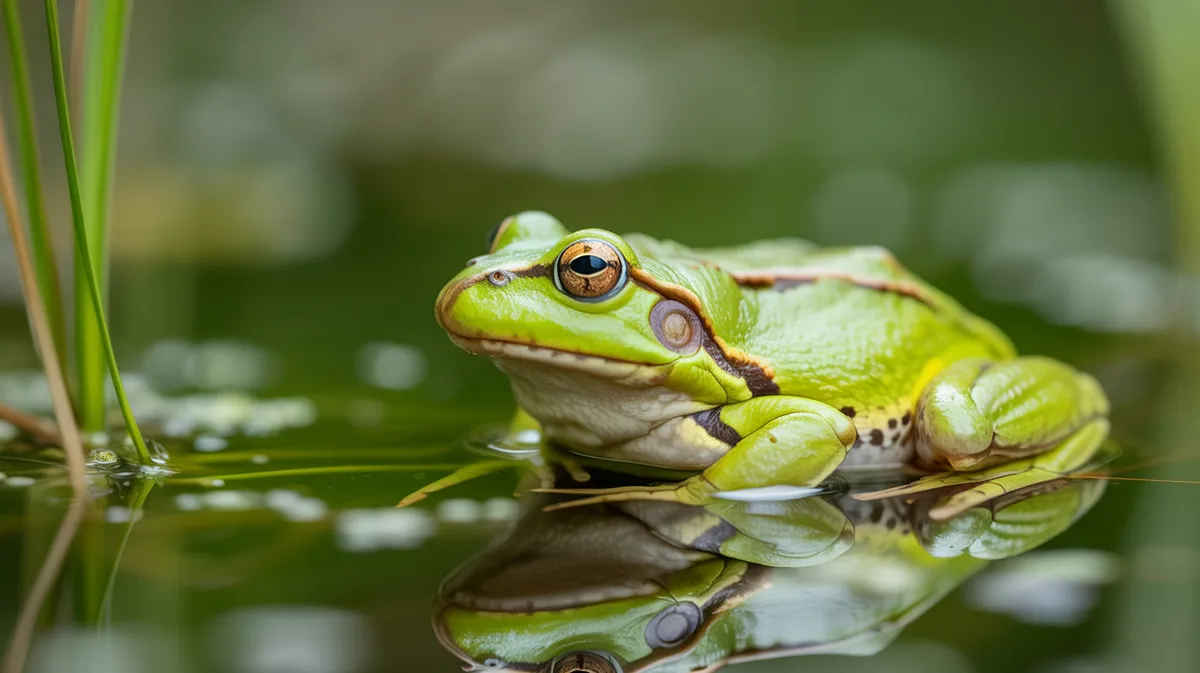
American Green Tree Frog
Hyla cinerea
The American Green Tree Frog is a small, slender amphibian known for its vibrant green color and distinctive white or yellow stripe running from its jaw along each side. This species is nocturnal and highly arboreal, preferring to spend most of its time perched on vegetation near water sources. They are commonly found in the southeastern United States, especially in wetlands, marshes, and swamps. Their loud, bell-like calls are a familiar sound during warm and humid nights.
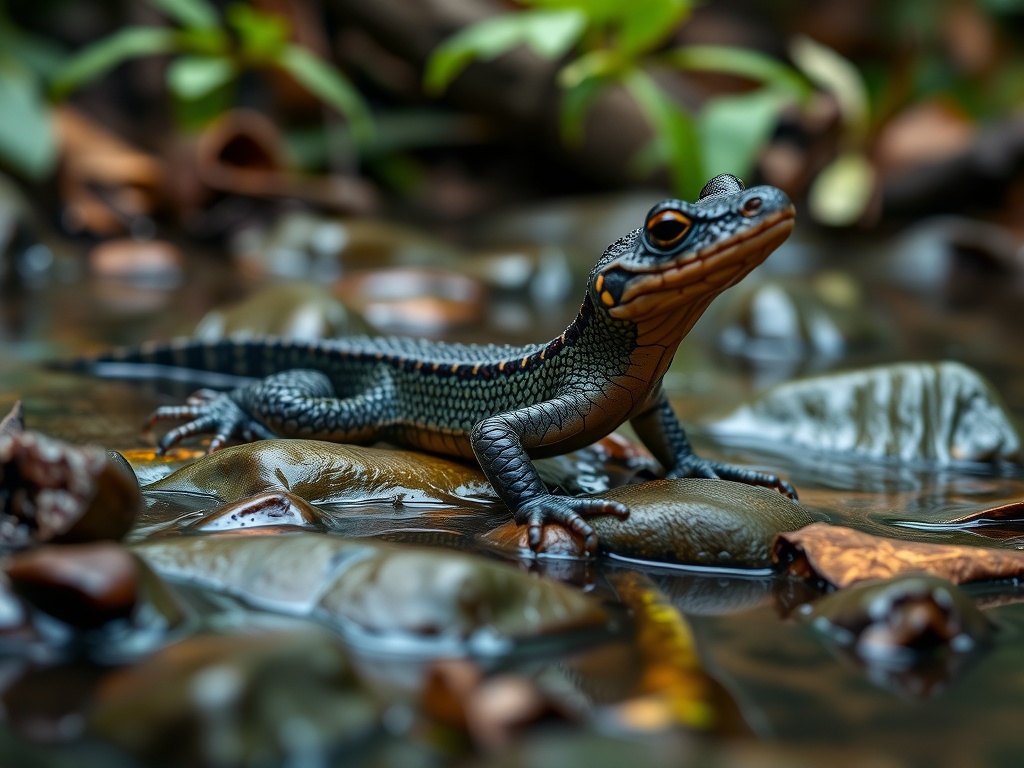
Anderson's Crocodile Newt
Echinotriton andersoni
Anderson's Crocodile Newt is a distinctive amphibian known for its rough, crocodile-like skin and prominent orange markings along its sides and tail. Native to the Ryukyu Islands of Japan and parts of Taiwan, this newt inhabits moist forests and mountain streams. It is a secretive, primarily nocturnal creature that spends much of its life hidden under leaf litter or stones. Due to habitat loss and collection for the pet trade, its populations have been declining, making it a conservation concern.
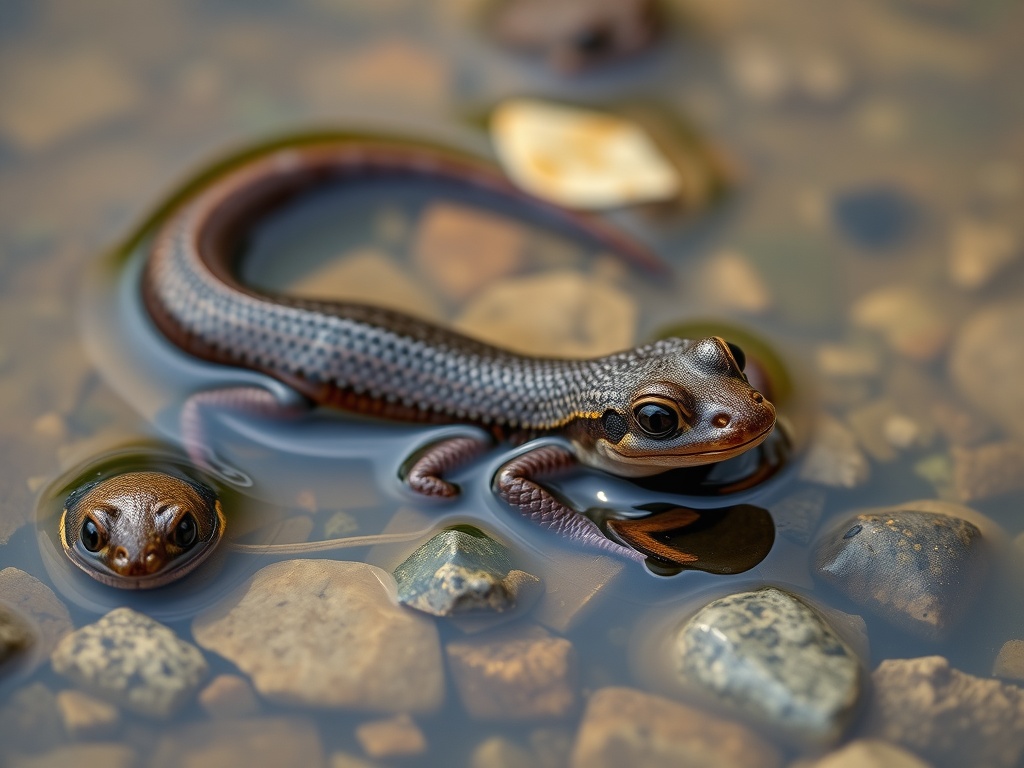
Anderson's Salamander
Ambystoma andersoni
Anderson's Salamander is a critically endangered amphibian native to a single high-altitude lake, Lake Zacapu, in Michoacán, Mexico. It is a large, fully aquatic salamander characterized by its external feathery gills and robust, dark-colored body. Unlike many amphibians, Anderson's Salamander exhibits neoteny, meaning it retains larval features such as gills throughout its life and does not metamorphose into a terrestrial form. The species is adapted to cold, clear freshwater environments and is highly sensitive to habitat degradation. Due to its restricted range and specialized habitat requirements, Anderson's Salamander is extremely vulnerable to environmental changes.
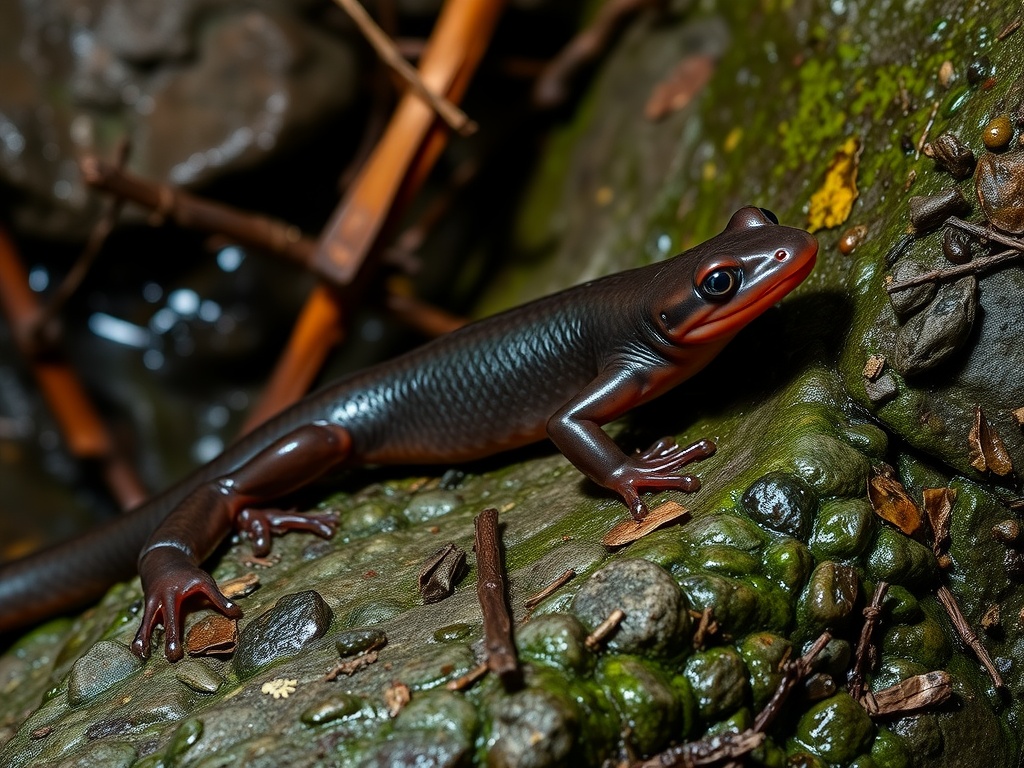
Appalachian Seal Salamander
Desmognathus monticola
The Appalachian Seal Salamander is a medium-sized, robust amphibian native to the Appalachian Mountains in the eastern United States. Its body is gray to brownish with scattered dark spots and a noticeably lighter belly, often giving it a 'seal-like' appearance. This salamander is primarily nocturnal and prefers the cool, moist environments found near rocky streams and seepages in forests. It is lungless and relies on cutaneous respiration, making it highly sensitive to environmental changes. Despite its secretive nature, it is commonly found within its range and plays an important ecological role in its habitat.
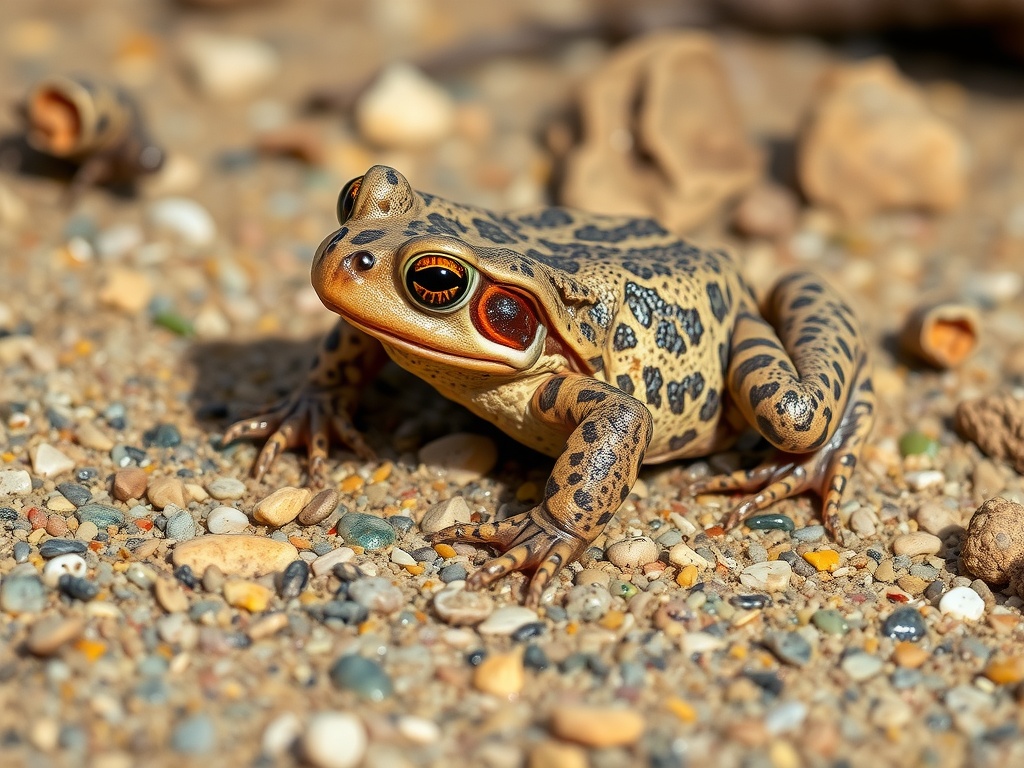
Arroyo Toad
Anaxyrus californicus
The Arroyo Toad is a small, stocky amphibian native to southwestern California and Baja California, Mexico. Characterized by its olive-gray warty skin and pale stripe across its head and back, this toad is specialized for life in sandy streamside habitats. Arroyo Toads are nocturnal and spend much of their life buried underground, emerging mainly during the breeding season after spring rains. Their populations are vulnerable due to habitat destruction, altered water flow, and invasive species.
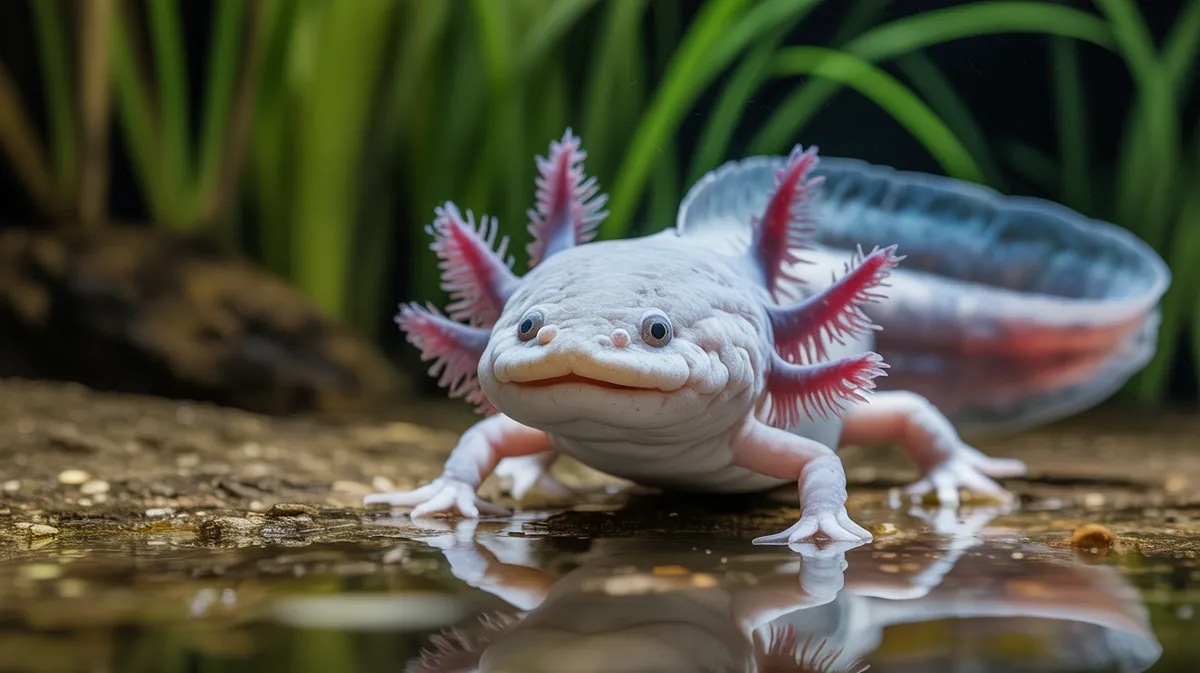
Axolotl
Ambystoma mexicanum
The axolotl (Ambystoma mexicanum) is a unique amphibian native to the ancient lake systems of Xochimilco and Chalco in Mexico City. Unlike most salamanders, axolotls exhibit neoteny, meaning they retain juvenile traits throughout their life, such as their feathery external gills and aquatic lifestyle. These amphibians typically grow to about 15 to 45 cm in length, with a notable regenerative ability that allows them to regrow entire limbs, spinal cords, and even parts of their brain. Axolotls are often mistaken for the larval stage of other neotenic salamanders, such as the tiger salamander (Ambystoma tigrinum), but they can be distinguished by their fully aquatic nature and distinct coloration, ranging from wild-type brown to leucistic pink. The retention of larval features in axolotls is an adaptive trait that allows them to exploit aquatic resources without the competition from terrestrial adults. In the wild, their populations are critically endangered due to habitat loss and pollution, making them a subject of significant conservation efforts.
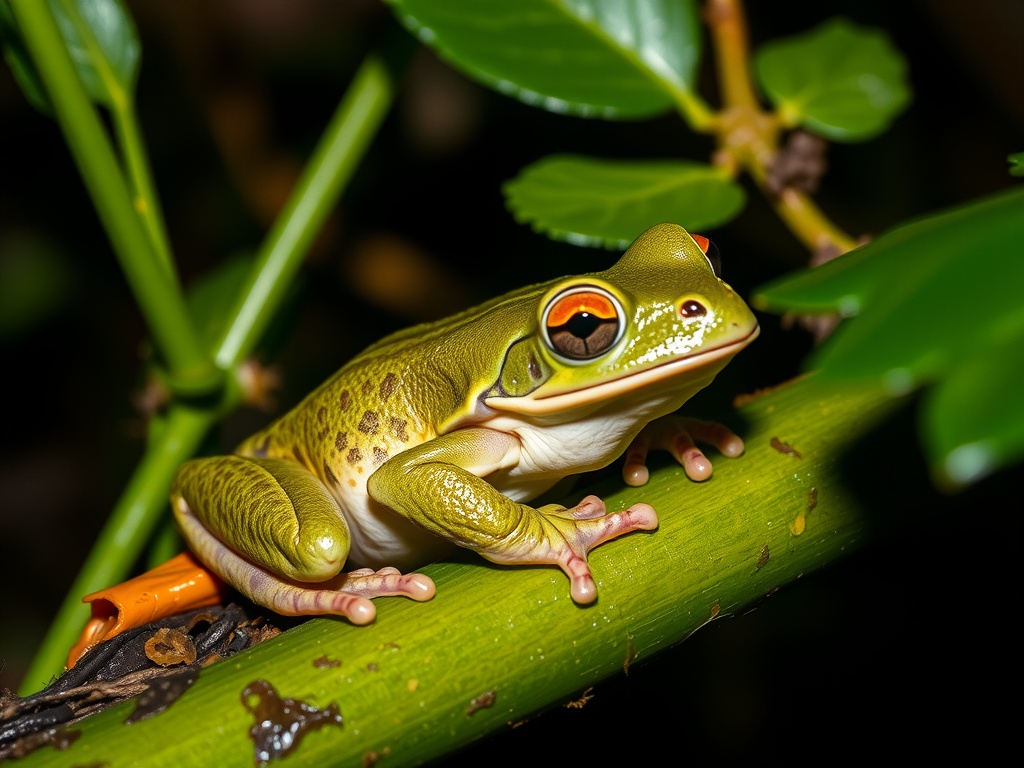
Barbour's Tree Frog
Dendropsophus minutus
Barbour's Tree Frog is a small, nocturnal amphibian found in parts of South America, particularly in Brazil, Bolivia, and Paraguay. It is known for its adaptability, thriving in both pristine forests and disturbed habitats such as gardens and cattle pastures. This frog is recognized for its slender body, long limbs, and distinctive coloration, which often includes brown, yellow, or green hues with variable patterns. Barbour's Tree Frog is an excellent climber, using its adhesive toe pads to move among vegetation, where it feeds on small insects.
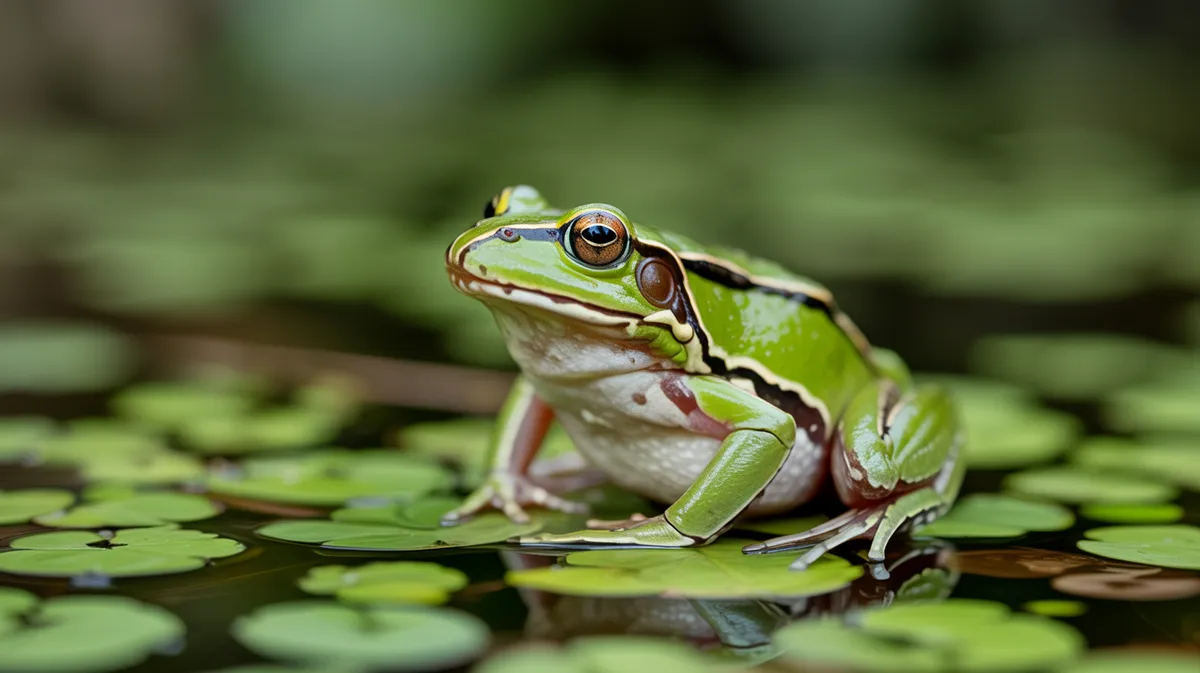
Barking Tree Frog
Hyla gratiosa
The Barking Tree Frog is the largest native tree frog in the southeastern United States, known for its distinctive, loud, dog-like barking call. This robust amphibian exhibits a plump, green or brown body covered with dark spots and granular skin, often changing color based on temperature and environment. It is most active at night, spending time high in trees or shrubs but descending to breed in fishless ponds and wetlands. Its powerful limbs and enlarged toe pads allow it to climb with ease, making it well-adapted for its arboreal lifestyle.
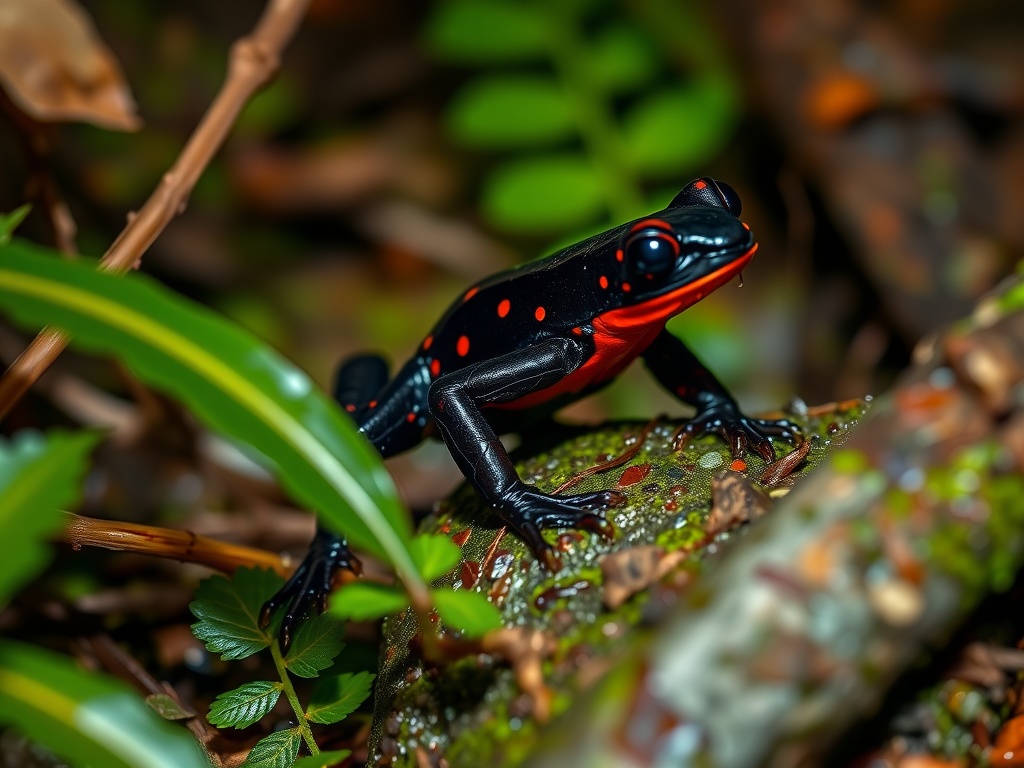
Baron's Mantella
Mantella baroni
Baron's Mantella is a strikingly colored frog species endemic to Madagascar, known for its vivid green, yellow, and black patterning that serves as a warning to predators. It is a small terrestrial amphibian, typically found in moist lowland and montane forests near streams and swampy areas. The species is diurnal and often seen active during the day, foraging on the forest floor for small invertebrates. Like other mantellas, it is renowned for its skin toxins, which are acquired from its diet and serve as chemical defense.
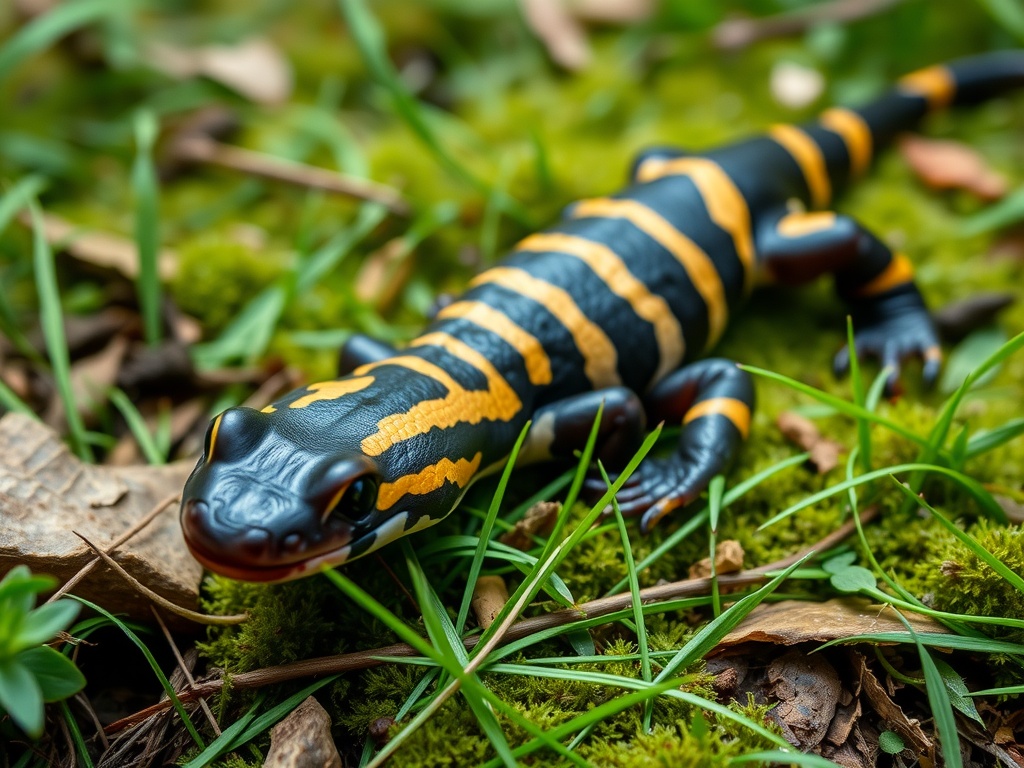
Barred Tiger Salamander
Ambystoma mavortium
The tiger salamander is the largest land salamander in North America, and its most remarkable trick is that it does not always bother becoming one. Given a permanent, stable pond and a poor terrestrial environment, the larvae may simply never metamorphose: they keep their feathery external gills and their aquatic bodies, grow to full size, and breed as though they were adults. This is neoteny, the same arrested development that makes an axolotl what it is — except that the tiger salamander can go either way depending on where it finds itself, which makes it a natural experiment in how flexible a life cycle can be. It has a second, stranger option. When larvae are crowded and food is scarce, some develop into a distinct cannibal morph, with a broader head and enlarged teeth, and eat the other larvae in the pond — and they appear to avoid eating close relatives, preferring unrelated pond-mates. Adults spend most of the year underground in burrows, emerging in numbers on rainy nights to migrate to the breeding ponds.
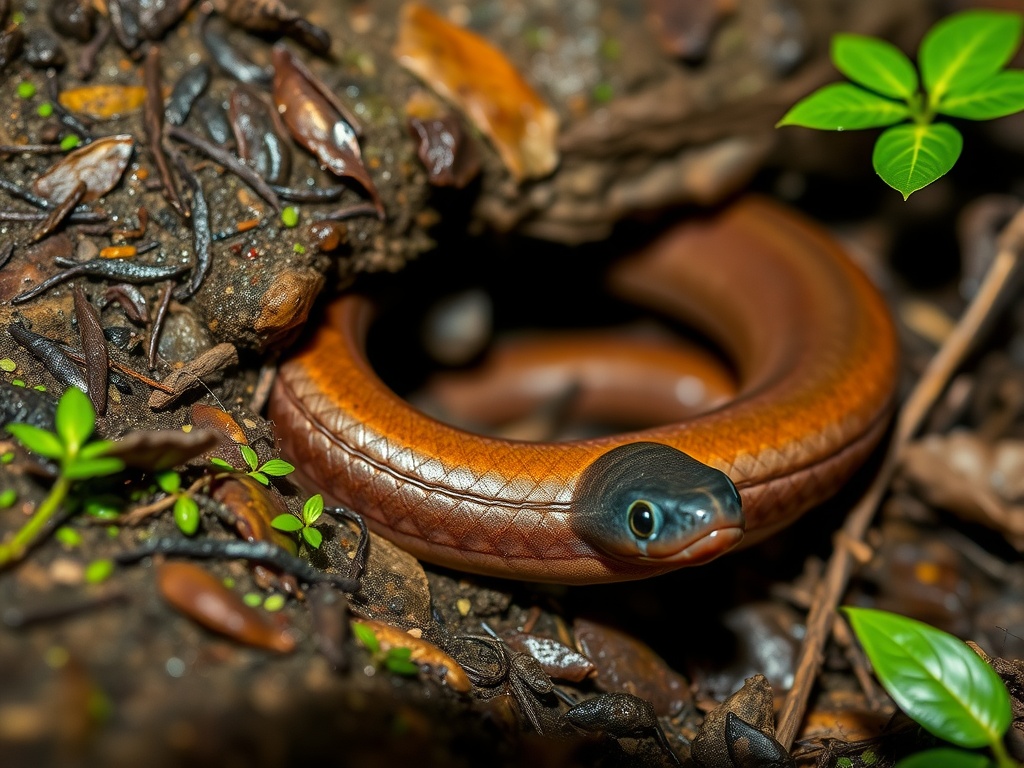
Beddome’s Caecilian
Ichthyophis beddomei
Beddome’s Caecilian is a limbless, burrowing amphibian native to the Western Ghats of southern India. Its elongated, worm-like body is adapted for a subterranean lifestyle, with smooth, segmented skin that is typically dark brown to bluish-black in color. This secretive animal spends most of its life hidden in moist soil, leaf litter, or under rotting logs, emerging mainly during the monsoon season. Beddome’s Caecilian is rarely seen due to its underground habits, and much of its biology remains poorly understood.
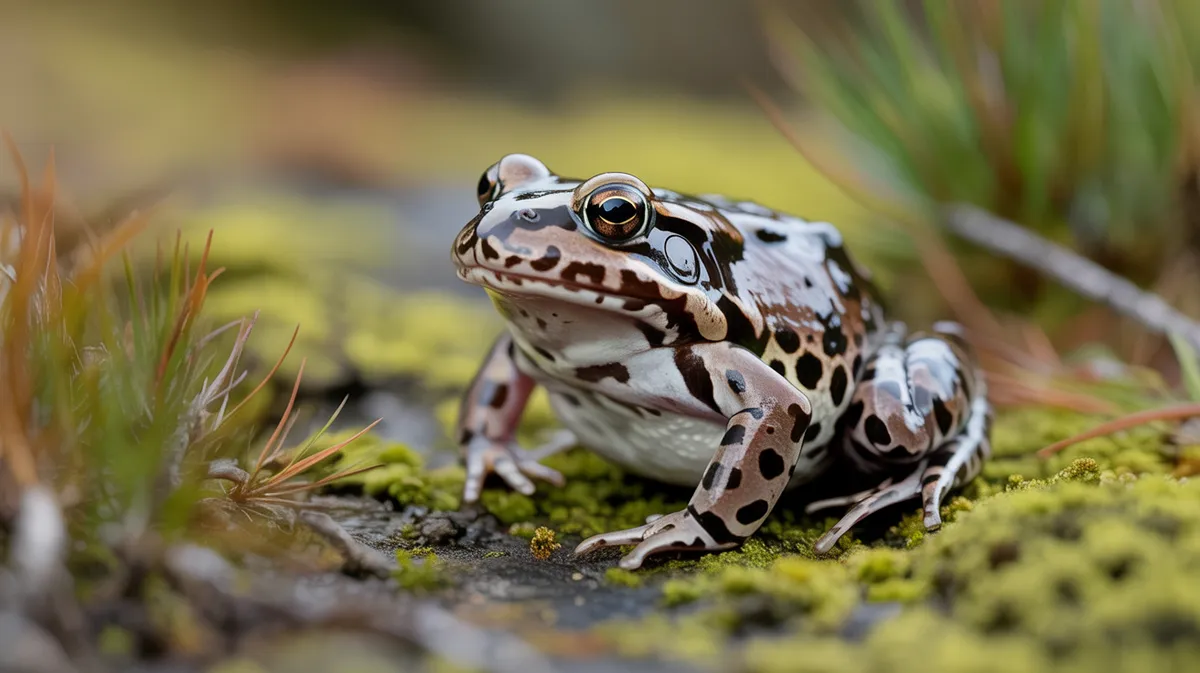
Black rain frog
Breviceps fuscus
The black rain frog can neither hop nor swim. Its legs are far too short and its body is a near-perfect sphere, so it walks, and if it falls in water it flounders. It is a burrower from the southern Cape mountains of South Africa, and it has cut water out of its life cycle entirely: there is no tadpole. Eggs are laid in a moist underground chamber and the young develop directly inside them, emerging as tiny fully formed froglets, which means the frog does not need a pond and can live in fynbos and forest floor far from any stream. Its defence is inflation. Threatened, it puffs itself up like a balloon and wedges into its tunnel, becoming impossible to pull out, and it squeaks and grunts while doing it, which is why photographs of it circulate online as the world's grumpiest animal. Mating creates an engineering problem, because the male is much smaller and his arms cannot reach around her sphere — so the female secretes a glue that sticks him to her back until the eggs are laid.
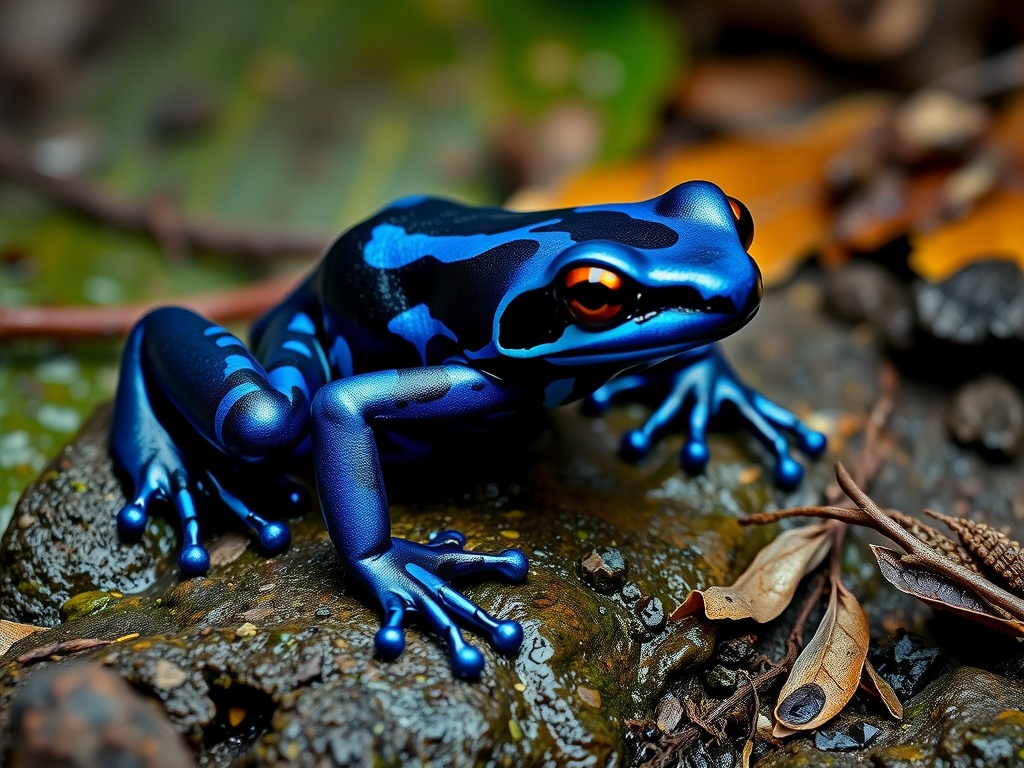
Blue Poison Dart Frog
Dendrobates tinctorius 'azureus'
Almost everything the name implies is wrong. Of the roughly 200 poison frog species, only three — all in the genus Phyllobates — were ever used to poison blowdarts, and this brilliant blue frog is not one of them. Its toxicity is also not its own: the lipophilic alkaloids in its skin are sequestered from the mites, ants and other leaf-litter arthropods it eats, so a captive-bred individual raised on fruit flies is completely non-toxic and always will be. Its blue is a warning to predators that can already taste the difference. It is now regarded not as a full species but as a striking colour morph of Dendrobates tinctorius, and it occurs in an odd geography: isolated patches of rainforest scattered like islands across the Sipaliwini savanna of southern Suriname, populations cut off from one another for thousands of years, which is exactly the sort of isolation that produces a locally distinct colour. Each individual carries a unique pattern of black spots.
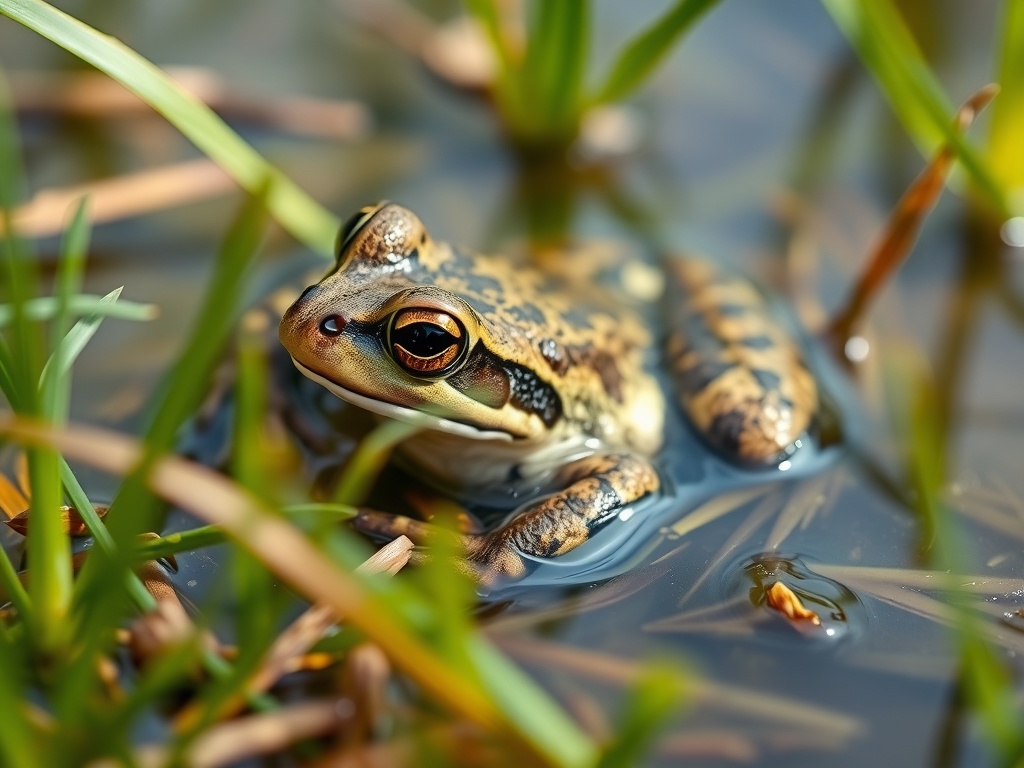
Boreal Chorus Frog
Pseudacris maculata
The Boreal Chorus Frog is a small, slender amphibian known for its distinctive, vibrant calls during the spring breeding season. It typically exhibits a greenish, brown, or grayish coloration with three dark stripes running down its back and a light belly. This species thrives in a wide range of habitats, from wetlands and marshes to grassy meadows and forests, often near standing or slow-moving water. Adapted to cold climates, the Boreal Chorus Frog ranges across much of Canada and the northern United States. Despite its tiny size, it plays a vital role in local ecosystems as both predator and prey.
Borneo Eared Frog
Polypedates otilophus
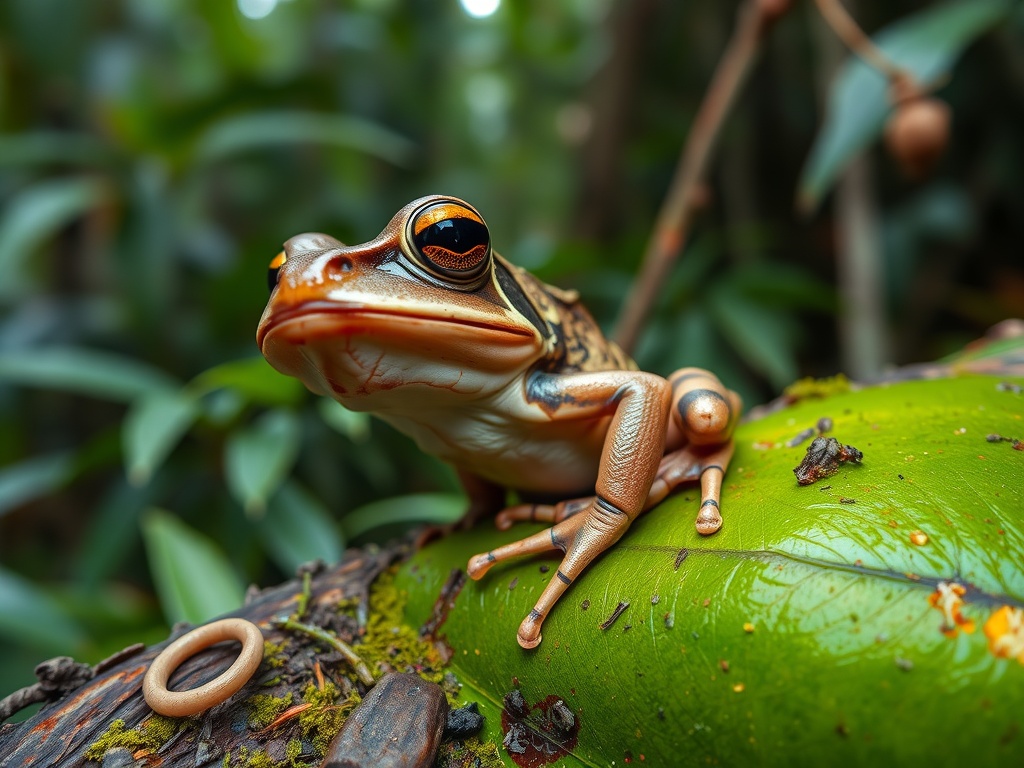
The Borneo Eared Frog is a striking tree frog native to the rainforests of Borneo, recognized for the prominent, ear-like projections on the sides of its head. This medium-sized amphibian displays a yellowish to brown coloration with dark, irregular markings that provide excellent camouflage among tree branches and leaves. Its large, round eyes and powerful limbs equipped with sticky toe pads make it well-adapted for an arboreal lifestyle. The species is primarily nocturnal, emerging at night to hunt insects and other small invertebrates. During the breeding season, males call from vegetation near water bodies, where eggs are laid above water to protect them from aquatic predators.
Borneo Flat-headed Frog
Barbourula kalimantanensis
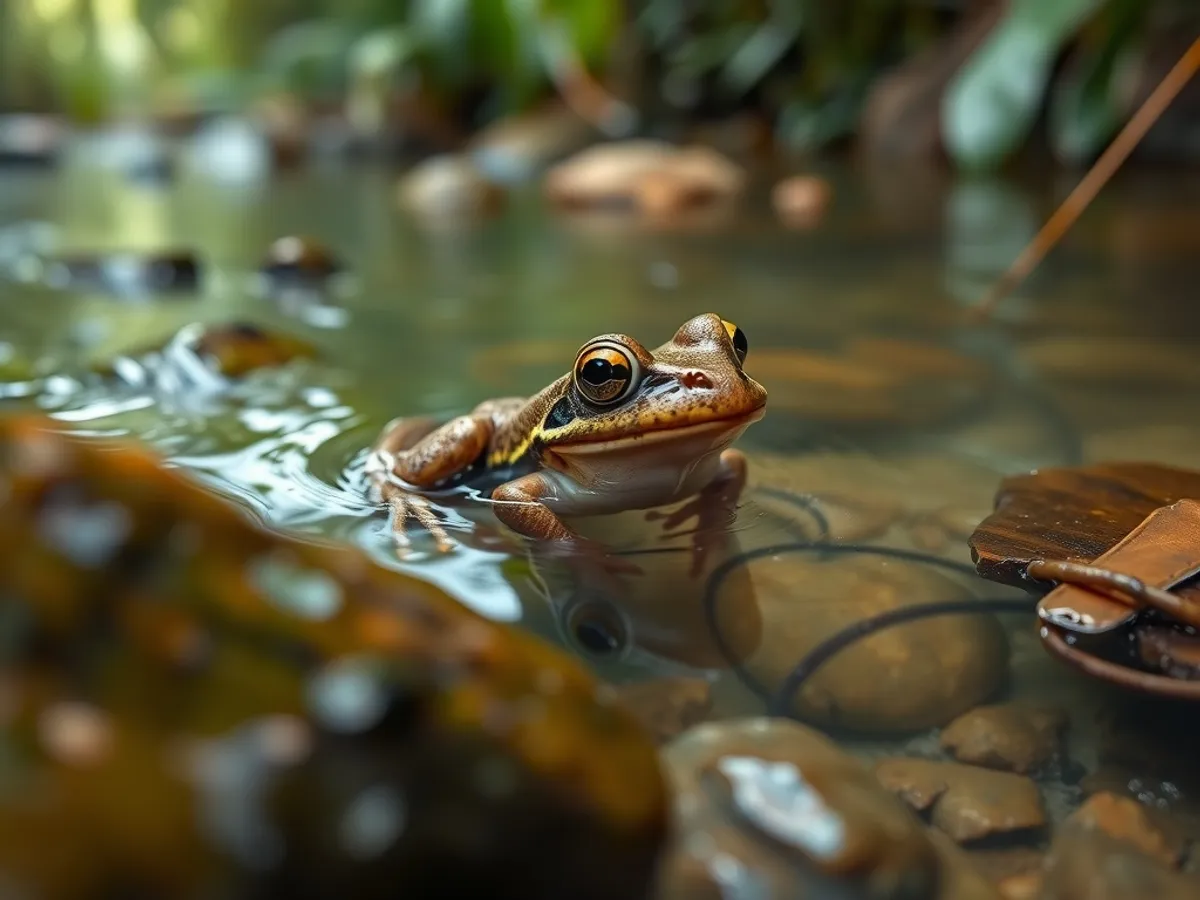
The Borneo Flat-headed Frog is a unique amphibian native to the rainforests of Borneo, Indonesia. It is renowned for being the world’s only frog species entirely lacking lungs, relying solely on its skin for respiration. This flat-bodied frog has a broad, flattened head and a smooth, dark-brown to olive-green skin, aiding its camouflage among river stones. Typically inhabiting fast-flowing, cold, clear streams, it is rarely seen due to its secretive nature and preference for pristine habitats.
Budgett's Frog
Lepidobatrachus laevis
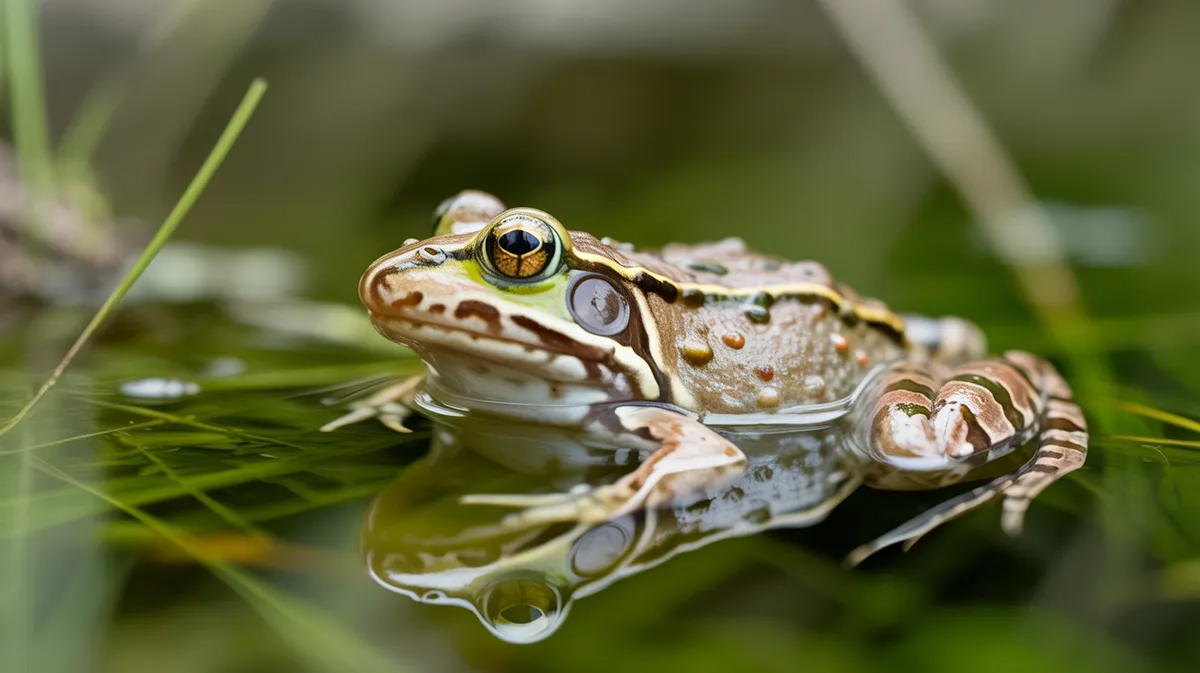
Budgett's Frog, also known as the Paraguay horned frog, is a unique amphibian native to South America. It is renowned for its bizarre, flattened appearance, wide mouth, and aggressive temperament, especially when threatened. Adapted to a semi-aquatic lifestyle, this amphibian spends much of the year in burrows during dry periods, emerging during the rainy season to breed. Its unusual vocalizations and voracious appetite make it a fascinating species both in the wild and in the exotic pet trade.
California Newt
Taricha torosa
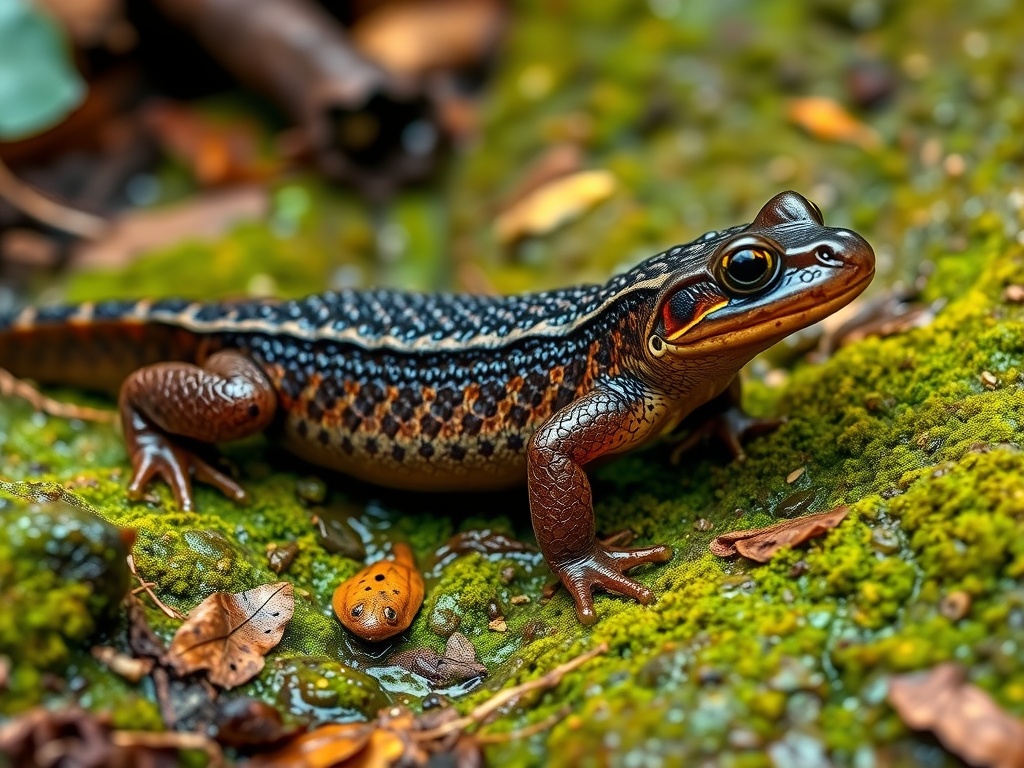
The California newt is a medium-sized amphibian native to California, recognized by its rough, warty skin and striking orange to brown coloration. It inhabits moist woodlands, chaparral, and forested areas, especially near streams and ponds during the breeding season. The newt is well adapted to both terrestrial and aquatic environments and is known for its potent skin toxin, which deters most predators. During the dry season, it retreats to moist refuges, becoming terrestrial until the rainy months trigger its migration to breeding pools.