

Carnivores
807 species in the encyclopedia
Meat-eaters — predators that hunt other animals for food.
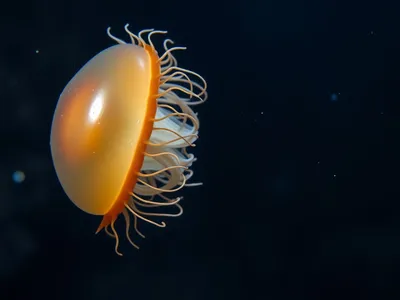
Abyssal Comb Jelly
Bathocyroe fosteri
The Abyssal Comb Jelly, Bathocyroe fosteri, is a translucent, deep-sea ctenophore notable for its delicate, balloon-like body and shimmering rows of cilia used for locomotion. Found at great oceanic depths, this invertebrate often drifts in the midwater column, capturing small prey with its lobes. Its bioluminescent capabilities create mesmerizing light displays, which may serve as camouflage or to deter predators. Despite its fragile appearance, the Abyssal Comb Jelly is well-adapted to the extreme pressure and darkness of the deep sea.
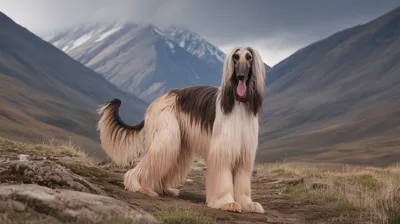
Afghan Hound
Canis lupus familiaris
The Afghan Hound is an ancient breed of sighthound renowned for its elegant appearance, long silky coat, and distinctive ring curl at the end of its tail. Originally bred in the mountainous regions of Afghanistan, this dog was valued for its speed, agility, and ability to hunt game over rugged terrain. Afghan Hounds are known for their independent and sometimes aloof temperament, yet they are affectionate with their families. Their unique appearance and dignified demeanor have made them popular in dog shows and as companion animals worldwide.
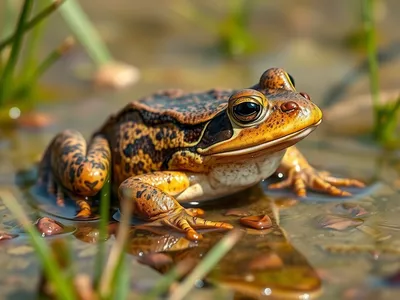
African Bullfrog
Pyxicephalus adspersus
The African bullfrog inverts the usual amphibian rule that females are the larger sex: males can exceed 2 kg and grow roughly twice the size of the females they mate with, because male-male combat over breeding pools rewards bulk. Along the lower jaw sit three odontoid projections — bony, tooth-like spikes that let it hold struggling prey, and give a bite that draws blood. It eats essentially anything it can cram down, including rodents, birds, other frogs, and famously young cobras. Its most remarkable behaviour is paternal: a male guards the tadpole mass, and when the puddle begins to evaporate he will excavate a channel with his hind legs to drain water from a shrinking pool into a larger one, saving the shoal. He is not sentimental about it — he also eats a share of the tadpoles he is guarding. Between rains the frog burrows down and encases itself in a cocoon built from layers of shed skin, sealing in moisture, and can wait out drought underground for a year or more.
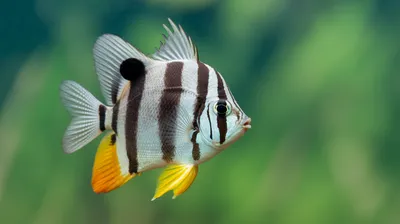
African Butterflyfish
Pantodon buchholzi
The African Butterflyfish is a distinctive freshwater fish known for its broad, wing-like pectoral fins and surface-dwelling lifestyle. Native to slow-moving rivers and swamps of West and Central Africa, this fish is specially adapted for life at the water's surface, where it hunts insects and small invertebrates. Its flattened body and upturned mouth allow it to capture prey efficiently, while its camouflage helps avoid predators. African Butterflyfish are popular in the aquarium trade due to their unique appearance and fascinating behaviors.
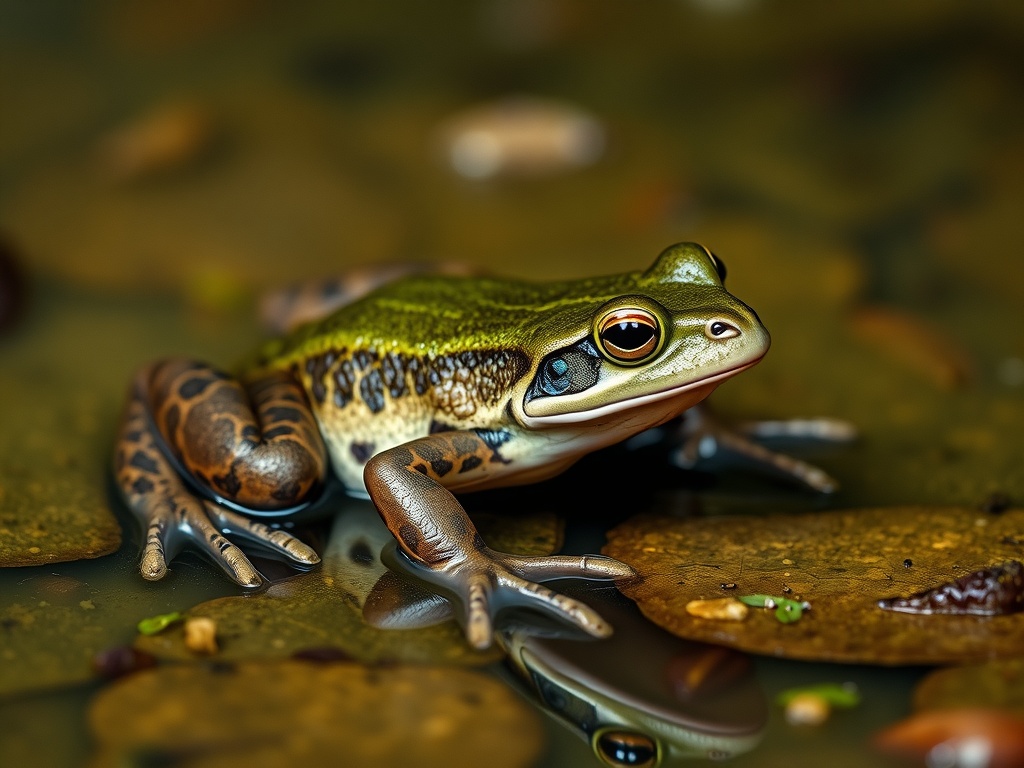
African Clawed Frog
Xenopus laevis
Xenopus laevis is a frog built for a life entirely in water: it has no tongue, no eardrum and no visible ears, and it shovels food into its mouth with its hands. Along its flanks run rows of stitch-like sensory organs — a lateral line retained into adulthood, which is unusual for a frog and lets it feel the water displaced by prey in muddy ponds. Its "claws" are three black keratinised toe tips on each hind foot, used to shred carrion. Males call underwater without moving air at all, clicking by snapping cartilage discs in the larynx. Its strangest cultural role came in the 1930s, when the Hogben test made it the world's pregnancy test: hormone in a woman's urine, injected into a female frog, made her lay eggs within hours, and hospitals kept tanks of them for three decades. That global trade in laboratory frogs is now strongly implicated in spreading the chytrid fungus that has since devastated amphibians on several continents — Xenopus carries it while largely resisting it.
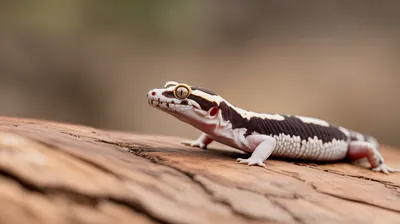
African Fat-tailed Gecko
Hemitheconyx caudicinctus
The African Fat-tailed Gecko is a medium-sized, nocturnal lizard native to West Africa. Recognized for its distinctive broad tail, which stores fat as an energy reserve, this gecko displays earthy color patterns with bold stripes or bands. It prefers arid to semi-arid environments, often sheltering under rocks or in burrows to avoid the harshest heat. Calm and docile, the African Fat-tailed Gecko is a popular choice for reptile enthusiasts due to its manageable size and hardy nature.
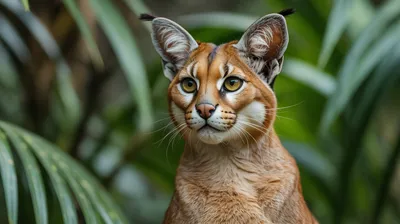
African Golden Cat
Caracal aurata
The African Golden Cat is a medium-sized, elusive wild cat native to the rainforests of Central and West Africa. It has a robust build, with a short tail and rounded ears, and its fur color ranges from golden or reddish-brown to silvery-grey, often marked with faint spots or stripes. This solitary and primarily nocturnal feline is seldom seen in the wild due to its secretive nature and dense forest habitat. African Golden Cats are skilled hunters, preying on a variety of small to medium-sized mammals, birds, and reptiles.
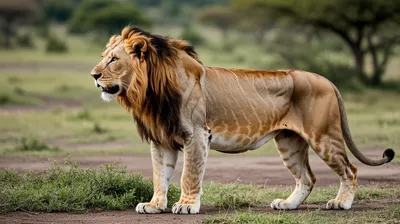
African Lion
Panthera leo
The lion is the only truly social cat, and its social life explains most of what it is. A male's mane is an honest advertisement: darker manes correlate with higher testosterone and better nutrition, and in Serengeti experiments using life-sized dummy lions, females approached dark-maned models while rival males avoided them. Manes are costly — dark manes trap heat, which is why males in hot, arid places such as Tsavo are often nearly maneless, and why mane colour lightens in cooler seasons. The roar carries up to about 8 km, produced by unusually square, fat-padded vocal folds that let the lion push huge volume without straining the larynx. Prides are matrilineal, and the females stay for life while coalitions of males hold tenure for only a couple of years before being ousted; incoming males kill the cubs, which brings the females back into oestrus. Lionesses do most of the hunting, but males are decisive on large, dangerous prey such as buffalo. Fewer than about 25,000 remain in the wild, in a fraction of a range that once stretched from Greece to India.
African Penguin
Spheniscus demersus
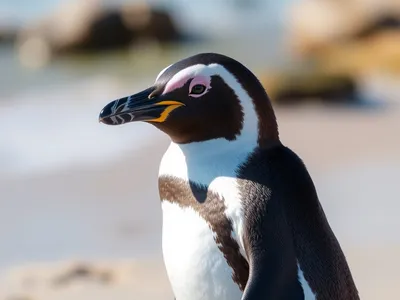
The African penguin is the only penguin that breeds on the African mainland and its islands, and it brays like a donkey — hence its older name, jackass penguin. The bare pink patch above each eye is a radiator: in heat, blood is shunted into the supraorbital gland region and the skin flushes a deeper pink as it dumps heat to the air, which is how a bird built for cold survives Namibian and South African summers. Its collapse is a case study in how an unrelated industry can destroy a species. For centuries penguins nested in burrows dug into metres-deep guano; when guano was scraped off the islands as fertiliser in the nineteenth century, the penguins were left nesting on bare rock, exposed to gulls and to lethal heat. Then commercial purse-seining stripped the sardine and anchovy stocks, and the fish that remained shifted east, away from the breeding colonies. From roughly a million pairs around 1900, fewer than 10,000 breeding pairs remain, and the species is now Critically Endangered.
African Reed Frog
Hyperolius viridiflavus
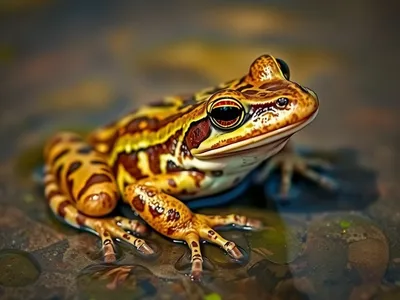
The African Reed Frog is a small, agile amphibian known for its vibrant coloration and remarkable adaptability. These frogs are typically found in wetlands, marshes, and reed beds throughout sub-Saharan Africa, often displaying a variety of colors and patterns, ranging from greens and yellows to browns and even blues. Their skin secretes a waxy substance that helps prevent dehydration, enabling them to thrive in both permanent and temporary water bodies. African Reed Frogs are especially famous for their loud, distinctive calls during the breeding season, which can be heard echoing across wetlands at dusk and night.
African Rock Python
Python sebae
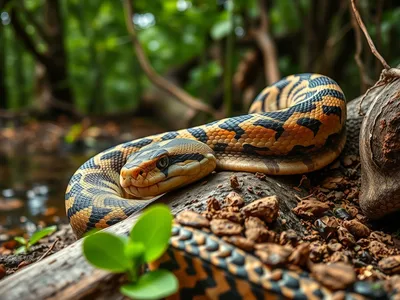
The African Rock Python is Africa's largest snake and one of the largest python species in the world. Characterized by its thick, muscular body and distinctive dark blotched pattern, it can grow up to 6 meters (20 feet) in length. This non-venomous constrictor is highly adaptable and found across a wide range of habitats, including savannas, forests, and near water bodies. African Rock Pythons are solitary and ambush predators, relying on stealth and power to subdue large prey such as antelope, monitor lizards, and even crocodiles. Despite their formidable size, they face threats from habitat loss and hunting.
African Wild Dog
Lycaon pictus
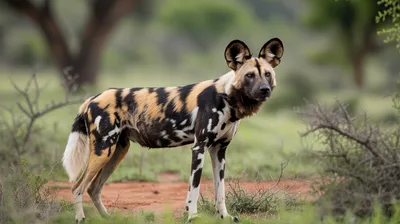
The African wild dog is not a dog, a wolf or a jackal. It is the only living member of its genus, cannot interbreed with any of them, and carries four toes on its front feet rather than five — the mark of a lineage that split off millions of years ago. It is arguably the most effective large predator in Africa, succeeding on a far higher share of its hunts than a lion or leopard, and it does so not by ambush but by endurance, running prey to exhaustion in a coordinated relay. The pack is intensely cooperative: hunters regurgitate meat for pups, for the sick and for injured adults, and dogs too old or hurt to hunt are fed rather than abandoned. Decisions are made collectively — before setting off, a pack effectively votes by sneezing, and the more sneezes recorded, the more likely the hunt is to go ahead, with a lower threshold when a dominant animal initiates. Every individual's blotched coat is unique, which is why the species' scientific name means "painted wolf". Its undoing is space: it needs enormous ranges, which puts it in permanent conflict with farmland and makes it one of Africa's most endangered carnivores.
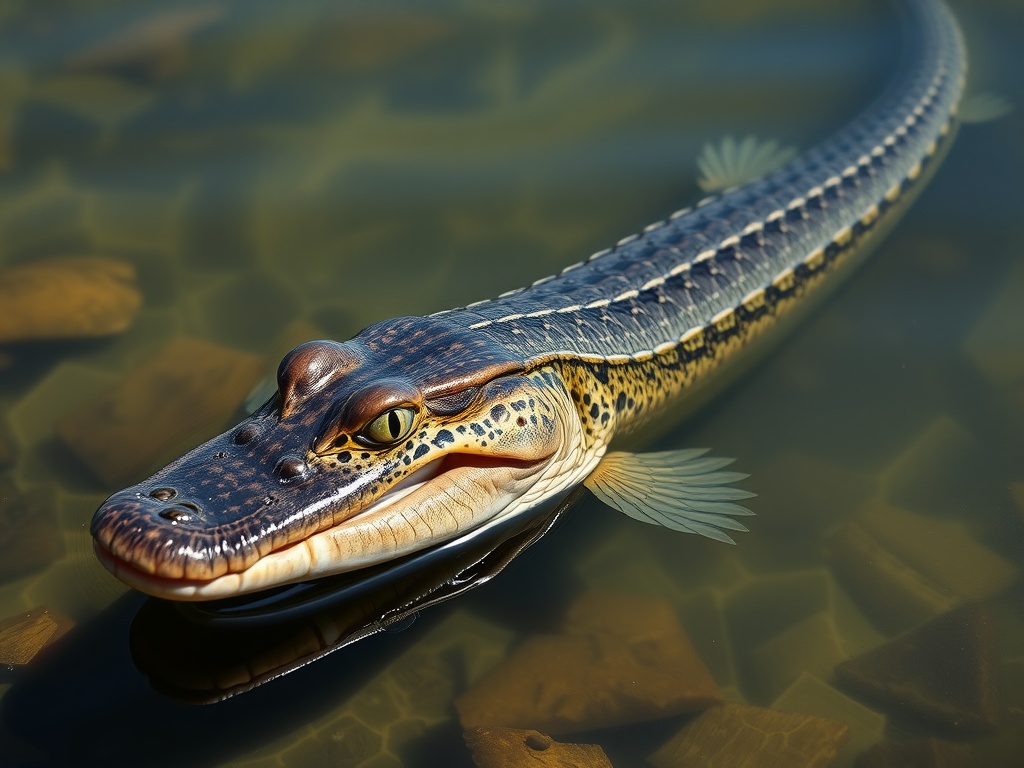
Alligator gar
Atractosteus spatula
The alligator gar is the largest fish that lives its whole life in fresh water in North America, reaching 2.5 m and over 130 kg, and it is armoured in a way no bony fish alive today matches. Its scales are ganoid: diamond-shaped, coated in a hard enamel-like layer of ganoine over a tough bony base, and interlocked into a lattice that behaves like chainmail — Native peoples used gar scales as arrowheads and gar hide as a covering for ploughs and shields. It breathes air through a vascularised swim bladder, which lets it hold on in the hot, oxygen-starved backwaters and oxbows where most predators suffocate. For most of the twentieth century it was branded a "trash fish" and deliberately culled by state agencies, which shot and netted them to protect sport fisheries; that view has reversed, and it is now valued as a native apex predator with a genuine appetite for invasive carp. It is also slow to recover from any of this: females may not spawn until around age ten and can live past fifty.
Alligator Snapping Turtle
Macrochelys temminckii
The alligator snapping turtle is one of very few vertebrates that fishes with a lure. It lies on the river bottom with its jaws open and wiggles a pink, worm-shaped appendage on the floor of its tongue; a fish that comes to inspect the "worm" is taken by a strike that closes the jaws in a fraction of a second. It is a genuine ambush specialist that may sit motionless for so long that algae grow on its shell, and its three high ridges of keels, hidden eyes set at the sides of the head, and hooked beak separate it clearly from the far more aggressive common snapper. The popular claim that it can bite through a broomstick is not true: measured bite forces are around 150 pounds of force, respectable but comparable to a large dog and well below the crushing power of many turtles that eat shellfish. Males can exceed 100 kg. Populations across the Mississippi basin were gutted in the twentieth century by commercial harvest for turtle soup, and the species is slow-maturing enough that recovery takes decades.
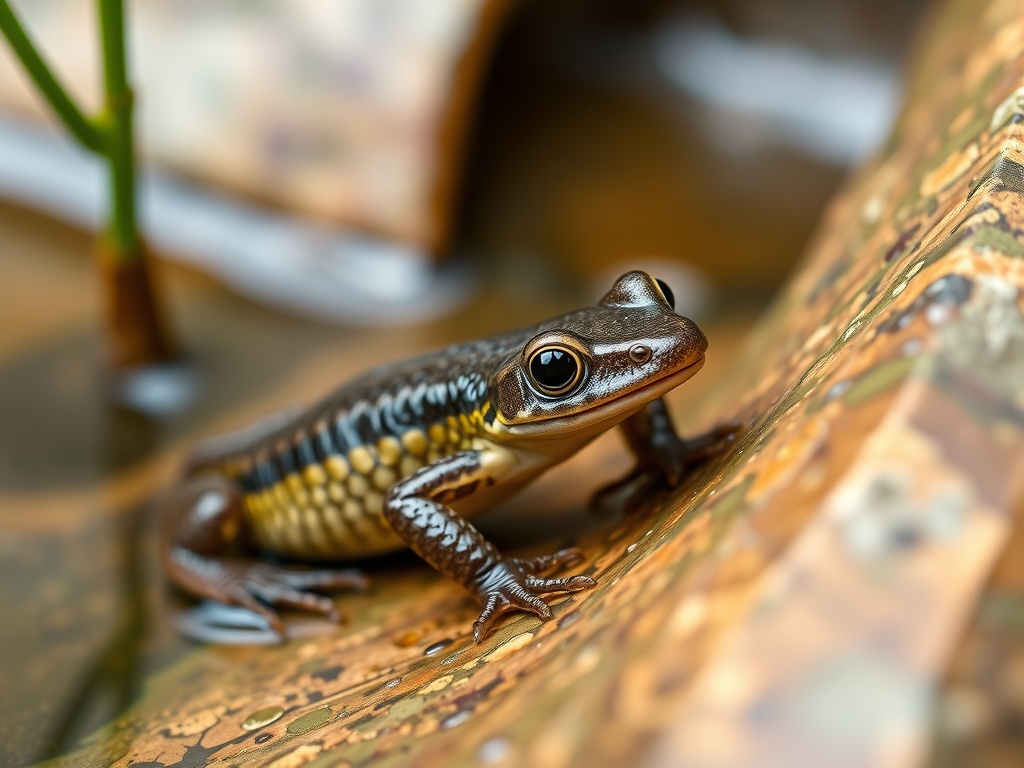
Alpine Newt
Ichthyosaura alpestris
The Alpine Newt is a striking amphibian native to central and southern Europe, particularly thriving in mountainous regions. It is recognized for its slender body, smooth skin, and vibrant breeding colors, with males displaying a bright orange belly and blue flanks during the mating season. Alpine Newts are semi-aquatic, spending part of their lives in freshwater ponds and part on land in moist, shaded habitats. They are known for their adaptability, often inhabiting high-altitude lakes, forest pools, and garden ponds. Despite facing localized threats, their populations remain stable across much of their range.
Amazon Kingfisher
Chloroceryle amazona
The Amazon Kingfisher is a medium-sized, strikingly colored bird found throughout Central and South America, especially along rivers and streams. It is recognized by its glossy green upperparts, white underparts, and the prominent white collar around its neck; males have a rufous band across the chest. This kingfisher is an agile hunter, perching quietly above water before diving headfirst to catch small fish and aquatic invertebrates. Its sharp bill and excellent vision make it a formidable predator in its freshwater habitat. The Amazon Kingfisher is a solitary bird, often seen alone or in pairs, and communicates with sharp, rattling calls.
Amazon Leaf Fish
Monocirrhus polyacanthus
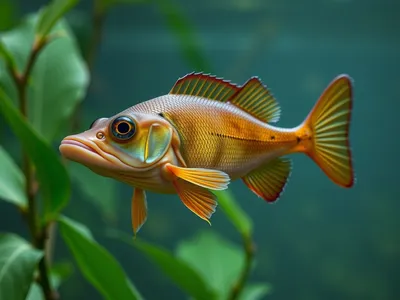
The Amazon Leaf Fish is a remarkable freshwater species native to the slow-moving streams and flooded forests of the Amazon Basin. This fish is famed for its extraordinary camouflage, mimicking a dead leaf in both appearance and movement to ambush unsuspecting prey. With a laterally flattened body, protruding lower jaw, and mottled brown coloration, it can remain motionless for long periods, blending seamlessly into its environment. Its feeding technique is highly specialized, using a large, extendable mouth to rapidly engulf small fish and invertebrates.
Amazon Milk Frog
Trachycephalus resinifictrix
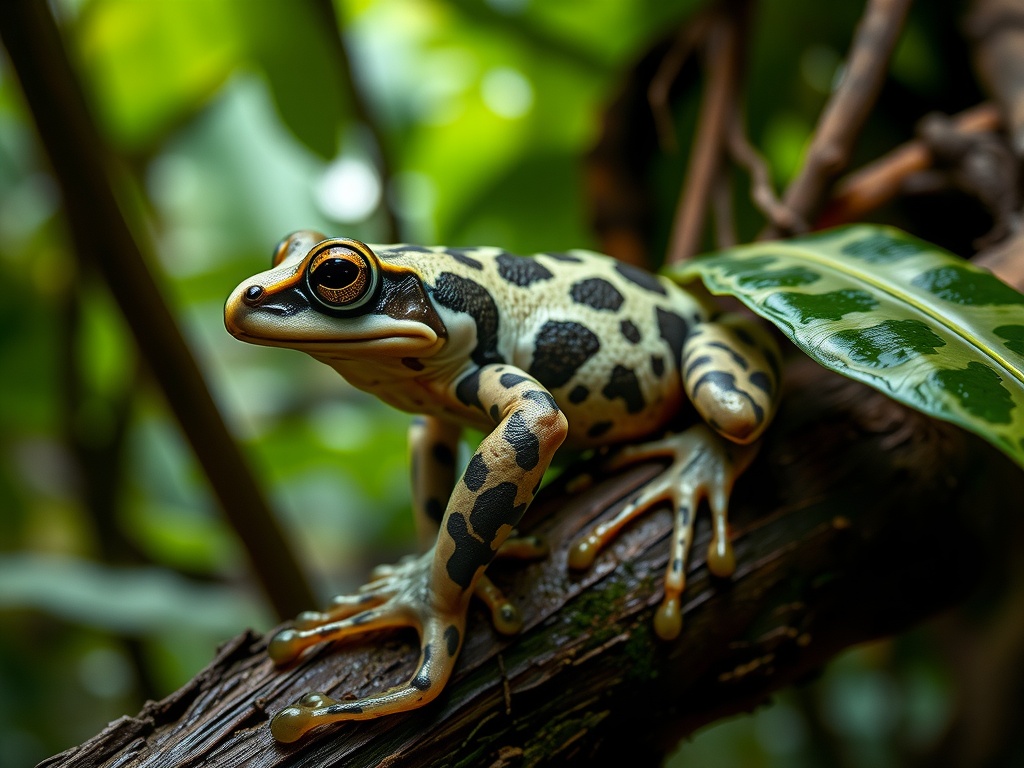
The Amazon Milk Frog is a striking tree frog native to the Amazon Rainforest, easily recognized by its pale blue-gray body adorned with brown or black banding. This nocturnal amphibian gets its name from the milky, sticky secretion it produces when stressed, which serves as a defense against predators. They are arboreal, spending most of their life high in the rainforest canopy, and are known for their loud, distinctive calls during the rainy season. Amazon Milk Frogs thrive in humid, tropical environments and are popular in the pet trade due to their unique appearance and manageable size.
Amazon River Dolphin
Inia geoffrensis
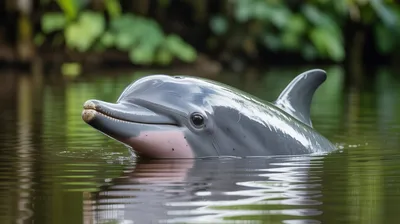
The boto is the largest river dolphin, up to 2.5 m and 185 kg, and it is built for a forest rather than for open water. Its neck vertebrae are unfused, so it can turn its head roughly 90 degrees — useless in the sea, essential for threading between drowned trunks in the varzea flooded forest, where it hunts through the canopy of a submerged rainforest for months each year. Its flippers are broad and paddle-like for tight manoeuvring rather than speed, and its rear teeth are blunt and molar-like, letting it crush armoured catfish and even river turtles that a marine dolphin's uniform cones could not handle. The pink colouring is not pigment so much as scarring and blood vessels close to the skin: males are far pinker than females because they fight, and an old male can be almost flamingo-coloured. Male botos have been recorded carrying objects — sticks, lumps of hard clay, turtles — and thrashing them at the surface in front of females, one of the very few reported cases of object-carrying sexual display in a non-human animal.
Amazon tree boa
Corallus hortulana
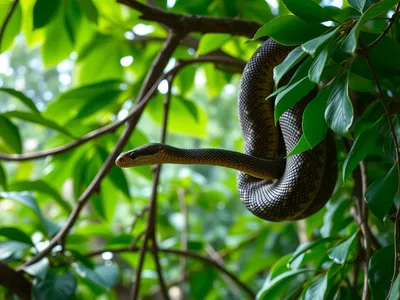
The Amazon tree boa is a slender, highly arboreal snake native to the rainforests of South America. This species exhibits remarkable color variation, with individuals ranging from bright yellow to deep red, orange, or gray, often with intricate patterns. Known for its agility, the Amazon tree boa uses its prehensile tail to navigate branches in search of prey, which includes small mammals, birds, and lizards. Though non-venomous, it is known for its defensive nature and can deliver a painful bite if threatened. Its nocturnal habits and cryptic coloration make it a master of camouflage in its dense, leafy habitat.
American Alligator
Alligator mississippiensis
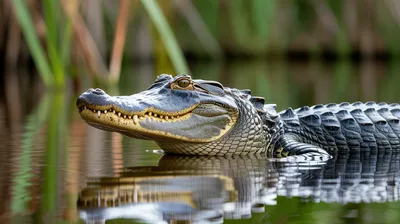
The American alligator (Alligator mississippiensis) is a formidable reptilian inhabitant of the Southeastern United States, thriving in freshwater environments such as swamps, marshes, rivers, and lakes. Male American alligators can grow up to 15 feet (4.6 meters) in length and weigh as much as 1,000 pounds (450 kilograms), making them significantly larger than their distant relative, the Chinese alligator (Alligator sinensis), which rarely exceeds 7 feet (2.1 meters). This size advantage is crucial for their role as apex predators, allowing them to control populations of prey species such as fish, birds, and mammals. Their robust jaws exert a bite force of about 2,980 psi (pounds per square inch), enabling them to crack turtle shells with ease. American alligators possess a unique adaptation in their heart, which can shunt blood away from the lungs, optimizing oxygen utilization during prolonged dives. This physiological trait is vital for their survival in aquatic habitats. They are also known for their vocalizations, particularly the male's bellowing during mating season, which can be heard up to 165 yards (150 meters) away.
American Bullfrog
Lithobates catesbeianus
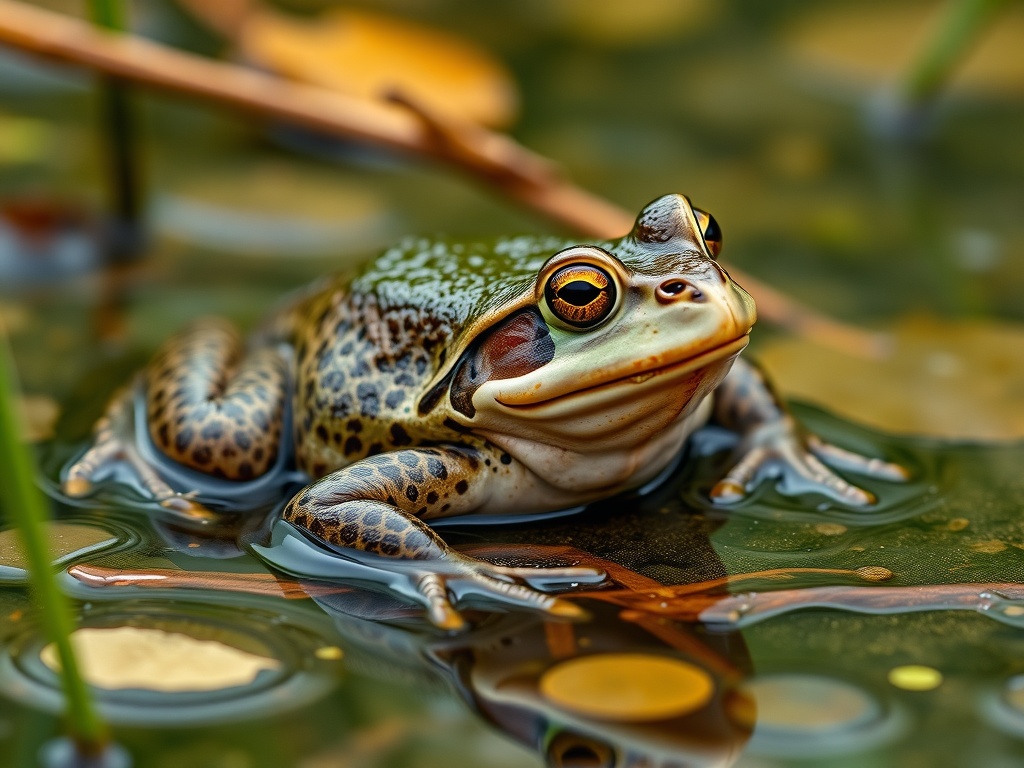
The American Bullfrog is the largest frog native to North America, recognized for its powerful legs and deep, resonant calls. It has smooth, olive-green skin with subtle bands on its legs and a pale underbelly. This highly adaptable amphibian thrives in a variety of freshwater habitats and is known for its voracious, opportunistic feeding behavior. American Bullfrogs can have significant ecological impacts, particularly in regions where they have been introduced outside their native range. Their loud croaks are a familiar sound in summer wetlands and ponds.
American Dipper
Cinclus mexicanus
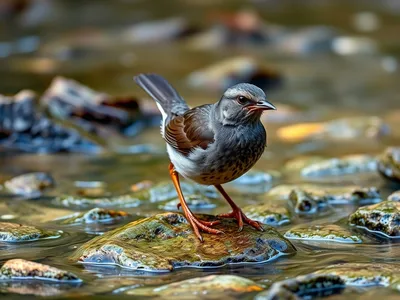
The dipper is North America's only aquatic songbird, and it does something no other passerine does: it walks straight into a cold mountain torrent and forages on the bottom, gripping the rocks with strong claws and using its wings to hold itself down or to swim. Its kit is entirely rebuilt for this. It has a preen gland roughly ten times the size of a comparable songbird's, feeding an unusually dense, water-repellent plumage; movable flaps close the nostrils underwater; a white nictitating membrane sweeps across the eye, giving it the characteristic flashing blink; and its blood carries extra oxygen, letting it stay under for up to about half a minute. It sings loudly right through winter, a long ringing warble pitched high enough to cut through the broadband roar of the stream — an acoustic adaptation to a permanently noisy home. Nests are dome-shaped moss shelters, often built on ledges behind or beside waterfalls, where spray keeps the moss alive and green.
American Green Tree Frog
Hyla cinerea
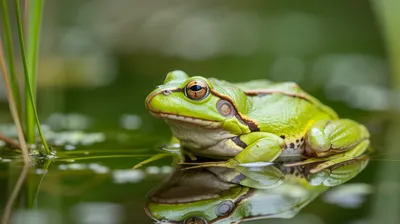
The American Green Tree Frog is a small, slender amphibian known for its vibrant green color and distinctive white or yellow stripe running from its jaw along each side. This species is nocturnal and highly arboreal, preferring to spend most of its time perched on vegetation near water sources. They are commonly found in the southeastern United States, especially in wetlands, marshes, and swamps. Their loud, bell-like calls are a familiar sound during warm and humid nights.