
About the Eastern Green Mamba
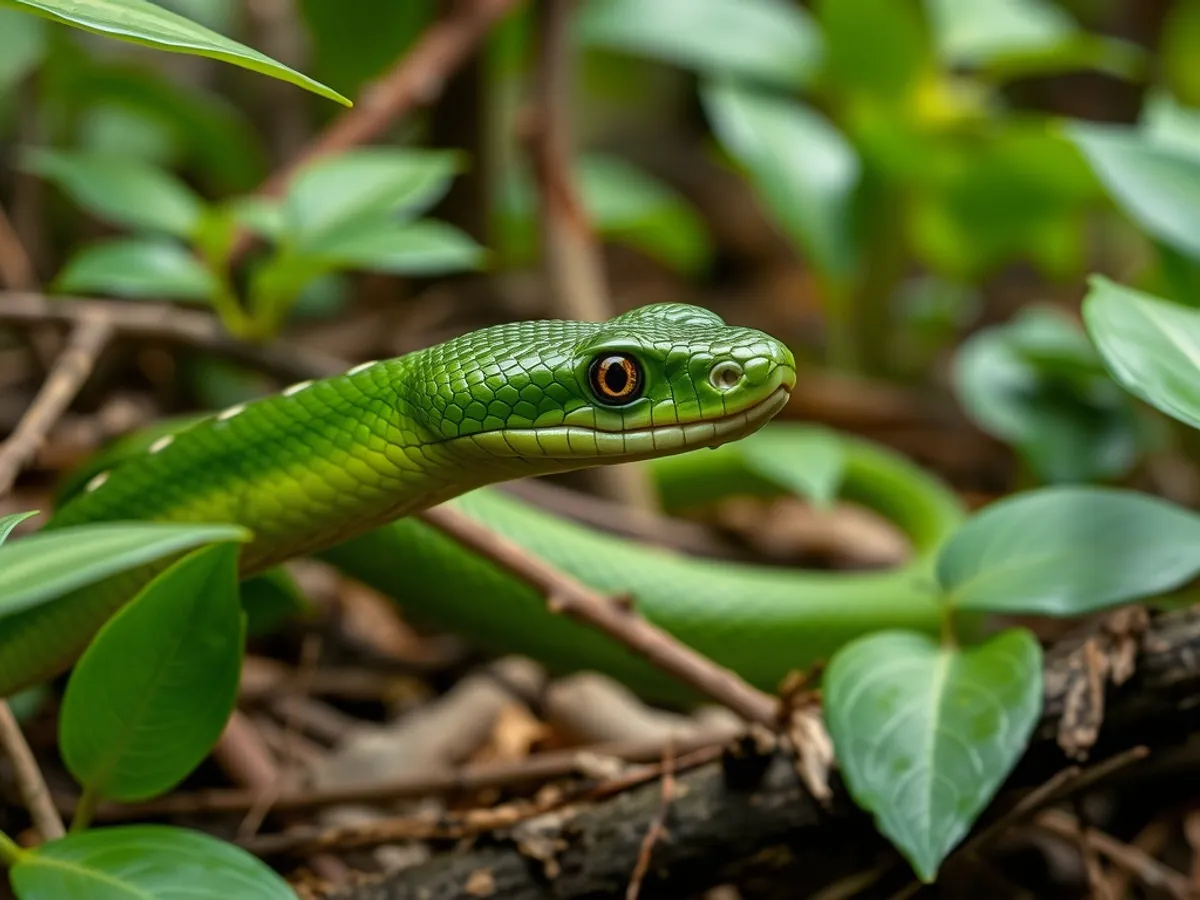
The Eastern Green Mamba is a slender, highly arboreal snake native to the coastal regions of East Africa. Its vibrant green coloration provides excellent camouflage among the leafy canopies where it spends most of its life. The species is known for its agility and speed, as well as its potent neurotoxic venom, although it is generally shy and avoids human contact. Eastern Green Mambas play a crucial role in controlling small mammal and bird populations within their habitat.
Fascinating facts
Arboreal Lifestyle
Eastern Green Mambas spend nearly their entire lives in trees, navigating branches with impressive agility.
Potent Venom
Their venom is highly neurotoxic and can cause severe symptoms in humans, but bites are rare due to their reclusive habits.
Egg Layers
Females lay between 6 and 17 eggs in rotting vegetation, which provides the necessary heat for incubation.
Detailed description
The Eastern Green Mamba (Dendroaspis angusticeps) is a strikingly slender, highly arboreal elapid snake, typically reaching adult lengths of 1.8 to 2.0 meters, with rare individuals exceeding 2.5 meters. Its dorsal coloration is a vivid emerald green, often with faint yellowish or bluish hues, while the ventral scales are a lighter green to yellow-green, providing exceptional camouflage among the foliage of its native coastal forests. The head is elongated and distinct from the neck, with large eyes featuring round pupils, granting excellent binocular vision crucial for its arboreal lifestyle. Scales are smooth and glossy, reducing friction as the snake moves rapidly through branches. The body is laterally compressed, enhancing maneuverability in dense vegetation. Eastern Green Mambas are diurnal, relying on their keen eyesight and agility to hunt and evade predators. They are generally solitary, except during the breeding season. Their potent neurotoxic venom is delivered through fixed front fangs, and while bites are rare due to the species' reclusive nature, envenomation can be life-threatening without prompt medical intervention. The species exhibits sexual dimorphism, with females being larger and more robust than males.
Did you know?
The Eastern Green Mamba’s eggs are incubated by the warmth of decaying vegetation, not by parental care.
Research & sources
Wikipedia summary
The eastern green mamba is a highly venomous snake species of the mamba genus Dendroaspis native to the coastal regions of southern East Africa. Described by Scottish surgeon and zoologist Andrew Smith in 1849, it has a slender build with a bright green back and green-yellow ventral scales. Adult females average around 2 metres in length, and males are slightly smaller.
Behaviour & social structure
Eastern Green Mambas are primarily arboreal and spend the majority of their lives in the upper canopy, rarely descending to the ground except to bask, drink, or occasionally hunt. They are highly agile and capable of rapid, sinuous movement through branches, often using their prehensile tails for balance. Their daily activity peaks during the early morning and late afternoon, coinciding with the movement of prey such as birds, nestlings, bats, and small mammals. Hunting is typically ambush-based; the snake remains motionless, blending with leaves, and strikes with remarkable speed when prey approaches. They are generally non-aggressive and will flee when threatened, but may display defensive behaviors such as flattening the neck, hissing, and striking if cornered. Social interactions are minimal, except during the mating season when males may engage in ritualized combat for access to receptive females.
Reproduction & life cycle
Breeding occurs during the rainy season, typically from October to March, when increased humidity and prey availability favor reproductive success. Males locate females through pheromonal cues and may engage in combat with rivals, intertwining and attempting to pin each other. Courtship involves tactile stimulation, with the male aligning his body alongside the female. Females are oviparous, laying clutches of 6 to 17 elongated, leathery eggs in concealed, humid locations such as hollow logs or leaf litter. Incubation lasts approximately 10 to 12 weeks, depending on ambient temperature (usually 24–28°C). Hatchlings measure 35–45 cm at birth and are fully independent, receiving no parental care. Juveniles are similarly colored to adults but may exhibit slightly bluer or more yellowish tones.
Adaptations & survival
The Eastern Green Mamba exhibits several specialized adaptations for arboreal life: its laterally compressed body and smooth scales facilitate swift movement through dense foliage, while its prehensile tail aids in gripping branches. The vivid green coloration provides cryptic camouflage, reducing predation risk from birds of prey and arboreal mammals. Its acute vision supports precise targeting of fast-moving prey. The potent neurotoxic venom, composed primarily of dendrotoxins, rapidly immobilizes prey by disrupting synaptic transmission, an adaptation for subduing agile, tree-dwelling animals. Behavioral adaptations include extreme shyness and avoidance of open ground, minimizing encounters with terrestrial predators and humans.
Cultural significance
The Eastern Green Mamba holds a place in local folklore and is often regarded with a mixture of fear and respect due to its vivid coloration and reputation for potent venom. In some East African cultures, it is associated with omens or spiritual significance, though it is less prominent in mythology compared to the Black Mamba. There are no widely documented traditional uses of this species in medicine or ritual, likely owing to its elusive behavior and dangerous reputation. Its striking appearance has made it a subject of fascination among herpetologists and wildlife enthusiasts.
Recent research
Recent research has focused on the molecular composition of Eastern Green Mamba venom, revealing a complex mixture of dendrotoxins, fasciculins, and other neurotoxic peptides with potential biomedical applications, such as novel analgesics or treatments for neurological disorders. Studies on its ecology have highlighted the importance of intact coastal forests for sustaining viable populations. Ongoing telemetry projects are investigating home range sizes, movement patterns, and habitat preferences, contributing to improved conservation strategies. Genetic analyses are clarifying the phylogenetic relationships within the genus Dendroaspis, supporting the distinctiveness of D. angusticeps from other mamba species.
Videos
Habitat
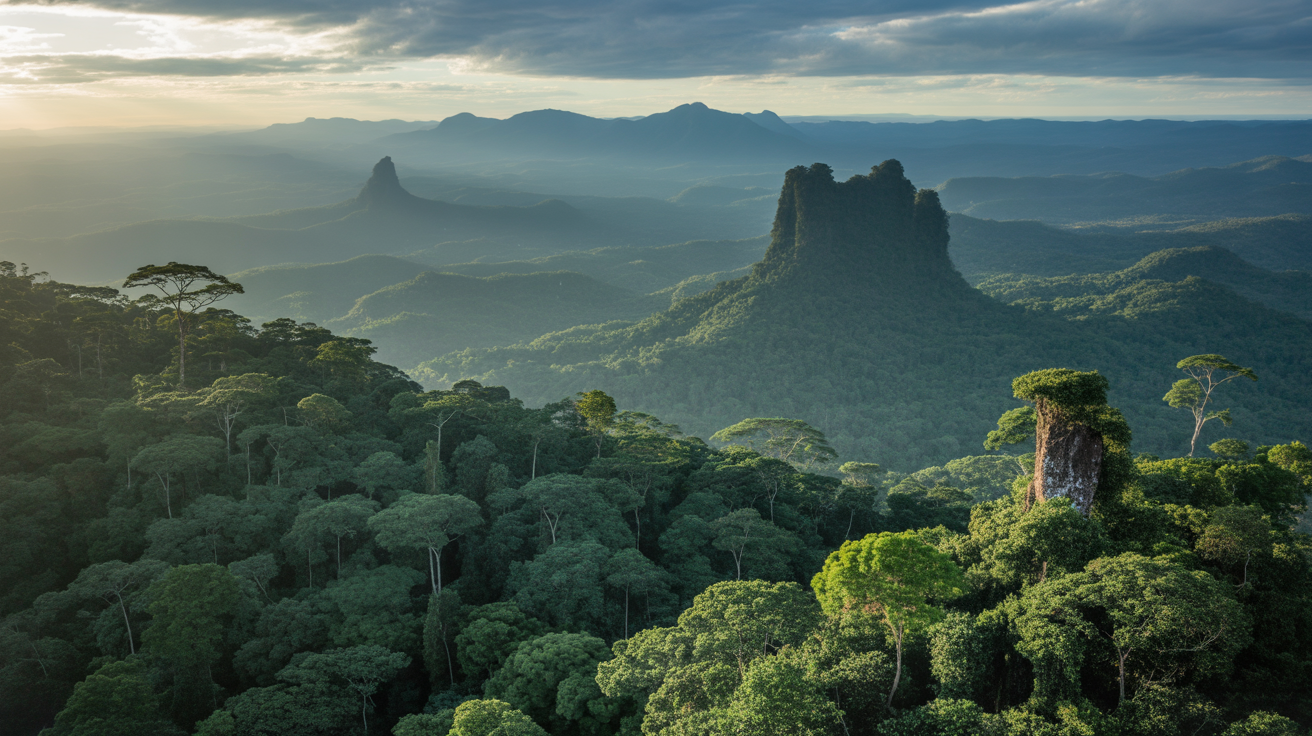
Coastal forests and thickets

Conservation
The Eastern Green Mamba is currently classified as Least Concern on the IUCN Red List.
Threats & challenges
Although currently classified as Least Concern by the IUCN, the Eastern Green Mamba faces localized threats from habitat loss due to deforestation, agricultural expansion, and urbanization along the East African coast. Fragmentation of coastal forests reduces available habitat and may isolate populations. The species is occasionally killed out of fear or misunderstanding, though its secretive nature limits direct human conflict. Climate change poses a potential long-term threat by altering the structure and microclimate of coastal forests. Despite these challenges, the species remains relatively widespread and adaptable within suitable habitats.
Taxonomy
Scientific name
Dendroaspis angusticeps
- Kingdom
- Animalia
- Phylum
- Chordata
- Class
- Reptilia
- Order
- Squamata
- Family
- Elapidae
- Genus
- Dendroaspis
- Species
- angusticeps
Community notes
Share your observations about the Eastern Green Mamba.
No community notes yet. Be the first!
Discover more wildlife
More fascinating animals from the encyclopedia.