
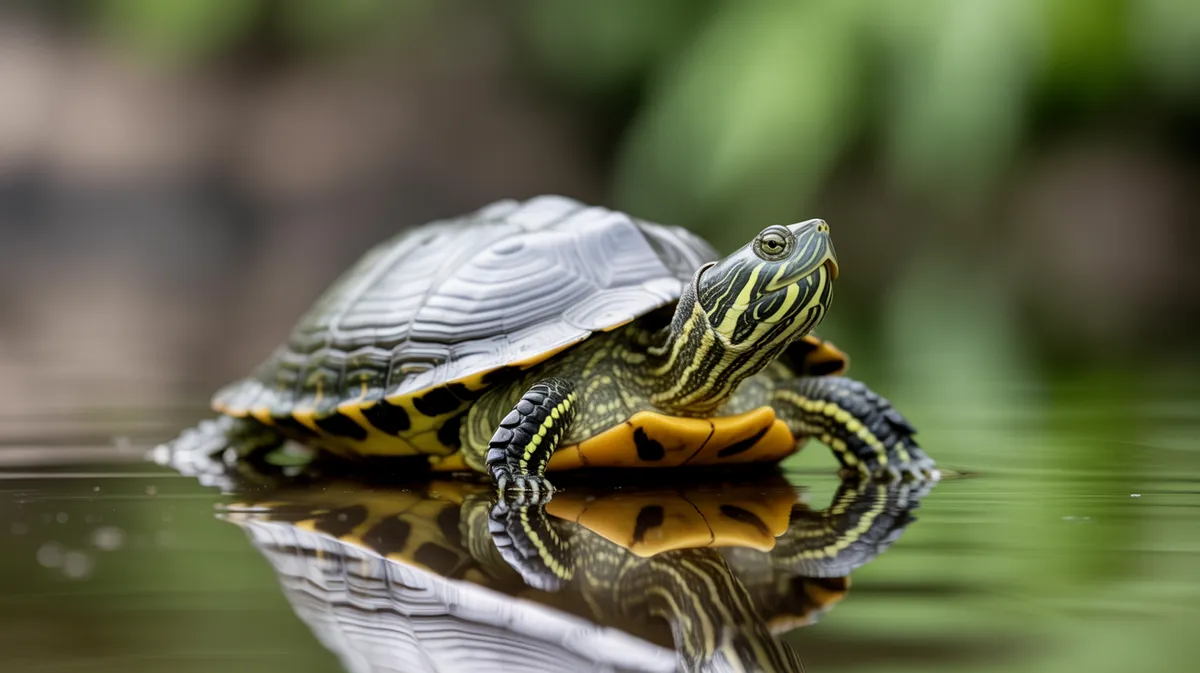
About the False Map Turtle
The False Map Turtle is a medium-sized freshwater turtle native to the central United States. Named for the map-like yellow lines on its olive-brown carapace, this turtle is distinguished by a prominent keel and a lack of a broad head marking found in some related species. It is often found basking on logs and rocks in slow-moving rivers, backwaters, and oxbows. The species is primarily aquatic, rarely venturing far from water, and is well-adapted to life in strong currents and murky environments.
Fascinating facts
Distinctive Shell Patterns
The intricate yellow lines on the carapace resemble contour lines on a map, giving the turtle its common name.
Prominent Keel
A noticeable central keel runs along the top of the turtle's shell, making it easy to identify among other turtles.
River Specialist
False Map Turtles are adapted to living in rivers with strong currents and are rarely found in still or stagnant waters.
Detailed description
The False Map Turtle (Graptemys pseudogeographica) is a medium-sized aquatic turtle, with adult females reaching carapace lengths of 15–27 cm (6–10.5 in) and males typically smaller at 9–15 cm (3.5–6 in). Its olive to brown carapace is adorned with intricate yellowish lines resembling contour maps, and a prominent central keel with serrated posterior marginals. The plastron is pale with dark lines along the seams, often fading with age. The head is relatively narrow, lacking the broad interorbital blotch seen in some congeners, but features thin yellow stripes and a crescent-shaped mark behind each eye. False Map Turtles are highly aquatic, rarely leaving water except to bask or nest. They are diurnal, spending much of the day basking in groups on logs or rocks, and are quick to dive when disturbed. Their limbs are strongly webbed, facilitating strong swimming in the moderate to swift currents of large rivers, oxbows, and backwaters. The species exhibits sexual dimorphism, with females being larger and having shorter tails. Juveniles are more vividly patterned and have a more pronounced keel. The species is primarily solitary but may aggregate in favorable basking or feeding sites. False Map Turtles are long-lived, with lifespans exceeding 30 years in the wild.
Did you know?
Despite their name, False Map Turtles can be difficult to distinguish from true map turtles without close examination of their head and shell markings.
Research & sources
Wikipedia summary
The false map turtle is a species of turtle endemic to the United States. It is a common pet species. Two subspecies are recognized, including the nominotypical subspecies described here.
Behaviour & social structure
False Map Turtles are primarily diurnal, with peak activity in the morning and late afternoon. Basking is a critical behavior for thermoregulation and parasite control, often involving multiple individuals sharing limited basking sites. They are wary and will quickly dive into the water at the slightest disturbance. Feeding is opportunistic and occurs both at the surface and underwater; their diet includes aquatic insects, mollusks, crustaceans, small fish, carrion, and a variety of aquatic plants and algae. Juveniles are more carnivorous, while adults consume more plant material. Social interactions are limited outside of basking aggregations and the breeding season, and there is little evidence of territoriality. During colder months, False Map Turtles enter brumation, burying themselves in mud or under debris at the bottom of water bodies.
Reproduction & life cycle
Breeding occurs in spring and early summer (April–June), with courtship involving tactile and visual displays by males, such as stroking the female's head and limbs with elongated foreclaws. Females lay 6–24 eggs per clutch, with 1–3 clutches per season, in sandy or loamy soils on elevated banks near water. Incubation lasts 60–80 days, depending on temperature, and sex determination is temperature-dependent (TSD), with warmer nests producing females. Hatchlings emerge in late summer or may overwinter in the nest, emerging the following spring. There is no parental care after egg-laying. Sexual maturity is reached at 4–6 years for males and 8–14 years for females.
Adaptations & survival
False Map Turtles possess several adaptations for riverine life: a streamlined, flattened shell reduces drag in currents; strong, webbed limbs enable efficient swimming; and their cryptic coloration provides camouflage among submerged debris and vegetation. The prominent keel may aid in stability and hydrodynamics. Their acute vision and sensitivity to vibrations help detect predators and prey. Behavioral wariness and rapid escape responses reduce predation risk. Temperature-dependent sex determination allows populations to adjust sex ratios in response to environmental conditions.
Cultural significance
While not a major figure in indigenous mythology or folklore, False Map Turtles are valued in the pet trade for their distinctive appearance and manageable size. They are sometimes used in educational programs to teach about river ecosystems and conservation. Their presence is considered an indicator of healthy riverine habitats.
Recent research
Recent research has focused on the effects of river management on population structure, genetic diversity among subspecies, and the impacts of temperature on sex ratios. Studies using radio telemetry have revealed detailed movement patterns and habitat use, showing strong site fidelity and seasonal shifts in home range. Ongoing work is examining the effects of contaminants (e.g., pesticides, heavy metals) on reproductive success and hatchling survival. There is also interest in the role of False Map Turtles in controlling invasive aquatic invertebrates.
Videos
Habitat
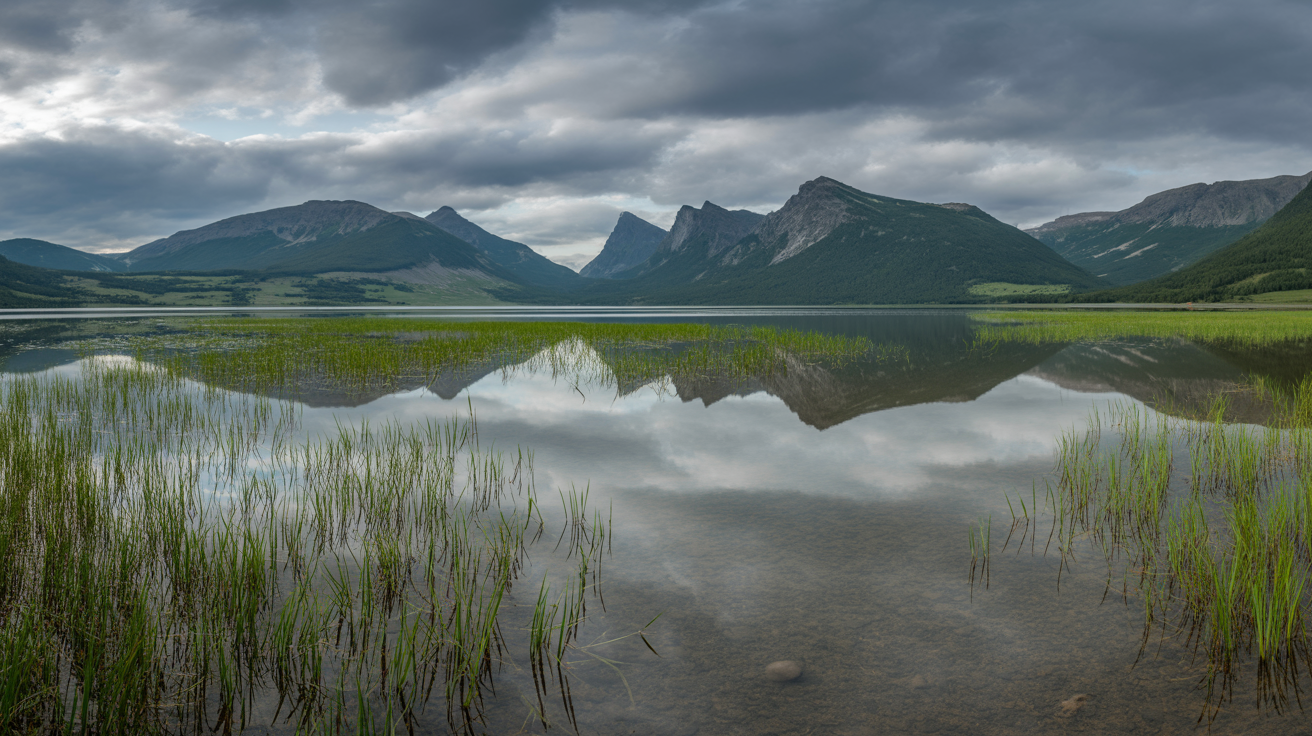
Freshwater rivers and streams
Conservation
The False Map Turtle is currently classified as Least Concern on the IUCN Red List.
Threats & challenges
Major threats include habitat modification (damming, channelization, pollution), loss of nesting sites due to riverbank development, and nest predation by raccoons, skunks, and other mammals. Collection for the pet trade, while regulated, can impact local populations. Water pollution and invasive species (such as zebra mussels) may alter food webs. Climate change poses long-term risks by affecting river hydrology and nesting temperatures. Despite these challenges, the species remains widespread and locally abundant, with stable populations in many areas, though some local declines have been noted.
Taxonomy
Scientific name
Graptemys pseudogeographica
- Kingdom
- Animalia
- Phylum
- Chordata
- Class
- Reptilia
- Order
- Testudines
- Family
- Emydidae
- Genus
- Graptemys
- Species
- pseudogeographica
Community notes
Share your observations about the False Map Turtle.
No community notes yet. Be the first!
Discover more wildlife
More fascinating animals from the encyclopedia.