
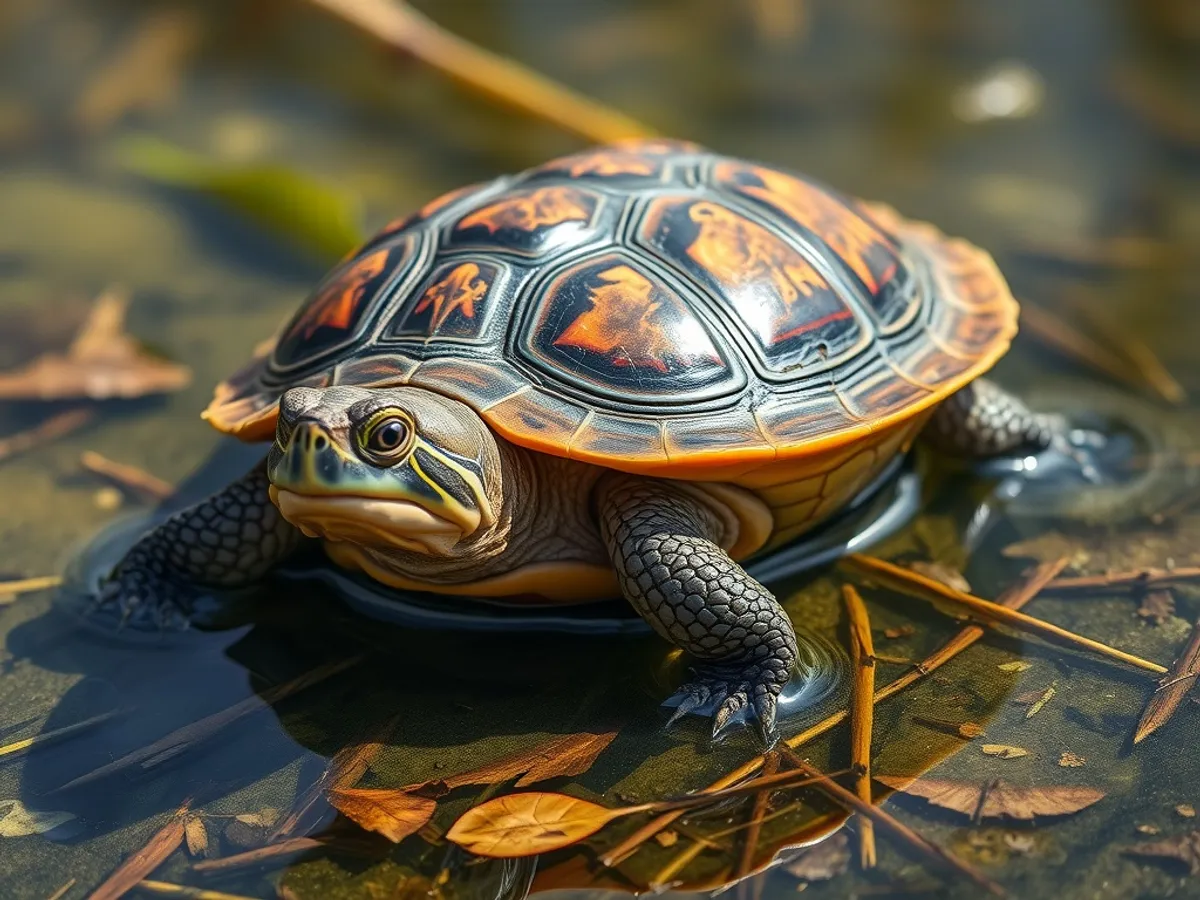
About the Florida Softshell Turtle
The Florida Softshell Turtle is a large, aquatic turtle native to the southeastern United States, particularly in Florida. It is easily recognized by its smooth, leathery shell, elongated snorkel-like nose, and streamlined, flat body that is well-adapted for life in the water. This species is an agile swimmer and prefers slow-moving freshwater habitats like lakes, rivers, ponds, and marshes. Florida Softshell Turtles are opportunistic predators, feeding on a wide variety of aquatic animals. Their unique appearance and behaviors make them a fascinating resident of their native wetlands.
Fascinating facts
Soft, Leathery Shell
Unlike most turtles with hard, bony shells, the Florida Softshell Turtle has a soft, flexible carapace covered in leathery skin.
Aquatic Lifestyle
This turtle spends nearly all its life in water, only coming onto land to bask or lay eggs.
Snorkel-like Nose
Its long, tubular nose acts as a snorkel, allowing it to breathe while almost completely submerged.
Detailed description
The Florida Softshell Turtle (Apalone ferox) is among the largest freshwater turtles in North America, with adult females reaching carapace lengths of up to 63 cm (25 in) and weights exceeding 20 kg (44 lbs), while males are significantly smaller, rarely exceeding 35 cm (14 in). Its carapace is smooth, leathery, and highly flattened, lacking the hard scutes typical of most turtles, and is olive to dark brown with subtle mottling. The plastron (underside) is pale and reduced. A distinctive feature is its elongated, tubular snout, which functions as a snorkel, allowing the turtle to breathe while remaining submerged and concealed. The limbs are broad and webbed, with powerful claws, facilitating rapid swimming and digging. Eyes are positioned dorsally, aiding in ambush predation. The species is almost entirely aquatic, rarely basking except in cooler weather. Florida Softshell Turtles are primarily carnivorous, preying on fish, amphibians, crustaceans, mollusks, insects, and occasionally carrion, but may also consume some plant matter. They are solitary and highly territorial, especially during the breeding season. The species exhibits sexual dimorphism, with females not only being larger but also possessing shorter tails. Their streamlined body and flexible shell confer exceptional agility in water, making them adept hunters and escape artists.
Did you know?
Unlike most turtles, the Florida Softshell Turtle breathes using its specialized pharyngeal lining, allowing it to absorb oxygen from water while submerged.
Research & sources
Wikipedia summary
The Florida softshell turtle is a species of turtle in the family Trionychidae. The species is native to the Southeastern United States. The maximum recorded lifespan of a Florida softshell turtle is 26 years.
Behaviour & social structure
Florida Softshell Turtles are predominantly solitary and exhibit crepuscular to nocturnal activity patterns, although they may be active during the day in undisturbed habitats. They are ambush predators, often burying themselves in sandy or muddy substrates with only their eyes and snout exposed, waiting motionless for prey to approach. When hunting actively, they use rapid lunges to capture fish, amphibians, or invertebrates. Their diet is opportunistic and can include small turtles and waterfowl. They are known to scavenge, feeding on dead animals when available. Social interactions are limited outside of the breeding season, with individuals displaying aggressive behaviors, such as biting and chasing, to defend territories or nesting sites. Basking is infrequent compared to other turtles, but may occur on floating logs or banks during cooler periods. They are capable of prolonged submergence, utilizing cutaneous and pharyngeal respiration to extract oxygen from water.
Reproduction & life cycle
Breeding occurs primarily from March to July, with courtship and copulation taking place in shallow water. Females may lay up to four clutches per season, each containing 4–38 spherical, hard-shelled eggs, depending on the size and age of the female. Nesting typically occurs at night or early morning, with females excavating nests in sandy or loose soil near water bodies, sometimes traveling considerable distances from water. Incubation lasts 60–90 days, and sex determination is temperature-dependent, with warmer nests producing more females. There is no parental care after egg-laying; hatchlings are fully independent upon emergence, usually in late summer to early fall. Juveniles are highly vulnerable to predation by raccoons, birds, and fish.
Adaptations & survival
Florida Softshell Turtles possess several notable adaptations: their flattened, flexible shell reduces drag and allows them to burrow into substrate for camouflage and ambush. The leathery carapace is lighter and more flexible than those of hard-shelled turtles, enhancing swimming speed and maneuverability. The elongated, snorkel-like nose enables breathing while nearly fully submerged, minimizing exposure to predators. Highly webbed feet with sharp claws facilitate both rapid swimming and effective digging. They can respire through the lining of their throat (pharyngeal respiration) and skin (cutaneous respiration), allowing extended underwater stays. Their powerful jaws and sharp beak are adapted for capturing and processing a wide variety of prey.
Cultural significance
Florida Softshell Turtles have been used historically as a food source by indigenous peoples and local communities, and are still harvested in some regions today. In folklore, their unusual appearance and burrowing behavior have inspired local myths, sometimes being associated with water spirits or as omens in Southern folklore. They are occasionally kept as exotic pets, though their large size and specialized care requirements make them unsuitable for most hobbyists. Their presence in wetlands is sometimes seen as an indicator of ecosystem health.
Recent research
Recent research has focused on the species' remarkable respiratory adaptations, including the ability to extract oxygen through the pharyngeal lining, which is rare among North American turtles. Genetic studies have clarified the relationships within the genus Apalone and helped distinguish A. ferox from closely related species. Ongoing ecological studies are examining the impacts of urbanization and water quality on population dynamics. Conservation research is also addressing the effects of harvest pressure and the efficacy of regulatory protections. Notably, studies on temperature-dependent sex determination are providing insights into potential vulnerabilities under climate change scenarios.
Videos
Habitat
Freshwater lakes, rivers, ponds, and marshes

Conservation
The Florida Softshell Turtle is currently classified as Least Concern on the IUCN Red List.
Threats & challenges
While currently listed as Least Concern by the IUCN, Florida Softshell Turtles face several threats. Habitat loss and degradation due to wetland drainage, pollution, and urbanization are significant concerns. Road mortality is common, especially during nesting migrations. Collection for the pet trade and for human consumption, both legal and illegal, has impacted some local populations. They are also susceptible to fishing bycatch and entanglement in fishing gear. Predation of eggs and hatchlings by raccoons, skunks, and birds can be intense, particularly in disturbed habitats. Climate change may alter nesting success and sex ratios due to temperature-dependent sex determination.
Taxonomy
Scientific name
Apalone ferox
- Kingdom
- Animalia
- Phylum
- Chordata
- Class
- Reptilia
- Order
- Testudines
- Family
- Trionychidae
- Genus
- Apalone
- Species
- ferox
Where to see a florida softshell turtle
1 zoo and aquarium in 1 country are recorded as keeping this species.

Community notes
Share your observations about the Florida Softshell Turtle.
No community notes yet. Be the first!
Discover more wildlife
More fascinating animals from the encyclopedia.