
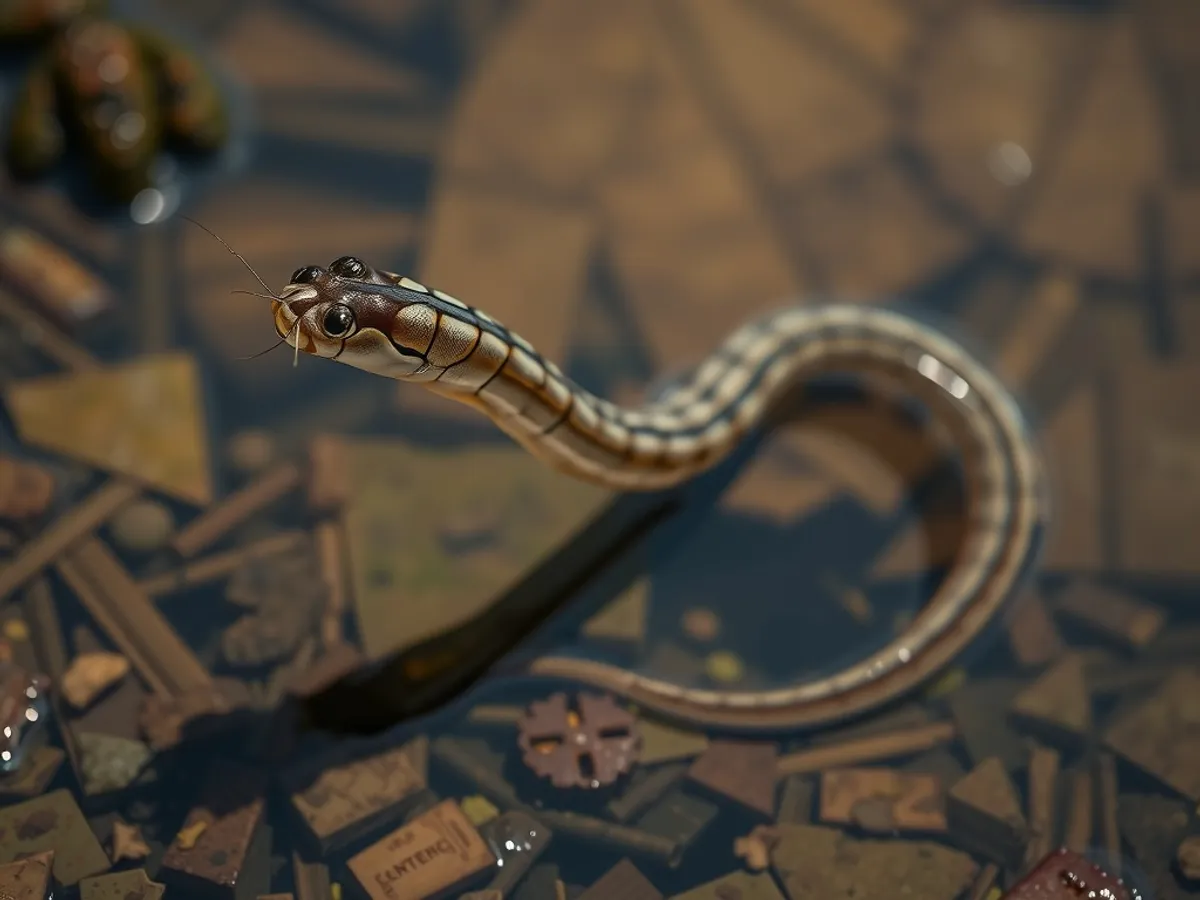
About the Freshwater Hydra
The freshwater hydra is a small, tube-shaped invertebrate found in clean, unpolluted freshwater environments. Known for its simple body structure, it consists of a tubular body with tentacles surrounding its mouth, which it uses to capture tiny aquatic prey. Hydras are renowned for their incredible regenerative abilities, capable of reforming an entire individual from small tissue fragments. Despite their simplicity, hydras possess specialized stinging cells called cnidocytes to immobilize prey. Their unique biology has made them a model organism for studying regeneration and aging.
Fascinating facts
Amazing Regeneration
Hydras can regenerate lost parts rapidly, and even a tiny fragment can grow into a complete new hydra.
Model Organism
Scientists use hydras to study regeneration, stem cell biology, and aging due to their simple anatomy and unique abilities.
Clean Water Indicator
Hydras are highly sensitive to pollution, so their presence indicates healthy, clean freshwater ecosystems.
Detailed description
Hydra vulgaris is a small, freshwater cnidarian typically measuring 5–15 mm in length, though it can contract or extend its body significantly. Its cylindrical body is anchored to substrates by a basal disc, while the opposite end features a mouth surrounded by 5 to 12 elongated, flexible tentacles. These tentacles are densely packed with specialized stinging cells (nematocysts) used to capture and immobilize prey. The body wall consists of two layers: an outer epidermis and an inner gastrodermis, separated by a gelatinous mesoglea. Hydra lacks a centralized nervous system but possesses a diffuse nerve net, allowing for coordinated movement and response to stimuli. Its simple digestive cavity enables both extracellular and intracellular digestion. Hydra is renowned for its remarkable regenerative capacity; even small tissue fragments can reorganize and form a complete organism, a process driven by abundant interstitial stem cells. The species is solitary but can form loose aggregations in optimal conditions. Hydra vulgaris is highly sensitive to water quality and is often used as a bioindicator for freshwater ecosystem health.
Did you know?
Hydras reproduce both sexually and asexually, often budding off new individuals directly from their bodies.
Research & sources
Behaviour & social structure
Hydra vulgaris is primarily sedentary, attaching itself to submerged vegetation, rocks, or debris using its basal disc. It exhibits a sit-and-wait predatory strategy, extending its tentacles to capture passing zooplankton, small crustaceans, insect larvae, and occasionally protozoans. Upon contact, nematocysts discharge, paralyzing prey, which is then transported to the mouth for ingestion. Hydra can move by a looping motion called 'somersaulting,' detaching and reattaching its basal disc, or by gliding along surfaces using mucous secretions. While generally solitary, hydras may be found in clusters in nutrient-rich environments, but they do not display true social behaviors. They respond to light and mechanical stimuli, retracting tentacles or contracting the body when disturbed. Feeding typically occurs during daylight hours, and hydras can survive periods of starvation by shrinking in size and reducing metabolic activity.
Reproduction & life cycle
Hydra vulgaris reproduces both asexually and sexually. Asexual reproduction is most common and occurs via budding: a small outgrowth forms on the body wall, develops tentacles and a mouth, and eventually detaches as a genetically identical clone. Under favorable conditions, budding can occur every few days. Sexual reproduction is triggered by environmental stressors such as temperature changes or reduced food availability. Hydra is hermaphroditic, producing both eggs and sperm, though cross-fertilization between individuals is typical. Fertilized eggs develop into resistant, encysted embryos (resting eggs) that can withstand adverse conditions and hatch when the environment improves. There is no parental care; offspring are independent upon release. Breeding can occur year-round in stable laboratory conditions but is often seasonal in the wild, peaking in late summer and autumn.
Adaptations & survival
Hydra vulgaris exhibits several key adaptations for survival in freshwater habitats. Its nematocysts allow efficient prey capture and defense against predators. The highly plastic body enables contraction and extension, aiding in feeding and movement. The presence of multipotent interstitial stem cells underpins its extraordinary regenerative abilities, allowing recovery from injury and a form of biological immortality, as hydras show negligible senescence under laboratory conditions. The ability to reproduce both asexually and sexually provides resilience to fluctuating environmental conditions. Hydra's simple nerve net allows rapid response to environmental stimuli despite the absence of a brain. Its sensitivity to pollutants and low tolerance for eutrophication make it a reliable indicator of water quality.
Cultural significance
While Hydra vulgaris does not have a prominent role in folklore or traditional human culture, it holds significant importance in scientific research. Its name derives from the mythological Hydra, a multi-headed serpent capable of regeneration, reflecting the organism's regenerative prowess. Hydra has been a model organism since the 18th century, contributing to advances in developmental biology, stem cell research, and aging studies. Its regenerative abilities have inspired studies into tissue engineering and regenerative medicine.
Recent research
Recent research on Hydra vulgaris has focused on the molecular mechanisms underlying its regenerative capacity, particularly the role of stem cells and genetic pathways such as Wnt signaling. Studies have shown that hydras do not exhibit typical aging processes, making them a valuable model for longevity research. Genomic analyses have revealed a surprisingly complex repertoire of genes associated with development, immunity, and neural function. Hydra is also used to study host-microbe interactions, as its simple microbiome influences development and regeneration. Ongoing research explores the potential for hydra-derived insights to inform regenerative medicine and aging interventions in higher animals.
Sources
The Hydra Model System: Dissecting the Molecular Mechanisms of Regeneration and Aging
Bosch, T.C.G. (2009)
scientificStem cell differentiation trajectories in Hydra resolved at single-cell resolution
Siebert, S. et al. (2019)
scientificStem Cell Differentiation Trajectories in Hydra Resolved at Single-Cell Resolution
Siebert, S. et al. (2019)
scientificVideos
Habitat
Freshwater ponds, lakes, and slow-moving streams

Conservation
The Freshwater Hydra is currently classified as Least Concern on the IUCN Red List.
Threats & challenges
Hydra vulgaris is currently classified as Least Concern, with stable populations in suitable habitats. However, it faces localized threats from water pollution, eutrophication, and habitat destruction due to agricultural runoff, urbanization, and invasive species. Hydras are sensitive to heavy metals, pesticides, and other contaminants, which can disrupt their physiology and reproductive success. Climate change and altered hydrological regimes may also impact hydra populations by changing water temperature and chemistry. Despite these challenges, hydra populations can recover quickly in clean, undisturbed waters due to rapid asexual reproduction.
Taxonomy
Scientific name
Hydra vulgaris
- Kingdom
- Animalia
- Phylum
- Cnidaria
- Class
- Hydrozoa
- Order
- Anthoathecata
- Family
- Hydridae
- Genus
- Hydra
- Species
- vulgaris
Community notes
Share your observations about the Freshwater Hydra.
No community notes yet. Be the first!
Discover more wildlife
More fascinating animals from the encyclopedia.