
About the Gharial
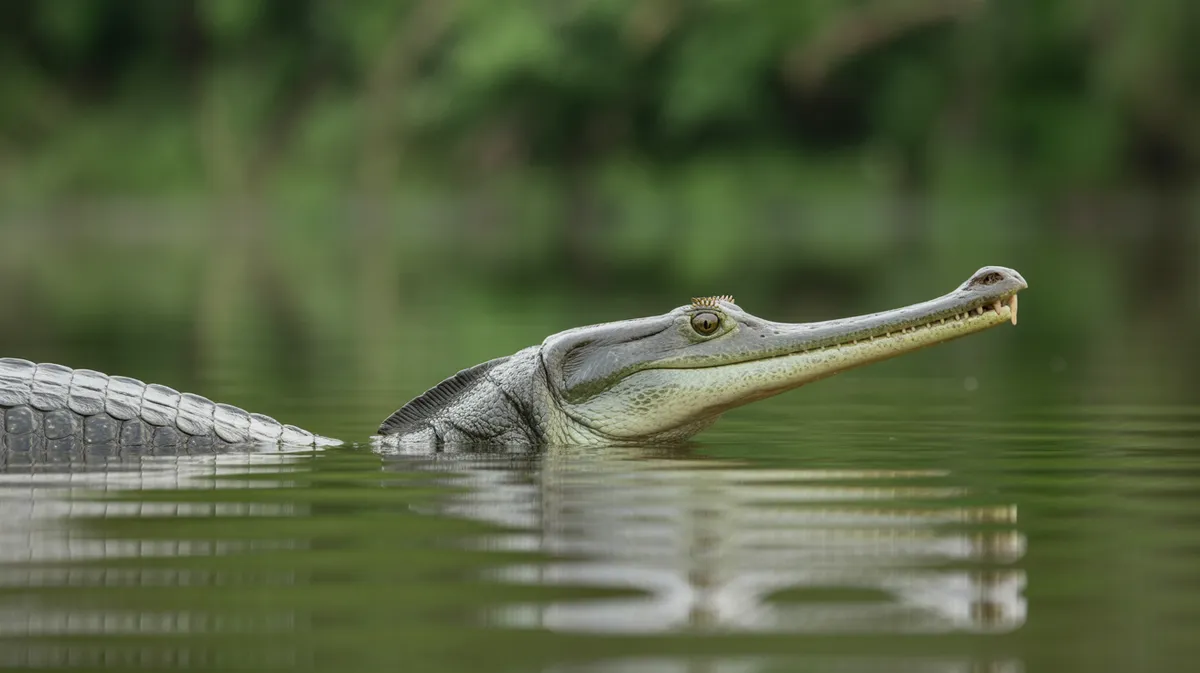
Gavialis gangeticus is the crocodilian that gave up on eating anything but fish. Its snout has become an absurdly long, narrow tube — proportionally the slimmest of any crocodilian — armed with over a hundred interlocking, needle-sharp teeth. A wide jaw would meet enormous drag underwater; a thin one can be swept sideways through the water almost instantly, and the gharial catches fish with exactly that flick, then juggles the fish round and swallows it head first. The trade-off is that it cannot handle large prey at all, and it is essentially harmless to people. Mature males grow a bulbous cartilaginous knob on the tip of the snout called the ghara, after the Indian earthenware pot it resembles, and it acts as a resonator, turning the male's hiss into a buzzing, far-carrying call, as well as being used to blow bubbles in courtship — one of the very few visible external sex differences in any crocodilian. Its legs cannot support its body on land, so unlike other crocodilians it cannot high-walk and simply slides on its belly, which ties it tightly to riverbanks. It is critically endangered, with likely under a thousand breeding adults left, most of them in the Chambal River. Females nest colonially on sandbanks and males help guard the creche of hatchlings.
Fascinating facts
Slender Snout
The gharial's extremely narrow snout reduces water resistance, allowing quick sideways snapping to catch fish.
Fish Specialist
Over 95% of the gharial's diet consists of fish, making it the most specialized piscivore among crocodilians.
Large Nests
Female gharials lay up to 60 eggs in a single clutch, the largest of any living crocodilian.
Detailed description
The gharial (Gavialis gangeticus) is a highly specialized crocodilian, instantly recognizable by its extremely elongated, narrow snout lined with 106–110 interlocking, needle-like teeth—an adaptation for catching slippery fish, its primary prey. Adult males are distinguished by a bulbous nasal protuberance at the tip of the snout called a 'ghara', which is used to amplify vocalizations and produce bubbles during courtship displays. Gharials are among the largest living crocodilians, with males reaching up to 6 meters in length and weighing over 250 kg, while females are generally smaller, averaging 2.6–4.5 meters. Their bodies are laterally compressed, and their tails are particularly well-developed for powerful swimming in deep, fast-flowing rivers. Unlike other crocodilians, gharials have weak limbs and are poorly adapted for terrestrial locomotion, rarely venturing far from water except to bask or nest. Their eyes are positioned high on the head, providing a wide field of vision above the water surface. Juveniles exhibit cryptic coloration for camouflage, while adults develop a more uniform, olive-gray coloration. Gharials are predominantly diurnal, spending much of the day basking and the night submerged. Social structure is loosely organized, with individuals often seen congregating on sandbanks, especially during the dry season. Their reproductive strategy involves communal nesting, and females lay large clutches of eggs in sandy riverbanks, which are guarded until hatching.
Did you know?
Gharials have the most acute specialization for eating fish among all living crocodilians, with over 100 sharp teeth perfectly suited for grasping and holding slippery prey.
Research & sources
Wikipedia summary
The gharial, also known as gavial or fish-eating crocodile, is a crocodilian in the family Gavialidae and among the longest of all living crocodilians. Mature females are 2.6 to 4.5 m long, and males 3 to 6 m. Adult males have a distinct boss at the end of the snout, which resembles an earthenware pot known as a ghara, hence the name "gharial". The gharial is well adapted to catching fish because of its long, narrow snout and 110 sharp, interlocking teeth.
Behaviour & social structure
Gharials are primarily aquatic and exhibit strong site fidelity, often returning to the same basking and nesting sites year after year. They are generally solitary hunters but may be observed in loose aggregations during basking or nesting seasons. Their feeding behavior is highly specialized: they use rapid lateral sweeps of their long jaws to snatch fish, minimizing water resistance thanks to the streamlined snout. Gharials rarely hunt or scavenge terrestrial prey, and their jaw structure precludes them from attacking large mammals or humans. During the breeding season, males become territorial, using their ghara to produce buzzing vocalizations and water bubbles to attract females and deter rivals. Daily routines involve basking in the morning and late afternoon to regulate body temperature, with most hunting occurring during crepuscular and daylight hours. Juveniles and subadults may form small groups for protection, while adults are more solitary outside the breeding season.
Reproduction & life cycle
The breeding season for gharials typically occurs from December to January, coinciding with the dry season when river levels are lower. Courtship involves complex visual and acoustic displays by males, including buzzing calls and bubble displays using the ghara. Females lay between 20 and 95 eggs in deep nests excavated in sandy riverbanks, usually in communal nesting sites. Incubation lasts approximately 60–80 days, with hatching occurring from March to April. Unlike other crocodilians, female gharials do not carry their young to water in their mouths due to the shape of their jaws, but they do guard the nest and remain nearby to protect hatchlings from predators. Hatchlings are highly vulnerable and rely on camouflage and rapid swimming to evade threats. Sexual maturity is reached at about 10 years of age for females (at ~2.6 m) and 13–15 years for males (at ~4 m).
Adaptations & survival
Gharials exhibit a suite of evolutionary adaptations for life in fast-flowing rivers. Their long, narrow snout minimizes hydrodynamic drag, allowing rapid lateral jaw movements to catch agile fish. The interlocking teeth provide a secure grip on slippery prey. Their laterally flattened tail and webbed feet enhance swimming efficiency, while reduced limb musculature reflects their almost exclusively aquatic lifestyle. The ghara of adult males is a unique adaptation for acoustic communication and sexual selection. High-set eyes and nostrils enable stealthy surface observation and breathing. Juvenile coloration provides camouflage among riverine substrates. Physiologically, gharials can remain submerged for up to 30 minutes, and their salt glands, though present, are less developed than in marine crocodilians, reflecting their strict freshwater habitat.
Cultural significance
The gharial holds a prominent place in South Asian culture and mythology. In Hindu tradition, it is associated with the river goddess Ganga and the deity Varuna, symbolizing purity and the life-giving properties of rivers. Gharials appear in ancient Indian art and temple carvings, often depicted as guardians of water. Historically, their snouts and eggs were sometimes used in traditional medicine, though such practices have declined. In recent decades, the gharial has become a flagship species for riverine conservation in India and Nepal, raising public awareness about the importance of healthy freshwater ecosystems.
Recent research
Recent phylogenetic studies, such as the 2021 analysis by Rio and Mannion, have clarified the gharial's evolutionary relationships, confirming its deep divergence from other extant crocodilians and resolving the long-standing 'gharial problem' in crocodylian taxonomy. Ongoing research focuses on population genetics, river connectivity, and the impacts of environmental contaminants on reproductive success. Conservation programs, including head-starting (raising hatchlings in captivity before release), have shown some success in India and Nepal, but long-term viability depends on restoring river habitats and maintaining fish populations. Satellite telemetry and drone surveys are increasingly used to monitor gharial movements and nesting sites, providing critical data for adaptive management.
Sources
Phylogenetic analysis of a new morphological dataset elucidates the evolutionary history of Crocodylia and resolves the long-standing gharial problem
J.P. Rio & P.D. Mannion (2021)
scientificVideos
Habitat
Freshwater rivers

Conservation
The Gharial is currently classified as Critically Endangered on the IUCN Red List.
Threats & challenges
Gharials face a multitude of threats, chief among them being habitat loss due to dam construction, sand mining, and riverbank modification, which destroy critical nesting and basking sites. Overfishing and depletion of native fish stocks reduce food availability, while entanglement in fishing nets is a significant cause of mortality. Pollution, particularly from agricultural runoff and industrial waste, further degrades riverine habitats. Human disturbance, egg collection, and poaching for traditional medicine or trophies exacerbate population declines. Fragmentation of river systems has isolated populations, impeding genetic exchange. As of 2024, the global wild population is estimated at fewer than 900 mature individuals, with a declining trend, making the gharial one of the most endangered crocodilians in the world.
Taxonomy
Scientific name
Gavialis gangeticus
- Kingdom
- Animalia
- Phylum
- Chordata
- Class
- Reptilia
- Order
- Crocodylia
- Family
- Gavialidae
- Genus
- Gavialis
- Species
- gangeticus
Where to see a gharial
3 zoos and aquariums in 1 country are recorded as keeping this species.
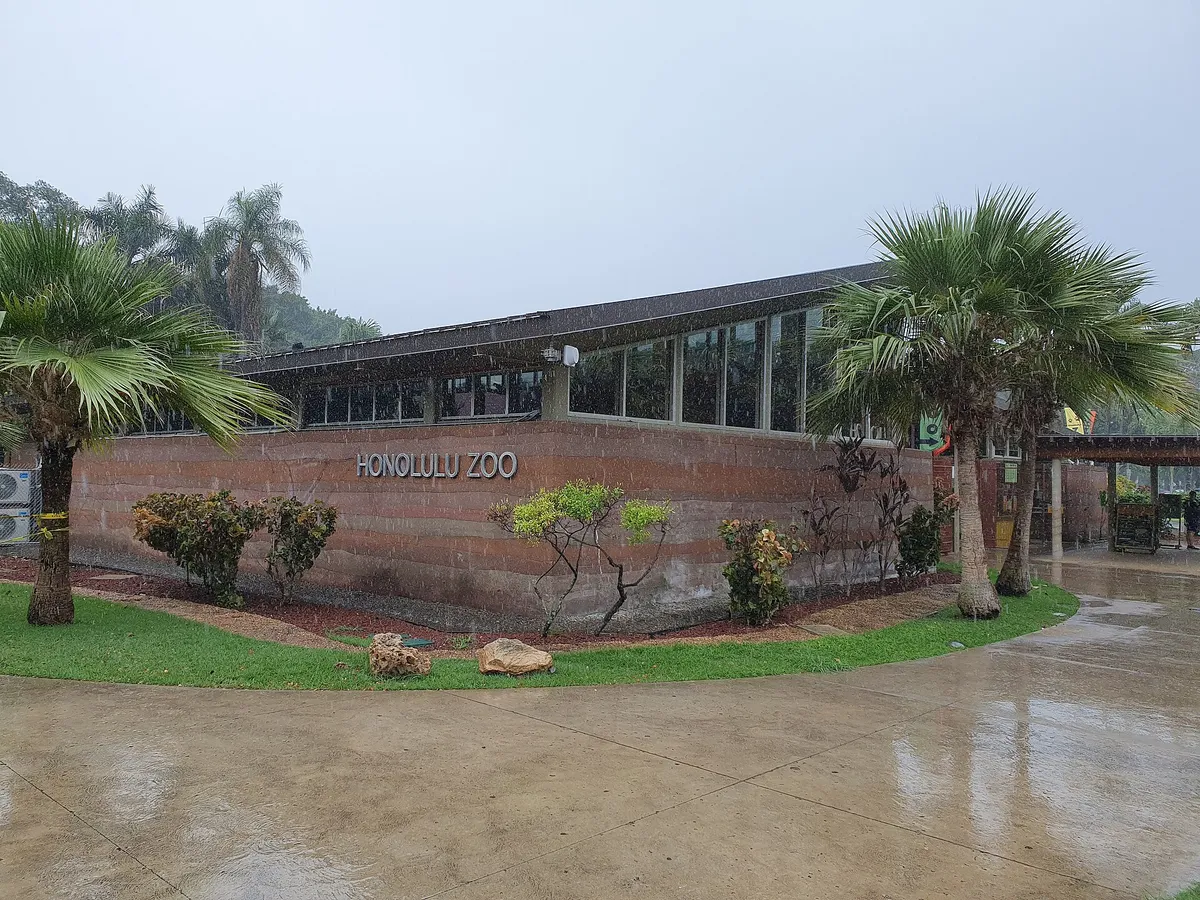 Honolulu Zoo🇺🇸 Honolulu, United States
 National Zoological Park🇺🇸 Washington, United States
 Cleveland Metroparks Zoo🇺🇸 Cleveland, United States
Community notes
Share your observations about the Gharial.
No community notes yet. Be the first!
Discover more wildlife
More fascinating animals from the encyclopedia.