
About the Ghost Shrimp
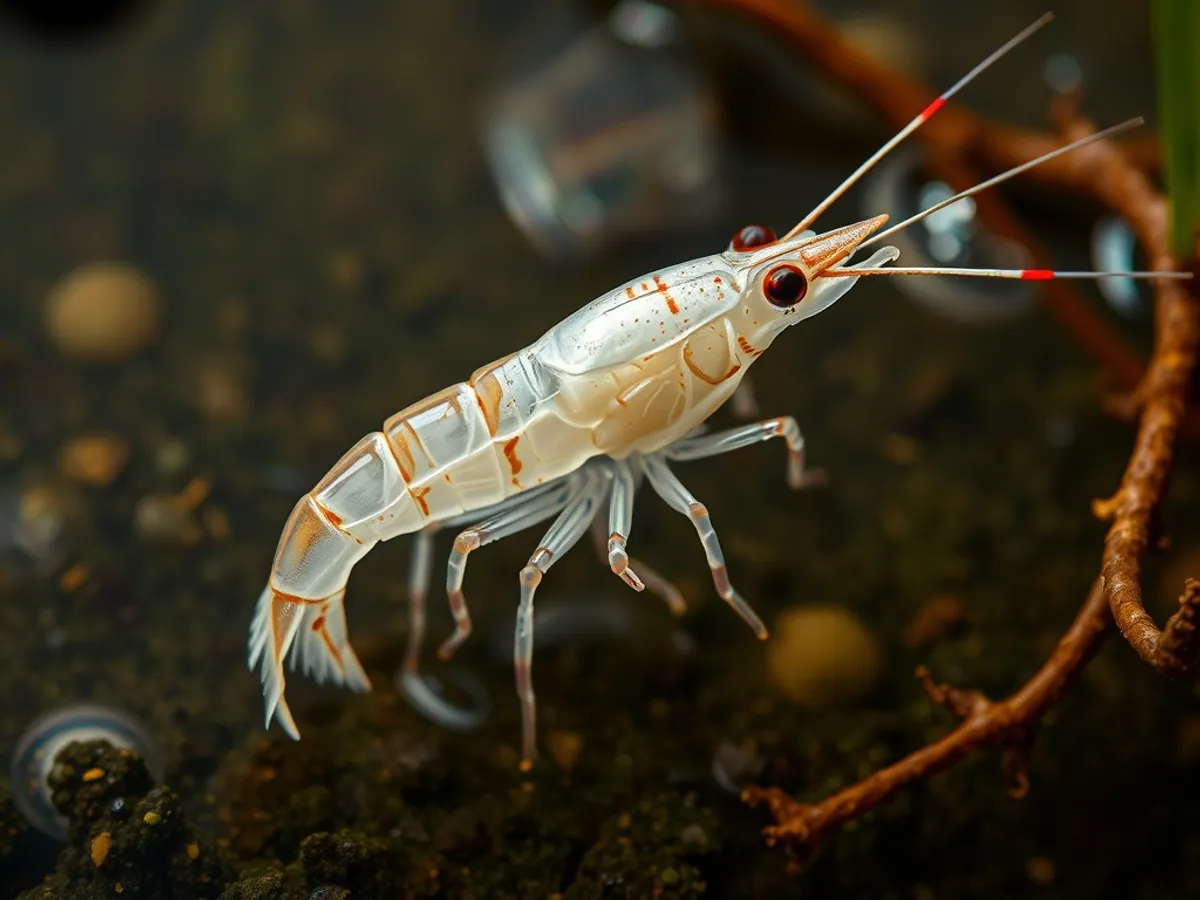
The ghost shrimp, also known as glass shrimp, is a small, transparent invertebrate commonly found in freshwater and brackish environments. Its nearly invisible body helps it evade predators and makes it a popular addition to aquariums due to its peaceful nature and algae-eating habits. Ghost shrimp are active scavengers, constantly foraging for food on the substrate. They play an important ecological role by breaking down detritus and recycling nutrients in their habitats. Their fascinating transparency allows observers to see their inner organs and even the food as it passes through their digestive tract.
Fascinating facts
See-Through Body
Ghost shrimp are almost entirely transparent, allowing their internal organs and even their food to be seen from the outside.
Regeneration Ability
If a ghost shrimp loses a claw or leg, it can regenerate the lost limb during subsequent molts.
Ecosystem Cleaner
Ghost shrimp help maintain water quality by scavenging on detritus, algae, and leftover food, thereby recycling nutrients in their ecosystem.
Detailed description
Palaemonetes paludosus, commonly known as the ghost shrimp or glass shrimp, is a small, translucent freshwater crustacean native to the southeastern United States. Adults typically measure 2.5–4 cm (1–1.5 inches) in length, with females generally larger than males. Their bodies are nearly transparent, with only faint markings and visible internal organs, an adaptation that provides effective camouflage against predators. The exoskeleton is thin and flexible, allowing for ease of movement and rapid molting. Ghost shrimp possess long, slender antennae for tactile sensing and chelae (claws) on their first pair of legs, which they use for feeding and defense. Their compound eyes are mounted on stalks, providing a wide field of vision. Ghost shrimp are highly active, spending much of their time foraging along the substrate for detritus, algae, and small invertebrates. They are primarily nocturnal, becoming more active at dusk and during the night. Socially, they are gregarious but non-territorial, often forming loose aggregations in favorable habitats. Their reproductive cycle is rapid, with females capable of producing multiple broods per year, contributing to their resilience and abundance in the wild.
Did you know?
Ghost shrimp breathe using tiny gills located in their legs, which are visible through their transparent exoskeleton.
Research & sources
Wikipedia summary
Ghost shrimp is a name applied to at least three different kinds of crustacean:Thalassinidea, crustaceans which live in deep burrows in the intertidal zone Caprellidae, amphipods with slender bodies more commonly known as "skeleton shrimps" Feeder shrimp : Palaemonetes, small mostly transparent shrimp commonly sold for use in freshwater aquaria
Behaviour & social structure
Ghost shrimp are continuous foragers, using their chelae and maxillipeds to sift through sediment and detritus in search of food. They exhibit a scavenging feeding strategy, consuming organic debris, algae, and occasionally small aquatic invertebrates. When threatened, ghost shrimp employ rapid backward swimming (caridoid escape reaction) by flexing their abdomen, allowing them to evade predators. They are generally peaceful and tolerate conspecifics and other small aquatic species, though minor competition may occur over food resources. During daylight hours, ghost shrimp often seek shelter among aquatic vegetation, leaf litter, or under rocks to avoid predation. At night, their activity increases as they venture into open areas to feed. Ghost shrimp communicate chemically and through tactile cues, especially during mating and social interactions. They periodically molt to grow, during which they are particularly vulnerable and may hide until their new exoskeleton hardens.
Reproduction & life cycle
Ghost shrimp exhibit sexual dimorphism, with females being larger and possessing a broader abdomen to carry eggs. Mating typically occurs after the female molts, when her exoskeleton is soft. Males transfer spermatophores to the female, who then fertilizes her eggs and attaches them to her pleopods (swimming legs) beneath her abdomen. The incubation period lasts approximately 2–3 weeks, depending on water temperature (optimal range: 22–28°C). A single female can carry 20–80 eggs per brood. Upon hatching, the larvae (zoeae) are planktonic and undergo several molts before metamorphosing into juvenile shrimp. There is no parental care after hatching; larvae are independent and must find food and shelter on their own. Breeding occurs year-round in warmer climates, but may be reduced or halted in colder months.
Adaptations & survival
The most notable adaptation of Palaemonetes paludosus is its extreme transparency, which provides camouflage from both aquatic and aerial predators. The shrimp's ability to rapidly molt allows for quick growth and regeneration of lost limbs. Their chelae are adapted for fine manipulation of food particles and detritus, while their long antennae enhance environmental awareness. Ghost shrimp can tolerate a wide range of salinities, allowing them to inhabit both freshwater and brackish environments. Their nocturnal activity pattern reduces predation risk. Additionally, their reproductive strategy of producing multiple broods per year ensures population stability even in fluctuating environments.
Cultural significance
Ghost shrimp have limited direct cultural significance but are widely used in the aquarium trade as feeder shrimp and as algae-eating tank cleaners. Their transparency and peaceful nature make them popular subjects for observation and educational purposes, allowing people to study crustacean anatomy and behavior. In some regions, they are used as live bait for fishing. There is no known significant role in mythology or traditional symbolism.
Recent research
Recent research on Palaemonetes paludosus has focused on their ecological role as detritivores and their potential as bioindicators of water quality. Studies have examined their responses to pollutants, such as pesticides and heavy metals, revealing sensitivity to environmental contaminants. Ongoing research explores their molting cycles, reproductive physiology, and genetic diversity across different populations. Their adaptability to varying salinities has made them a model organism for studying osmoregulation in crustaceans. Advances in imaging techniques have also utilized ghost shrimp to visualize internal organ function due to their transparency.
Sources
Videos
Habitat
Freshwater rivers, streams, lakes, and marshes

Conservation
The Ghost Shrimp is currently classified as Least Concern on the IUCN Red List.
Threats & challenges
Currently, ghost shrimp populations are considered stable and are classified as Least Concern by conservation authorities. However, localized threats include habitat degradation from pollution, agricultural runoff, and wetland drainage. Over-collection for the aquarium trade can impact local populations if not managed sustainably. Invasive species and changes in water quality (e.g., increased salinity or temperature) may also pose risks. Despite these challenges, their high reproductive rate and adaptability have allowed them to persist in a variety of habitats.
Taxonomy
Scientific name
Palaemonetes paludosus
- Kingdom
- Animalia
- Phylum
- Arthropoda
- Class
- Malacostraca
- Order
- Decapoda
- Family
- Palaemonidae
- Genus
- Palaemonetes
- Species
- paludosus
Community notes
Share your observations about the Ghost Shrimp.
No community notes yet. Be the first!
Discover more wildlife
More fascinating animals from the encyclopedia.