
About the Gooseneck Barnacle
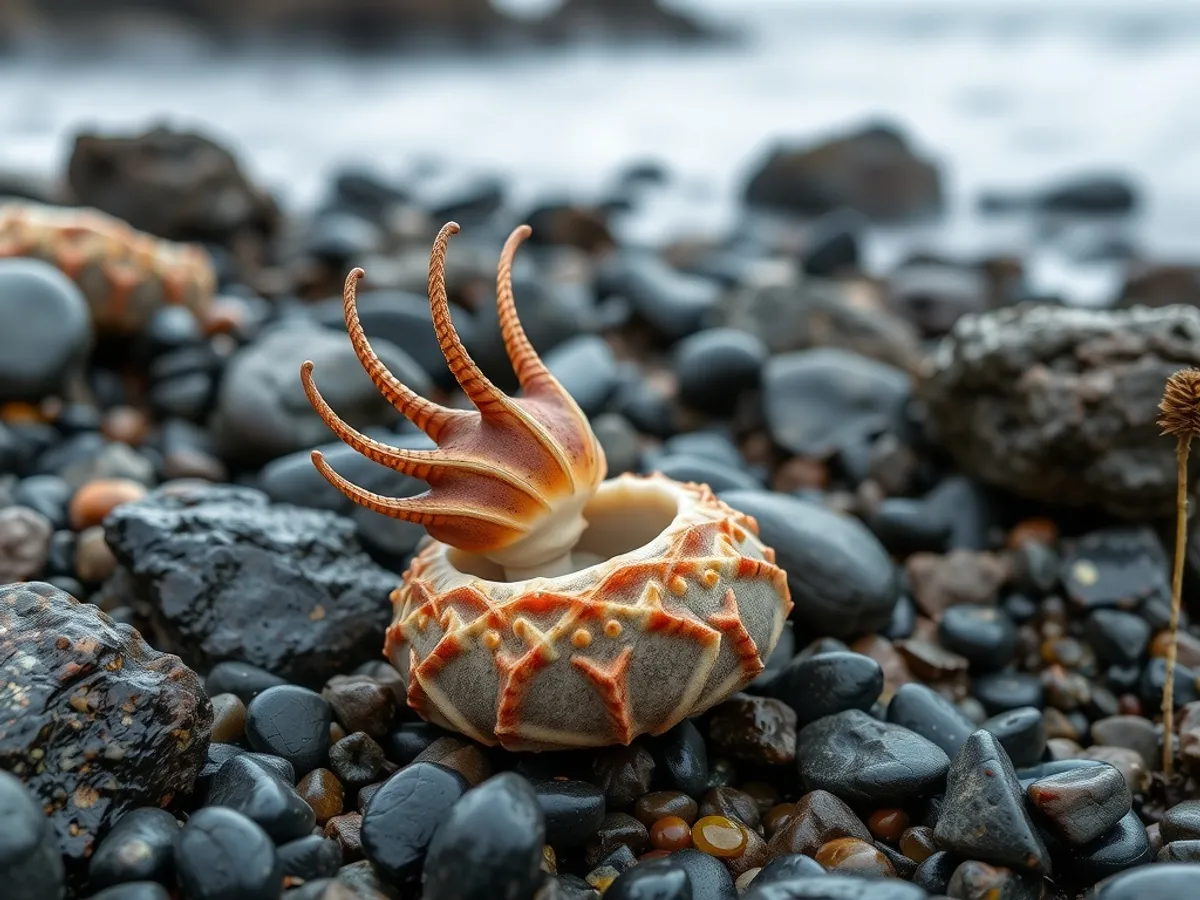
Gooseneck barnacles (Pollicipes and Lepas) are crustaceans that spend their adult lives cemented head-down to rock or driftwood, kicking feathery legs called cirri through the water to comb out plankton - Thomas Huxley's description of a barnacle as an animal standing on its head and kicking food into its mouth applies exactly. The fleshy stalk is the animal's head; the shell plates enclose the body. Their common name comes from a genuine medieval belief: because no one in northern Europe ever found barnacle goose nests or eggs, and because the stalked barnacles washed up on driftwood in dark, feather-like clusters, scholars concluded the geese hatched from the barnacles, and the birds were classed as fish and eaten on fast days. Gerald of Wales recorded the practice in 1187. Pollicipes pollicipes, the goose barnacle of Galicia and Portugal, is a luxury food; percebeiros harvest it by rope and timing, working the face of surf-battered rock between waves, and deaths are a regular feature of the trade. Barnacles are hermaphrodites with the longest penis relative to body size of any animal, up to eight times body length, an adaptation for reaching neighbours without moving.
Fascinating facts
Wave Survivors
Gooseneck barnacles thrive in high-energy coastal environments, anchoring themselves securely to withstand relentless waves.
Gourmet Delicacy
They are considered a culinary delicacy in Spain and Portugal and can fetch high market prices due to the difficulty of harvesting.
Crustacean Cousins
Despite their stationary lifestyle, gooseneck barnacles are related to crabs and shrimp within the crustacean group.
Detailed description
The Gooseneck Barnacle (Pollicipes pollicipes) is a distinctive stalked barnacle characterized by its fleshy, flexible peduncle (stalk), which can reach 5–8 cm in length, and its capitulum, a cluster of calcareous plates forming a volcano-like shell at the tip. The capitulum is composed of several white to gray plates, providing protection against predators and the abrasive action of waves. The barnacle attaches itself permanently to hard substrates in the intertidal zone using a strong, proteinaceous cement secreted from glands at the base of the peduncle. Pollicipes pollicipes often forms dense aggregations, sometimes covering entire rock faces, which can reduce desiccation and predation risks. The animal is a suspension feeder, extending its feathery cirri—modified thoracic appendages—into the water column to capture plankton and detritus. Its body is highly adapted to withstand the mechanical stress of crashing waves and periodic exposure to air during low tide. Internally, it possesses a reduced abdomen and a simple digestive tract suited to its planktonic diet. The species exhibits simultaneous hermaphroditism, with individuals capable of both producing and receiving sperm. Growth rates and longevity are influenced by environmental factors, with individuals living up to 5–8 years in optimal conditions.
Did you know?
Harvesting gooseneck barnacles is considered one of the most dangerous professions due to the treacherous, wave-battered rocks where they grow.
Research & sources
Wikipedia summary
Goose barnacles, also called percebes, turtle-claw barnacles, stalked barnacles, gooseneck barnacles, are filter-feeding crustaceans that live attached to hard surfaces of rocks and flotsam in the ocean intertidal zone. Goose barnacles formerly made up the taxonomic order Pedunculata, but the group has been found to be polyphyletic, with its members scattered across multiple orders of the infraclass Thoracica.
Behaviour & social structure
Gooseneck barnacles are sessile as adults, remaining fixed to their chosen substrate for life. They are highly gregarious, often forming dense clusters that can number thousands per square meter, which provides mutual protection and enhances reproductive success. Feeding is primarily diurnal, with cirri extended during high tide when submerged, and retracted during low tide to prevent desiccation. The cirri rhythmically sweep the water, capturing suspended organic particles and plankton. Competition for space is intense, both among barnacles and with other intertidal organisms such as mussels and limpets. Social interactions are limited to reproductive exchanges, as individuals are hermaphroditic and require proximity for cross-fertilization. Juveniles, known as cyprid larvae, actively select settlement sites, often preferring areas already colonized by conspecifics.
Reproduction & life cycle
Pollicipes pollicipes is a simultaneous hermaphrodite, possessing both male and female reproductive organs. Fertilization is internal and typically occurs via copulation, with individuals extending a long, flexible penis to transfer sperm to neighboring barnacles. Spawning is seasonal, peaking in late winter to early spring in the northeastern Atlantic, though timing can vary with latitude and local conditions. After fertilization, eggs are brooded within the mantle cavity for 2–4 weeks before being released as free-swimming nauplius larvae. These larvae undergo several molts in the plankton over 2–3 weeks before metamorphosing into cyprid larvae, which actively seek suitable substrates for settlement. There is no parental care beyond brooding; survival of larvae is subject to predation and environmental factors.
Adaptations & survival
Gooseneck barnacles exhibit several key adaptations for survival in the harsh intertidal environment. The flexible peduncle allows them to sway with wave action, reducing the risk of detachment. The capitulum's calcareous plates provide robust protection against predators such as sea stars and fish, as well as from desiccation and UV exposure during low tide. The proteinaceous cement used for attachment is among the strongest natural adhesives, enabling the barnacle to anchor securely to rocks and man-made structures. Their feathery cirri are highly efficient at filtering plankton from turbulent waters. Physiologically, they can tolerate wide fluctuations in temperature, salinity, and oxygen levels. The gregarious lifestyle reduces individual exposure to desiccation and predation, while simultaneous hermaphroditism ensures reproductive opportunities even in dense aggregations.
Cultural significance
Gooseneck barnacles, known as percebes in Spanish and Portuguese, are highly prized in Iberian cuisine and considered a luxury seafood item. Their collection is steeped in tradition, with 'percebeiros' risking dangerous surf to harvest them from wave-battered rocks. The barnacle has also featured in maritime folklore, with early naturalists mistakenly believing that barnacle geese hatched from these barnacles, due to their similar appearance. This myth persisted into the Middle Ages. Today, percebes are celebrated in regional festivals and are an important economic resource for coastal communities in Galicia (Spain) and northern Portugal.
Recent research
Recent research has focused on the population genetics and larval dispersal of Pollicipes pollicipes, revealing significant genetic structuring across its range, which has implications for management and conservation. Studies on the biomechanics of the barnacle's adhesive have inspired biomimetic applications in medical and industrial adhesives. Ongoing ecological monitoring assesses the impact of harvesting and climate change on population dynamics. There is also active research into the effects of microplastic pollution on barnacle health and recruitment. Advances in molecular taxonomy have clarified the evolutionary relationships within the Pedunculata, confirming the polyphyletic nature of the group.
Videos
Habitat
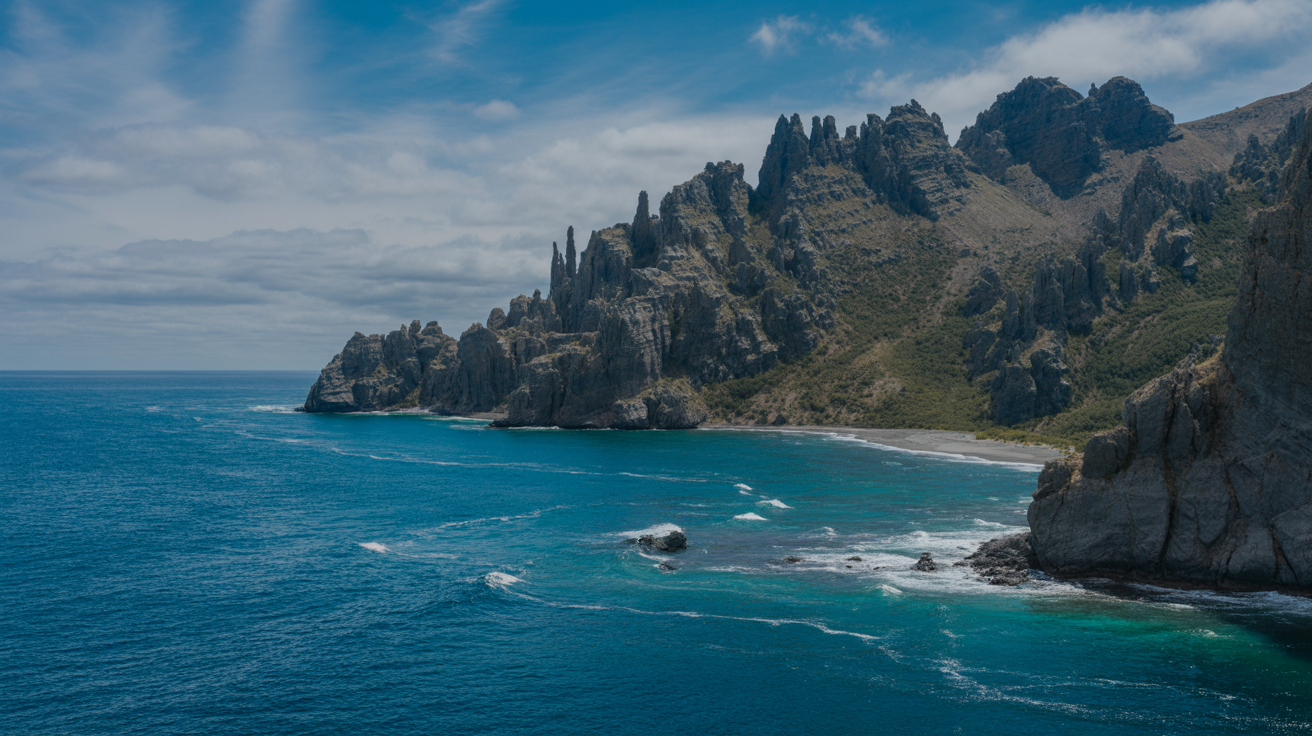
Rocky intertidal shores
Conservation
The Gooseneck Barnacle is currently classified as Least Concern on the IUCN Red List.
Threats & challenges
While currently listed as Least Concern by the IUCN, Pollicipes pollicipes faces several localized threats. Overharvesting for culinary purposes, particularly in Spain and Portugal where percebes are a delicacy, has led to population declines in some regions. Harvesting is physically dangerous and often unregulated, exacerbating pressure on wild populations. Habitat loss due to coastal development and pollution (e.g., oil spills, microplastics) also poses risks. Climate change, with its associated sea-level rise and increased storm frequency, may alter intertidal habitats and impact recruitment. In some areas, illegal and unsustainable harvesting practices have prompted local management interventions, including harvest quotas and protected areas.
Taxonomy
Scientific name
Pollicipes pollicipes
- Kingdom
- Animalia
- Phylum
- Arthropoda
- Class
- Maxillopoda
- Order
- Pedunculata
- Family
- Pollicipedidae
- Genus
- Pollicipes
- Species
- pollicipes
Community notes
Share your observations about the Gooseneck Barnacle.
No community notes yet. Be the first!
Discover more wildlife
More fascinating animals from the encyclopedia.