
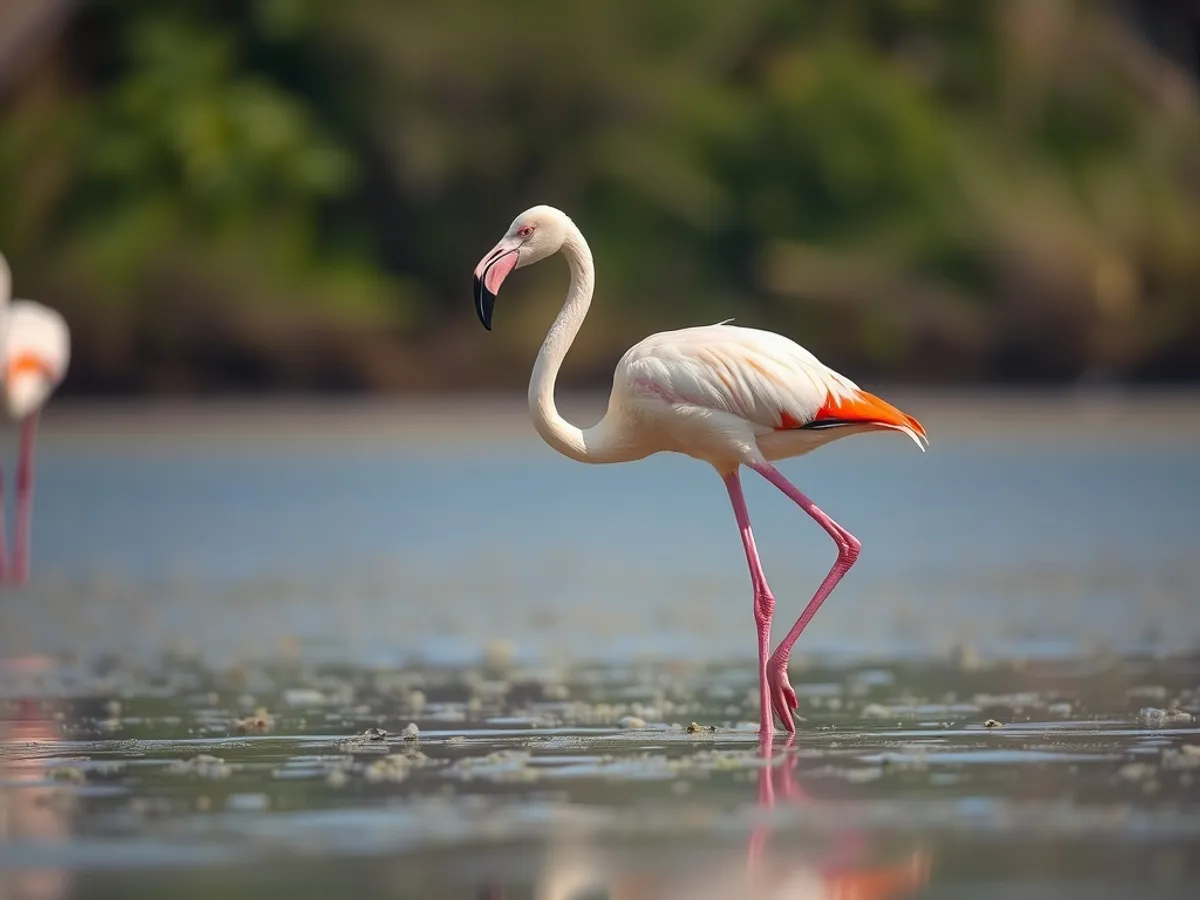
About the Greater Flamingo
The greater flamingo is the largest and most widespread of the flamingos, standing up to about 1.5 m tall on stilt-like legs yet weighing only a few kilograms — a build that lets it wade into water too deep for most competitors. Its pink colour is not innate: chicks hatch grey-white, and the adult blush comes from carotenoid pigments in the algae and brine shrimp it eats, which is why captive birds fade without a supplemented diet. It feeds with its head upside-down, sweeping its downcurved bill through the water while comb-like lamellae strain out algae and small crustaceans — the same filter-feeding principle a baleen whale uses, at a fraction of the scale. The famous one-legged stance appears to require no active muscular effort to hold, and likely reduces heat loss through the legs. Flamingos are intensely social, nesting in dense colonies on mud mounds where synchronised group displays bring thousands of birds into breeding condition at once. Both parents feed the single chick a fat-rich "crop milk" secreted from the upper digestive tract — a trait they share with pigeons rather than with other waterbirds. They favour harsh, saline and alkaline lagoons that few other species tolerate, trading comfort for a food supply almost no competitor can reach.
Fascinating facts
Pink Comes from Food
Their pink and reddish hues are caused by carotenoid pigments in the organisms they eat, such as shrimp and algae.
One Egg at a Time
Greater Flamingos typically lay only a single egg per breeding season, which both parents incubate.
Long Journeys
These birds are strong fliers and can travel hundreds of kilometers between feeding and breeding sites.
Detailed description
The Greater Flamingo (Phoenicopterus roseus) is the largest extant species of flamingo, with adults typically standing 110–150 cm tall and weighing between 2 and 4 kg. Their plumage is predominantly pale pink to white, with brighter pink or reddish hues on the wing coverts and black flight feathers visible during flight. The long, slender neck and stilt-like legs are key adaptations for wading in deep, shallow waters. The bill is uniquely shaped—downward-bending and equipped with lamellae (comb-like structures)—enabling efficient filter-feeding. Eyes are positioned laterally, providing a wide field of view to detect predators. Greater Flamingos are highly social, forming colonies that can number from several hundred to tens of thousands of individuals, which enhances breeding success and predator avoidance. Their vocalizations include honking and grunting, used for communication within flocks. These birds are strong fliers, capable of covering hundreds of kilometers during seasonal migrations. Their lifespan in the wild can exceed 30 years, with some individuals in captivity living over 50 years.
Did you know?
A Greater Flamingo can filter as many as 20 beakfuls of water per second to collect its food.
Research & sources
Wikipedia summary
The greater flamingo is the most widespread and largest species of the flamingo family. Common in the Old World, they are found in Northern (coastal) and Sub-Saharan Africa, the Indian Subcontinent, the Middle East, the Levant, the Persian Gulf, the Gulf of Aden, the Red Sea, and the Mediterranean countries of Southern Europe.
Behaviour & social structure
Greater Flamingos exhibit complex social behaviors, including synchronized group displays during courtship and coordinated feeding. They are diurnal, spending daylight hours feeding, preening, and engaging in social interactions, while roosting at night in shallow water for safety. Feeding involves stirring up mud with their feet and sweeping their heads side-to-side underwater, using their specialized bills to filter out algae, diatoms, small crustaceans, and mollusks. Social hierarchies exist within flocks, with dominance often determined by age and size. Flocks provide safety in numbers, reducing individual predation risk and facilitating information sharing about food sources. During breeding season, large groups perform elaborate collective displays, including synchronized head-flagging, wing-saluting, and marching, which are critical for mate selection.
Reproduction & life cycle
Greater Flamingos are monogamous within each breeding season, forming pairs that cooperate in nest building and chick rearing. Breeding is highly synchronized within colonies and typically occurs in response to favorable water levels, often between March and July in the Mediterranean and variable in other regions. Nests are constructed as mud mounds rising 30–40 cm above water, providing protection from flooding and terrestrial predators. Females usually lay a single chalky white egg, which both parents incubate for 27–31 days. After hatching, chicks are covered in gray down and are initially fed a protein- and fat-rich 'crop milk' secreted from the parents' upper digestive tract. Chicks form large crèches (nursery groups) within a week, with parents recognizing their own offspring by voice. Fledging occurs at 65–90 days, after which juveniles gradually acquire adult plumage over 2–3 years.
Adaptations & survival
Greater Flamingos possess several remarkable adaptations for their specialized lifestyle. Their long legs and webbed feet allow them to wade into deeper waters inaccessible to many competitors. The unique bill structure, with lamellae and a sharply angled shape, is highly efficient for filter-feeding on microscopic organisms. Their pink coloration derives from carotenoid pigments in their diet, serving as an indicator of health and playing a role in mate selection. Salt glands located above the eyes excrete excess salt ingested from brackish water, enabling survival in hypersaline environments. Social behaviors such as synchronized breeding and group vigilance enhance reproductive success and reduce predation risk. Their strong, pointed wings enable long-distance migratory flights between breeding and feeding sites.
Cultural significance
Greater Flamingos have been admired since antiquity, featuring in ancient Egyptian, Roman, and Greek art and mythology. In some cultures, they symbolize beauty, grace, and renewal. Their striking appearance has made them popular in ecotourism and as emblems for wetland conservation. In parts of Africa and South Asia, flamingos are occasionally referenced in folklore and traditional medicine, though direct exploitation is rare. The bird's image is widely used in conservation campaigns to raise awareness about the importance of wetland ecosystems.
Recent research
Recent research on Greater Flamingos has focused on their migratory connectivity, using satellite tracking to map long-distance movements between breeding and wintering sites. Studies have revealed high site fidelity to both breeding and non-breeding areas, but also occasional long-range dispersal events. Investigations into their filter-feeding mechanisms have provided insights into the evolution of specialized bill morphology and dietary flexibility. Genetic studies indicate low differentiation across the species' range, supporting the view of a single, widespread population. Ongoing research addresses the impacts of climate change and habitat alteration on breeding success and population dynamics, with several projects monitoring colonies in the Mediterranean and South Asia using remote sensing and citizen science data.
Sources
Handbook of the Birds of the World, Vol. 1: Ostrich to Ducks
del Hoyo, J., Elliott, A., & Sargatal, J. (Eds.) (1992)
scientificPhoenicopterus roseus: The IUCN Red List of Threatened Species 2018
BirdLife International
conservationVideos
Habitat
Shallow wetlands

Conservation
The Greater Flamingo is currently classified as Least Concern on the IUCN Red List.
Threats & challenges
While the Greater Flamingo is classified as Least Concern by the IUCN, it faces several localized threats. Habitat loss and degradation due to wetland drainage, pollution, and human disturbance are significant challenges, especially in the Mediterranean and South Asian regions. Water extraction for agriculture and urbanization can lower water levels, reducing suitable breeding and feeding habitats. Disturbance from tourism and egg collection can disrupt breeding colonies. Climate change poses additional risks by altering hydrological cycles and increasing the frequency of droughts. Despite these threats, the species' wide distribution and adaptability have allowed populations to remain stable or increase in some areas, aided by legal protection and wetland conservation initiatives.
Taxonomy
Scientific name
Phoenicopterus roseus
- Kingdom
- Animalia
- Phylum
- Chordata
- Class
- Aves
- Order
- Phoenicopteriformes
- Family
- Phoenicopteridae
- Genus
- Phoenicopterus
- Species
- roseus
Where to see a greater flamingo
5 zoos and aquariums in 3 countries are recorded as keeping this species.
 Marwell Zoo🇬🇧 Winchester, United Kingdom
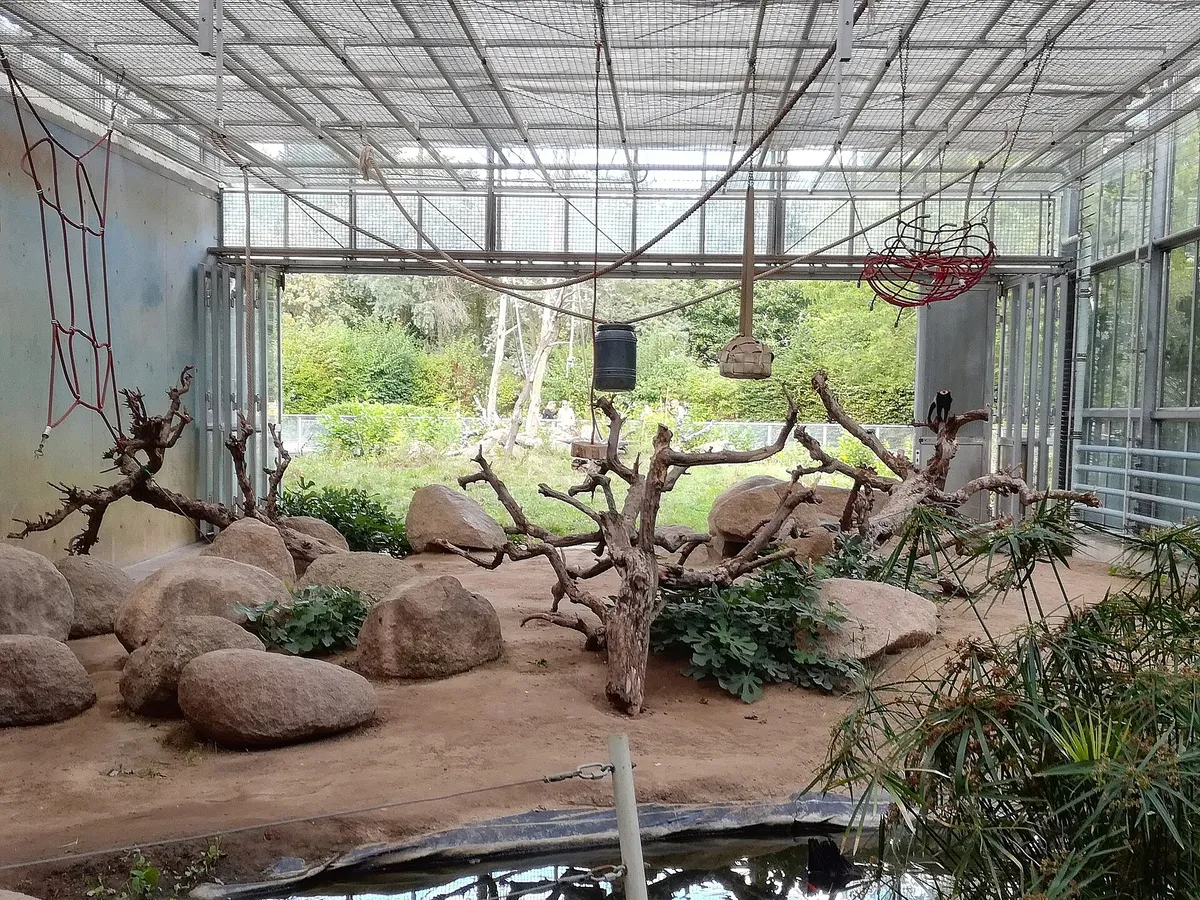 Vivarium🇩🇪 Darmstadt, Germany
 Tierpark und Fossilium Bochum🇩🇪 Bochum, Germany
 Phoenix Zoo🇺🇸 Phoenix, United States
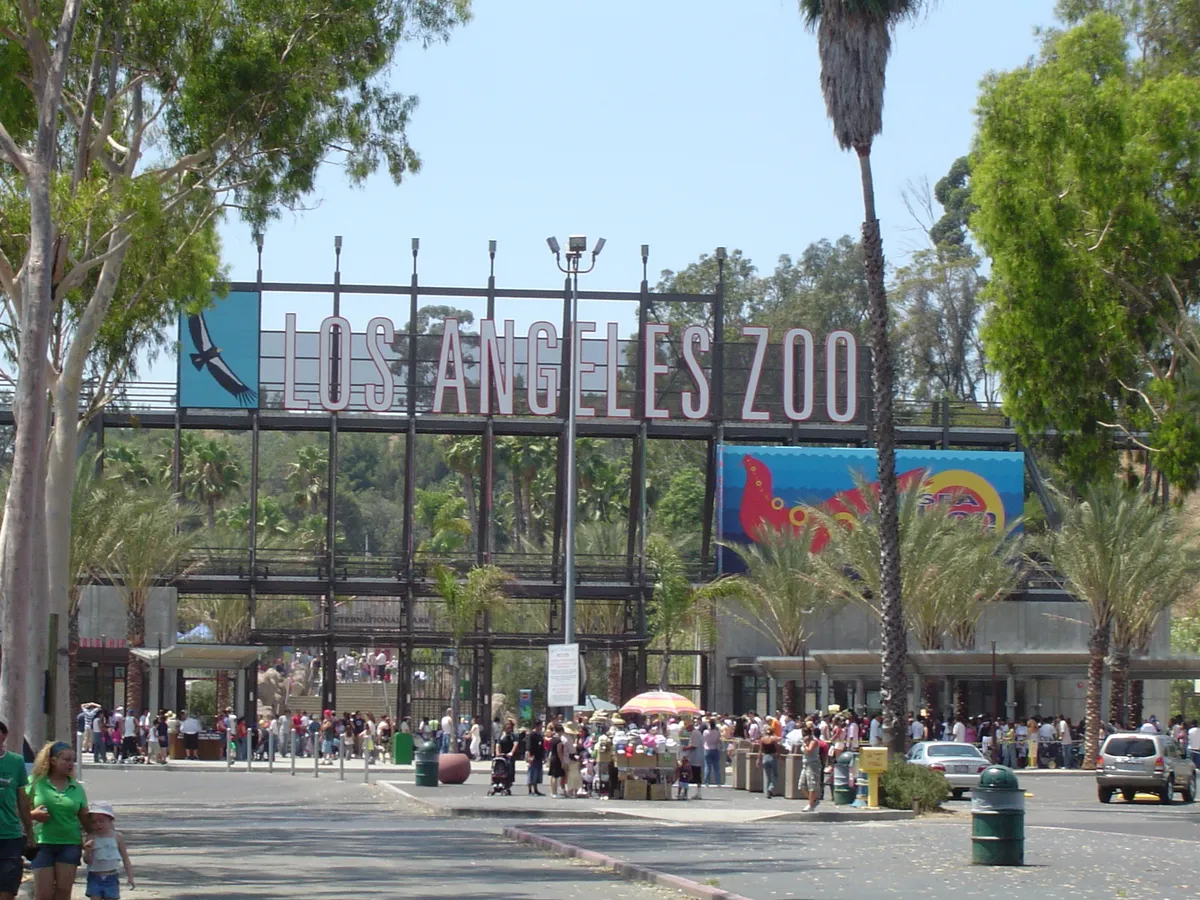 Los Angeles Zoo🇺🇸 United States
Community notes
Share your observations about the Greater Flamingo.
No community notes yet. Be the first!
Discover more wildlife
More fascinating animals from the encyclopedia.