

Birds
216 species in the encyclopedia
Feathered, winged vertebrates — most take to the air, and all lay eggs.
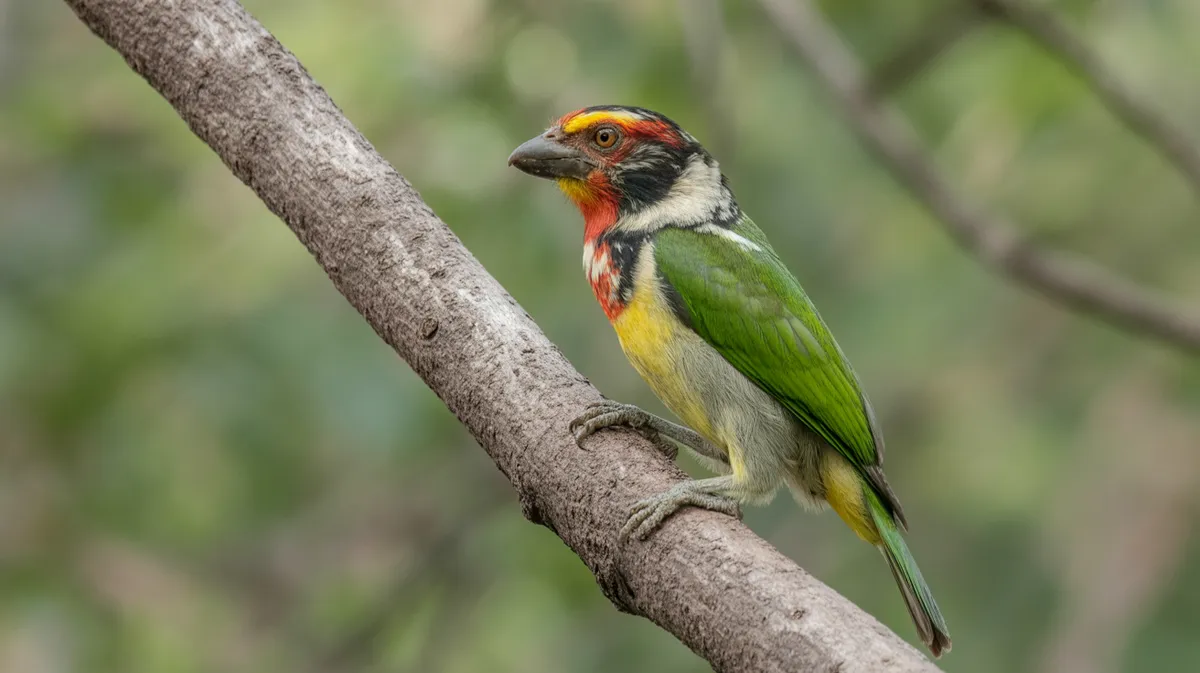
African Barbet
Lybiidae
Barbets are plump, colorful birds found throughout tropical regions of Africa and Asia, known for their stout bills and bristle-fringed faces. Members of the family Lybiidae, African barbets are particularly noted for their bright plumage, which often includes striking reds, yellows, and greens. They primarily inhabit forests and woodland environments, where they excavate nest holes in trees. Barbets are vocal birds, producing distinctive, repetitive calls that can be heard over long distances. Their diet consists mainly of fruit, but they will also eat insects and other small animals.
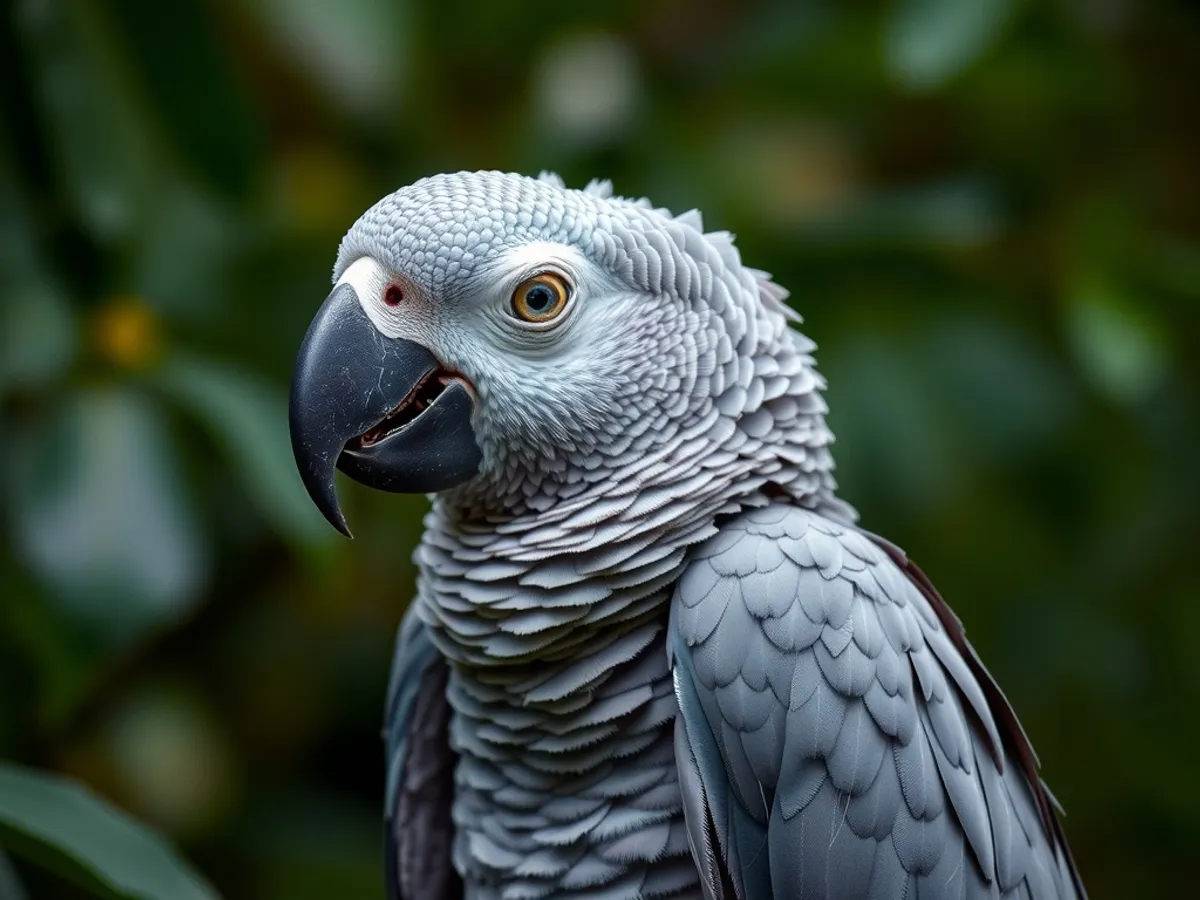
African Grey Parrot
Psittacus erithacus
The African grey is the parrot that changed what science was prepared to say about animal minds. Over three decades, Irene Pepperberg's grey, Alex, learned to label around a hundred objects, colours, shapes and materials, and — crucially — to combine those categories: shown a tray, he could answer which object was both green and three-cornered, which requires holding two attributes in mind at once. He grasped same and different as abstract concepts, and he understood none, a functional zero, which he produced spontaneously when asked which colour differed among a set of identical objects. He is also the only non-human animal on record to have asked an existential question, when he saw himself in a mirror and asked what colour he was. Greys are long-lived, often past fifty, and intensely social, which is exactly why they suffer so badly alone: a bored grey plucks out its own feathers. The demand created by that intelligence has been ruinous, and trapping for the pet trade, combined with habitat loss, has pushed the species onto the endangered list.
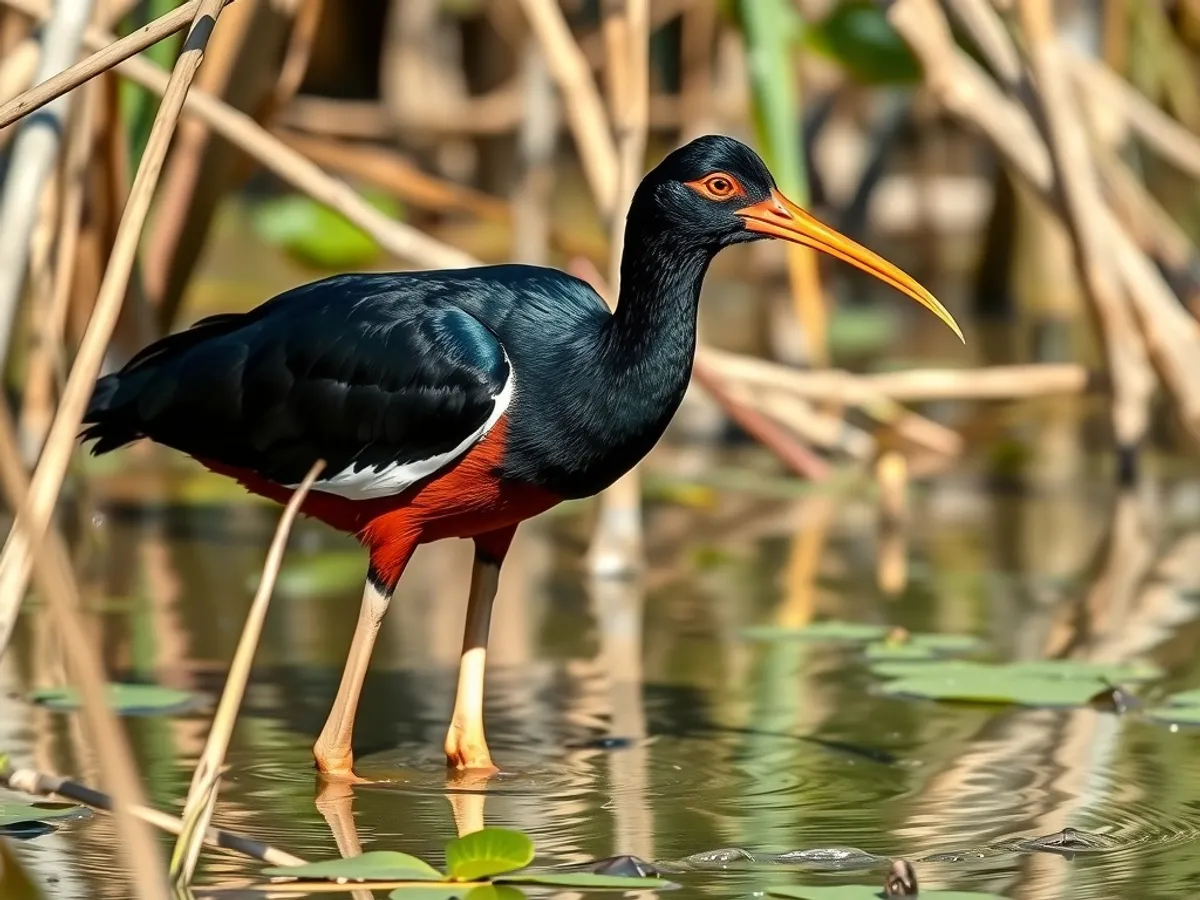
African Jacana
Actophilornis africanus
The African jacana runs the standard bird family upside down. Females are about 1.5 times heavier than males, hold a territory, and mate with up to four of them; the males build the nests, incubate the eggs, and raise the chicks alone. A father moves his brood by scooping the chicks up under his wings and walking off with four sets of tiny legs dangling from his flanks — one of the strangest silhouettes in African wetlands. The bird's most obvious feature is its feet: toes and claws so absurdly elongated that its weight is spread across floating lily pads, letting it stroll over open water and earning it the names lily-trotter and Jesus bird. Chicks can dive and hide beneath the surface, clamping onto submerged vegetation with only the bill tip exposed to breathe. It feeds on insects and snails picked from the undersides and surfaces of floating leaves, flipping pads over with the bill. Its range spans sub-Saharan floodplains, swamps and lagoons wherever water lilies persist.
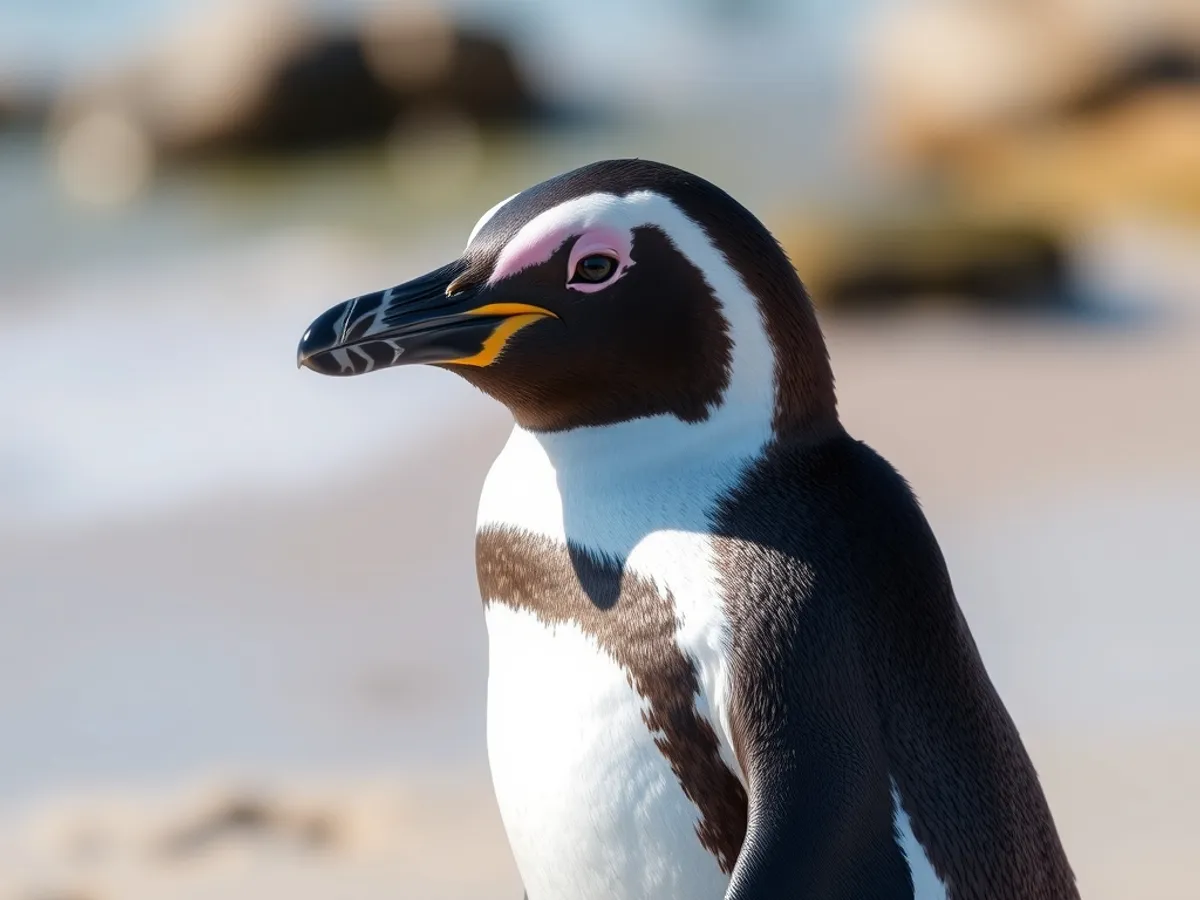
African Penguin
Spheniscus demersus
The African penguin is the only penguin that breeds on the African mainland and its islands, and it brays like a donkey — hence its older name, jackass penguin. The bare pink patch above each eye is a radiator: in heat, blood is shunted into the supraorbital gland region and the skin flushes a deeper pink as it dumps heat to the air, which is how a bird built for cold survives Namibian and South African summers. Its collapse is a case study in how an unrelated industry can destroy a species. For centuries penguins nested in burrows dug into metres-deep guano; when guano was scraped off the islands as fertiliser in the nineteenth century, the penguins were left nesting on bare rock, exposed to gulls and to lethal heat. Then commercial purse-seining stripped the sardine and anchovy stocks, and the fish that remained shifted east, away from the breeding colonies. From roughly a million pairs around 1900, fewer than 10,000 breeding pairs remain, and the species is now Critically Endangered.
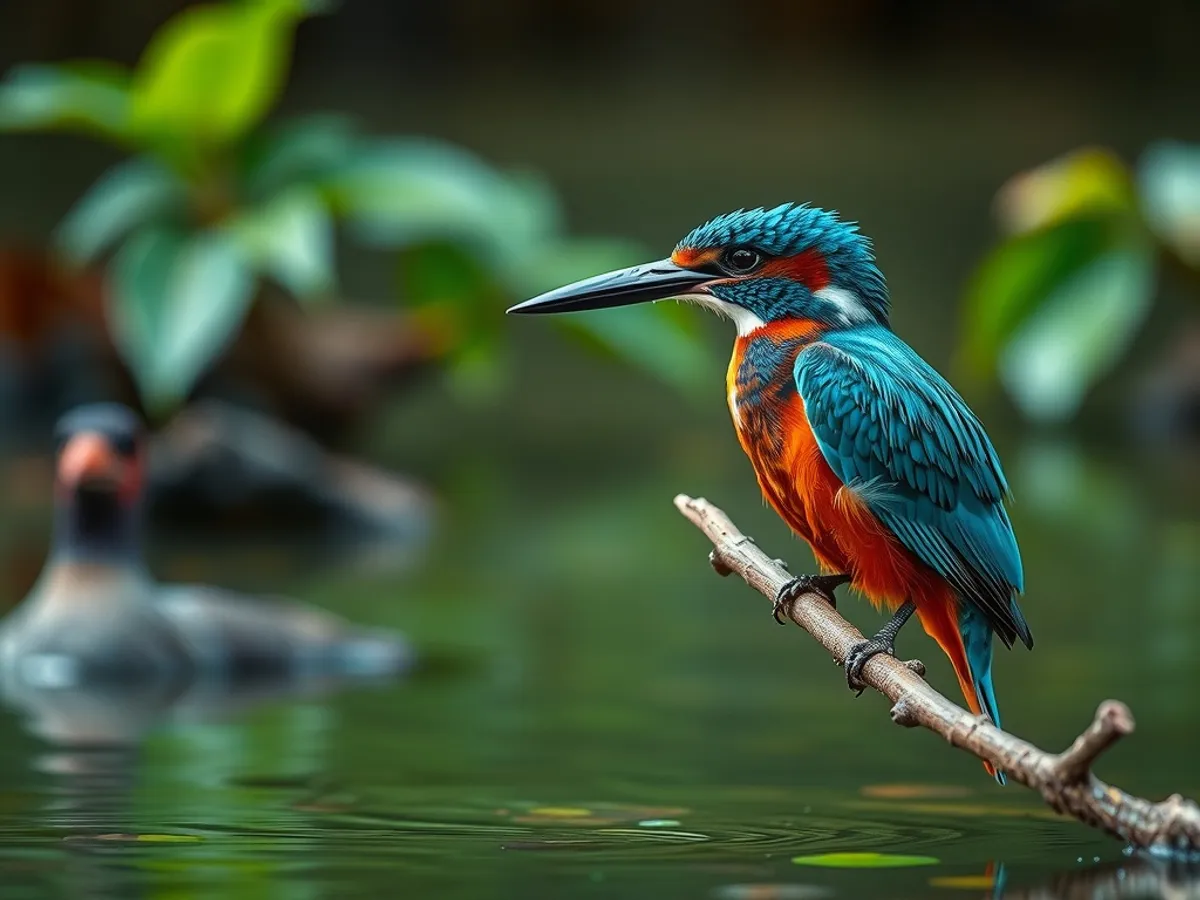
Amazon Kingfisher
Chloroceryle amazona
The Amazon Kingfisher is a medium-sized, strikingly colored bird found throughout Central and South America, especially along rivers and streams. It is recognized by its glossy green upperparts, white underparts, and the prominent white collar around its neck; males have a rufous band across the chest. This kingfisher is an agile hunter, perching quietly above water before diving headfirst to catch small fish and aquatic invertebrates. Its sharp bill and excellent vision make it a formidable predator in its freshwater habitat. The Amazon Kingfisher is a solitary bird, often seen alone or in pairs, and communicates with sharp, rattling calls.

Amazonian Royal Flycatcher
Onychorhynchus coronatus
The Amazonian Royal Flycatcher is a small, insectivorous bird best known for its spectacular fan-shaped crest, which is vividly colored and usually displayed during courtship or when threatened. This bird inhabits the humid lowland forests and river edges of the Amazon Basin, often remaining inconspicuous as it forages for insects. With olive-brown upperparts and yellowish underparts, its remarkable crest—red in males and yellow to orange in females—remains mostly hidden except during displays. The species builds long, hanging nests suspended over water to protect its young from predators. Despite its striking appearance, the Amazonian Royal Flycatcher is seldom seen due to its secretive habits and preference for dense forest undergrowth.
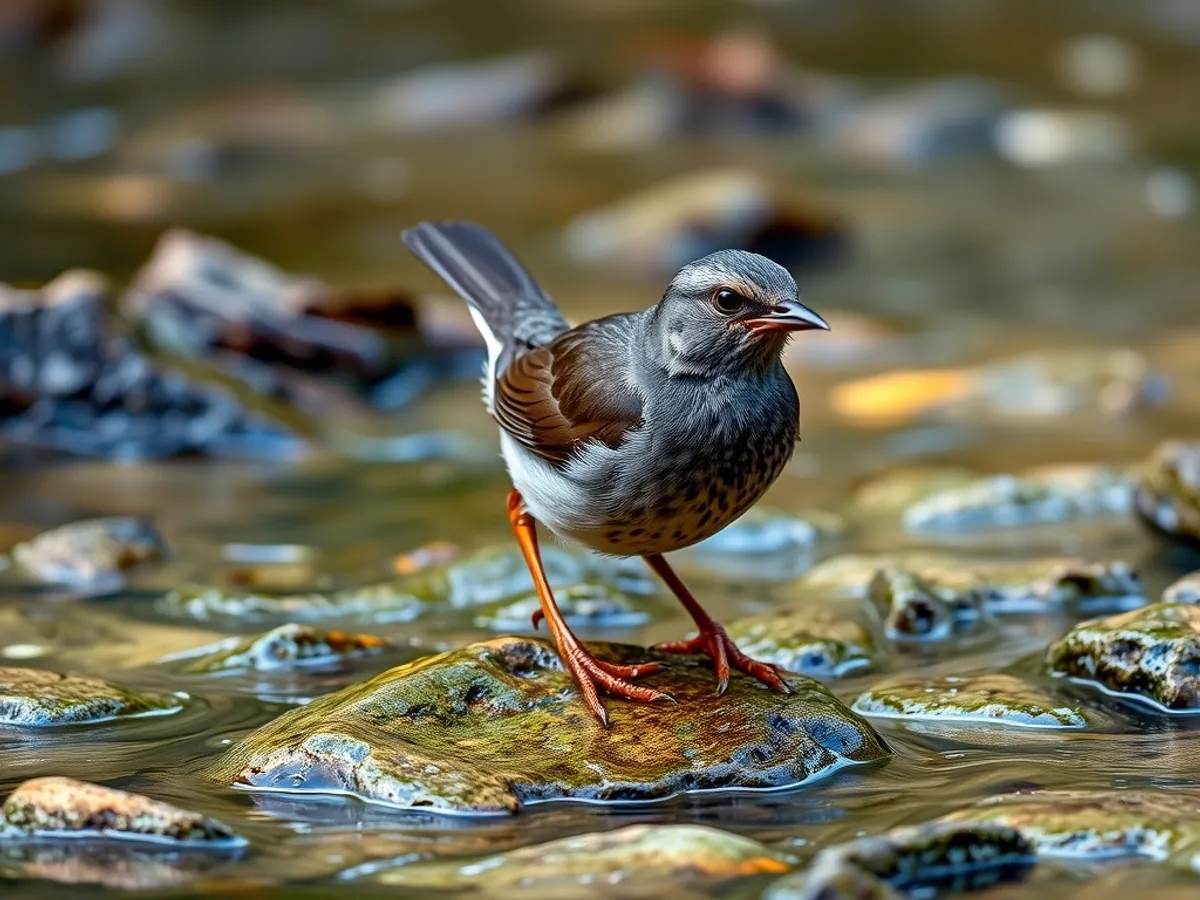
American Dipper
Cinclus mexicanus
The dipper is North America's only aquatic songbird, and it does something no other passerine does: it walks straight into a cold mountain torrent and forages on the bottom, gripping the rocks with strong claws and using its wings to hold itself down or to swim. Its kit is entirely rebuilt for this. It has a preen gland roughly ten times the size of a comparable songbird's, feeding an unusually dense, water-repellent plumage; movable flaps close the nostrils underwater; a white nictitating membrane sweeps across the eye, giving it the characteristic flashing blink; and its blood carries extra oxygen, letting it stay under for up to about half a minute. It sings loudly right through winter, a long ringing warble pitched high enough to cut through the broadband roar of the stream — an acoustic adaptation to a permanently noisy home. Nests are dome-shaped moss shelters, often built on ledges behind or beside waterfalls, where spray keeps the moss alive and green.
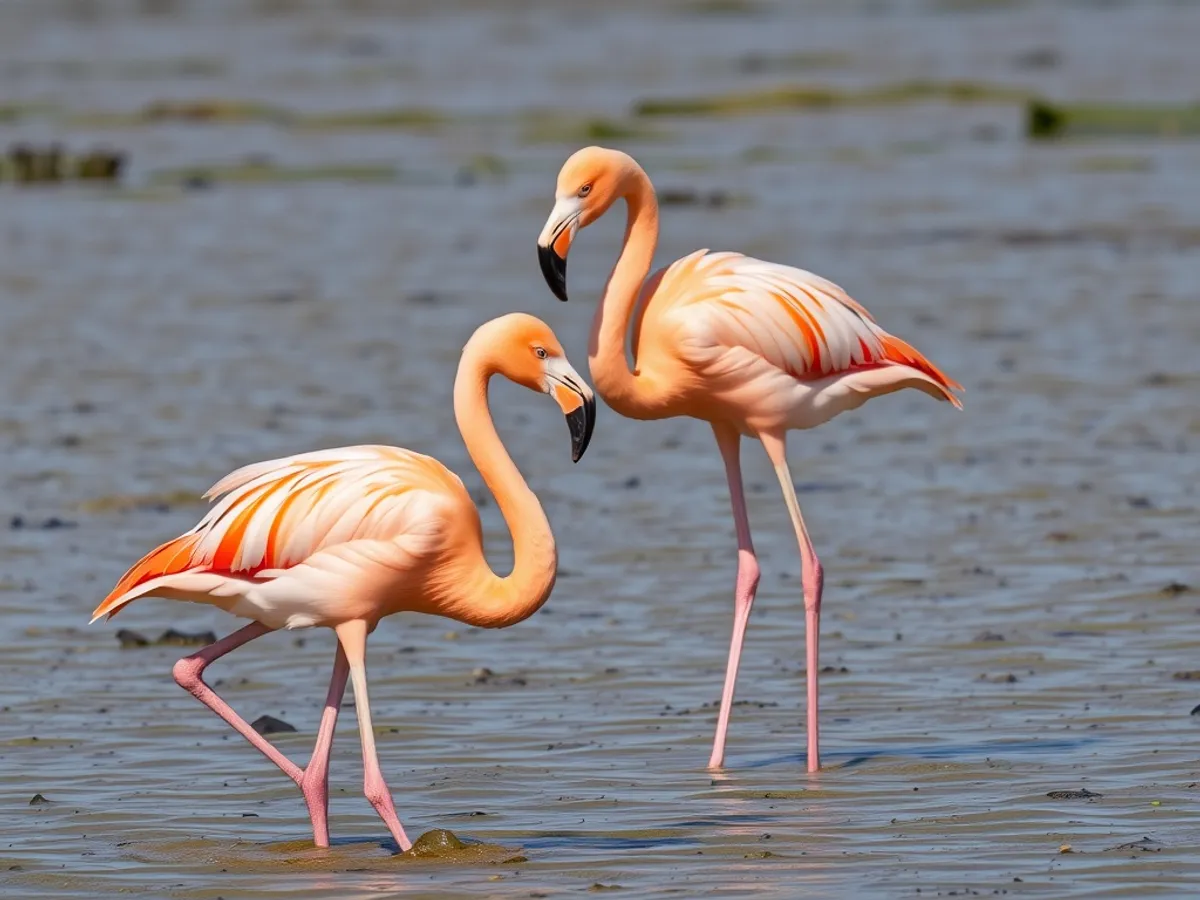
American Flamingo
Phoenicopterus ruber
The American flamingo is the most intensely coloured of all the flamingos, a deep and almost scarlet pink where its Old World relatives are pale, and the difference comes down entirely to diet. Flamingos are not born pink: chicks hatch grey-white, and the colour is assembled from carotenoid pigments extracted from the algae and brine shrimp they filter from the water, which means the richness of the colour is a direct, honest advertisement of how well a bird is feeding. It feeds with its head upside down, sweeping the downcurved bill through the shallows while comb-like plates strain food from the water — the same filter-feeding principle a baleen whale uses, at a fraction of the scale. Its choice of habitat is the whole strategy: it favours hypersaline lagoons and alkaline flats where almost nothing else can survive, trading a hostile chemistry for a food supply nothing competes for. It nests in dense colonies on cones of mud, and both parents feed the single chick a fat-rich crop milk secreted from the upper digestive tract.
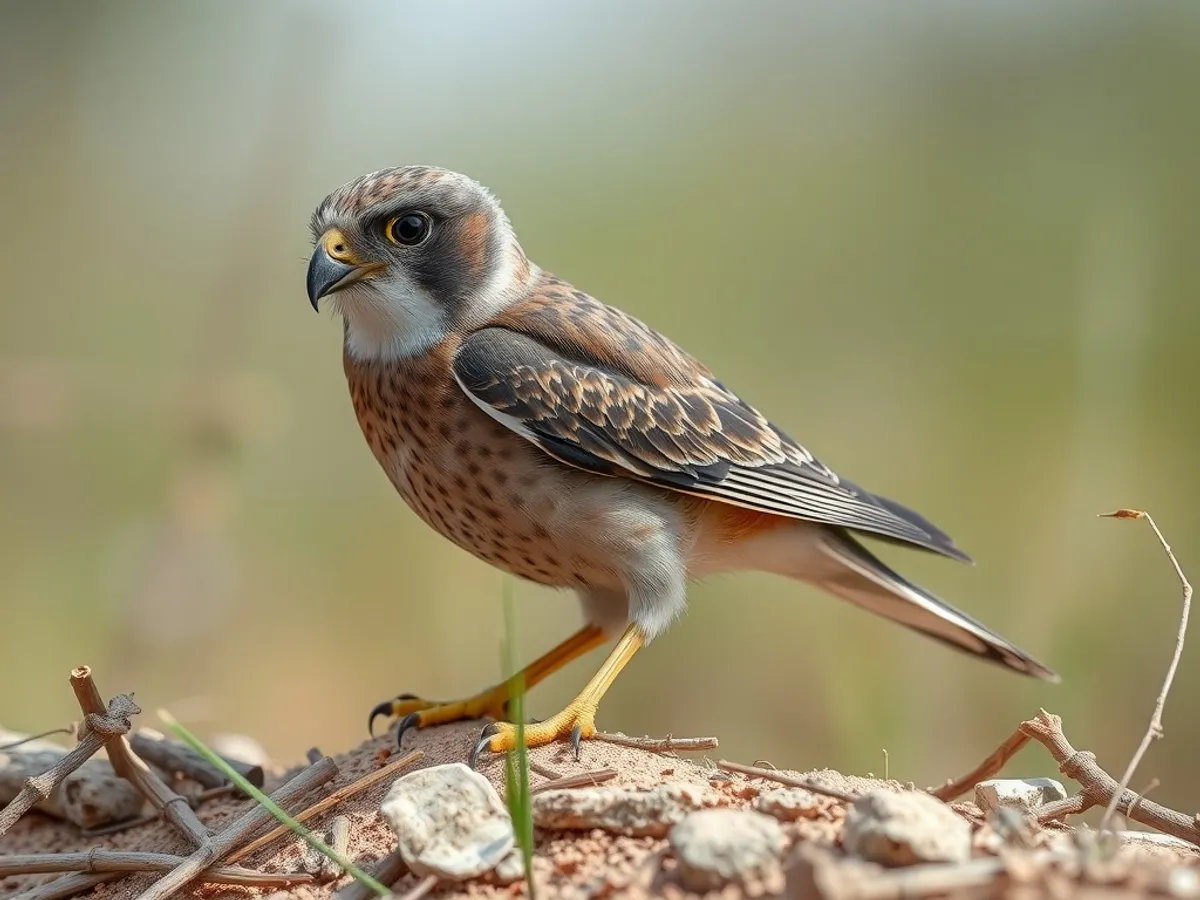
American Kestrel
Falco sparverius
The American kestrel is North America's smallest falcon, roughly the mass of a mourning dove, and it is also one of the very few raptors where you can sex a bird instantly by colour: males have slate-blue wings and a rufous back, females are rufous all over and barred. Most birds of prey give no such visual cue, and kestrels show the difference from the nestling stage. On the back of its head are two black false eyespots, widely interpreted as a deterrent to attacks from behind by larger raptors — a small predator's bluff. It hunts by hovering into the wind with the head locked absolutely still, then dropping onto grasshoppers, voles and lizards, and it caches surplus prey in fence posts, grass clumps and cavities to eat later. It cannot excavate a nest hole itself and depends on woodpecker cavities and natural hollows, which is why it takes readily to nest boxes. Despite all this adaptability, the species has lost something like half its North American population since 1970, and the cause is still not settled.
American Robin
Turdus migratorius
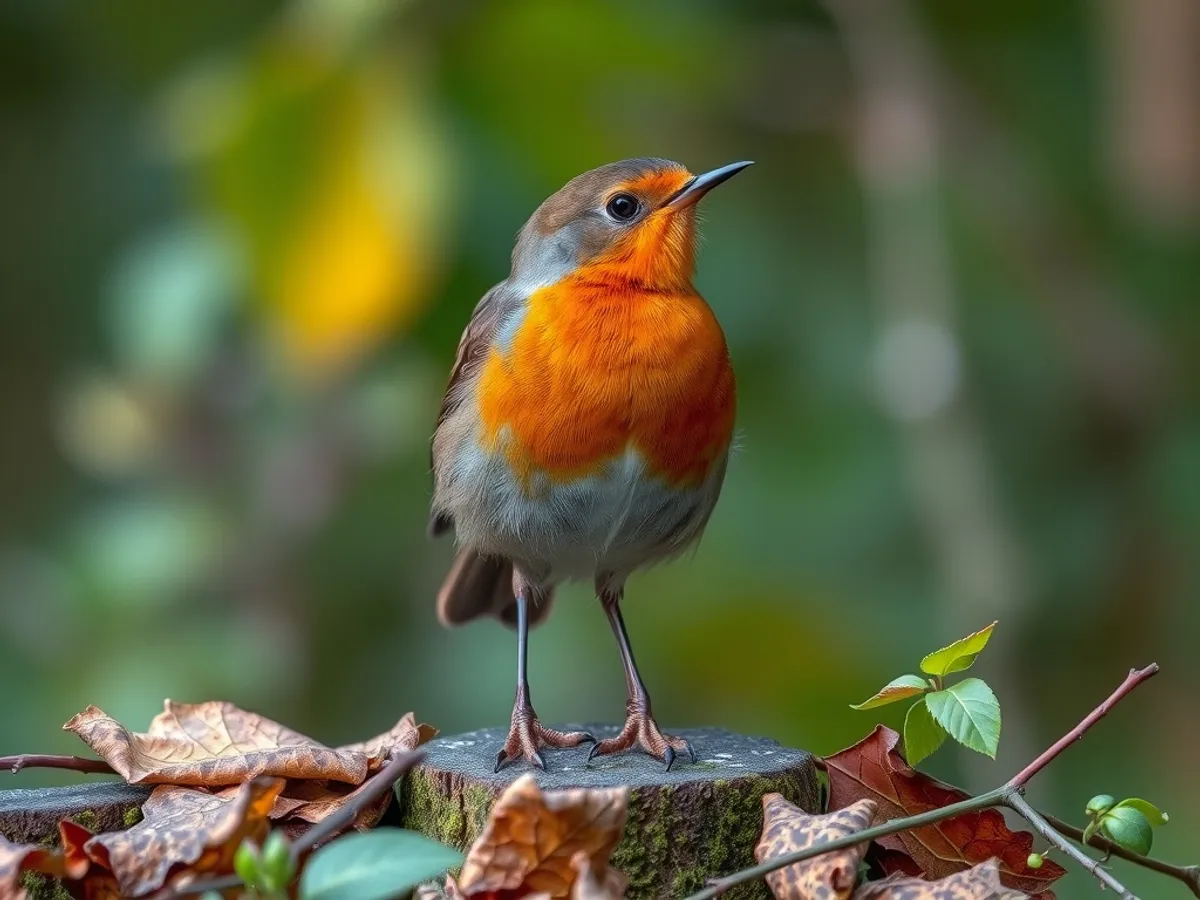
The American robin is not a robin. Homesick English colonists named it after the small European robin because of the red breast; it is in fact a thrush, and its nearest relatives are blackbirds and fieldfares. Its signature move — running a few steps, stopping, and cocking its head at the lawn — has been widely misread. Experiments in which auditory, visual and vibrational cues were manipulated showed that robins can genuinely hear worms moving underground, not merely see them, so the head-cock is doing more than it looks. The idea that a robin's return announces spring is also mostly a misunderstanding: many robins simply switch from earthworms to fruit in autumn, abandon lawns and territories, and roam in large nomadic flocks through winter, sometimes far north, only becoming conspicuous again when they return to the grass. Its blue eggs get their colour from biliverdin, a pigment derived from broken-down haemoglobin, and there is evidence that males feed chicks more when the eggs were more intensely blue.
American Woodcock
Scolopax minor
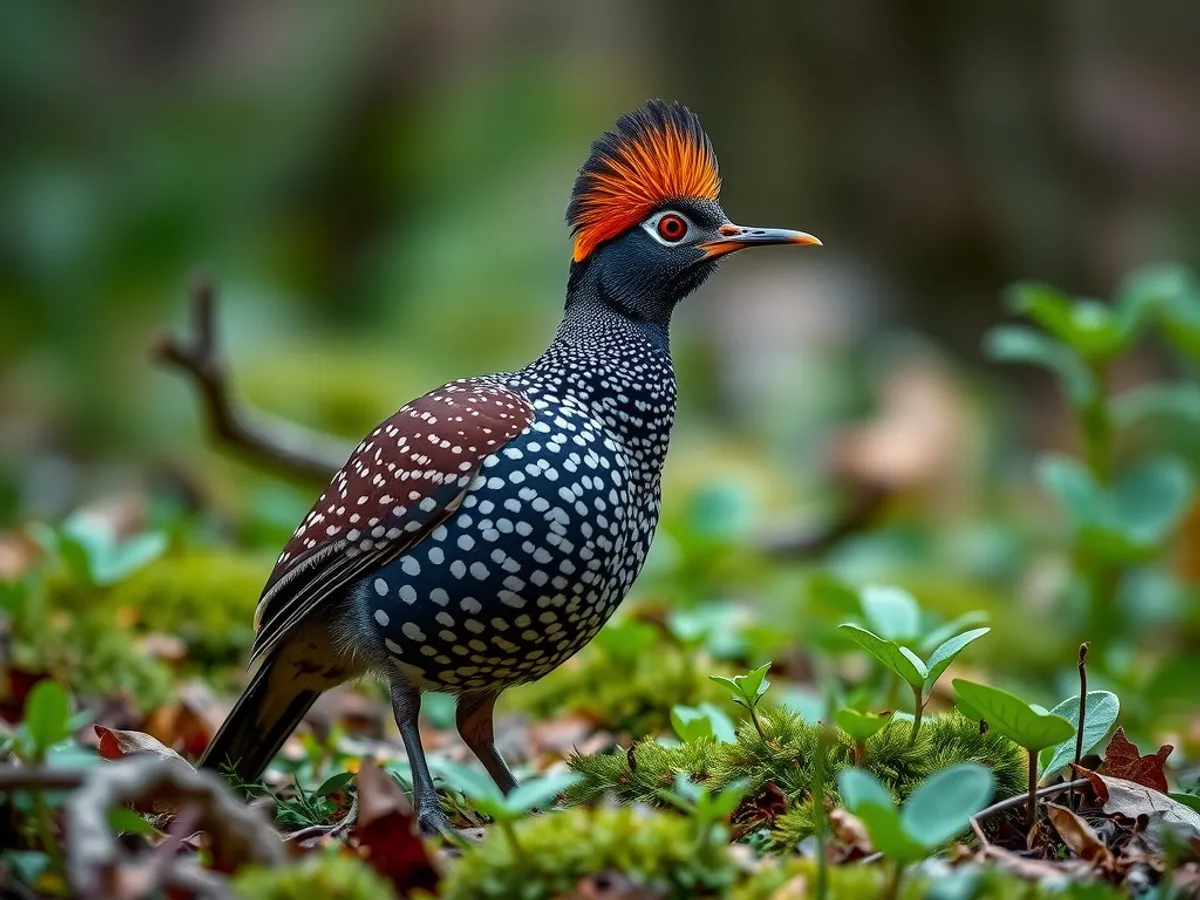
The woodcock is a shorebird that lives in young forest and eats earthworms, and almost everything about its anatomy is a consequence of that job. Its eyes have migrated so far back and high on the skull that it has a field of view of nearly 360 degrees, including binocular vision behind its own head — so it can watch for a hawk while its bill is buried in mud. The price is that its brain has been shoved around: the cerebellum sits below and behind the rest of the brain rather than above it, effectively upside-down relative to other birds. The bill tip is flexible and prehensile, so the woodcock can open just the last centimetre underground and grip a worm without opening its whole bill through soil. In spring the male performs a display flight, spiralling several hundred feet up and tumbling back down while producing a twittering sound not with his voice but with air whistling through three narrowed outer primary feathers. It is also one of the slowest fliers ever measured, capable of holding the air at around 5 mph.
Andean Cock-of-the-rock
Rupicola peruvianus
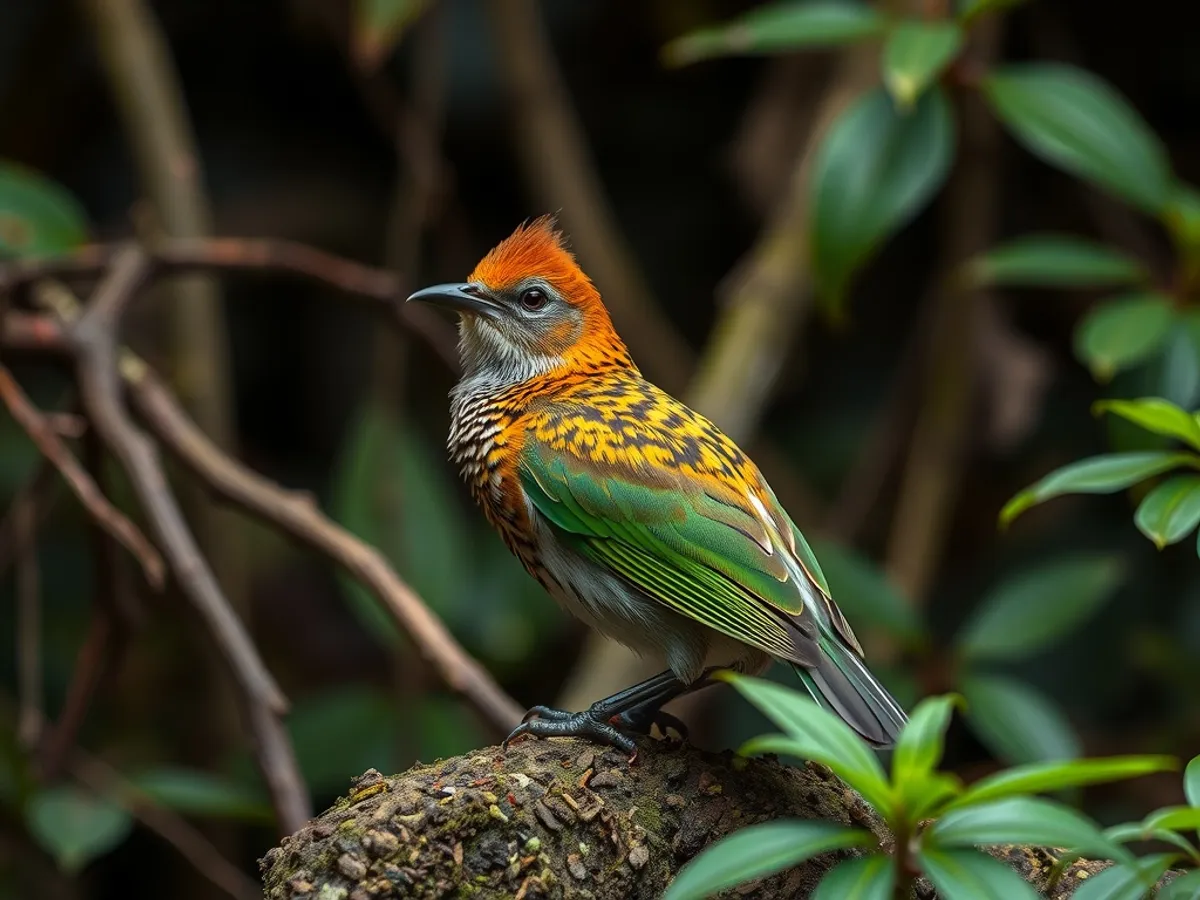
The male Andean cock-of-the-rock has a crest so extreme it is effectively a mask: a permanent, disc-shaped half-moon of feathers that projects forward over the top of the bill and hides most of it, nostrils included. It is not raised or lowered like an ordinary crest — it is simply always there, and the bird looks at the world past it. Males gather at leks, traditional display arenas in steep, humid Andean forest that can be used for decades, where a dozen or more birds bow, hop, flap and produce squealing, grunting calls at each other while females come, watch and choose. Once a female has mated she leaves, and the male contributes nothing further. She then builds a cup nest of mud and plant material glued to a shaded rock face or cave wall, often near a stream — the "rock" of the name — and raises the chicks alone. Females are a drab reddish-brown, an inevitable consequence of a system where only males are being chosen and only females need to be invisible on a nest.
Andean Condor
Vultur gryphus
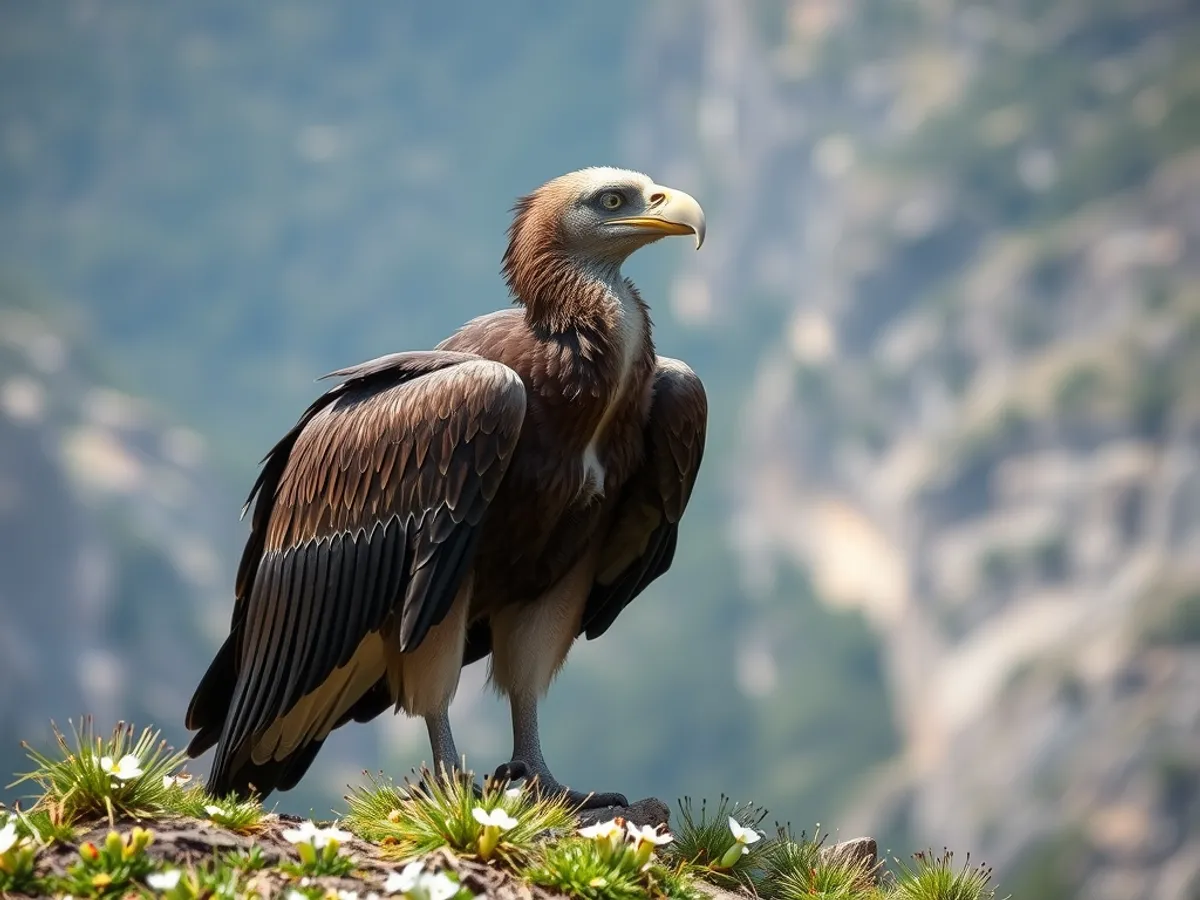
The Andean condor is among the largest flying birds on Earth, and almost everything about it is shaped by the problem of getting that mass airborne and keeping it there for free. Tracking studies found it spends barely one percent of its flight time flapping: it can cover more than a hundred kilometres and stay up for hours on a single takeoff, riding thermals and the updrafts deflected off mountain ridges, and flapping mainly in the awkward moments near the ground. Takeoff is the expensive part, which is precisely why condors roost on cliffs and high ledges — they need height, or wind, to launch at all. It is a scavenger that finds carcasses by sight rather than smell, often simply by watching other scavengers drop. Unusually among birds of prey, the sexes differ visibly: the male is the larger, and carries a fleshy caruncle on his head, inverting the usual raptor pattern in which the female is bigger. It is long-lived and slow to breed — a single chick every couple of years — and it is woven deeply into Andean culture, appearing on coats of arms and in origin myths across the range.
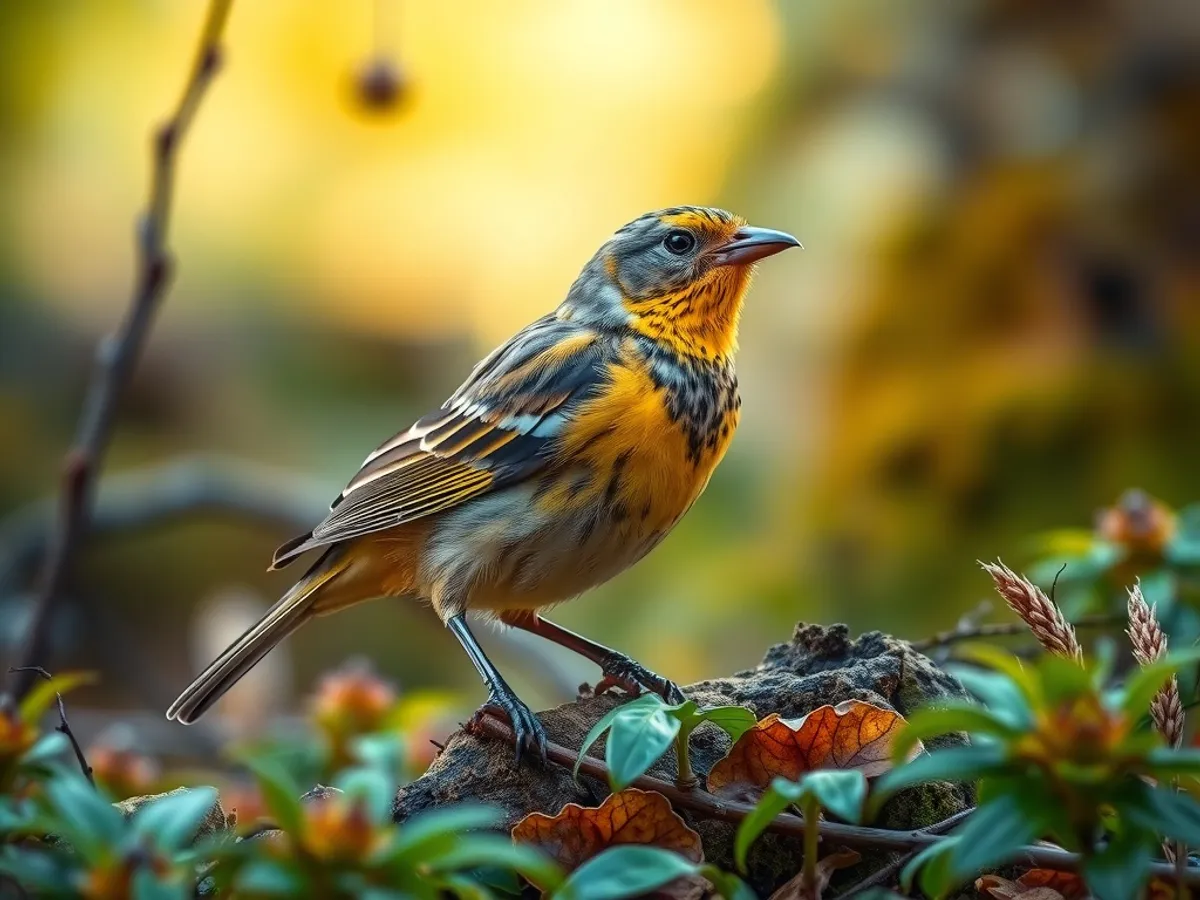
Atlantic Canary
Serinus canaria
The Atlantic Canary is a small, vibrant songbird native to the Macaronesian Islands, particularly the Canary Islands, Azores, and Madeira. Recognized for its bright yellow-green plumage and melodic singing, it has been widely bred in captivity, giving rise to the popular domestic canary. Wild Atlantic Canaries inhabit forests, shrublands, and gardens, where they feed mainly on seeds and small insects. Their pleasant song and adaptability make them a favorite among bird enthusiasts worldwide.
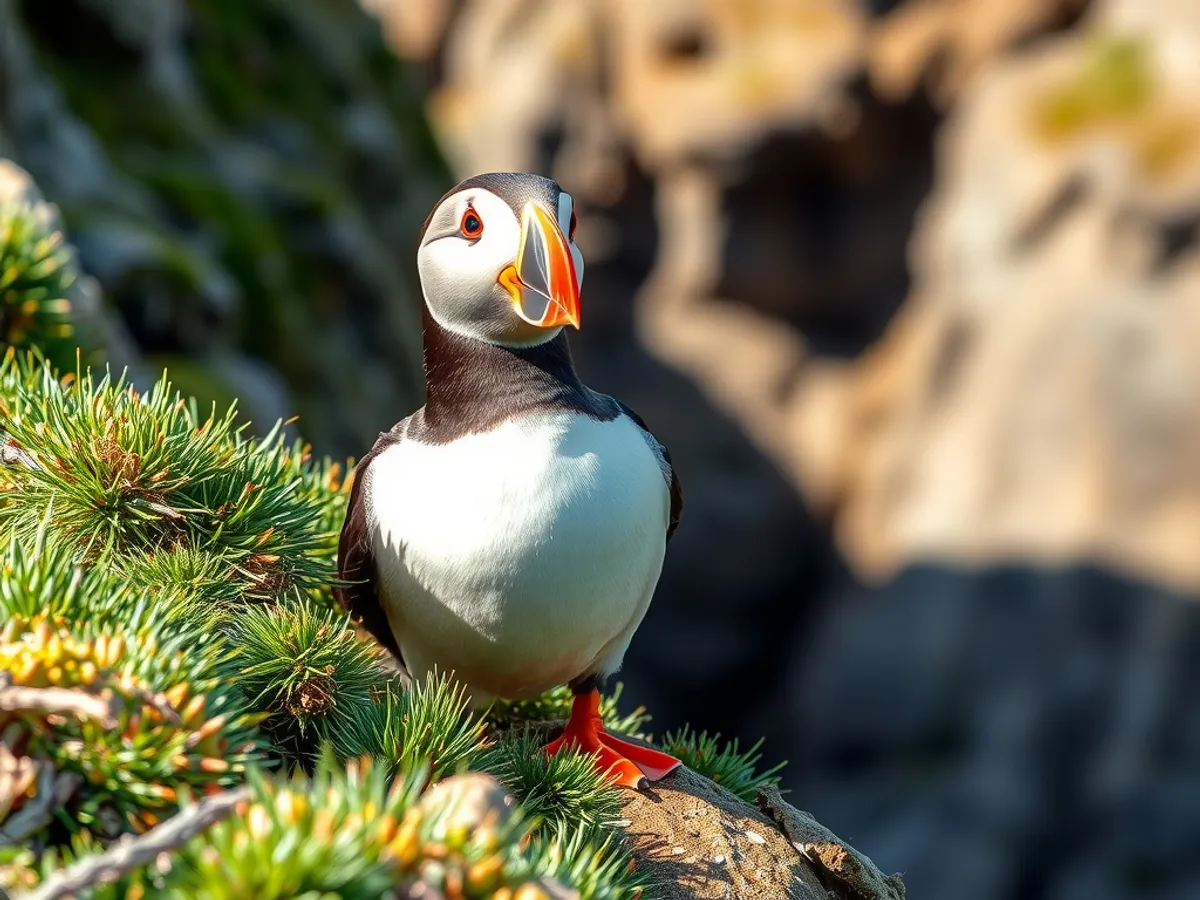
Atlantic Puffin
Fratercula arctica
The Atlantic puffin's parrot-bright bill is a seasonal ornament: the orange, blue and yellow plates are grown for the breeding season and shed afterwards, leaving a smaller, duller bill for the winter at sea. That bill performs a trick few birds manage — a puffin can carry a dozen or more small fish crosswise at once, pinning the catch against backward-pointing spines on its tongue and palate while still opening its beak for the next one. In the air it is frankly inelegant, beating stubby wings around four hundred times a minute just to stay up; underwater those same wings become superb, and the bird effectively flies beneath the surface in pursuit of sandeels and herring. Puffins spend most of the year far out on the open ocean, touching land only to breed, when they nest in burrows dug into clifftop turf or take over abandoned rabbit holes. They are long-lived and faithful to both mate and burrow, returning to the same patch of cliff year after year. Their decline is mostly a food-web problem: warming seas have pushed the small fish they depend on beyond reach of the colonies.
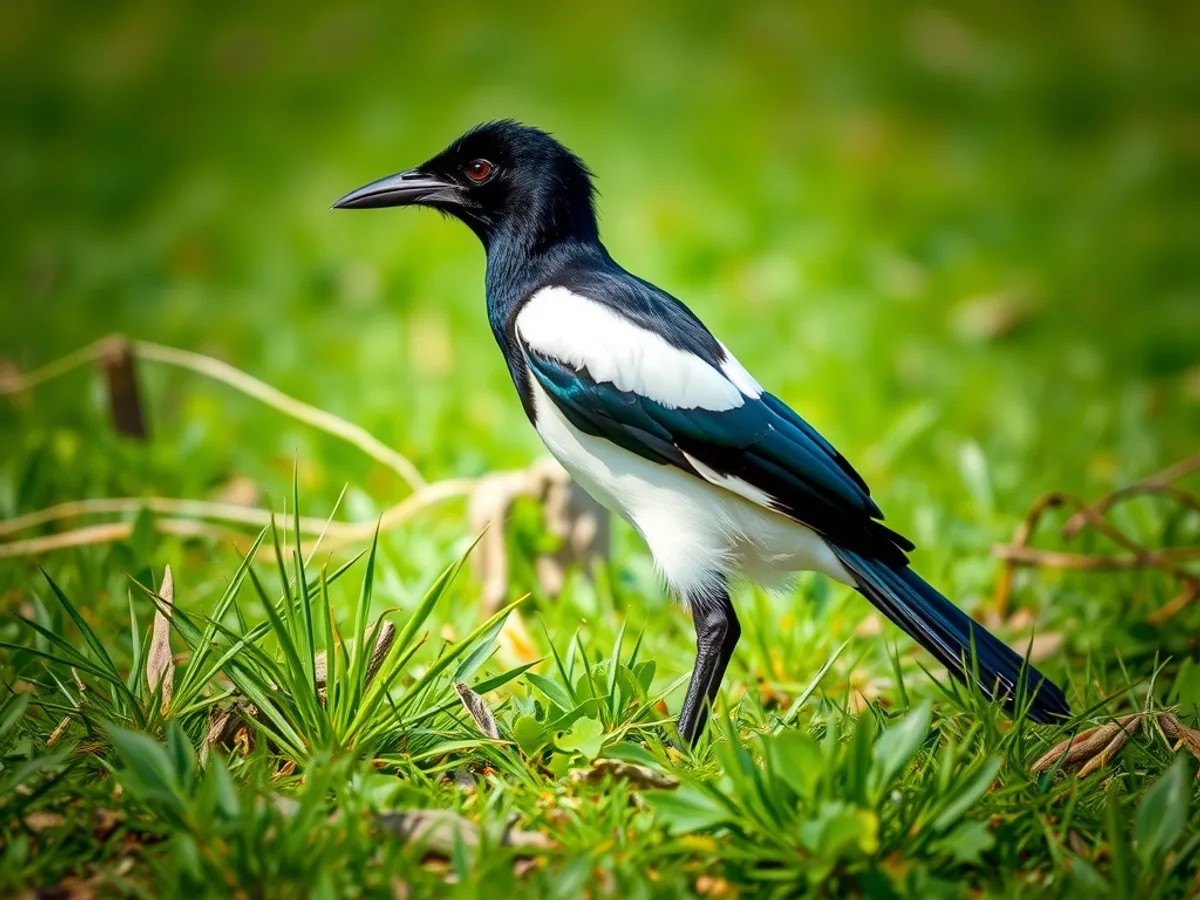
Australian Magpie
Gymnorhina tibicen
The Australian magpie is not a magpie and is not a crow: it belongs to the Artamidae, alongside butcherbirds and currawongs, and its resemblance to the European magpie is pure convergence in a black-and-white bird. Its carolling is one of the most complex songs of any bird, a fluting, organ-like improvisation that a group may perform together at dawn, and it is a good mimic — captive birds have reproduced human speech, dog barks and car alarms. It hunts by listening: it stands still on a lawn, head cocked, and detects scarab larvae moving under the turf, then drives its bill straight down. The infamous swooping season lasts only a few weeks and involves a small minority of birds — roughly one in ten males — and those birds are not attacking indiscriminately. Magpies recognise individual human faces and remember them for years, and a swooping male typically targets specific people it has decided are threats while ignoring others walking the same path.
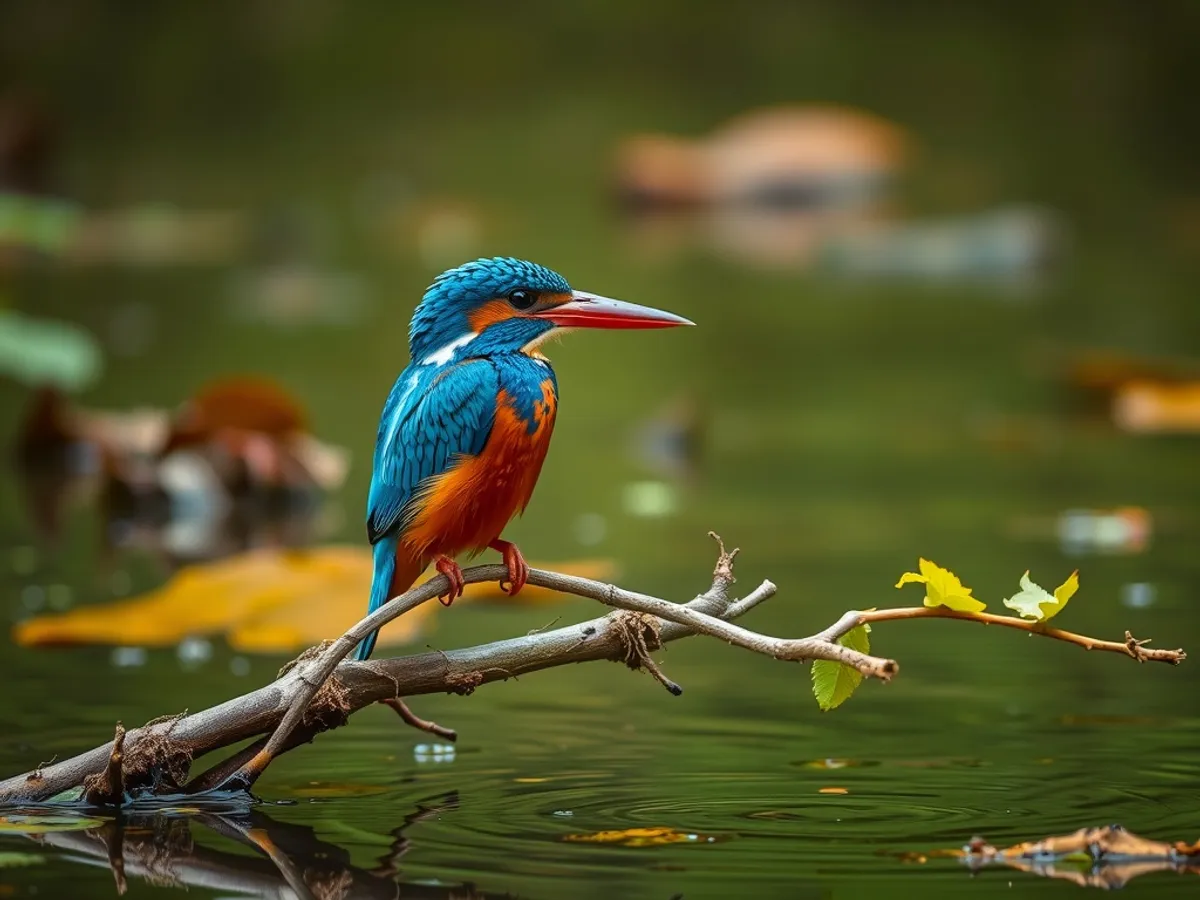
Azure Kingfisher
Ceyx azureus
The Azure Kingfisher is a small, brilliantly colored bird known for its vivid cobalt-blue upperparts and striking orange underparts. Found predominantly along freshwater rivers, streams, and billabongs in Australia and parts of New Guinea, this species is highly adapted for a life of fishing. It has a compact body, short tail, and a long, slender bill perfectly suited for catching aquatic prey. The Azure Kingfisher is shy and elusive, often spotted perched low over water, waiting patiently to dive for small fish and aquatic insects.
Azure-winged Magpie
Cyanopica cyanus
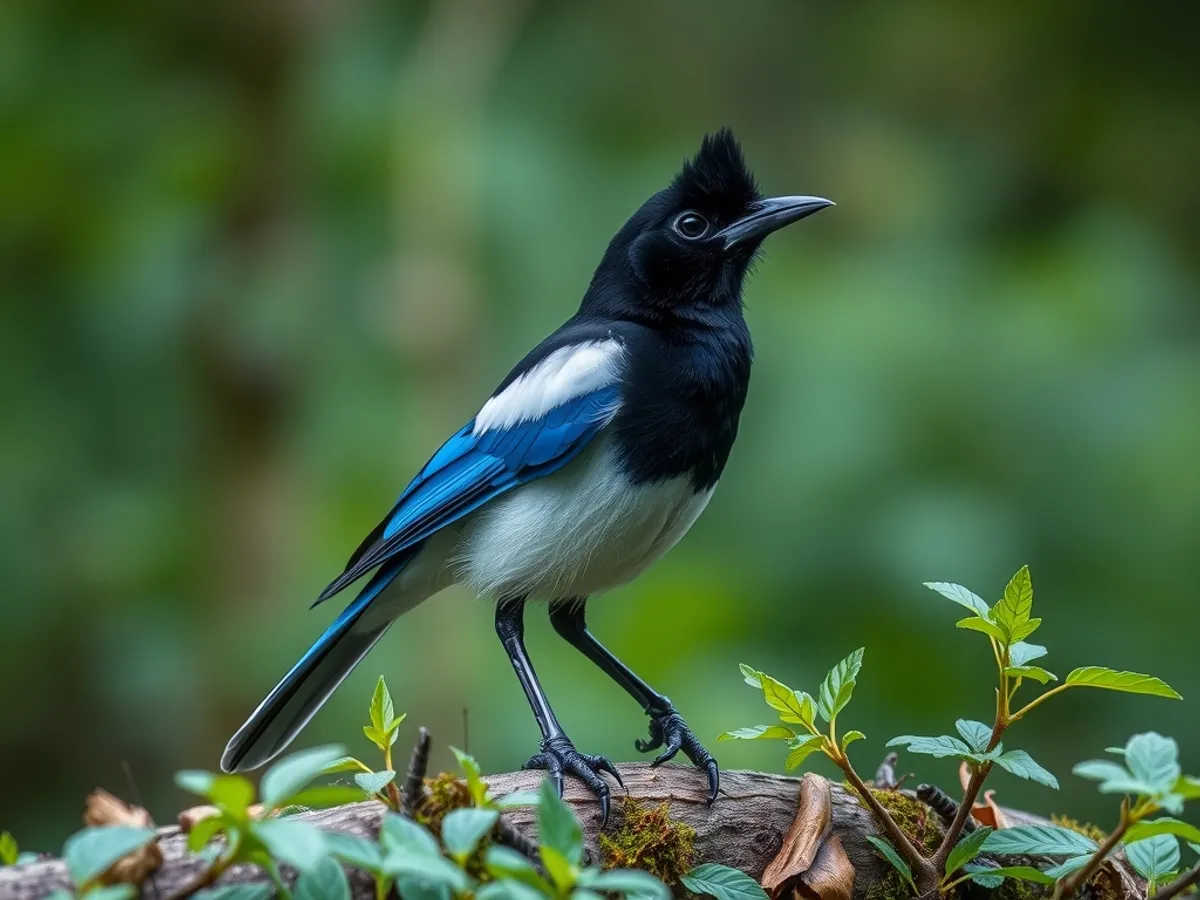
The Azure-winged Magpie is a striking medium-sized bird known for its soft blue wings and tail, contrasted by a pale grayish body and a black cap. These highly social birds are often found in noisy, cooperative flocks, foraging on the ground or in trees for a variety of foods. Native to East Asia and the Iberian Peninsula, they inhabit woodlands, parks, and gardens. Their intelligence and adaptability help them thrive in both rural and urban environments. Azure-winged Magpies are also known for their complex vocalizations and communal breeding behaviors.
Bald Eagle
Haliaeetus leucocephalus
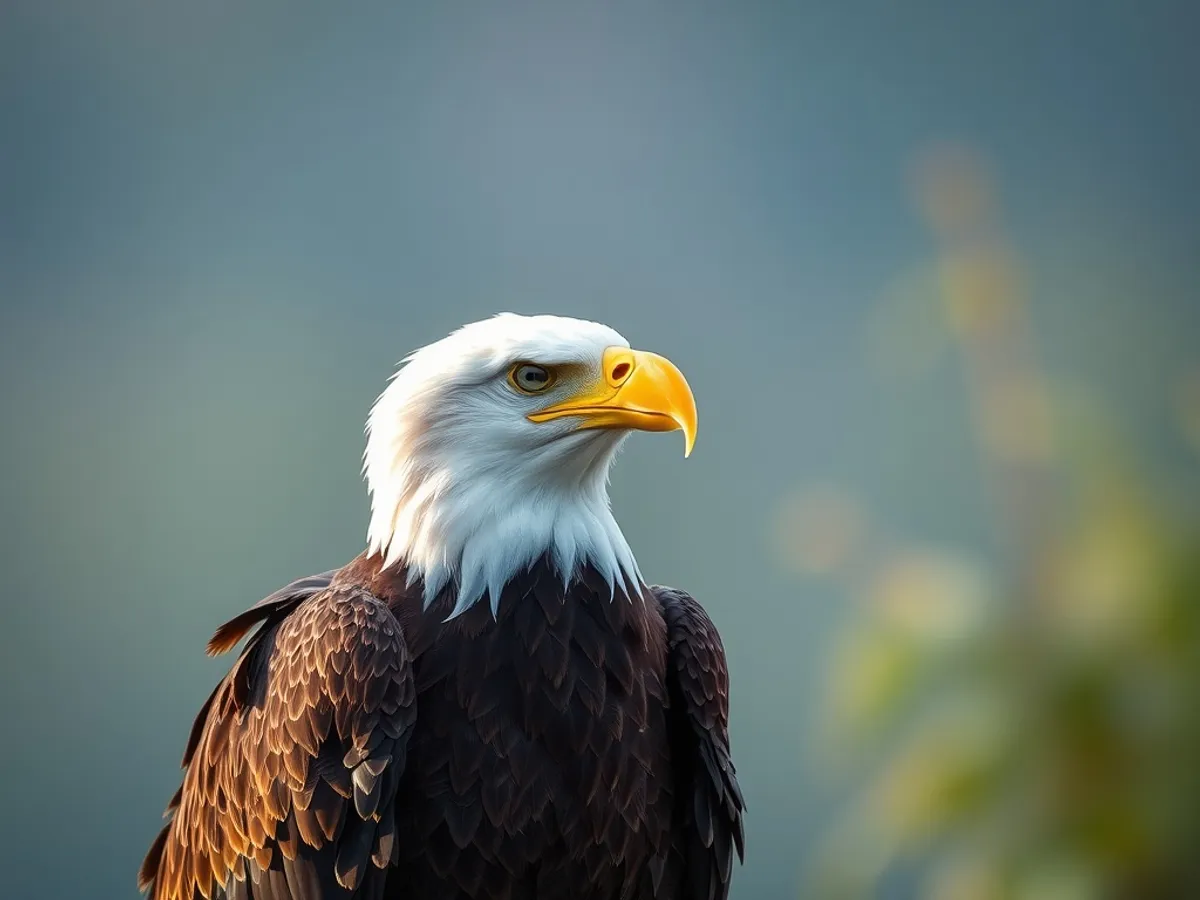
The Bald Eagle (Haliaeetus leucocephalus) is a formidable raptor native to North America, renowned for its striking white head and tail contrasting with a dark brown body and wings. This species thrives in regions abundant with water bodies, such as lakes and coastal areas, where it primarily preys on fish. The Bald Eagle can weigh between 3 to 6.3 kilograms (6.6 to 14 pounds) and boasts a wingspan ranging from 1.8 to 2.3 meters (5.9 to 7.5 feet). Two recognized subspecies exist: the northern H. l. alascanus, which is larger, and the southern H. l. leucocephalus. This bird's powerful talons are adapted for grasping slippery fish, a skill honed by its keen eyesight, which is among the sharpest in the animal kingdom. While the Bald Eagle's range spans most of Canada and Alaska, it also extends into the contiguous United States and northern Mexico, where it shares ecological roles with the White-tailed Eagle (Haliaeetus albicilla) in Eurasia.
Bananaquit
Coereba flaveola
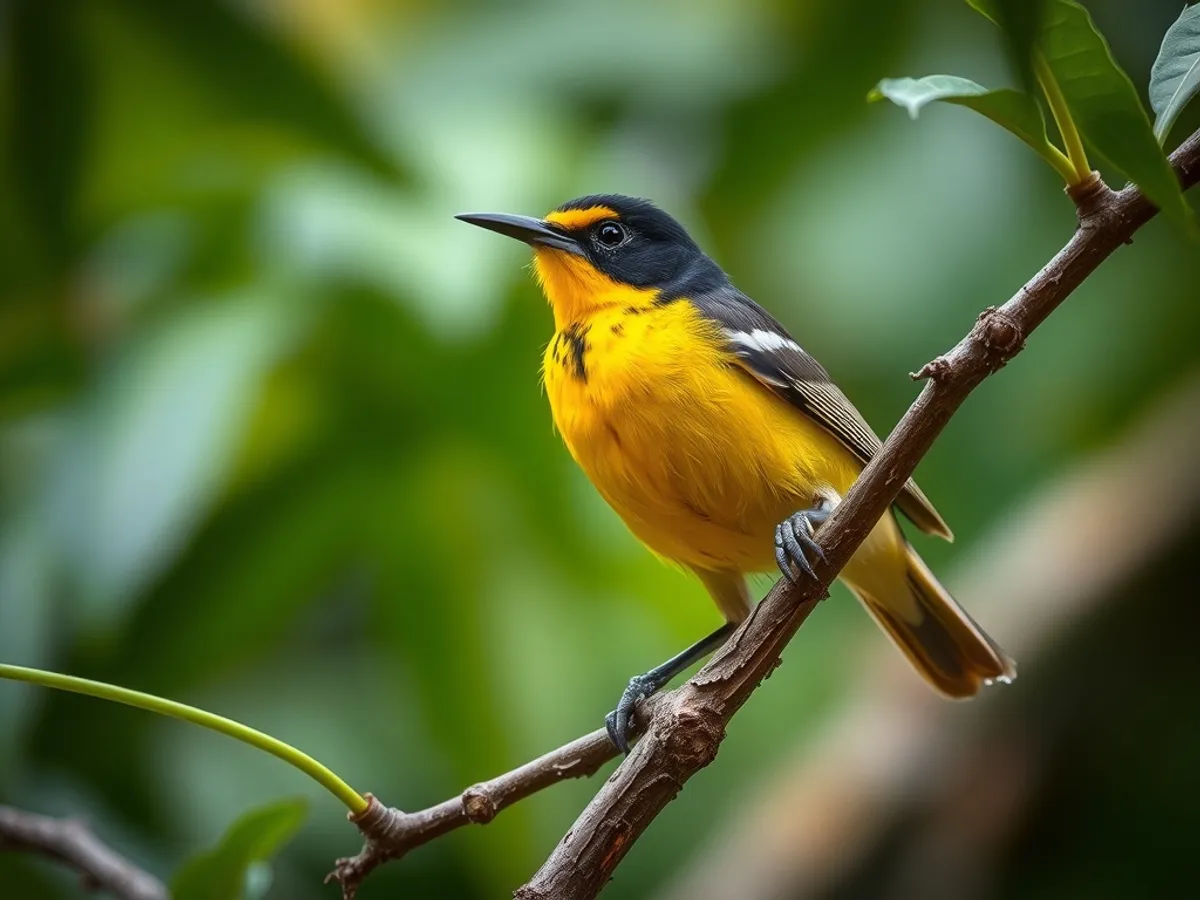
The Bananaquit is a small, energetic songbird native to the tropical and subtropical regions of the Americas, especially the Caribbean. Recognizable by its curved bill, dark gray upperparts, and bright yellow underparts, it is often seen flitting among flowers and foliage. This bird is highly adaptable, thriving in a variety of habitats, from gardens and plantations to forests and shrublands. Its agility and inquisitive nature make it a frequent visitor to nectar feeders, where it is loved for its lively behavior. The Bananaquit plays an important role in pollination thanks to its fondness for floral nectar.
Barn Owl
Tyto alba
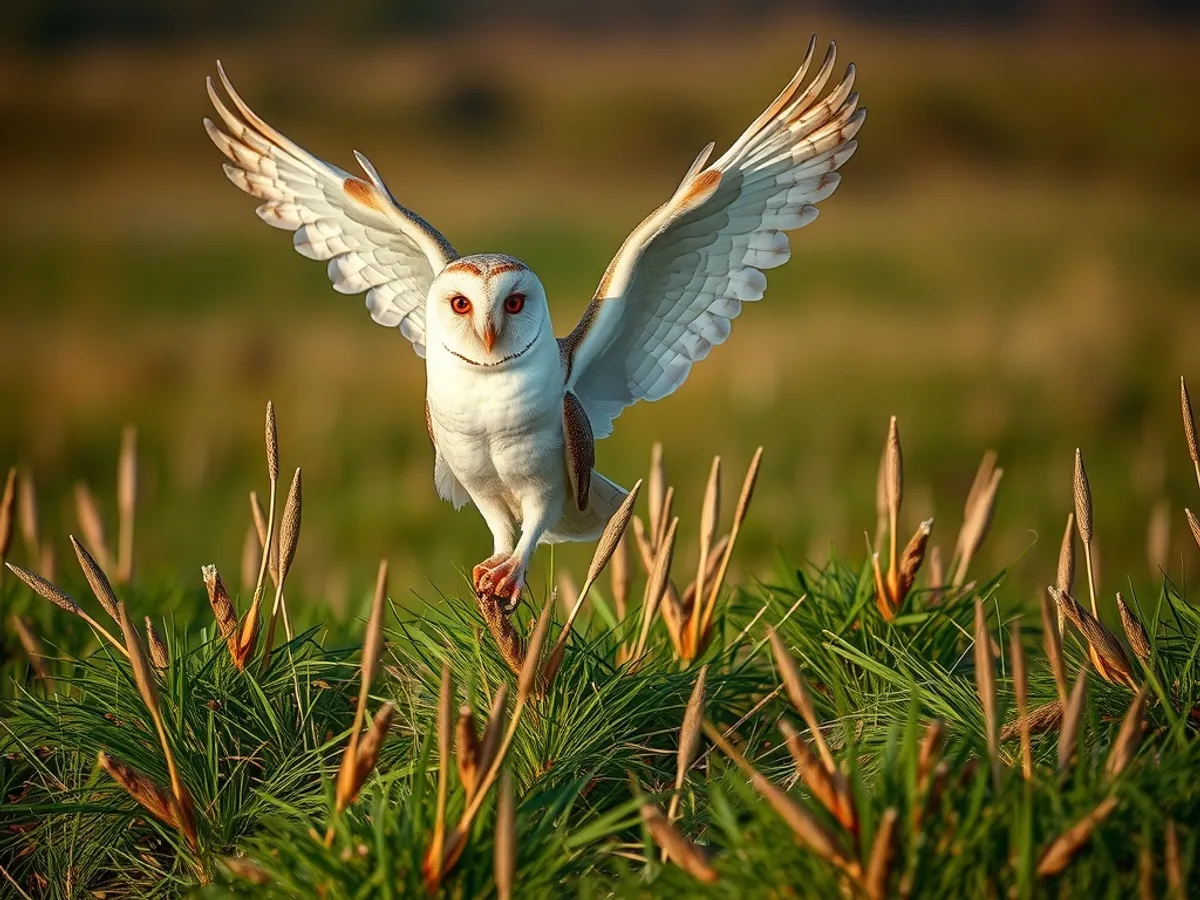
The barn owl hunts by sound alone, and it can do it in total darkness. Its ear openings are asymmetrical, one set higher than the other, so a sound arriving from below reaches one ear a fraction before the other and a sound from above does the reverse. That tiny discrepancy gives it vertical resolution, while the ordinary left-right difference gives it horizontal, so the owl builds a genuine three-dimensional fix on a mouse it has never seen. The heart-shaped face is not decoration but a parabolic dish of stiff feathers that funnels sound into those ears; an owl whose facial ruff is disturbed hunts far less well. Its flight is effectively silent, achieved by a comb-like fringe along the leading edge of the flight feathers that breaks up the turbulence which would otherwise make noise, and a velvety surface that damps what remains. That silence works twice over: it hides the owl from the prey, and it keeps the owl's own wingbeats from drowning out the sounds it is listening for. It swallows prey whole and coughs up the bones and fur as pellets.
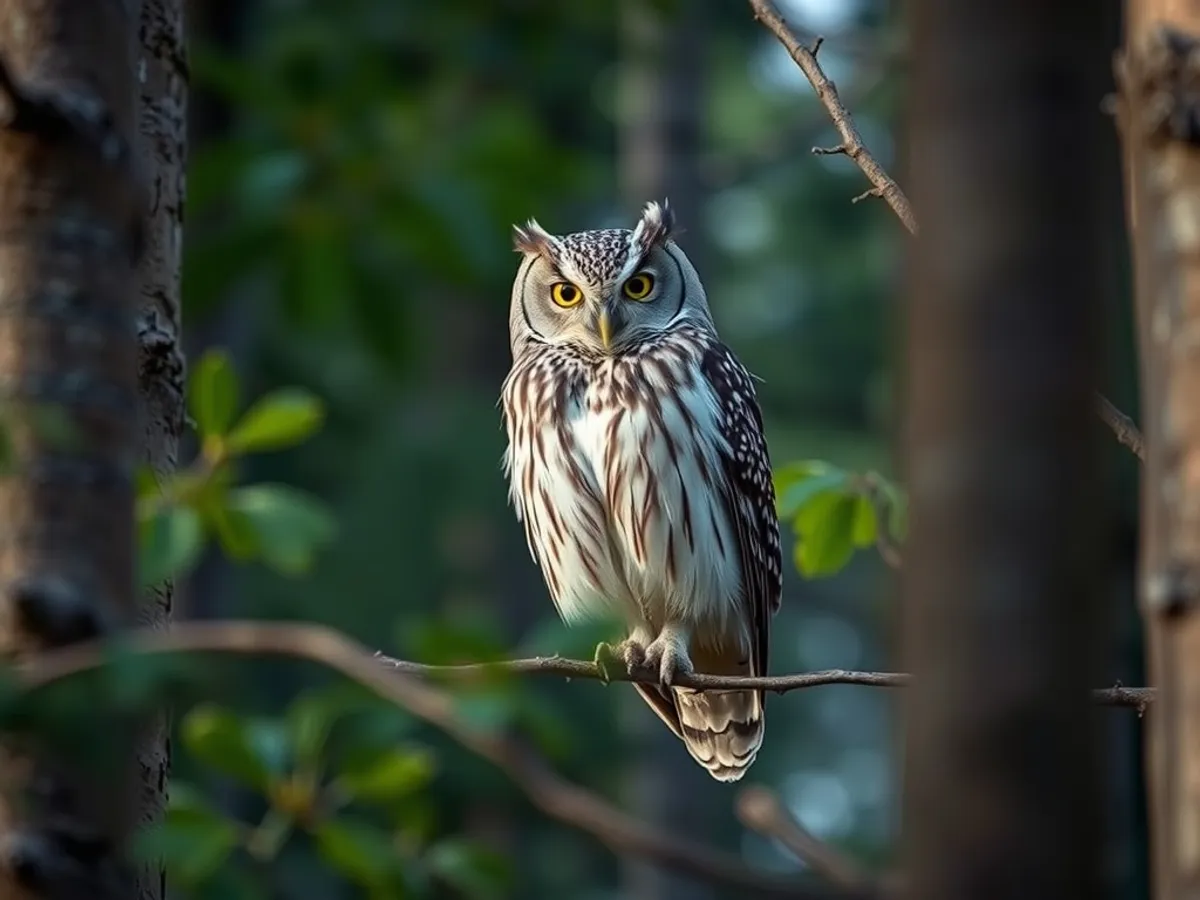
Barred Owl
Strix varia
The barred owl is the bird behind the classic North American hoot rendered as "who cooks for you, who cooks for you-all", and unlike most owls it has deep brown-black eyes rather than yellow ones. It has also become a conservation problem entirely by its own initiative. Historically an owl of eastern hardwood forests, it spread west across the Canadian boreal during the twentieth century — helped by fire suppression and tree planting on the previously treeless plains — and arrived in the Pacific Northwest, where it is bigger, more aggressive and far more generalist than the endangered northern spotted owl. It outcompetes spotted owls, evicts them, and hybridises with them, and the United States has responded with the deeply uncomfortable policy of shooting large numbers of barred owls to buy time for the species they displaced. Barred owls are unusually catholic feeders for an owl, taking crayfish, frogs and fish as readily as rodents.
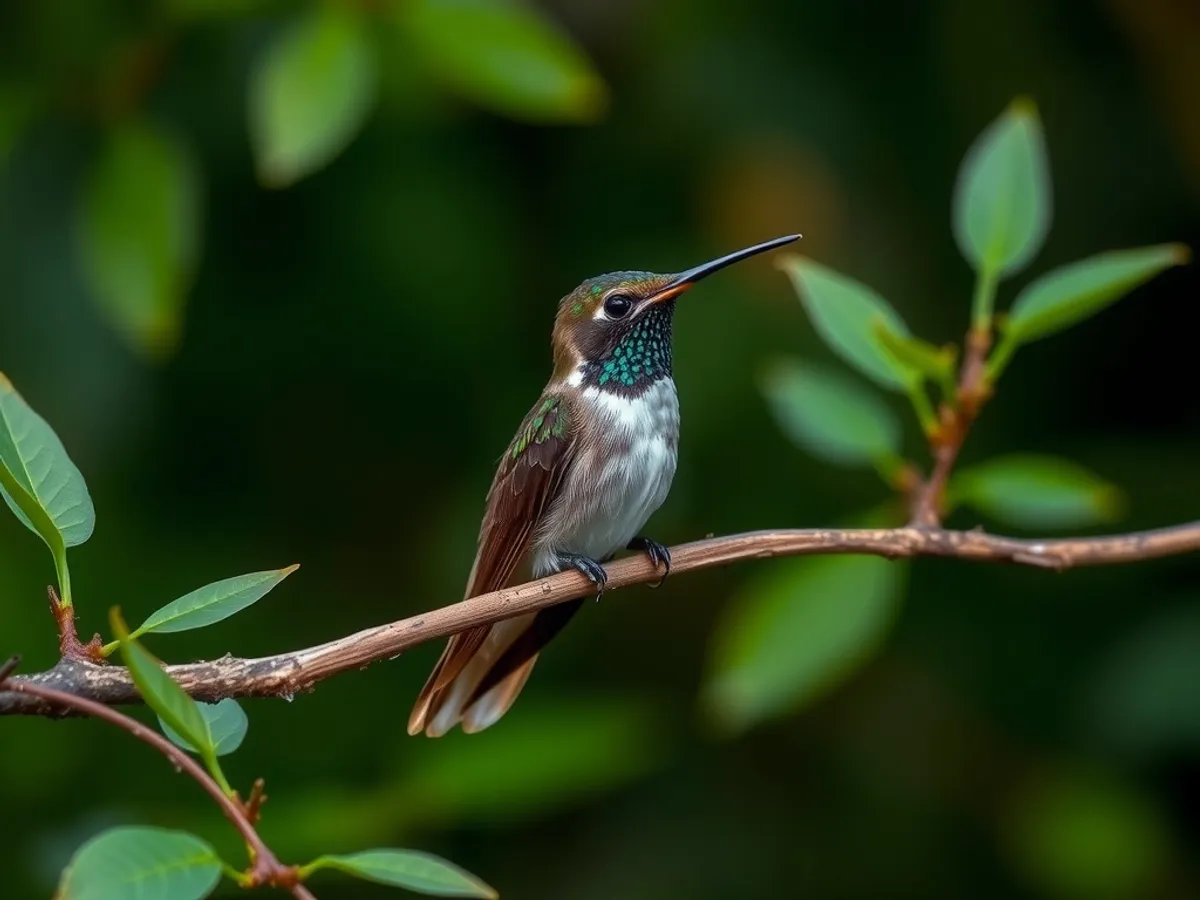
Bee Hummingbird
Mellisuga helenae
The bee hummingbird of Cuba is the smallest bird in the world: about 5 to 6 cm long, and weighing under 2 g — less than a US penny — with a nest the size of a thimble and eggs the size of a coffee bean. Everything about it is pushed against physiological limits. Its heart can beat over 1,200 times a minute, its wings beat up to about 80 times a second in a courting male, and it must consume roughly half its body mass in food each day and drink many times its own weight in nectar, because at that size the ratio of surface area to volume makes heat loss brutal. It cannot survive a night at that metabolic rate, so it enters torpor: the body temperature collapses, the heart rate drops to a fraction of normal, and the bird becomes cold and unresponsive on its perch until dawn. It is endemic to Cuba and the Isla de la Juventud, and it is so small that it is routinely mistaken for a large insect, which is exactly what its name records.
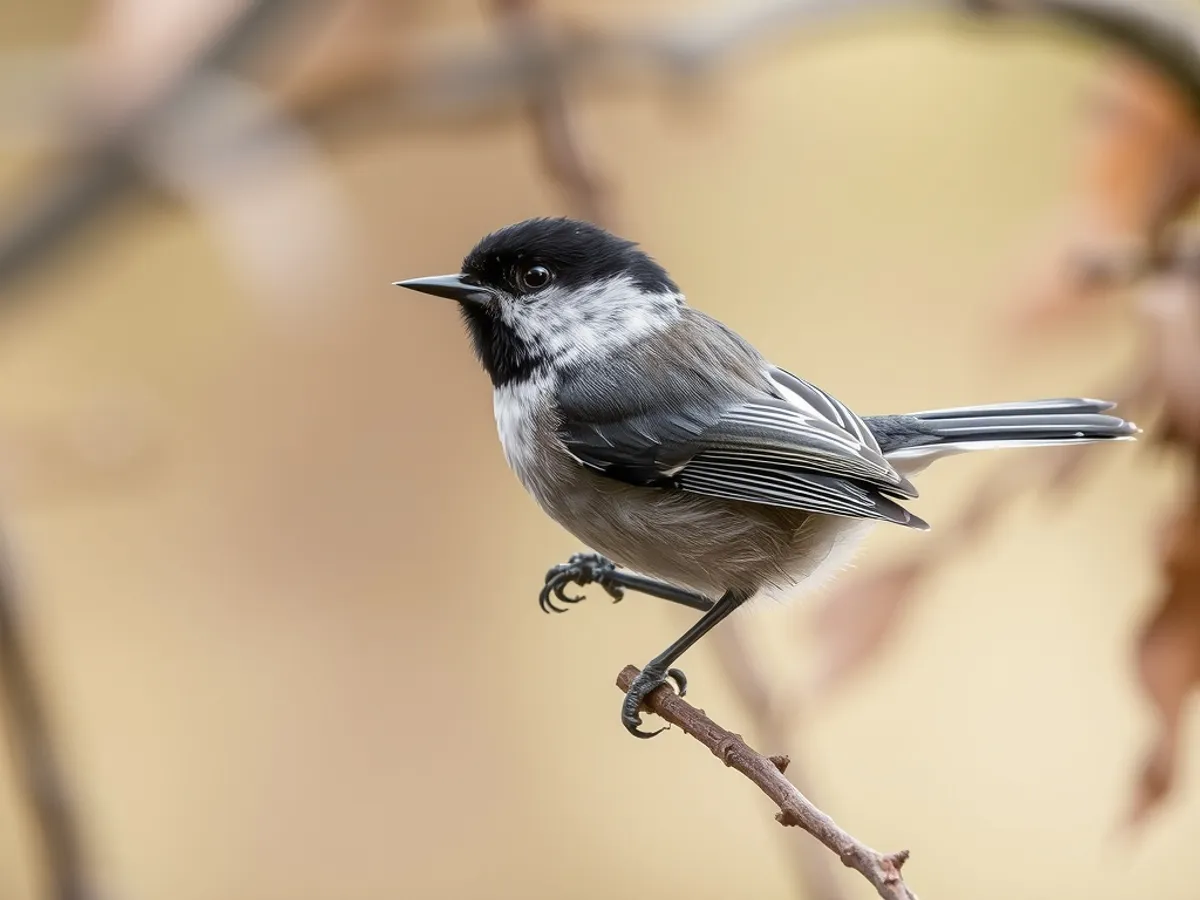
Black-capped Chickadee
Poecile atricapillus
A chickadee caches thousands of individual seeds through autumn, hiding each one in a different crevice, and it can recover them weeks later — a memory task that would defeat most animals. To do it, the bird grows its own brain: the hippocampus, the region handling spatial memory, physically enlarges in autumn with a burst of new neurons and shrinks again in spring, a seasonal remodelling that was first demonstrated in food-caching birds like this one. Its call is the other famous thing about it, and it is a genuine language-like system. The number of "dee" notes appended to a "chick-a-dee" encodes the danger of a predator, and it is scaled by threat, not by size: a small, agile pygmy owl that can actually catch a chickadee gets many more dees than a big, clumsy great horned owl. Other species, including nuthatches and warblers, eavesdrop on those calls and respond appropriately, so the chickadee is effectively the neighbourhood's alarm system.