
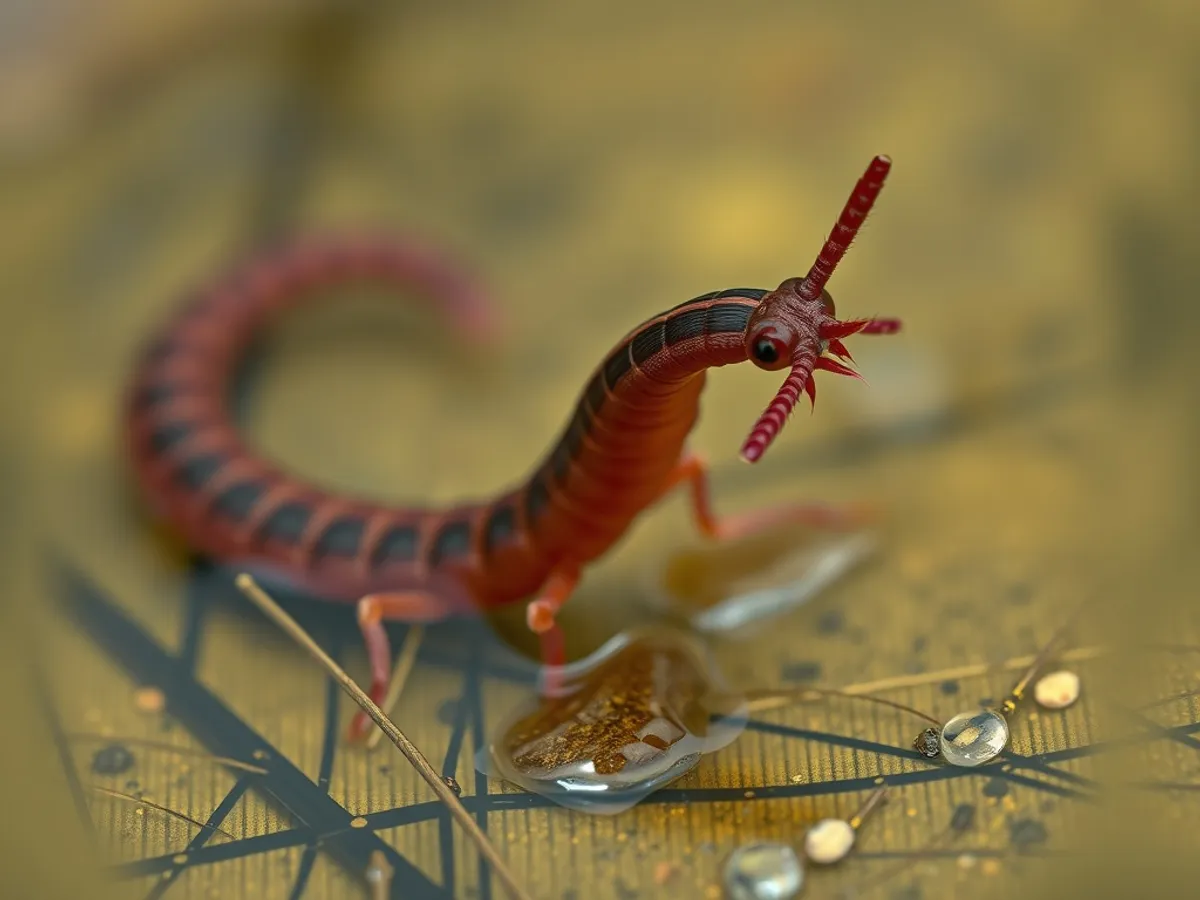
About the Horsehair Worm
Horsehair worms (phylum Nematomorpha) are long, thin, brown, apparently featureless threads that show up in puddles, horse troughs and swimming pools, which is where the old folk belief came from that horse hairs falling into water came alive. The reality is stranger. The adult worm has no functional mouth or gut - it does not eat at all, and its entire adult existence is a few weeks of mating in water. Its life is spent inside a host. Larvae are eaten by an aquatic insect, encyst, and are then transferred when that insect is eaten by a cricket, grasshopper or mantis on land. Inside the terrestrial host the worm grows to many times the length of the insect, coiled tightly in the body cavity, consuming its fat body. Then it must return to water, and it makes the host take it there: infected crickets abruptly seek out and jump into streams and pools, at which point the worm bursts out through the cuticle and swims away, leaving the host to drown or be eaten. Proteomic work by French researchers found the worm produces molecules that mimic the host's own nervous system proteins, including those affecting geotaxis and circadian behaviour, effectively hijacking the insect's navigation.
Fascinating facts
Parasite to Predator
Horsehair worm larvae live as internal parasites of insects, but the adult worms are free-living and do not eat at all.
Aquatic Adulthood
Adult horsehair worms require aquatic environments to reproduce, often emerging from their host directly into water.
Mind Control
Horsehair worm larvae can alter the behavior of their host insect, compelling it to seek water so the worm can complete its life cycle.
Detailed description
Horsehair worms (phylum Nematomorpha) are elongated, thread-like invertebrates, typically ranging from 50 to 100 millimeters in length, though some species can reach up to 2 meters. Their cylindrical, unsegmented bodies are covered with a tough, flexible cuticle and lack distinct external features such as parapodia or setae. The anterior end is often slightly tapered, while the posterior end may be blunt or rounded, sometimes with a bifurcated tail in males. Internally, they possess a simple digestive tract that is non-functional in adults, as adult horsehair worms do not feed. The nervous system is relatively simple, with a dorsal nerve cord and a circumpharyngeal nerve ring. Larvae are highly specialized parasites, infecting a range of terrestrial and aquatic arthropods, including orthopterans (crickets, grasshoppers), beetles, mantids, and occasionally crustaceans. Upon reaching maturity, larvae manipulate their host's behavior, often inducing them to seek water, where the adult worm emerges. Adults are free-living in freshwater or moist terrestrial environments, where they swim or crawl in search of mates. Horsehair worms exhibit sexual reproduction, with males and females engaging in brief courtship behaviors before copulation. Their life cycle is complex, involving both parasitic and free-living stages, and they are known for their ability to coil into tight knots, reminiscent of the Gordian knot, which is the origin of their common name.
Did you know?
Horsehair worms were once believed to spontaneously generate from horsehair left in water, a myth that persisted for centuries.
Research & sources
Wikipedia summary
Nematomorpha are a phylum of parasitoid animals superficially similar to nematode worms in morphology, hence the name. Most species range in size from 50 to 100 millimetres, reaching 2 metres (79 in) in extreme cases, and 1 to 3 millimetres in diameter. Horsehair worms can be discovered in damp areas, such as watering troughs, swimming pools, streams, puddles, and cisterns. The adult worms are free-living, but the larvae are parasitic on arthropods, such as beetles, cockroaches, mantises, orthopterans, and crustaceans. About 351 freshwater species are known and a conservative estimate suggests that there may be about 2000 freshwater species worldwide. The name "Gordian" stems from the legendary Gordian knot. This relates to the fact that nematomorphs often coil themselves in tight balls that resemble knots.
Behaviour & social structure
Horsehair worms display a dual lifestyle: parasitic as larvae and free-living as adults. Larvae actively seek out and penetrate suitable arthropod hosts, often via ingestion of cysts or direct penetration. Once inside, they grow by absorbing nutrients from the host's body cavity, sometimes reaching lengths several times greater than the host. As they approach maturity, the worms secrete neuroactive compounds that alter host behavior, compelling the host to seek water. Upon contact with water, the adult worm rapidly exits the host, often resulting in the host's death. Adult worms are solitary and do not form social groups. They exhibit undulating swimming motions and can coil or knot themselves, possibly as a defensive mechanism or during mating. Adults do not feed and are primarily focused on reproduction, often congregating in aquatic environments during the breeding season.
Reproduction & life cycle
Reproduction in horsehair worms is sexual, with distinct male and female individuals. Mating typically occurs in aquatic environments, where males locate females using chemosensory cues. Courtship involves the male wrapping around the female and transferring sperm via direct contact, as horsehair worms lack copulatory organs. Females lay large numbers of eggs, often in gelatinous strings or masses attached to submerged vegetation or substrates. Egg development can take several weeks to months, depending on environmental conditions. Upon hatching, larvae are free-swimming but must quickly find a suitable host to continue development. There is no parental care after egg deposition. Breeding seasons vary by species and region but are generally synchronized with periods of high host availability and suitable aquatic conditions.
Adaptations & survival
Nematomorphs possess several unique adaptations for their complex life cycle. Their tough, flexible cuticle protects them from desiccation and host immune responses. Larvae have specialized hooks and stylets for penetrating host tissues. The ability to manipulate host behavior through neurochemical means is a remarkable evolutionary adaptation, ensuring successful transition from host to aquatic environment. Adults have reduced or absent digestive systems, reflecting their non-feeding lifestyle. Their elongated, flexible bodies facilitate movement through both host tissues and aquatic environments. The capacity to coil into knots may deter predators or aid in mating encounters.
Cultural significance
Horsehair worms have intrigued humans for centuries, often appearing in folklore and myth. In many cultures, their sudden appearance in water troughs or puddles led to the belief that they spontaneously generated from horsehair, hence the common name. The Gordian knot reference reflects their tendency to form tangled masses. In some regions, they have been regarded as omens or symbols of transformation. There are no known traditional medicinal or practical uses for horsehair worms, and they are generally considered harmless to humans and domestic animals.
Recent research
Recent research has focused on the molecular mechanisms underlying host manipulation, with studies identifying neuroactive peptides and proteins secreted by the larvae. Genomic and transcriptomic analyses have provided insights into the evolutionary history of Nematomorpha and their relationship to nematodes. Ecological studies have examined their role in regulating insect populations and their potential as biological control agents. Ongoing research is investigating the diversity of nematomorphs in understudied regions, with molecular techniques revealing cryptic species and greater biodiversity than previously recognized.
Videos
Habitat
Freshwater
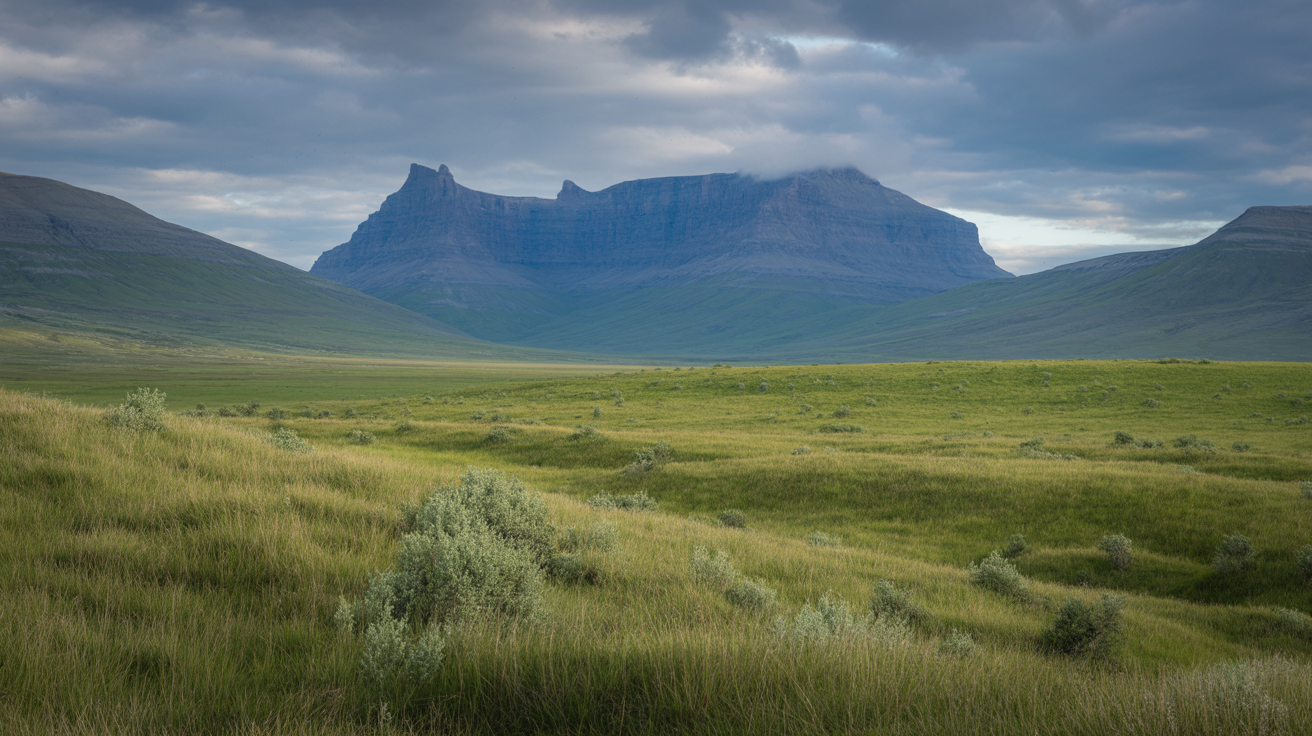 Various Continental Regions
Grassland
Open areas dominated by grasses rather than trees, supporting numerous herbivores and their predators.
 Global
Forest
Wooded areas with significant tree cover and diverse plant and animal communities.
 Global
Freshwater
Lakes, rivers, and wetlands with diverse aquatic ecosystems.
Conservation
The Horsehair Worm is currently classified as Least Concern on the IUCN Red List.
Threats & challenges
Currently, horsehair worms are not considered threatened and are classified as Least Concern. Their populations are generally stable due to their wide distribution and broad host range. However, local populations may be impacted by water pollution, habitat destruction, and pesticide use, which can reduce host availability or contaminate aquatic habitats. Climate change may also alter the distribution of both worms and their hosts. Despite these challenges, there is no evidence of significant population declines at a global scale.
Taxonomy
Scientific name
Gordius spp.
- Kingdom
- Animalia
- Phylum
- Nematomorpha
- Class
- Gordioida
- Order
- Gordioidea
- Family
- Gordiidae
- Genus
- Gordius
- Species
- various
Community notes
Share your observations about the Horsehair Worm.
No community notes yet. Be the first!
Discover more wildlife
More fascinating animals from the encyclopedia.