
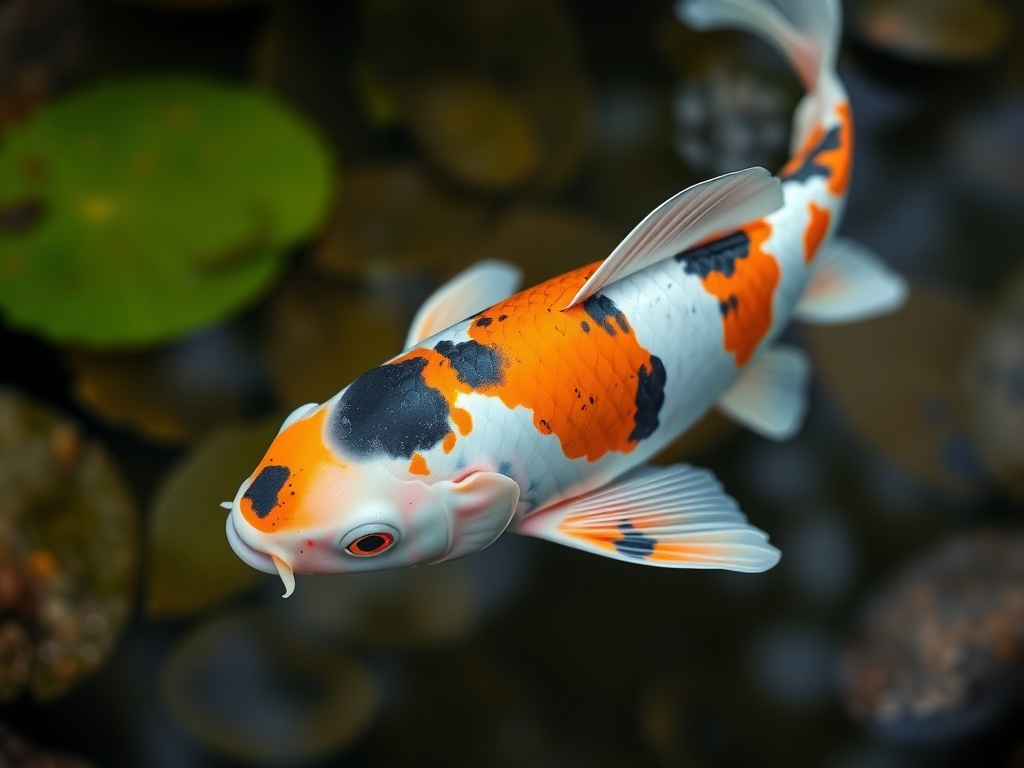
About the Koi Fish
The Koi fish is a domesticated variety of the Amur carp, selectively bred for its vibrant colors and patterns. Originating in Japan, Koi are highly prized ornamental fish, often kept in outdoor ponds and water gardens. They display a wide range of hues including white, black, red, yellow, blue, and cream, and are known for their graceful swimming and hardy nature. Koi can recognize their caregivers and may even eat from their hands, making them popular among aquarists and garden enthusiasts. Their cultural significance in East Asia is immense, symbolizing luck, prosperity, and perseverance.
Fascinating facts
Colorful Varieties
Koi are bred into countless color patterns, with some individual fish fetching tens of thousands of dollars at auction.
Social Behavior
Koi are social fish that often swim in groups and can recognize and respond to their caregivers.
Genetic Origins
All Koi are descended from the common Amur carp (Cyprinus rubrofuscus), with selective breeding starting in Japan in the early 19th century.
Detailed description
Koi fish (Cyprinus rubrofuscus) are large, ornamental cyprinids renowned for their striking coloration and pattern diversity, achieved through centuries of selective breeding. Adult koi typically reach lengths of 60–90 cm (24–36 inches), with some individuals documented at over 1 meter (39 inches) and weights exceeding 10 kg (22 lbs) under optimal conditions. Their bodies are elongated and laterally compressed, with barbels at the corners of the mouth aiding in substrate foraging. Koi possess a well-developed lateral line system for detecting vibrations and changes in water pressure. Their skin is covered in large, cycloid scales, and they exhibit a remarkable array of color morphs, including Kohaku (red and white), Sanke (red, white, and black), and Ogon (metallic gold or platinum). Koi are diurnal, displaying active foraging and social behaviors during daylight hours. They are highly adaptable, tolerating a wide range of water temperatures (4–35°C), but thrive best between 15–25°C. Social by nature, koi often form loose shoals and communicate via body language and chemical cues. Their lifespan is notable, with many individuals living 25–35 years, and some documented cases surpassing 50 years, especially in optimal, low-stress environments. Koi are omnivorous, feeding on aquatic invertebrates, plant matter, algae, and commercial pellets. Their reproductive strategy involves broadcast spawning, with females releasing thousands of eggs onto submerged vegetation, which are then externally fertilized by males.
Did you know?
The oldest known Koi, named Hanako, reportedly lived to be 226 years old, as determined by examining its scales.
Research & sources
Behaviour & social structure
Koi exhibit complex social behaviors, often forming hierarchies within groups, with dominant individuals leading feeding frenzies. They are opportunistic feeders, using their sensitive barbels to locate food items such as insects, crustaceans, and plant debris on pond bottoms. Koi are known for their trainability and can be conditioned to respond to feeding cues, even recognizing individual humans and associating them with food. They are generally peaceful but may display mild territoriality during breeding or when resources are scarce. Koi are most active during daylight, spending nights resting near the pond bottom. In colder climates, they enter a state of torpor during winter, reducing metabolic activity and ceasing feeding. Social interactions include tactile contact, parallel swimming, and occasional nipping, which is usually non-aggressive.
Reproduction & life cycle
Koi are oviparous, with spawning typically triggered by rising water temperatures in spring (usually 17–22°C). Breeding involves vigorous courtship, with males chasing and nudging gravid females to stimulate egg release. Females can lay between 50,000 and 100,000 adhesive eggs, which attach to aquatic plants or spawning mats. Fertilization is external, and eggs hatch within 4–7 days, depending on temperature. There is no parental care; fry are left to fend for themselves and are vulnerable to predation, including cannibalism by adult koi. Sexual maturity is reached at 2–3 years, though optimal breeding age is considered 3–5 years for both sexes. Selective breeding programs in Japan and worldwide have refined color, pattern, and body shape traits.
Adaptations & survival
Koi possess several adaptations for survival in variable freshwater environments. Their gills are efficient at extracting oxygen even in low-oxygen conditions, and their ability to tolerate a broad temperature range allows them to survive seasonal fluctuations. The barbels serve as tactile and chemosensory organs, aiding in foraging under murky conditions. Koi can alter their metabolism in response to temperature, entering torpor during cold periods to conserve energy. Their coloration, while a result of artificial selection, can provide camouflage in natural settings. Koi also exhibit a strong immune response, with mucus-covered skin acting as a barrier against pathogens.
Cultural significance
Koi hold profound cultural importance, especially in East Asia. In Japan, koi are symbols of perseverance, strength, and good fortune, often featured in art, tattoos, and folklore. The annual Koi Nobori festival celebrates koi as emblems of children's health and success. Chinese legends associate koi with transformation and ambition, epitomized by the myth of koi leaping the Dragon Gate to become dragons. Koi keeping is a refined hobby, with prized specimens fetching high prices at international auctions. Koi ponds are integral to traditional Japanese gardens, reflecting harmony, tranquility, and aesthetic beauty.
Recent research
Recent research has focused on koi genetics, particularly the inheritance of color and pattern traits, revealing complex polygenic mechanisms. Studies on koi immune responses have advanced understanding of disease resistance, leading to improved management practices. Investigations into koi cognition have demonstrated their capacity for associative learning and memory, supporting anecdotal reports of individual recognition. Environmental research has examined the ecological impact of feral koi populations, which can disrupt native aquatic ecosystems through sediment disturbance and competition. Advances in aquaculture have improved breeding efficiency and disease control, supporting both ornamental and conservation goals.
Videos
Habitat
Freshwater ponds, lakes, and slow-moving rivers

Conservation
The Koi Fish is currently classified as Least Concern on the IUCN Red List.
Threats & challenges
While wild populations of Cyprinus rubrofuscus are stable, ornamental koi face several challenges. Disease outbreaks, particularly viral (Koi Herpesvirus) and bacterial infections, pose significant risks in densely stocked ponds. Habitat degradation, water pollution, and introduction of invasive species can impact both wild and feral populations. Overbreeding and inbreeding in the ornamental trade may reduce genetic diversity, increasing susceptibility to disease. Climate change, leading to unpredictable temperature shifts and extreme weather, may also affect koi health and breeding cycles. Despite these challenges, koi are not currently threatened in the wild and are classified as Least Concern by the IUCN.
Taxonomy
Scientific name
Cyprinus rubrofuscus
- Kingdom
- Animalia
- Phylum
- Chordata
- Class
- Actinopterygii
- Order
- Cypriniformes
- Family
- Cyprinidae
- Genus
- Cyprinus
- Species
- rubrofuscus
Where to see a koi fish
1 zoo and aquarium in 1 country are recorded as keeping this species.
Community notes
Share your observations about the Koi Fish.
No community notes yet. Be the first!
Discover more wildlife
More fascinating animals from the encyclopedia.