
About the Muskrat
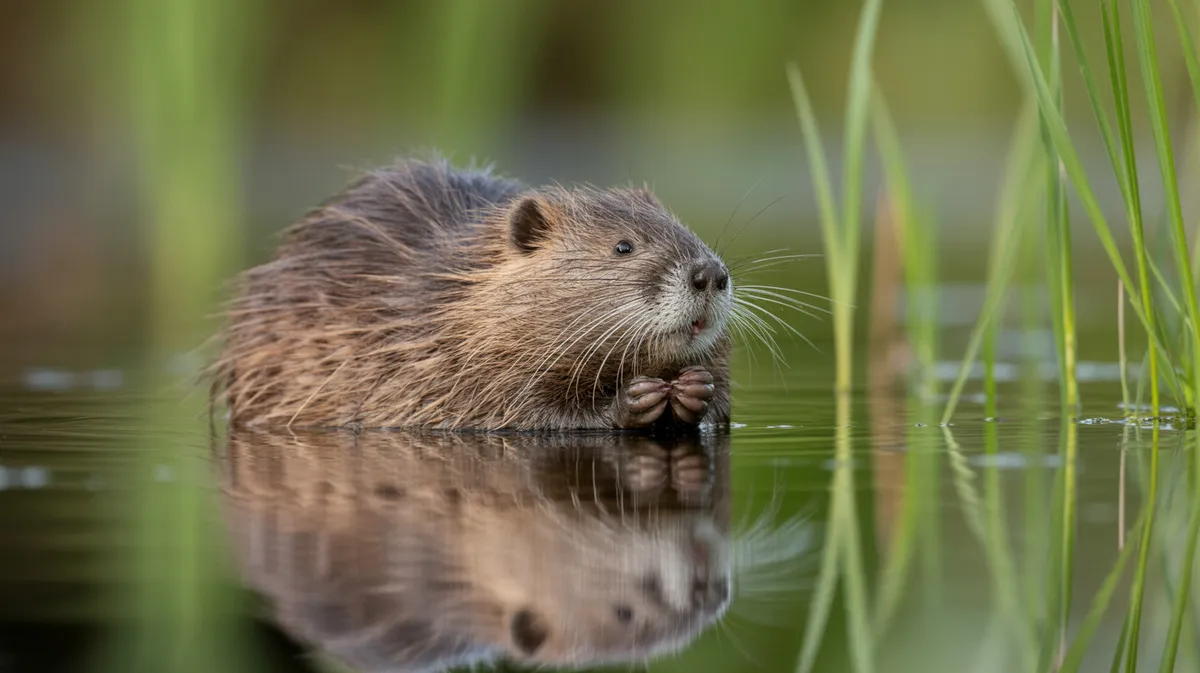
Ondatra zibethicus is a large vole, not a rat and not a beaver, though it lives a distinctly beaver-like life. It is North America's most important freshwater furbearer by sheer volume — tens of millions of pelts were traded in the twentieth century — and it is now established across Europe and Asia after escapes and introductions from fur farms beginning in Bohemia in 1905. Where beavers build dams, muskrats build push-ups and lodges from cattail and bulrush cemented with mud, and in doing so they cut out large open patches in dense marsh vegetation, creating the interspersion of water and cover that ducks, rails and bitterns depend on. In marshes that lose muskrats, cattail can close over completely and waterbird diversity crashes. Muskrats can stay submerged for 15 to 20 minutes by tolerating high blood carbon dioxide and by slowing the heart, and they gnaw underwater with lips that close behind the incisors, so water never enters the mouth. The laterally flattened, scaly tail is used as a rudder and a scull. The name comes from paired perineal glands that produce a strong musky secretion, used to mark territory and once harvested for perfumery. Populations are famously cyclic, boom and crash on roughly a decade.
Fascinating facts
Wetland Engineers
Muskrats help shape wetland environments by building lodges and feeding platforms, which create habitat diversity for other species.
Ever-Growing Teeth
Like other rodents, muskrats have incisors that grow continuously and are kept in check by constant gnawing.
Nighttime Activity
Muskrats are most active at night and during dawn and dusk, minimizing exposure to predators while foraging.
Detailed description
The muskrat (Ondatra zibethicus) is a robust, semi-aquatic rodent characterized by a stocky body measuring 40–70 cm in total length, including a laterally compressed, scaly tail that accounts for nearly half its length. Adults typically weigh between 0.6 and 2 kg, with males slightly larger than females. Their dense, waterproof fur consists of a soft undercoat and longer guard hairs, providing insulation in cold aquatic environments. Muskrats possess partially webbed hind feet, aiding in propulsion through water, while their forepaws are dexterous for manipulating food and building materials. The head is blunt with small eyes and ears, which can close to prevent water entry during submersion. Muskrats are primarily crepuscular and nocturnal, spending daylight hours in their lodges or burrows. They are skilled swimmers and divers, capable of remaining submerged for up to 15–20 minutes by slowing their heart rate and utilizing oxygen stored in their muscles. Socially, muskrats are generally solitary outside the breeding season, though family groups may share lodges. Their ecological engineering—building lodges and feeding platforms from vegetation—significantly shapes wetland habitats, promoting biodiversity and open water areas.
Did you know?
Muskrats can swim underwater for up to 15 minutes by slowing their heart rate, allowing them to evade predators and find food.
Research & sources
Wikipedia summary
The muskrat or common muskrat is a medium-sized semiaquatic rodent native to North America and an introduced species in parts of Europe, Asia, and South America.
Behaviour & social structure
Muskrats exhibit a range of complex behaviors adapted to their wetland environments. They are primarily herbivorous, feeding on cattails, bulrushes, water lilies, and other aquatic plants, but will occasionally consume small aquatic animals such as mussels, frogs, and fish. Foraging is typically performed at night or during twilight hours, with muskrats often transporting food to feeding platforms or their lodges. They construct elaborate lodges from vegetation and mud, or burrow into banks, with underwater entrances to deter predators. Territoriality is pronounced during the breeding season, with individuals marking boundaries using musk glands located near the tail. Vocalizations are rare, but muskrats may communicate through squeaks, squeals, and tail slaps on the water. Daily routines involve alternating periods of foraging, grooming, and resting, with increased activity during spring and summer when food is abundant.
Reproduction & life cycle
Muskrats are prolific breeders, with mating occurring from late winter through early autumn, depending on latitude. In warmer regions, females may produce up to three litters per year, while in northern areas, one or two is typical. Gestation lasts approximately 28–30 days, after which females give birth to litters of 6–8 young (range 2–11). The altricial pups are born blind and hairless, but develop rapidly, opening their eyes at about two weeks and weaning at three to four weeks. Both parents may participate in nest maintenance, though the female provides the majority of care. Juveniles disperse from the natal lodge at 4–6 weeks, often establishing new territories nearby. High reproductive rates enable muskrat populations to recover quickly from periodic declines.
Adaptations & survival
Muskrats possess several key adaptations for aquatic life. Their dense, water-repellent fur and subcutaneous fat layer provide thermal insulation. The laterally flattened tail acts as a rudder, enhancing maneuverability in water. Partially webbed hind feet facilitate efficient swimming, while the ability to close their lips behind their incisors allows them to gnaw underwater without ingesting water. Muskrats can slow their metabolism and heart rate while submerged, extending dive times. Behavioral adaptations include the construction of lodges with underwater entrances for protection from predators and temperature extremes. Their capacity to exploit a wide range of wetland habitats, from marshes to irrigation canals, underpins their success as both native and introduced species.
Cultural significance
Muskrats have played a notable role in the fur trade, particularly in North America, where their pelts—marketed as 'musquash'—were highly valued. In Indigenous North American mythology, the muskrat is often depicted as a creator figure; for example, in several Algonquian traditions, the muskrat dives to the bottom of the primordial waters to bring up earth, forming the land. Muskrat meat has been consumed in some regions, especially during religious fasting periods, as it is considered aquatic and thus permissible. The animal also features in local folklore and as a symbol of industriousness and adaptability.
Recent research
Recent research has focused on the ecological impacts of muskrat engineering in wetland environments, demonstrating their role in maintaining open water and enhancing plant diversity. Genetic studies have clarified the phylogenetic relationships within the Arvicolinae subfamily, confirming Ondatra as a monotypic genus. Ongoing studies in Europe and Asia examine the ecological consequences of muskrat introductions, including competition with native water voles and effects on wetland vegetation. Disease ecology is another active area, with investigations into muskrat susceptibility to zoonotic pathogens and their role as reservoirs. Advances in remote sensing and population modeling are improving understanding of muskrat population dynamics and responses to environmental change.
Videos
Habitat
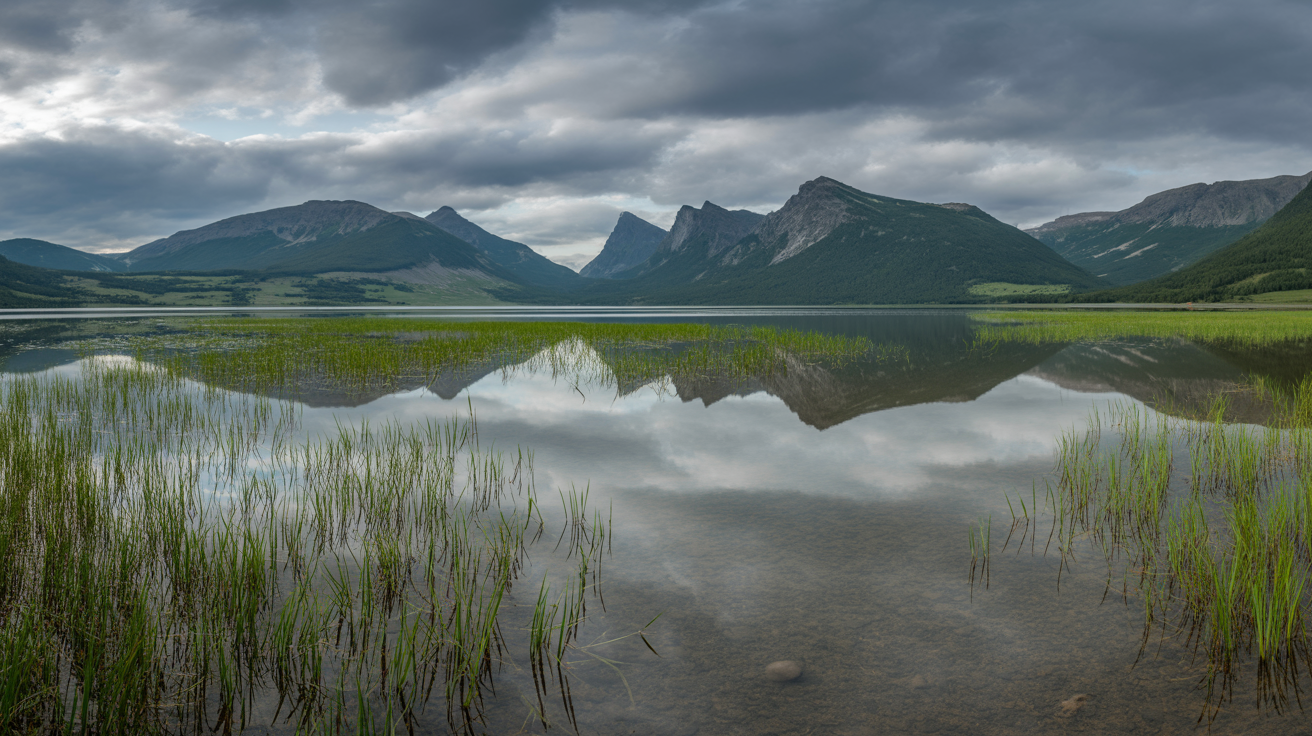
Freshwater wetlands
Conservation
The Muskrat is currently classified as Least Concern on the IUCN Red List.
Threats & challenges
While muskrats remain abundant and are listed as Least Concern by the IUCN, they face several localized threats. Habitat loss due to wetland drainage, pollution, and urbanization can reduce suitable environments. Predation by mink, otters, foxes, raptors, and large fish is significant, especially for juveniles. In some regions, muskrats are trapped for their fur, though commercial harvests have declined. Introduced populations in Europe and Asia can become invasive, damaging irrigation systems and competing with native species. Disease outbreaks, such as tularemia and Tyzzer's disease, can cause periodic population crashes. Climate change, altering wetland hydrology, may pose future challenges.
Taxonomy
Scientific name
Ondatra zibethicus
- Kingdom
- Animalia
- Phylum
- Chordata
- Class
- Mammalia
- Order
- Rodentia
- Family
- Cricetidae
- Genus
- Ondatra
- Species
- zibethicus
Community notes
Share your observations about the Muskrat.
No community notes yet. Be the first!
Discover more wildlife
More fascinating animals from the encyclopedia.