
About the Pearl danio
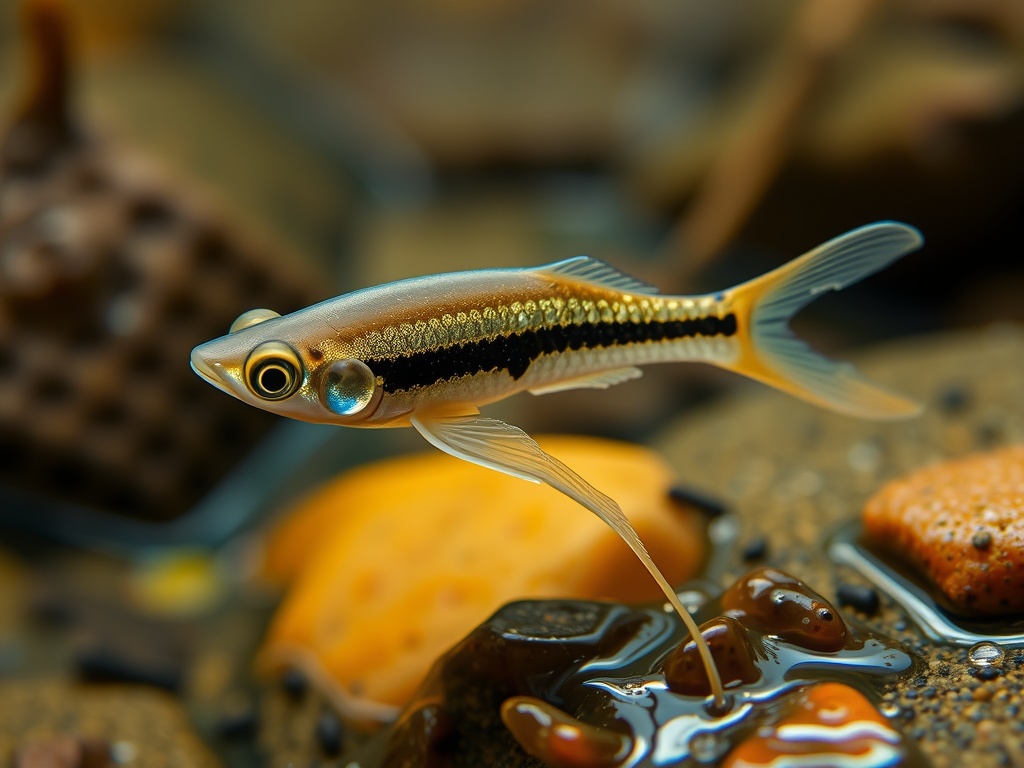
The Pearl danio is a small, vibrant freshwater fish known for its iridescent body with a striking pearly sheen and subtle pink or yellow hues. Native to Southeast Asia, especially Myanmar, Thailand, and Sumatra, this species thrives in clear, slow-moving streams and rivers. Pearl danios are peaceful, schooling fish often favored by aquarists due to their hardiness and lively behavior. Their streamlined bodies and active swimming make them a captivating presence in both wild habitats and aquariums.
Fascinating facts
Schooling Fish
Pearl danios are happiest and most active when kept in groups of six or more, as they are naturally schooling fish.
Iridescent Sheen
Their bodies display a shimmering, pearly iridescence that reflects light, making them especially beautiful under aquarium lighting.
Omnivorous Diet
Pearl danios eat a varied diet consisting of small insects, crustaceans, plant material, and commercial fish foods.
Detailed description
The Pearl danio (Danio albolineatus) is a small, streamlined cyprinid fish, typically reaching an adult length of 5–6.5 cm (2–2.6 inches). Its body is laterally compressed and displays a striking iridescent sheen, with coloration ranging from silvery-pink to pale gold or blue, often overlaid with subtle longitudinal stripes in hues of yellow, white, blue, or red. The fins are generally translucent with a faint yellow or orange tint, and the caudal fin is distinctly forked, aiding in its agile swimming. Pearl danios possess two pairs of short barbels near the mouth, which are sensory organs used for foraging. Sexual dimorphism is evident: females are generally larger with a fuller, rounder abdomen, especially when gravid, while males tend to be slimmer and more vividly colored. Their large eyes and upturned mouths are adaptations for midwater feeding. In the wild, they inhabit clear, slow-moving streams and rivers with dense marginal vegetation, often forming large, active schools. Their social nature and constant movement make them a prominent feature in their native habitats. The species is known for its resilience and adaptability, thriving in a range of water conditions, which contributes to its popularity in the aquarium trade.
Did you know?
Pearl danios were one of the earliest tropical fish species introduced to the aquarium hobby, dating back to the early 1900s.
Research & sources
Wikipedia summary
The pearl danio is a tropical, freshwater ray-finned fish belonging to the family Danioinidae. Originating in Sumatra, Myanmar, and Thailand and Vietnam ,this fish is sometimes found in aquariums by fish-keeping hobbyists. It grows to a maximum length of 2.6 inches (6.6 cm) and lives for around five years. The fish could have a brownish-yellow, pink, or a silver body and two light yellow/white or blue/red stripes. It has an iridescent look. The female fish has two pairs of barbels.
Behaviour & social structure
Pearl danios are diurnal and highly social, exhibiting pronounced schooling behavior for both predator avoidance and social cohesion. They are fast, agile swimmers, often occupying the upper and middle water columns. In the wild, they feed opportunistically on small invertebrates, zooplankton, insect larvae, and plant matter, using their barbels to detect food particles. In captivity, they readily accept a variety of foods, including flakes, live, and frozen diets. Aggression is minimal, though minor hierarchical disputes may occur, especially among males during breeding displays. Their schooling instinct is strong; individuals kept alone or in small groups may become stressed or display abnormal behavior. Pearl danios are known for their exploratory nature, frequently darting through vegetation and open water. At night, they seek shelter among plants or submerged debris, reducing activity to conserve energy.
Reproduction & life cycle
Pearl danios are oviparous, engaging in group spawning rather than forming monogamous pairs. Breeding typically occurs at dawn, triggered by rising temperatures and increased daylight, often coinciding with the onset of the rainy season in their native range. Males display intensified coloration and actively chase females, nudging them to stimulate egg release. Females scatter hundreds of adhesive eggs among aquatic plants or fine-leaved substrates. There is no parental care; adults may consume eggs if not separated. Incubation lasts 24–36 hours at 24–26°C (75–79°F), after which larvae hatch and become free-swimming within 3–5 days. Rapid growth is typical, with juveniles reaching sexual maturity in 4–6 months under optimal conditions. In captivity, selective breeding has produced several color morphs, but wild-type forms remain common.
Adaptations & survival
Pearl danios exhibit several adaptations for survival in dynamic freshwater environments. Their iridescent coloration provides camouflage by reflecting ambient light, making them less visible to predators. The streamlined body and deeply forked tail enable swift, agile swimming, facilitating both escape from threats and efficient foraging. Barbels enhance tactile and chemical sensing, allowing detection of food in low-visibility conditions. Schooling behavior reduces individual predation risk and improves foraging efficiency. Physiologically, they tolerate a wide range of water parameters, including variable pH (6.0–8.0) and temperature (18–28°C), which allows them to exploit diverse habitats and withstand environmental fluctuations.
Cultural significance
While not prominent in folklore or traditional medicine, Pearl danios have significant cultural value as ornamental fish. They have been popular in the aquarium trade since the early 20th century, prized for their hardiness, peaceful temperament, and attractive appearance. Their ease of care and breeding has made them a staple in educational and hobbyist settings, where they are often used to teach basic principles of fish biology and aquatic ecology. In some Southeast Asian regions, they are occasionally collected for local markets, but their primary significance remains within the global aquarium community.
Recent research
Recent research on Danio albolineatus has focused on its genetics, reproductive biology, and ecological adaptability. Comparative studies with the closely related zebrafish (Danio rerio) have provided insights into pigment cell development, as Pearl danios display unique xanthophore (yellow pigment cell) patterns. Ongoing studies investigate their resilience to environmental stressors, making them a model for understanding adaptation in freshwater fishes. Additionally, their schooling behavior and social dynamics are subjects of ethological research, contributing to broader knowledge of collective animal behavior. Conservation genetics projects are monitoring population structure to detect potential impacts of habitat fragmentation.
Videos
Habitat
Freshwater streams and rivers

Conservation
The Pearl danio is currently classified as Least Concern on the IUCN Red List.
Threats & challenges
Currently assessed as Least Concern by the IUCN, Pearl danios have stable populations across their native range. However, localized threats include habitat degradation from agricultural runoff, deforestation, and pollution, which can reduce water quality and aquatic vegetation. Over-collection for the aquarium trade is not considered a significant threat due to their prolific breeding and widespread distribution. Climate change and increasing human encroachment may pose future risks by altering hydrological regimes and fragmenting habitats. Conservation efforts focus on habitat preservation and monitoring wild populations to ensure long-term viability.
Taxonomy
Scientific name
Danio albolineatus
- Kingdom
- Animalia
- Phylum
- Chordata
- Class
- Actinopterygii
- Order
- Cypriniformes
- Family
- Cyprinidae
- Genus
- Danio
- Species
- albolineatus
Community notes
Share your observations about the Pearl danio.
No community notes yet. Be the first!
Discover more wildlife
More fascinating animals from the encyclopedia.