
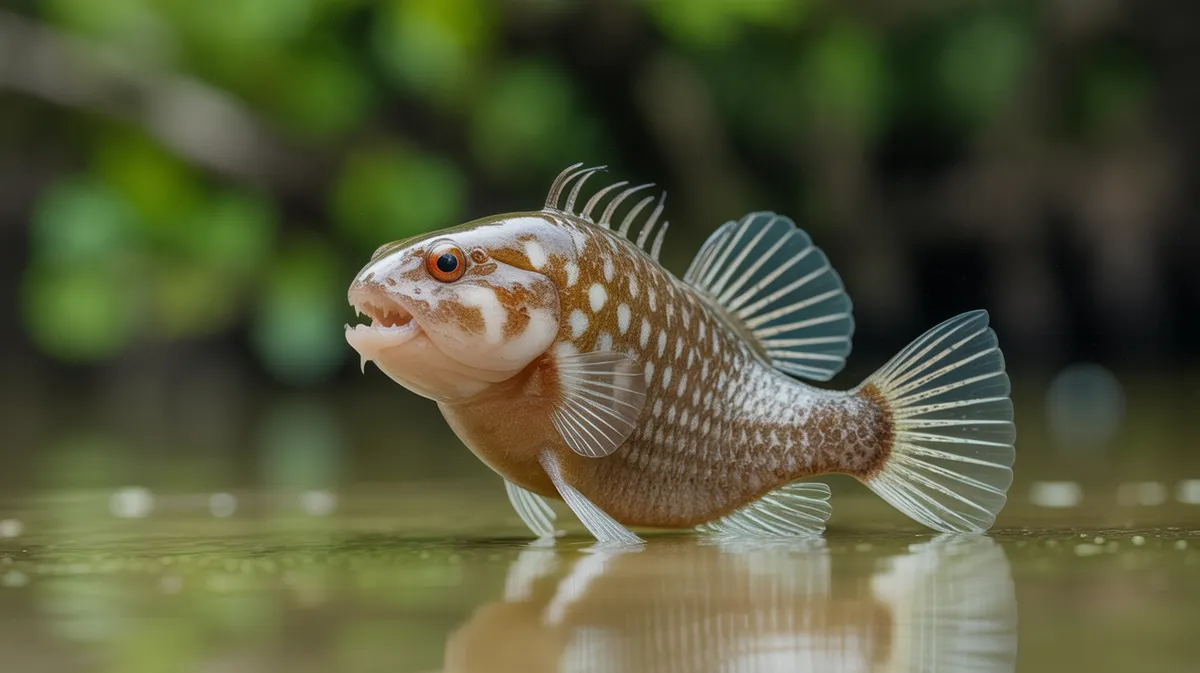
About the Spotted Scat
The Spotted Scat is a medium-sized, laterally compressed fish known for its distinctive silvery-green body covered with black or brown spots. Native to the Indo-Pacific region, it thrives in a variety of brackish and coastal waters, often venturing into freshwater rivers and mangrove estuaries. This species is popular in the aquarium trade due to its unique appearance and adaptability, but it is also sought after as a food fish in some regions. Their social nature means they are often found in schools, and their omnivorous diet allows them to consume a wide range of organic material.
Fascinating facts
Brackish Water Expert
Spotted Scats are especially well-adapted to brackish environments and can often be found in river mouths, estuaries, and mangroves where salt and fresh water mix.
Omnivorous Scavenger
Their diet includes plant matter, algae, detritus, small invertebrates, and even waste, helping to keep their ecosystem clean.
Venomous Defense
The dorsal, anal, and pelvic fins of the Spotted Scat have venomous spines used to deter predators and can cause painful wounds to humans if handled carelessly.
Detailed description
The Spotted Scat (Scatophagus argus) is a medium-sized, laterally compressed fish reaching up to 38 cm in length, though most individuals are typically 20–25 cm. Its body is disc-shaped and deep, with a steep dorsal profile and a small, terminal mouth adapted for grazing. The coloration is generally silvery-green to brownish, adorned with numerous dark, round spots that vary in size and density depending on age and locality. Juveniles often display more pronounced spots and a more vivid green hue, while adults may become more bronze or olive. The dorsal fin is continuous but deeply notched, with 11–12 strong spines followed by 16–18 soft rays, and the anal fin has 4 spines and 13–15 soft rays. The caudal fin is truncate or slightly emarginate. Spotted scats possess small, ctenoid scales and a robust lateral line. They are highly gregarious, forming large schools in estuaries, mangroves, and coastal lagoons, and are known for their tolerance of a wide range of salinities, often moving between marine, brackish, and freshwater environments. Their digestive system is specially adapted for an omnivorous diet, including a muscular stomach and a relatively long intestine. Notably, the genus name 'Scatophagus' refers to their habit of consuming detritus and organic debris, including animal waste, which plays a role in nutrient cycling within their habitats.
Did you know?
Despite their attractive appearance, Spotted Scats possess venomous spines on their dorsal fins that can deliver a painful sting.
Research & sources
Wikipedia summary
Scatophagus is a genus of ray-finned fishes belonging to the family Scatophagidae. They are found in the Indo-Pacific region. Species in this genus are referred as spotted scats.
Behaviour & social structure
Spotted scats are diurnal and exhibit strong schooling behavior, often forming dense aggregations for both foraging and protection from predators. They are opportunistic omnivores, feeding on algae, detritus, small invertebrates, and occasionally fish fry. In the wild, they graze on submerged surfaces, scraping off biofilm and plant matter with their small, bristle-like teeth. Feeding peaks during daylight hours, particularly at dawn and dusk. Socially, they display a clear hierarchy within schools, with larger individuals often dominating feeding sites. When threatened, they scatter rapidly but regroup quickly, relying on the confusion effect of their spotted pattern. Spotted scats are also known for their ability to jump out of water when startled. In captivity, they recognize routine feeding times and can become tame, even hand-feeding from aquarists.
Reproduction & life cycle
Spotted scats are oviparous, with external fertilization. Spawning typically occurs during the rainy season, when increased freshwater inflow and changes in salinity trigger reproductive activity. Females release thousands of small, pelagic eggs into the water column, which are fertilized by males. There is no parental care post-spawning; eggs and larvae are left to drift with currents. Incubation is rapid, with eggs hatching within 24–36 hours depending on water temperature. Larvae are planktonic and undergo several developmental stages before settling into juvenile habitats, often in mangrove creeks or estuarine shallows. Sexual maturity is usually reached at 1–2 years of age. Breeding in captivity is rare and requires careful manipulation of salinity and temperature to mimic natural spawning cues.
Adaptations & survival
Spotted scats exhibit remarkable euryhalinity, allowing them to thrive in environments ranging from full marine to freshwater. Their gills and kidneys are highly efficient at osmoregulation, enabling rapid adjustment to changing salinities. The laterally compressed body aids in maneuvering among dense mangrove roots and submerged vegetation. Their coloration and spotted pattern provide camouflage against predators in dappled light environments. The robust dorsal and anal spines offer protection from predation. Their digestive tract is adapted for processing both plant and animal matter, including tough algae and detritus. Additionally, they possess a mild venom in the dorsal and anal fin spines, which can cause painful stings to predators and humans alike.
Cultural significance
Spotted scats have moderate economic importance in local fisheries and are considered a delicacy in some Southeast Asian cuisines. In traditional medicine, they are sometimes used for purported health benefits. Their hardy nature and striking appearance have made them popular in the aquarium trade worldwide. In some cultures, their name and feeding habits have led to associations with cleanliness and recycling, reflecting their ecological role as detritivores. There are no significant mythological or symbolic roles documented, but their presence in local markets and aquaria contributes to regional biodiversity awareness.
Recent research
Recent studies have focused on the species' osmoregulatory mechanisms, providing insights into how euryhaline fishes adapt to fluctuating salinities. Genetic research has revealed significant population structuring across the Indo-Pacific, suggesting limited larval dispersal and potential for local adaptation. Investigations into their diet using stable isotope analysis have confirmed their role as key nutrient recyclers in estuarine ecosystems. There is ongoing research into the mild venom produced by their fin spines, with potential implications for understanding fish toxin evolution. Captive breeding programs are being developed to reduce pressure on wild populations for the aquarium trade.
Videos
Habitat
Brackish estuaries, mangroves, and coastal waters

Conservation
The Spotted Scat is currently classified as Least Concern on the IUCN Red List.
Threats & challenges
Currently assessed as Least Concern by the IUCN, Spotted Scat populations are stable across most of their range. However, localized threats include habitat degradation from mangrove deforestation, pollution, and coastal development. Overfishing for the aquarium trade and as a food source may impact some populations, particularly in Southeast Asia. Juveniles are especially vulnerable to water quality changes and habitat loss. Climate change, with its effects on estuarine salinity and temperature regimes, poses a potential long-term threat. Despite these challenges, their broad ecological tolerance and adaptability have allowed them to persist in disturbed environments.
Taxonomy
Scientific name
Scatophagus argus
- Kingdom
- Animalia
- Phylum
- Chordata
- Class
- Actinopterygii
- Order
- Perciformes
- Family
- Scatophagidae
- Genus
- Scatophagus
- Species
- argus
Community notes
Share your observations about the Spotted Scat.
No community notes yet. Be the first!
Discover more wildlife
More fascinating animals from the encyclopedia.