
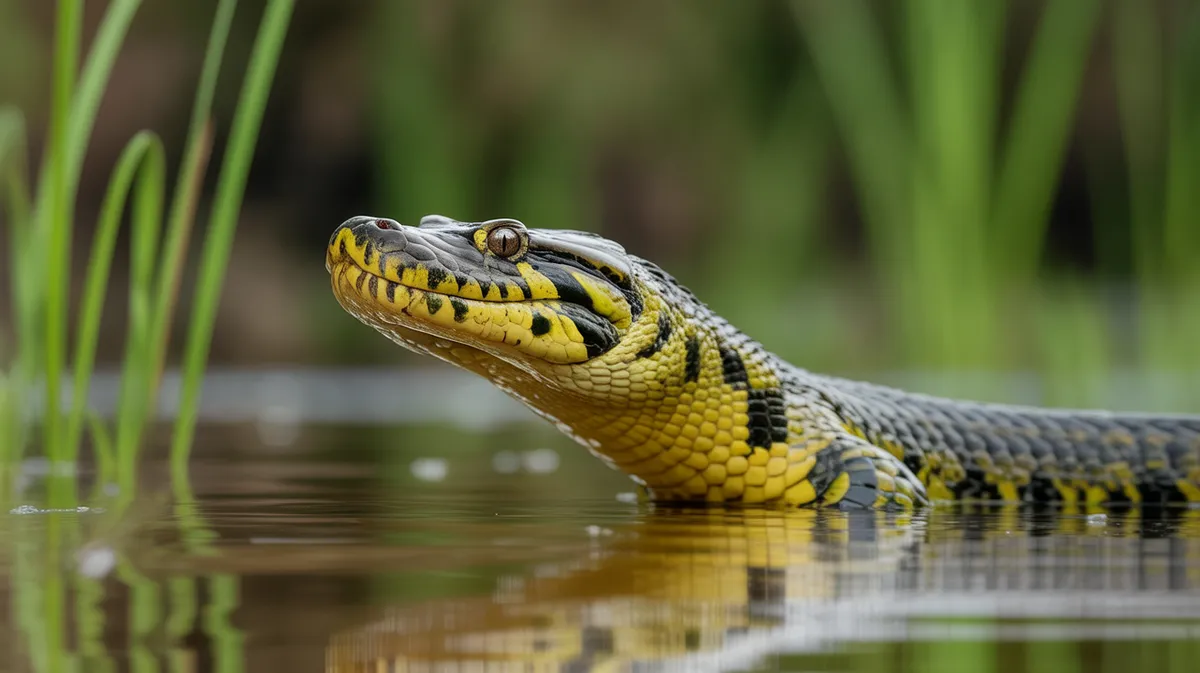
About the Yellow Anaconda
The Yellow Anaconda is a large, non-venomous constrictor snake native to South America, particularly found in the swamps, marshes, and slow-moving rivers of the Paraguay and Paraná river basins. It is renowned for its striking yellow, gold, and olive coloration overlaid with black or dark brown splotches and bands. Although smaller than its relative, the Green Anaconda, the Yellow Anaconda is still one of the largest snakes in the world, both in length and girth. This solitary and semi-aquatic reptile is an ambush predator, spending much of its life in or near water where it preys on a wide variety of animals. Its elusive nature and preference for dense aquatic vegetation make sightings in the wild relatively uncommon.
Fascinating facts
Aquatic Lifestyle
Yellow Anacondas spend much of their time in water, where they are well-camouflaged and hunt for prey such as fish, birds, and mammals.
Impressive Size
Females can reach lengths of over 4 meters (13 feet), making them among the heaviest and longest snakes in South America.
Live Birth
Unlike many snakes, Yellow Anacondas are ovoviviparous, meaning they give birth to live young instead of laying eggs.
Detailed description
The yellow anaconda (Eunectes notaeus) is a robust, semi-aquatic boa species distinguished by its striking coloration: a base of yellow to olive-green overlaid with irregular black or dark brown blotches and bands, which provide camouflage in aquatic vegetation. Adults typically range from 3 to 4.5 meters (10–15 feet) in length, with exceptional females occasionally exceeding 5 meters (16.4 feet), and can weigh up to 60 kg (132 lbs), though most are considerably lighter. Sexual dimorphism is pronounced, with females being significantly larger and more massive than males—a trait common among boas and advantageous for reproductive output. The head is broad and distinct from the neck, with small, dark eyes positioned dorsally to facilitate surface swimming. The body is heavily muscled, optimized for constriction and aquatic locomotion. Yellow anacondas are primarily solitary, except during the breeding season, and are most active at dusk and during the night (crepuscular and nocturnal). They are ambush predators, relying on stealth and patience, often lying submerged with only their nostrils and eyes above water. Their diet is highly opportunistic, including fish, birds, amphibians, reptiles, and small to medium-sized mammals. Reproduction is ovoviviparous, with females giving birth to live young after a gestation period of 6–7 months. Adapted for an aquatic lifestyle, they possess valvular nostrils and can remain submerged for extended periods, sometimes over 10 minutes. Their range encompasses the wetlands and floodplains of the Paraguay, Paraná, and lower Uruguay river systems, with a preference for densely vegetated, slow-moving waters.
Did you know?
Despite their enormous size and formidable appearance, Yellow Anacondas are rarely dangerous to humans and typically avoid contact.
Research & sources
Wikipedia summary
The yellow anaconda, also known as the Paraguayan anaconda, is a boa species endemic to southern South America. It is one of the largest snakes in the world but smaller than its close relative, the green anaconda. No subspecies are currently recognized. Like all boas and pythons, it is non-venomous and kills its prey by constriction.
Behaviour & social structure
Yellow anacondas are predominantly solitary and display territorial tendencies, especially during the breeding season. They are ambush predators, often remaining motionless in shallow water or dense aquatic vegetation, waiting for prey to approach. When hunting, they use both chemical cues (via the Jacobson's organ) and vibration sensitivity to detect prey. Their diet is diverse, including aquatic and semi-aquatic animals such as capybaras, caimans, fish, birds, and occasionally domestic livestock. Feeding frequency is low due to their slow metabolism; large meals may sustain them for weeks. They are excellent swimmers, capable of rapid bursts of speed in water, but are slower and more vulnerable on land. During the dry season, they may aestivate in mud or seek refuge in burrows to avoid desiccation. Social interactions are minimal outside of mating, and aggression may occur if territories overlap. Basking is common during cooler periods, as thermoregulation is essential for digestion and reproductive processes.
Reproduction & life cycle
Yellow anacondas are polygynandrous, with both males and females mating with multiple partners during the breeding season, which typically occurs from April to May (austral autumn). Males locate receptive females by following pheromone trails, and courtship involves tactile stimulation and body alignment. Mating balls—aggregations of several males competing for a single female—are occasionally observed. Fertilization is internal, and the species is ovoviviparous: females retain eggs internally, with embryos developing in utero. Gestation lasts approximately 6–7 months, after which females give birth to 20–40 live young, each measuring 50–70 cm (20–28 in) at birth. Neonates are fully independent and receive no parental care. Sexual maturity is reached at 3–4 years for males and 4–5 years for females, depending on growth rates and environmental conditions.
Adaptations & survival
Eunectes notaeus exhibits several adaptations for an aquatic lifestyle. Its laterally compressed, muscular body and smooth scales reduce drag in water, while valvular nostrils and dorsally positioned eyes allow for breathing and vision at the water's surface. The cryptic coloration provides effective camouflage among aquatic plants and muddy substrates. Its powerful jaws and recurved teeth enable it to grasp slippery prey, and its highly flexible ligaments allow ingestion of animals much larger than its head. The species can slow its metabolism during periods of food scarcity or drought, and its ability to remain submerged for extended periods aids both in hunting and predator avoidance. Females' larger size is an adaptation for increased fecundity, allowing them to produce more and larger offspring.
Cultural significance
In local cultures of the Pantanal and surrounding regions, yellow anacondas are often associated with myths and folklore, sometimes revered as powerful water spirits or feared as dangerous predators. They are less prominent in indigenous mythology than the green anaconda but are occasionally featured in stories as guardians of rivers or symbols of fertility. In some rural communities, their skins have been used for traditional crafts or as status symbols. Negative perceptions, fueled by exaggerated reports of attacks, have led to persecution in some areas, though they rarely pose a threat to humans.
Recent research
Recent research has focused on the species' ecology, population genetics, and the impact of the skin trade. Studies using radio telemetry have revealed detailed movement patterns, habitat preferences, and seasonal shifts in activity. Genetic analyses have clarified the species' relationships within the Eunectes genus and highlighted the importance of wetland connectivity for maintaining genetic diversity. Ongoing research is investigating the effects of climate change on wetland habitats and anaconda reproductive cycles. Conservation initiatives in the Pantanal are promoting sustainable management and community education to reduce human-wildlife conflict.
Videos
Habitat
Swamps, marshes, and slow-moving rivers

Conservation
The Yellow Anaconda is currently classified as Least Concern on the IUCN Red List.
Threats & challenges
Although currently listed as Least Concern by the IUCN, yellow anacondas face several threats. Habitat loss and degradation due to wetland drainage, agricultural expansion, and urbanization are significant concerns. They are also hunted for their skins, which are valued in the leather trade, and occasionally killed due to fear or in retaliation for preying on livestock. Road mortality and pollution of aquatic habitats further impact populations. Despite these pressures, the species' wide distribution and adaptability have helped maintain stable populations in many areas, but localized declines have been reported. International trade is regulated under CITES Appendix II to prevent overexploitation.
Taxonomy
Scientific name
Eunectes notaeus
- Kingdom
- Animalia
- Phylum
- Chordata
- Class
- Reptilia
- Order
- Squamata
- Family
- Boidae
- Genus
- Eunectes
- Species
- notaeus
Where to see a yellow anaconda
4 zoos and aquariums in 2 countries are recorded as keeping this species.
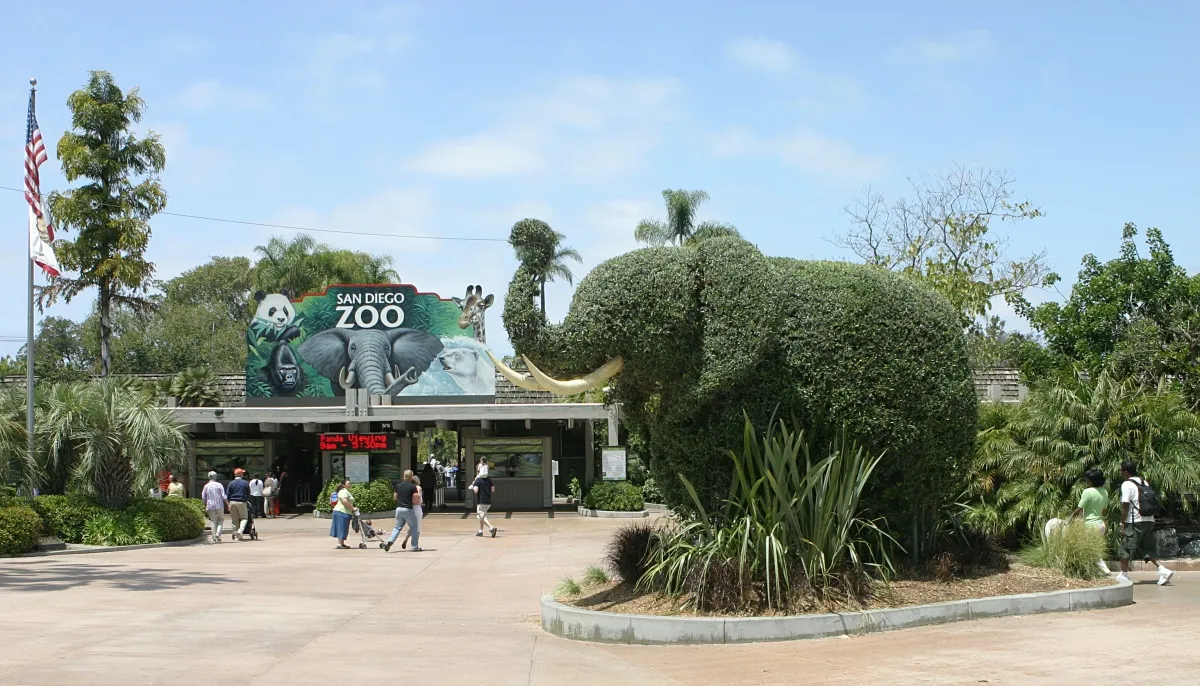 San Diego Zoo🇺🇸 San Diego, United States
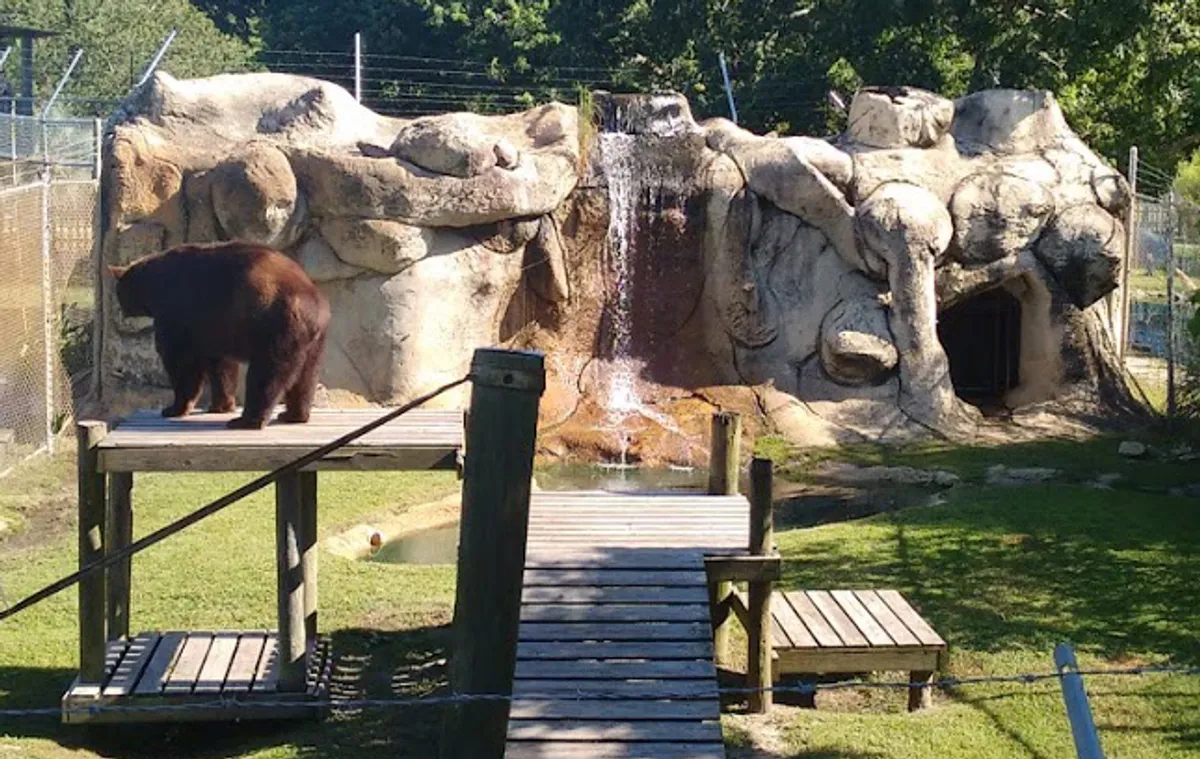 Alabama Gulf Coast Zoo🇺🇸 Gulf Shores, United States
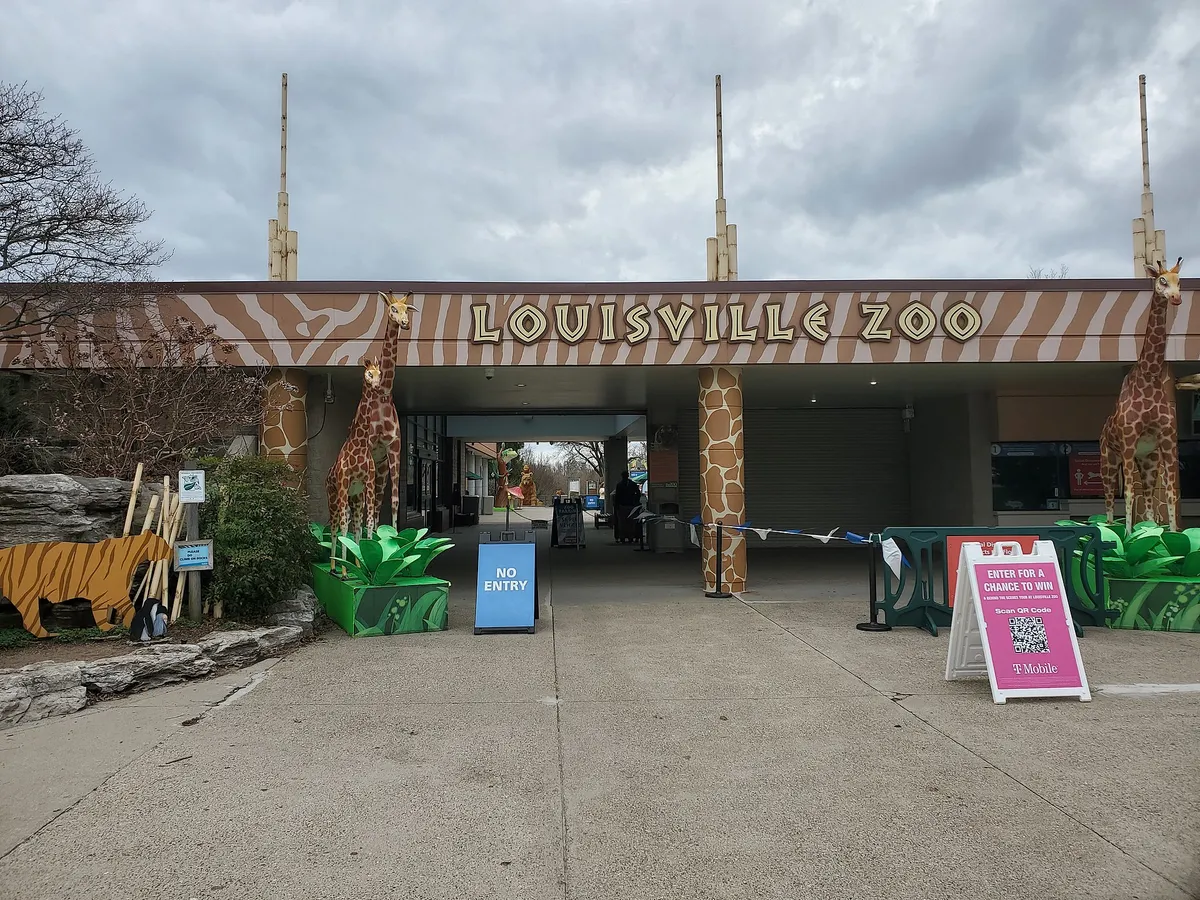 Louisville Zoo🇺🇸 United States
- 🦁Natur- und Tierpark Brüggen🇩🇪 Germany
Community notes
Share your observations about the Yellow Anaconda.
No community notes yet. Be the first!
Discover more wildlife
More fascinating animals from the encyclopedia.