
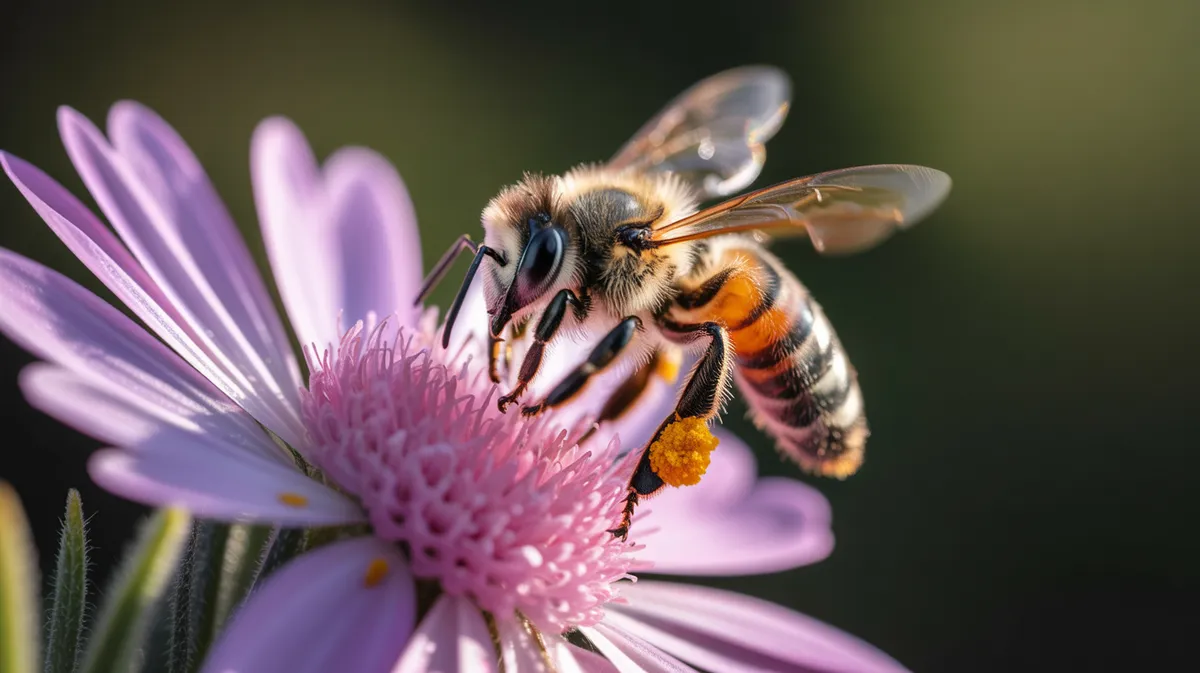
Bees are among the most beloved insects on Earth — and among the most misunderstood. We picture them all making honey, all dying when they sting, and all itching for a fight. The reality is far richer: most bees are solitary, stingless to you, and quietly doing the most important job in agriculture. This entry in our Animal Myths, Debunked series clears the air about our most vital pollinators.
With more than 20,000 bee species worldwide, "the bee" is really a vast, varied family. Here are seven myths to retire — and when you're done, see what we got wrong about crows and hyenas.
Myth 1: All bees make honey
Say "bee" and most people instantly think of honey.
But of the 20,000-plus bee species, only honeybees (and a few stingless bees) produce honey in any quantity. The vast majority are solitary bees that store little or no honey at all.
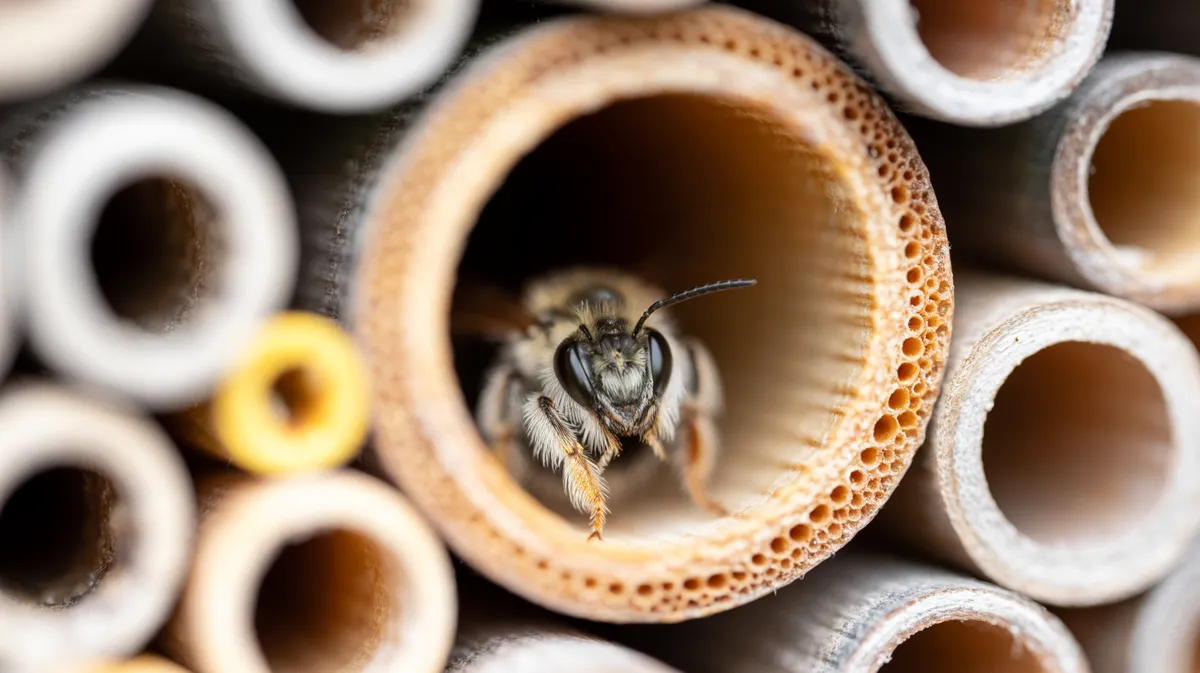
Mason bees, leafcutter bees, and mining bees live alone, provisioning small nests with pollen for their young — no hive, no honeycomb, no surplus to spare.
These solitary bees are often gentle, efficient pollinators precisely because they aren't busy defending a hive. Many gardeners now build "bee hotels" specifically to host them.
Myth 2: All bees die when they sting
The tragic image of a bee dying after one heroic sting is only half the story.
It's true for honeybee workers, whose barbed stingers tear loose when they sting a mammal. But bumblebees, solitary bees, and queen honeybees have smooth stingers and can sting more than once.
Most bees, in fact, are reluctant to sting at all — losing your life over a single jab is a defence of last resort, not a habit.
The barb evolved to anchor the stinger in thick-skinned hive raiders like bears, not in soft petals or fellow insects. Against another bug, a honeybee can sting and survive just fine.
Myth 3: Bees are aggressive and out to sting you
A bee near your picnic feels like an incoming attack.
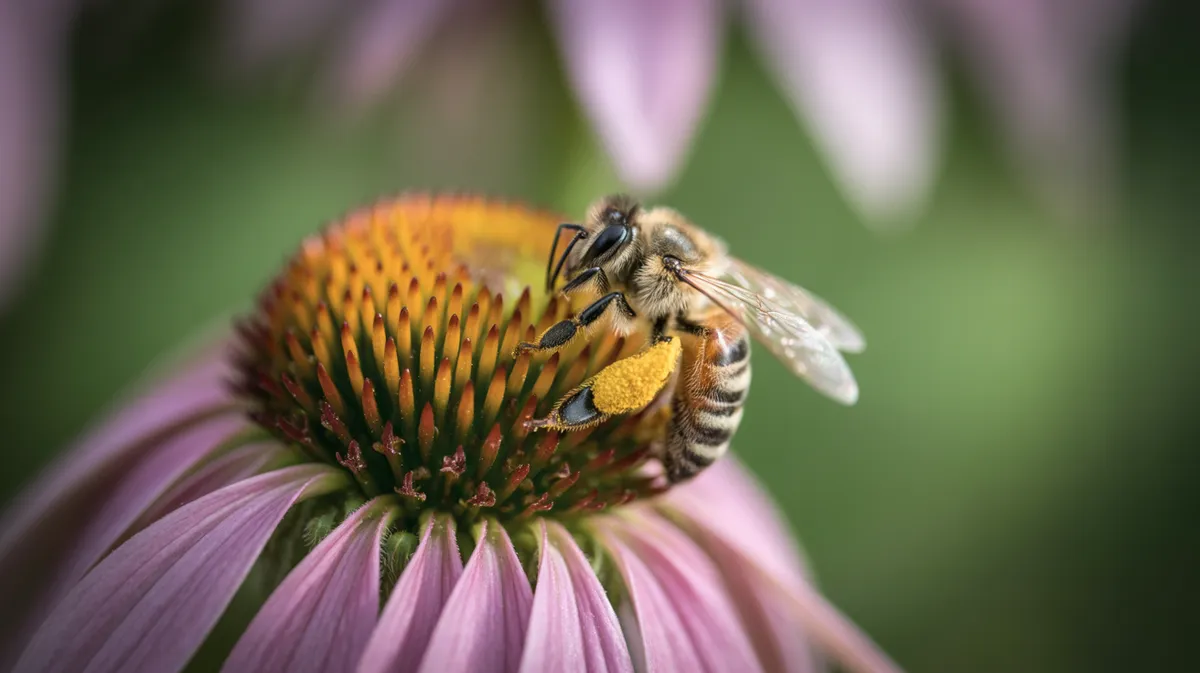
In reality, foraging bees are remarkably docile — they're focused on flowers, not on you, and sting almost exclusively to defend their hive. Solitary bees rarely sting under any circumstances.
Most "bee" stings at a barbecue are actually from wasps, which are far more interested in your food and drink than any bee is.
Africanized "killer" bees are the exception that fuels the fear, yet even they only swarm when the colony feels directly threatened. A bee browsing a flowerbed has no interest in you at all.
Myth 4: Honeybees are the most important pollinators
The honeybee gets nearly all the credit for pollination.
Yet honeybees are essentially domesticated livestock, and in places like the Americas they're not even native. Wild and native bees — bumblebees, mason bees, and thousands of others — are crucial pollinators too.
For some crops, native bees are actually more effective per visit, which is why protecting wild bees matters as much as keeping hives.
Leaning on a single managed species is actually risky, because disease or colony collapse can ripple through whole harvests. A diversity of wild bees is the real insurance policy for our food.
Myth 5: Bees and wasps are basically the same
Both buzz and both can sting, so the two get lumped together.
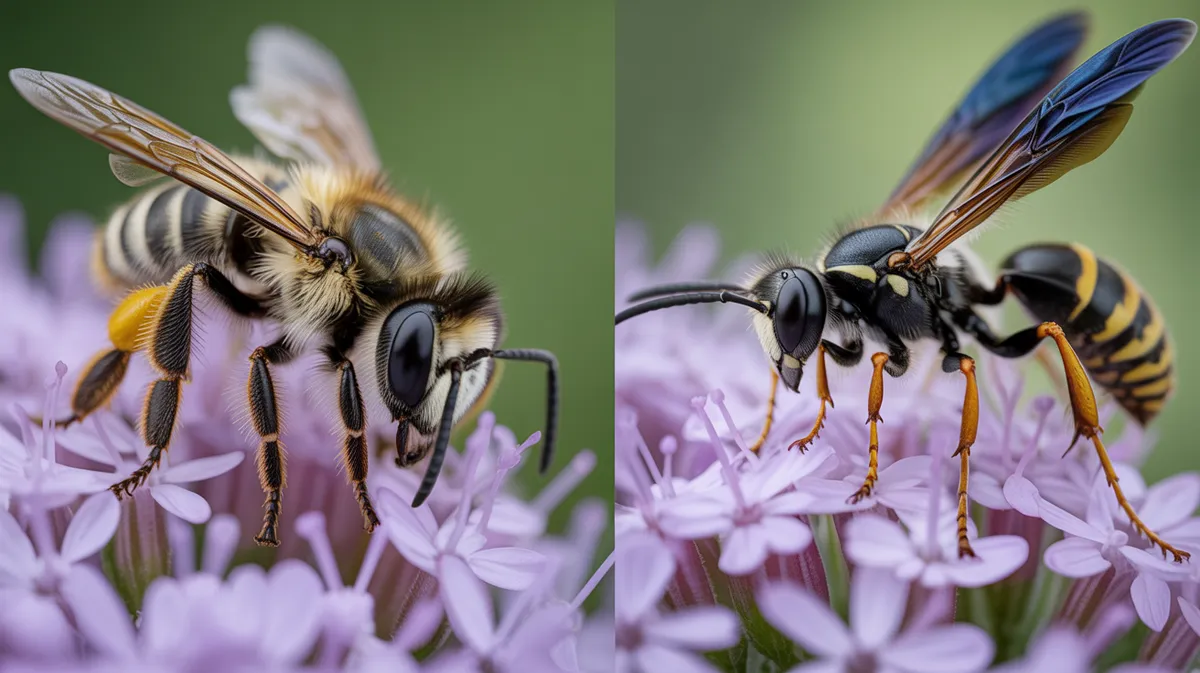
They're quite different. Bees are mostly vegetarian, feeding on pollen and nectar, and tend to be fuzzy — that fuzz is what makes them great pollinators. Wasps are largely predators with smooth, shiny bodies.
Wasps play their own useful role controlling pest insects, but they aren't bees, and they're usually the culprits behind aggressive late-summer stinging.
A quick tell: a fuzzy, rounded, pollen-dusted body is almost always a bee, while a sleek, narrow-waisted, shiny insect is a wasp.
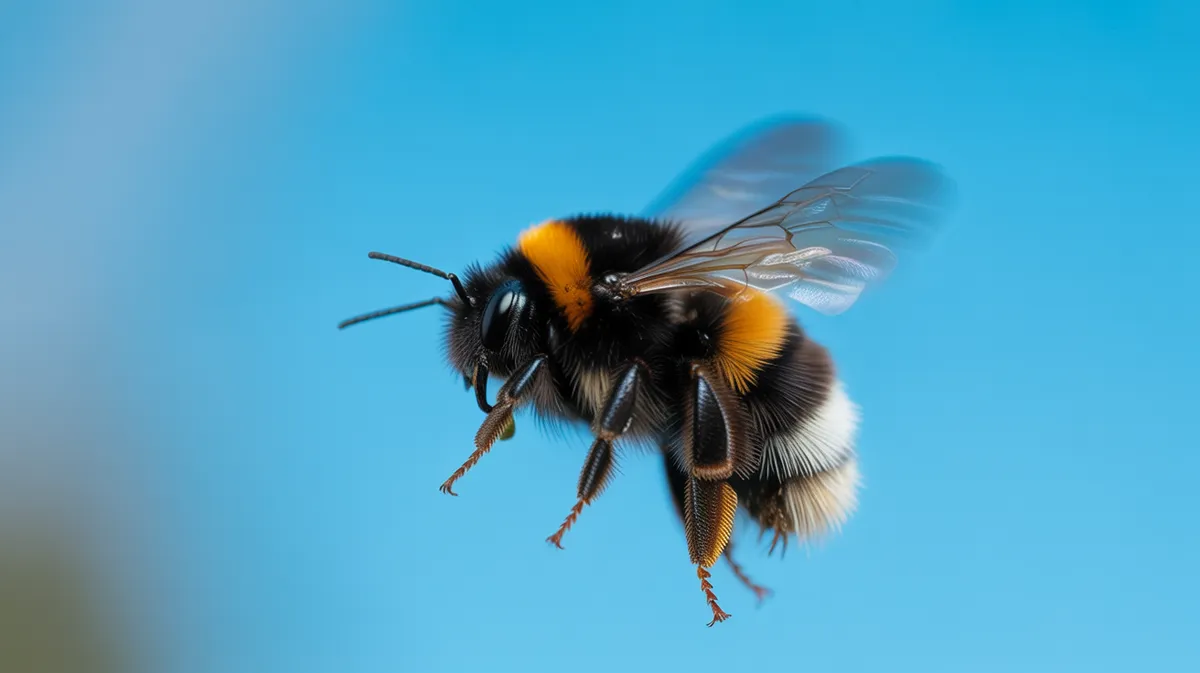
Myth 6: Science says bumblebees shouldn't be able to fly
You've surely heard that bumblebees defy physics and "shouldn't" fly.
That old chestnut came from applying fixed-wing aeroplane math to a flapping insect — the wrong tool entirely. Bees fly by sweeping their wings in a rapid rotating motion that generates swirling vortices of lift.
There's no mystery and no rule-breaking; bumblebee flight is simply more sophisticated than a 1930s back-of-envelope calculation could capture.
High-speed cameras finally settled it, revealing tiny rotating wing strokes and swirling air vortices that fixed-wing aircraft never produce. Insect flight turned out to be a science all its own.
Myth 7: Honey is just bee vomit
A popular "gross fact" claims honey is regurgitated bee sick.
It's misleading. Nectar is stored in a special "honey stomach" — a crop kept separate from the bee's digestive stomach — where enzymes begin transforming it.
The bee passes this nectar mouth-to-mouth and the hive fans it dry into honey. It's a refined production process, not digestion gone in reverse.
Calling it vomit also ignores the enzymes and evaporation that transform thin nectar into a stable, antimicrobial food — one so durable that edible honey has been found in ancient tombs.
Three more myths, quickly
"The queen bee rules the hive" — She commands nothing. Her job is laying eggs; big decisions like swarming emerge collectively from the workers, with no one in charge.
"Bees turn aggressive in late summer" — That is almost always wasps, which grow desperate for sugar as autumn closes in. Bees stay focused on flowers to the end.
"A bee sting always kills the bee" — Only when the barbed sting catches in the elastic skin of a mammal. Stinging another insect, a honeybee pulls free and flies off unharmed.
Why bees deserve a closer look
Bees are far more diverse and far gentler than their reputation suggests, and our food supply leans heavily on them. Knowing the difference between a honeybee, a bumblebee, and a wasp is the first step to protecting the pollinators we can't live without.
Frequently asked questions
Do all bees make honey? No — only honeybees and some stingless bees. Most of the 20,000+ species are solitary and make none.
Do all bees die after stinging? No. Only honeybee workers do; bumblebees and solitary bees can sting repeatedly but rarely do.
Is honey really bee vomit? Not really — nectar is stored and processed in a separate "honey stomach," not the digestive one.
Next in the series: the feathered geniuses everyone underrates — 7 myths about crows, and Africa's most maligned predator in 7 myths about hyenas, debunked.