
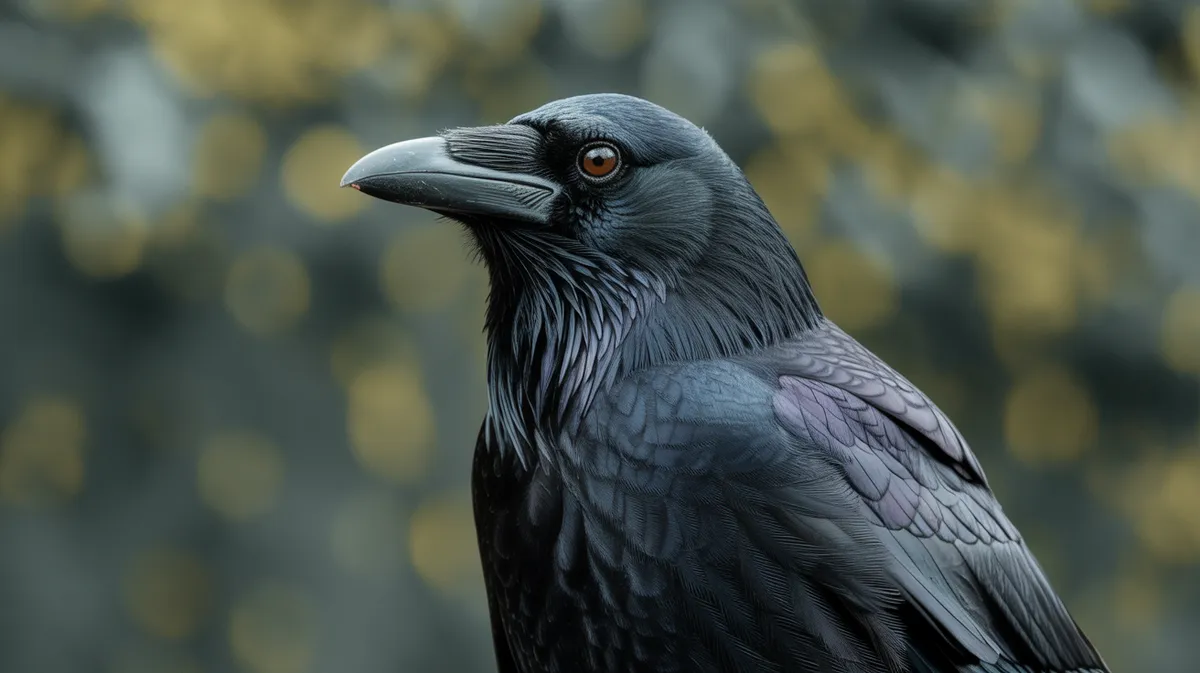
Few birds carry as much baggage as the crow. Cast as bad omens, dim-witted scavengers, and compulsive thieves of shiny things, crows are victims of some of the most persistent myths in the animal world. The truth? They're among the smartest animals alive. This entry in our Animal Myths, Debunked series gives the much-maligned corvid its due.
From recognising human faces to using tools, crows constantly surprise the scientists who study them. Here are seven myths worth dropping. See also bees and hyenas in the series.
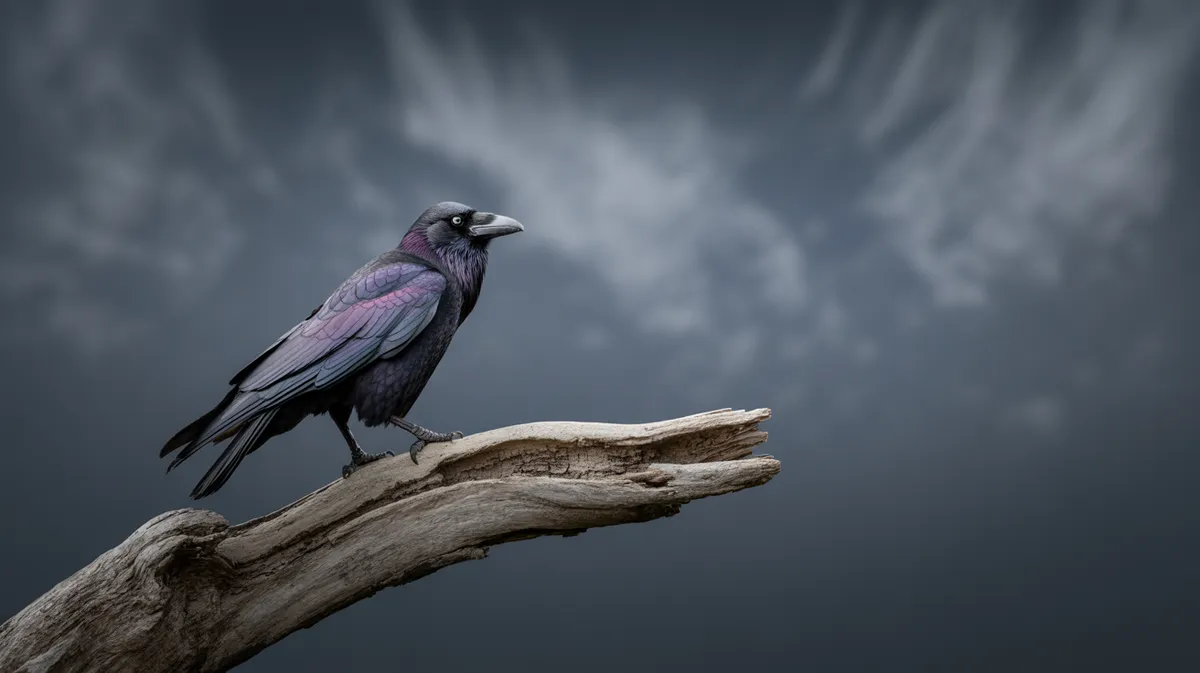
Myth 1: Crows are bad omens
For centuries crows have been tied to death, witchcraft, and ill fortune.
That reputation is pure folklore, shaped by their black plumage and taste for carrion rather than anything sinister about the birds themselves.
In many other cultures crows are symbols of intelligence, creativity, and even good luck — a reminder that "omen" says more about us than about the bird.
The Norse god Odin even kept two crows, Huginn and Muninn — "thought" and "memory" — as his all-seeing messengers. Reverence, not dread, is the older tradition.
Myth 2: Crows are dumb birds
"Bird brain" is meant as an insult, and crows get tarred with it.
Yet crows are among the most intelligent animals on the planet. They make and use tools, solve multi-step puzzles, plan for the future, and even understand simple analogies.
Some crows drop nuts onto roads for cars to crack, then wait for the light to change before retrieving them — problem-solving that would impress a primate.
Crows have also passed delayed-gratification tests, choosing to wait for a better reward — the kind of self-control once thought rare outside the great apes.
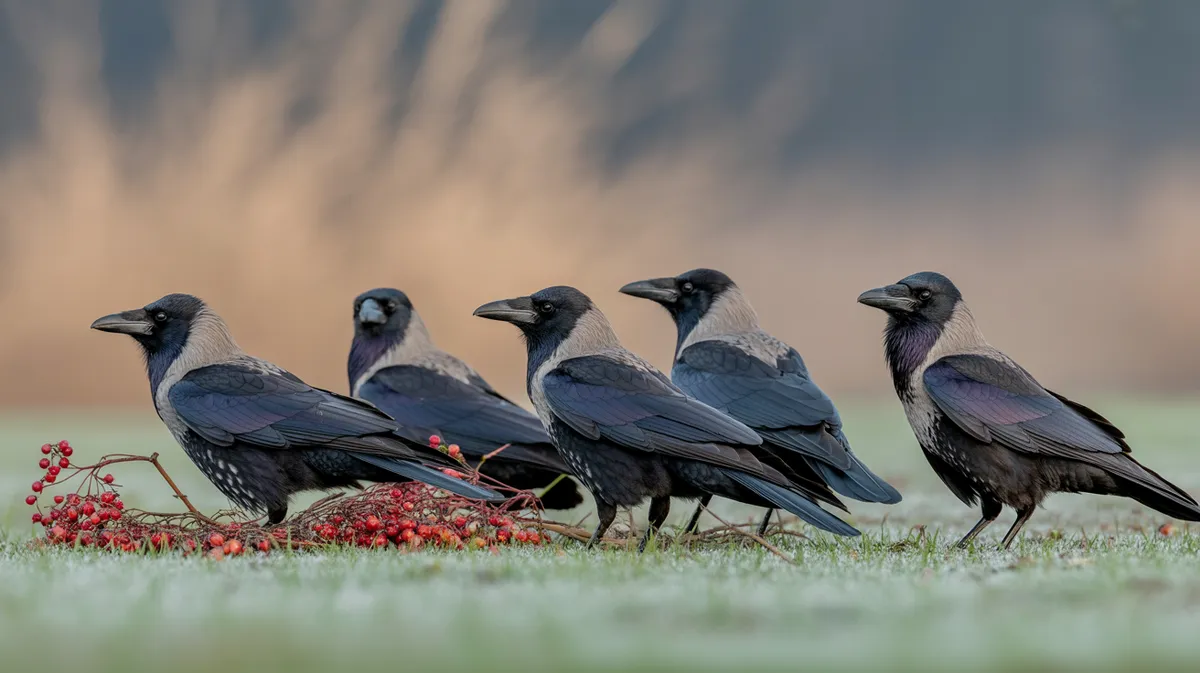
Myth 3: A "murder of crows" means they hold trials and executions
The eerie collective noun has spawned tales of crows gathering to judge and kill their own.
"A murder of crows" is just a fanciful medieval term, not a description of behaviour. Crows are highly social and gather in family groups and large communal roosts.
They do sometimes mob a dead crow — but scientists think they're studying the danger that killed it, not staging an execution.
These gatherings around a dead crow can last for days and seem to help the flock learn to avoid whatever predator or place caused the death.
Myth 4: Crows can't tell humans apart
We assume one person looks much like another to a bird.
Crows are remarkably good at recognising and remembering individual human faces — and they hold grudges, scolding people who once threatened them.
Even more astonishing, they teach their offspring and flockmates to recognise a "dangerous" face, so a person can be harassed by crows that never personally met them.
In one famous experiment, researchers wearing a particular mask were scolded by crows for years — including by birds that had never witnessed the original threat.
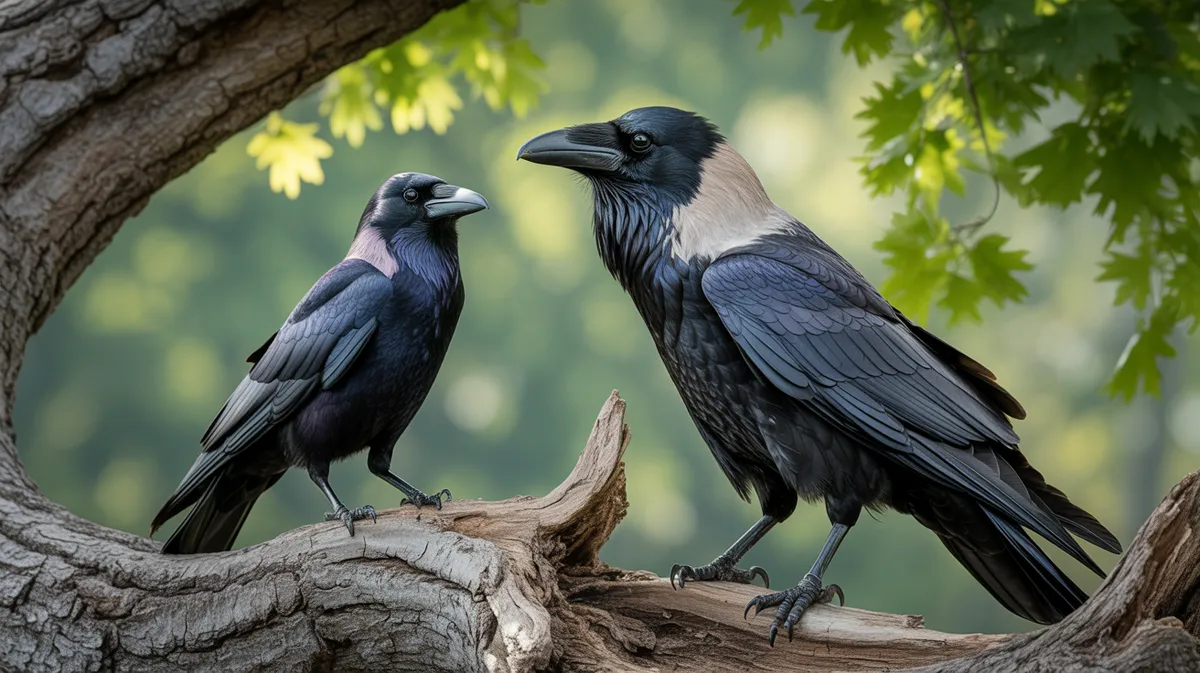
Myth 5: Crows and ravens are the same bird
The two black birds are routinely confused.
They're related but distinct. Ravens are noticeably larger, with shaggy throat feathers, wedge-shaped tails, and a deep croak; crows are smaller, sleeker, and caw.
Ravens also tend to soar and travel in pairs, while crows are more likely to flock — handy clues once you know to look.
Ravens are also among the few animals known to play purely for fun, sliding down snowy roofs and rolling in mid-air.
Myth 6: Crows are dirty pests that only eat garbage
Seen picking through bins, crows get written off as filthy nuisances.
In fact they're adaptable omnivores that eat insects, rodents, grubs, and carrion, providing genuine pest control and cleanup services.
Their willingness to eat almost anything is a sign of intelligence and flexibility, not squalor — it's exactly why they thrive alongside us.
By devouring carrion and crop pests, a flock of crows can be quietly worth a small fortune in free pest control to nearby farms.
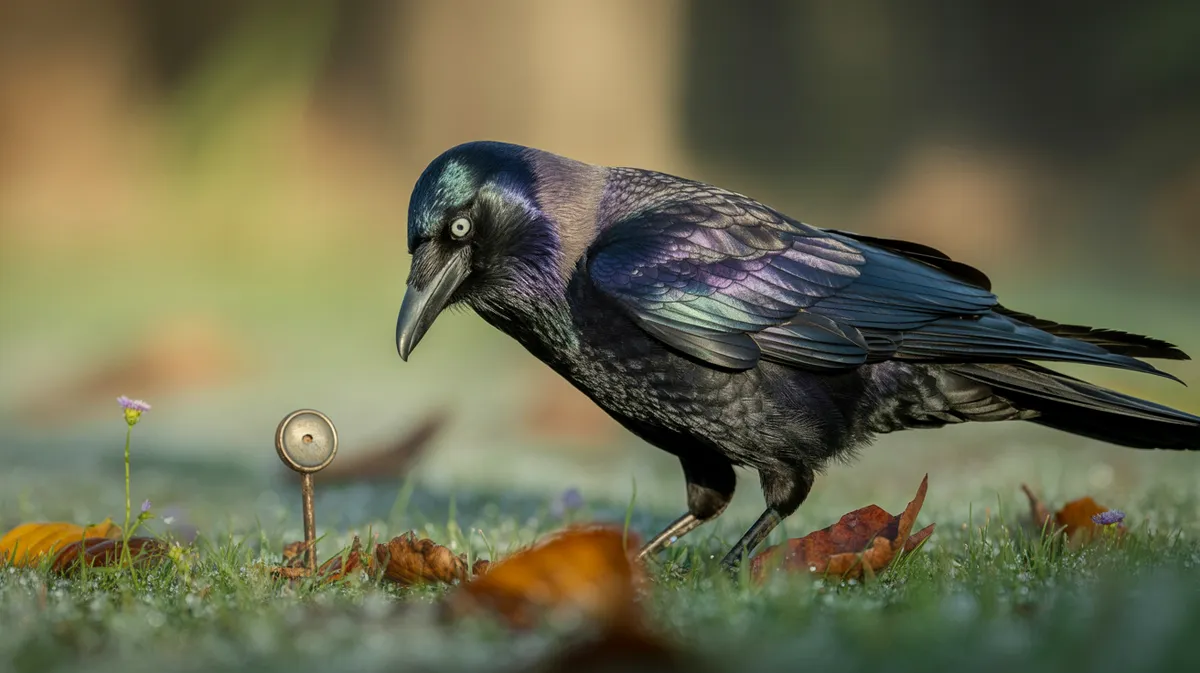
Myth 7: Crows steal shiny objects
The "thieving crow" hoarding jewellery is a favourite trope.
It's largely a myth. Controlled studies of corvids found they're often wary of novel shiny objects rather than drawn to them.
Crows do collect odd items occasionally, but there's no evidence of a special magpie-like obsession with treasure — the legend outshines the facts.
The legend likely comes from magpies in old folklore — yet even magpies, when tested, mostly avoided shiny trinkets rather than hoarding them.
Three more myths, quickly
"Crows only live a few years" — They can live 15 to 20 years in the wild, and longer in captivity — easily long enough to remember a face for a lifetime.
"A caw is just a caw" — Crows have a substantial vocabulary, with different calls for assembling, scolding, and warning. Their alarm calls even differ depending on the threat.
"Crows never give anything back" — People who feed crows regularly sometimes find small objects — buttons, beads, bits of glass — left behind in apparent exchange.
Why crows are so underrated
Behind the spooky reputation is one of the cleverest, most socially sophisticated animals you'll ever meet in your own backyard. Watch crows for a while and the omens give way to genuine admiration.
Frequently asked questions
Are crows really intelligent? Yes — they use tools, solve complex puzzles, plan ahead, and rank among the smartest animals on Earth.
Can crows recognise faces? Yes, and they remember and even teach others which humans are dangerous.
What's the difference between a crow and a raven? Ravens are larger with wedge-shaped tails and a croak; crows are smaller, sleeker, and caw.
Are crows and rooks the same bird? No. Rooks have a pale, bare patch at the base of the bill and nest in far more sociable colonies.
Do crows really use tools? Yes. New Caledonian crows manufacture hooked twigs, and others drop nuts onto roads for passing cars to crack.
Do crows remember individual people? For years — and they teach their offspring and flockmates which faces to avoid.
Are crows protected by law? In many countries yes, and harming them can be an offence. Check local rules before taking any action.
Continue with 7 myths about hyenas, debunked, or revisit 7 myths about bees.