
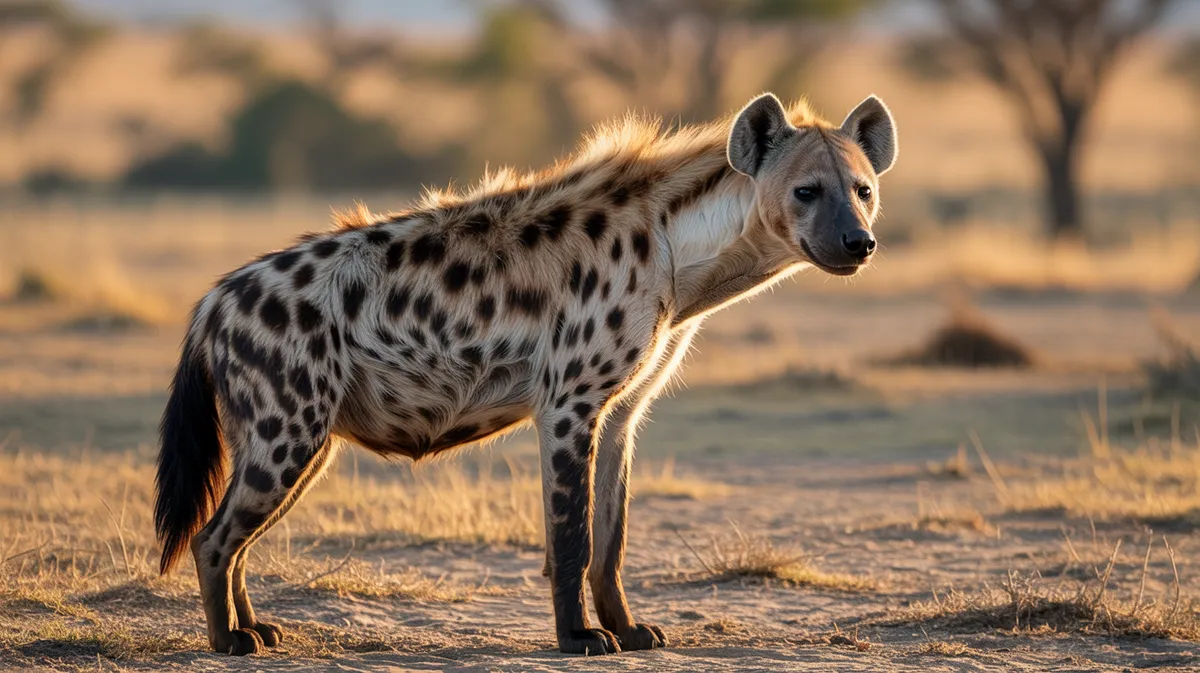
Hyenas may be the most unfairly slandered animals in Africa. Pop culture casts them as cowardly, stupid, dog-like scavengers cackling in the dark — and almost every word of that is wrong. This entry in our Animal Myths, Debunked series rehabilitates one of the savanna's most capable and complex predators.
Far from skulking thieves, spotted hyenas are skilled hunters with societies as intricate as a baboon's. Here are seven myths to bury for good. See also bees and crows in the series.
Myth 1: Hyenas are just cowardly scavengers
Thanks to films and documentaries, hyenas are typecast as carcass-stealing cowards.
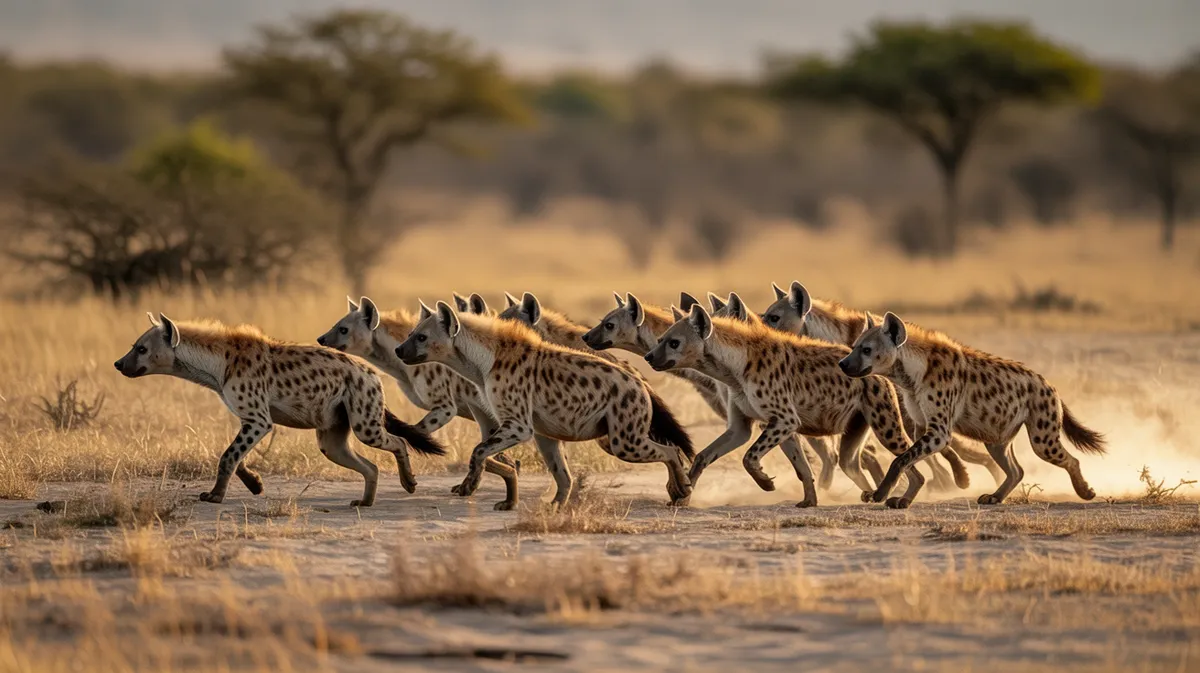
Spotted hyenas are actually formidable hunters that kill the majority of their own food, taking down wildebeest and zebra in coordinated chases.
The irony is that lions frequently scavenge from hyenas, not the other way around — the "thief" stereotype has the roles reversed.
A spotted hyena clan can run prey down over long distances with relentless stamina, and their bone-crushing jaws then waste almost nothing of the kill.
Myth 2: Hyenas are a type of dog
With their doggy build and loping run, hyenas are widely assumed to be wild canines.
They're not dogs at all. Hyenas belong to their own family, Hyaenidae, and sit on the cat side of the carnivore tree — more closely related to mongooses and cats than to dogs.
Their resemblance to dogs is a case of convergent evolution: similar lifestyles producing similar shapes from very different ancestry.
Their closest relatives are actually the mongoose and meerkat family, which sit firmly on the cat branch of the carnivore family tree.
Myth 3: Hyenas "laugh" because they're happy
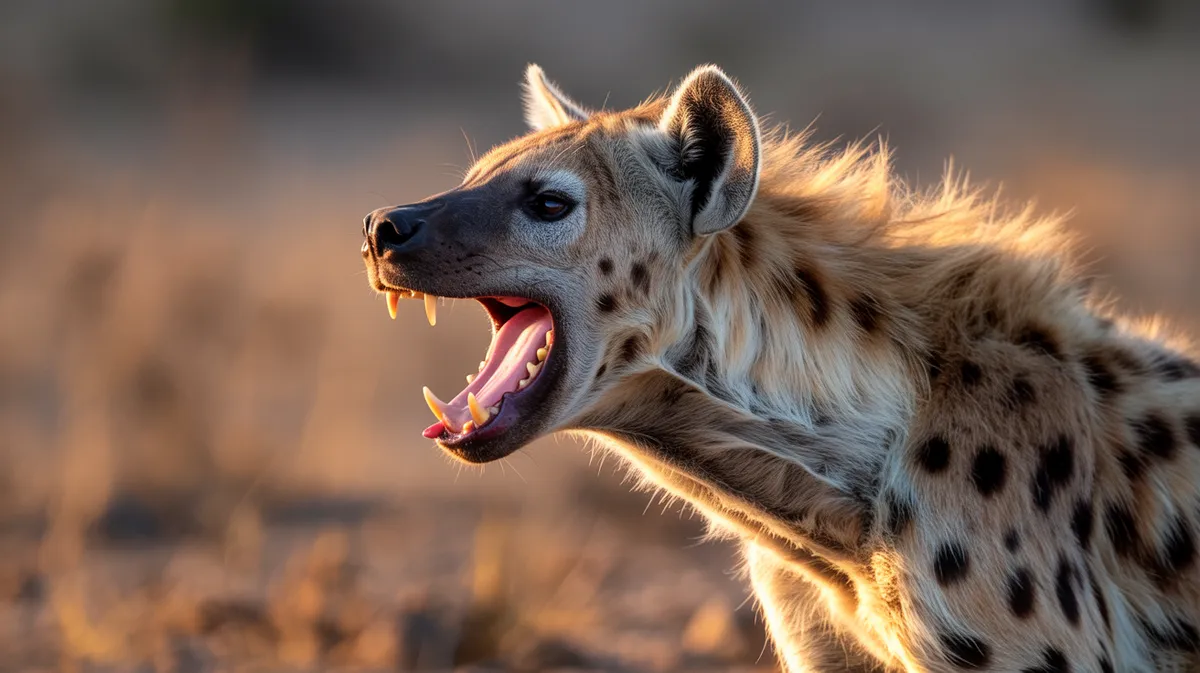
The famous hyena "giggle" sounds like manic laughter.
But it isn't joy. The giggle is a vocalisation of stress, excitement, or submission, often produced when a hyena is frightened or jostling over a kill.
Researchers can even read a hyena's age and social rank from the pitch of its calls — the "laugh" is sophisticated communication, not amusement.
Each hyena's voice is individually distinctive too, letting clan members recognise exactly who is calling across the dark savanna.
Myth 4: Hyenas are stupid
Cartoons love to portray hyenas as bumbling and dim.
In truth they're remarkably intelligent. Spotted hyenas live in clans of up to 80 individuals with strict hierarchies, and they track complex social relationships much as primates do.
In problem-solving experiments, hyenas have outperformed chimpanzees at certain cooperative tasks — clever enough to coordinate, deceive, and plan.
They can even assess rival numbers before deciding whether to challenge another clan — a kind of head-count that helps them avoid losing fights.
Myth 5: Hyena clans are ruled by males
We tend to assume a big predator's group is led by a dominant male.
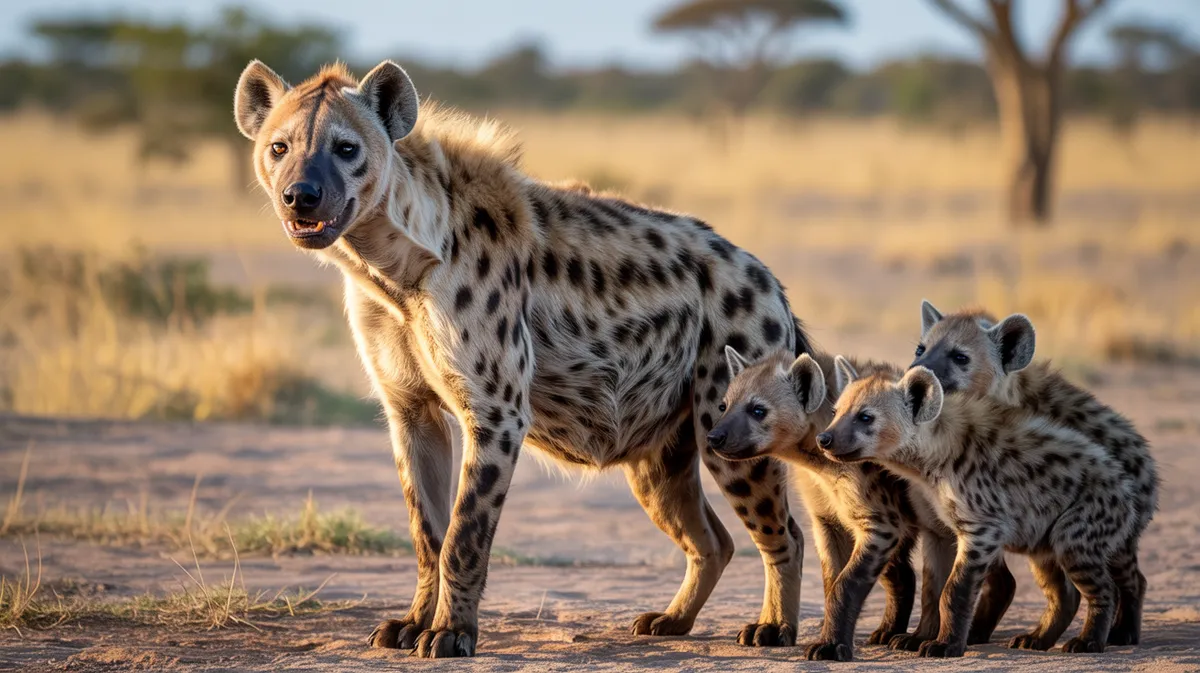
Spotted hyena society is strongly matriarchal. Females are larger, more aggressive, and socially dominant, and even the lowest-ranking female outranks the highest-ranking male.
Cubs inherit their mother's rank, making these clans some of the most female-dominated societies in the mammal world.
Females also pour enormous energy into their young, nursing cubs for well over a year — one of the longest nursing periods of any carnivore.
Myth 6: Hyenas are dirty, disease-ridden animals
Their scavenging habits make people assume hyenas are filthy and sickly.
In fact they have famously robust immune systems and powerful, bone-crushing digestion that lets them safely consume carcasses other animals can't.
By cleaning up carrion, hyenas actually help limit the spread of disease across the savanna — they're sanitation workers, not vectors.
Their stomach acid is so powerful it neutralises anthrax and other pathogens that would kill most scavengers outright.
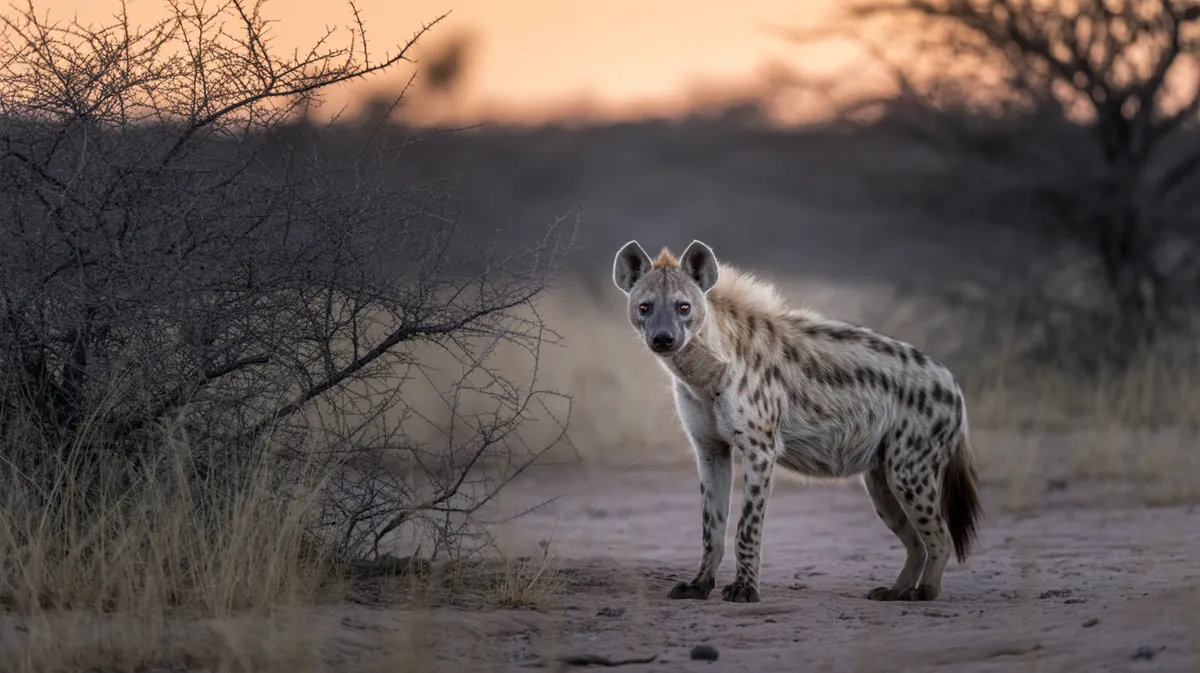
Myth 7: All hyenas are the same spotted, cackling kind
"Hyena" conjures a single image: the spotted, giggling scavenger.
There are actually four species — the spotted, striped, and brown hyenas, plus the aardwolf.
The aardwolf barely fits the stereotype at all: it's a shy, insect-eater that laps up termites with a sticky tongue, harming nothing larger than a bug.
Striped and brown hyenas are shy and largely solitary — a world away from the boisterous, clan-living spotted hyena most people picture.
Three more myths, quickly
"Hyenas only eat rotten meat" — They mostly eat fresh kills — usually their own. Their formidable digestion simply means carrion is also safely on the menu.
"Hyenas are silent skulkers" — They have one of the richest vocal repertoires of any carnivore: whoops that carry for kilometres, plus giggles, groans, and grunts, each carrying meaning.
"All spotted hyenas look alike" — Every spotted hyena's pattern of spots is unique, like a fingerprint, and researchers routinely identify individuals from photographs alone.
Why hyenas deserve a rethink
Strip away the cartoons and you find intelligent, cooperative, female-led predators that keep ecosystems healthy. The hyena isn't the villain of the savanna — it's one of its most underrated success stories.
Frequently asked questions
Are hyenas just scavengers? No — spotted hyenas are skilled hunters that kill most of their food; lions often scavenge from them.
Are hyenas related to dogs? No. They're feliforms, more closely related to cats and mongooses than to dogs.
Why do hyenas "laugh"? The giggle signals stress, excitement, or submission — not happiness.
Are hyenas related to dogs or cats? Neither directly. They have their own family, Hyaenidae, but sit on the cat side of the carnivore family tree.
How many hyena species are there? Four — the spotted, striped, and brown hyenas, plus the shy, insect-eating aardwolf.
Do hyenas live in packs? Spotted hyenas live in large clans of up to 80 animals, governed by a strict, female-led hierarchy.
Are hyenas endangered? Spotted hyenas are doing reasonably well, but striped and brown hyenas are far scarcer and under real pressure.
Why do hyenas have sloping backs? Their front legs are longer than their hind legs, giving them the distinctive slope. It is an adaptation for stamina, letting them lope tirelessly for kilometres after prey.
Can hyenas crush bones? Yes — their jaws are among the most powerful of any mammal, letting them crack open thigh bones and extract the nutritious marrow inside.
That's three more myths busted. Revisit wolves, snakes, and cats — and watch for more in the Animal Myths, Debunked series.