
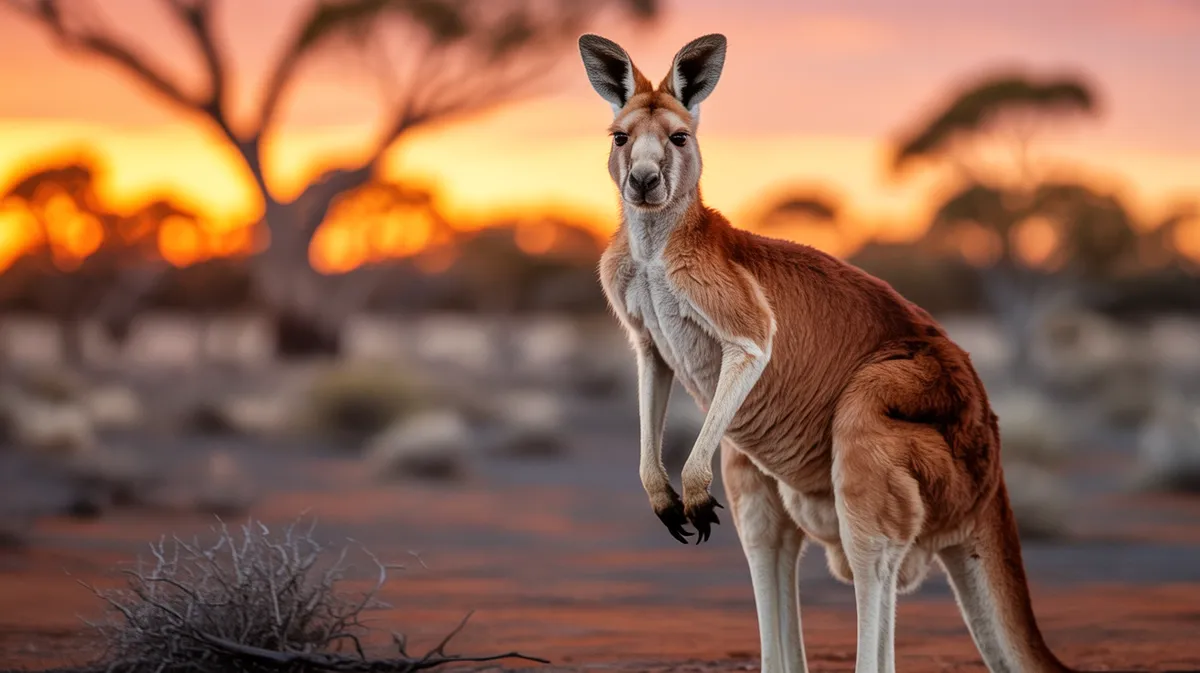
Kangaroos are instantly recognisable, yet most of what people "know" about them is a little off. We picture joeys born straight into the pouch, all kangaroos as towering boxers, and the tail as a simple prop for balance. The reality is stranger and more impressive. This entry in our Animal Myths, Debunked series hops through the facts about Australia's most famous marsupials.
From a thumb-sized newborn to a tail that works as a fifth leg, kangaroos are full of surprises. Here are seven myths to clear up. See also elephants and skunks in the series.
Myth 1: Baby kangaroos are born in the pouch
It's natural to assume a joey is born safely inside its mother's pouch.
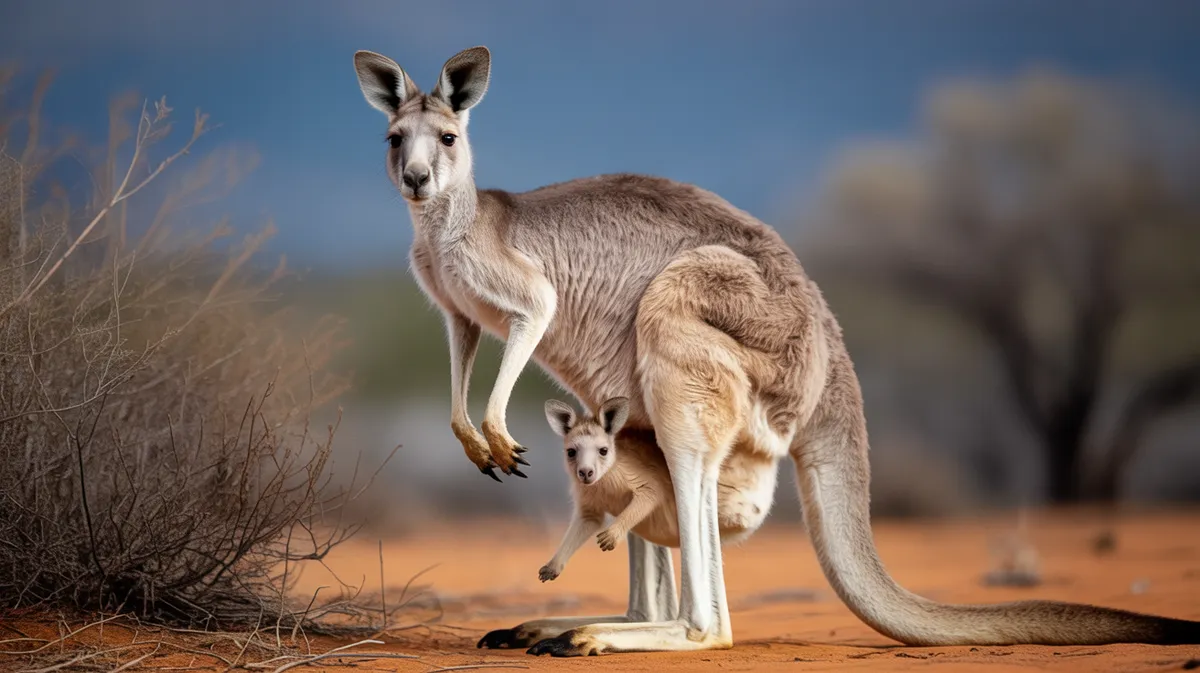
In fact a newborn kangaroo is born outside, after just over a month of pregnancy, as a blind, hairless creature the size of a jellybean.
This tiny joey must crawl unaided up through its mother's fur and into the pouch, where it latches onto a teat to continue developing for months.
The journey to the pouch, made with only its forelimbs, is one of the most remarkable feats of any newborn mammal.
Myth 2: All kangaroos are huge
The towering red kangaroo dominates our mental image of the animal.
But kangaroos belong to a large family, the macropods, that spans a huge range of sizes. Many are small, and the tiny musky rat-kangaroo is barely larger than a guinea pig.
Wallabies, tree-kangaroos, and quokkas are all part of the same broad group, far from the giant boxers of the outback.
At the other extreme, the red kangaroo can stand taller than a person and clear obstacles in single bounds of several metres.
Myth 3: Kangaroos "box" for fun
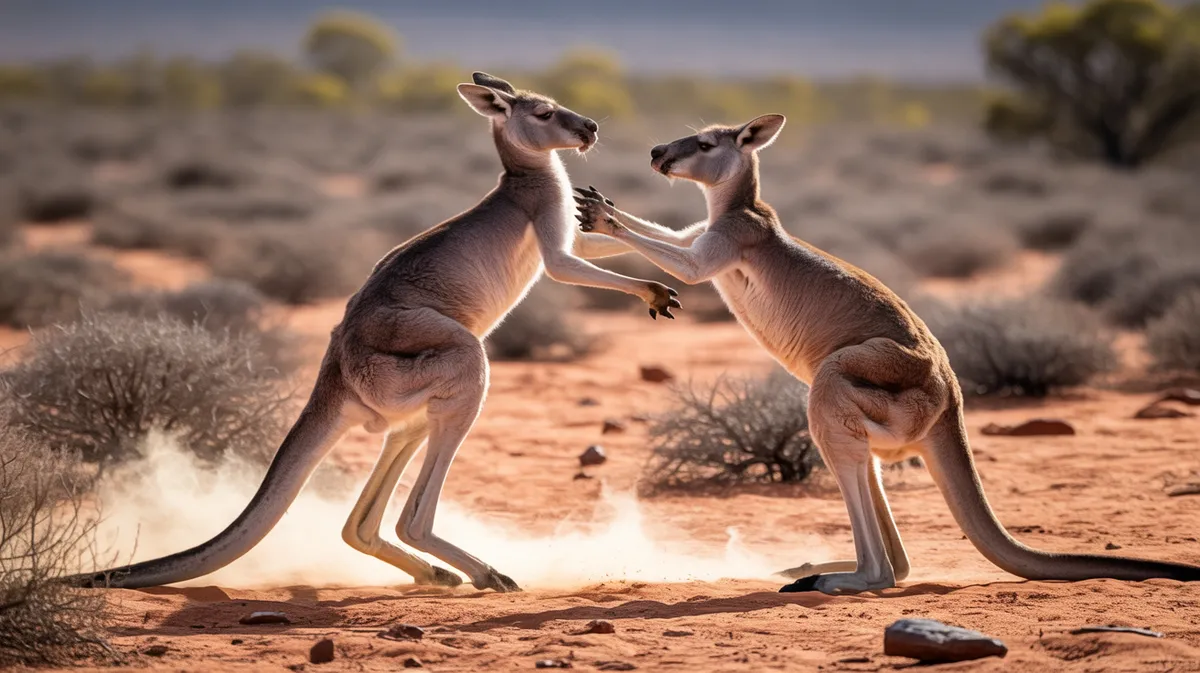
Footage of sparring kangaroos makes the boxing look almost playful.
It's serious business. Males box to compete for territory and mates, grappling with their forelimbs and delivering powerful kicks with their hind legs.
Those kicks, armed with sharp claws, can be genuinely dangerous, and the contests decide who gets to breed — not a game at all.
They sometimes lean back on their tails to free both powerful hind legs for a disembowelling double-kick — a serious weapon, not showmanship.
Myth 4: Kangaroos and wallabies are completely different animals
We tend to treat kangaroos and wallabies as separate creatures.
They're actually close relatives in the same family, Macropodidae, and the main difference is simply size.
Wallabies are generally smaller with proportions suited to denser habitats, but there's no hard biological line dividing a big wallaby from a small kangaroo.
The whole family shares the same basic body plan: big hind legs, a heavy tail, and that signature hop, scaled up or down by species.
Myth 5: A kangaroo's pouch is just a cosy empty pocket
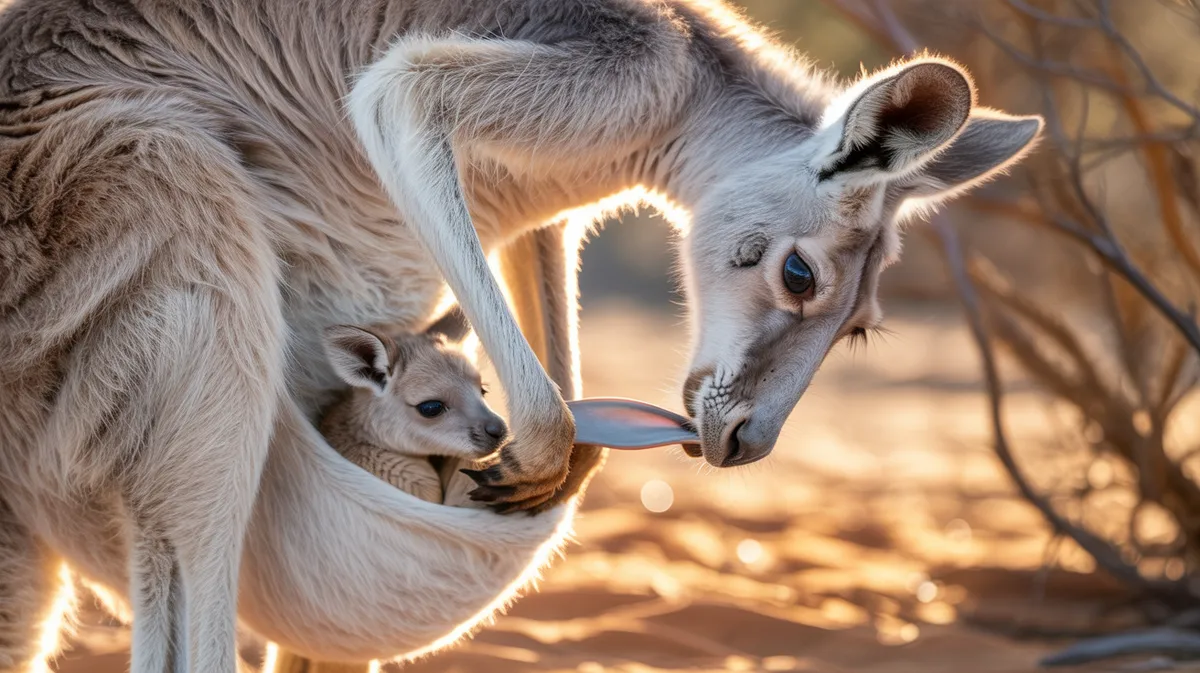
The pouch is often imagined as a simple warm pocket for carrying the baby.
It's a sophisticated nursery. The pouch contains teats, strong muscles to hold the joey securely, and the mother keeps it scrupulously clean by licking it out.
A female can even nurse a joey while a second, paused embryo waits in reserve — producing two different kinds of milk at once for young of different ages.
This system of "embryonic diapause" lets a female pause a pregnancy and resume it when conditions improve, keeping reproduction ticking through droughts.
Myth 6: Kangaroos need lots of water
Big animals in a hot land surely must drink heavily — or so it seems.
Kangaroos are superbly adapted to Australia's dry interior and can go long stretches with little to no drinking water.
They get much of their moisture from the plants they eat and conserve water so efficiently that they thrive where many large mammals would perish.
They're most active in the cool of dawn and dusk, resting in shade through the heat to lose as little moisture as possible.
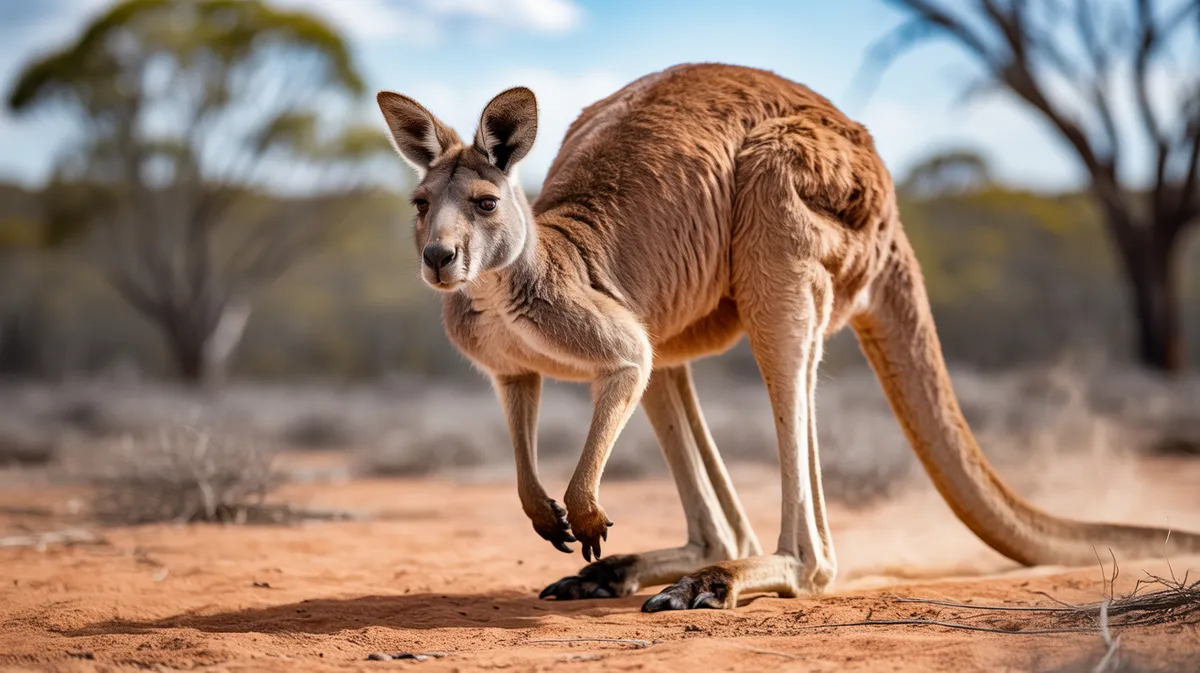
Myth 7: The tail is only for balance
The thick tail is usually described as just a counterweight for hopping.
It's far more than that. When moving slowly, a kangaroo plants its tail like a powerful fifth limb and uses it to push the body forward — a gait scientists call "pentapedal" walking.
Studies have shown the tail does as much propulsive work as a human leg, making it a true extra leg, not a passive prop.
Hopping itself is wonderfully efficient too — elastic tendons store and release energy like springs, so a kangaroo uses little extra effort to go faster.
Three more myths, quickly
"Kangaroos can walk backwards" — They really cannot, not easily — which is precisely why the kangaroo appears on Australia's coat of arms, as a symbol of only ever moving forward.
"Kangaroos are dangerous killers" — Attacks are rare, though a cornered big male can injure with its kick. They deserve respect and distance, not fear.
"Kangaroo rats are baby kangaroos" — Kangaroo rats are American rodents, not marsupials at all. The shared name is pure coincidence, based on their hopping gait.
Why kangaroos keep surprising us
From jellybean newborns to a fifth-leg tail and reserve embryos, kangaroos are a masterclass in marsupial engineering. The real animal is far more ingenious than the boxing cartoon suggests.
Frequently asked questions
Are baby kangaroos born in the pouch? No — they're born tiny on the outside and crawl into the pouch to keep developing.
Are kangaroos and wallabies different animals? No — they're close relatives in the same family; the main difference is size.
Is a kangaroo's tail just for balance? No — it works as a powerful fifth leg for slow, "pentapedal" walking.
How fast can a kangaroo hop? Comfortably around 25 km/h, with far faster bursts over short distances.
How long do kangaroos live? Commonly six to eight years in the wild, and considerably longer in captivity.
What do kangaroos eat? Grasses and shrubs. They are grazers with a chambered stomach that ferments tough plant material.
How many kangaroo species are there? Four true kangaroos, sitting within the much larger macropod family that includes wallabies.
Continue with 7 myths about skunks, debunked, or revisit 7 myths about elephants.