
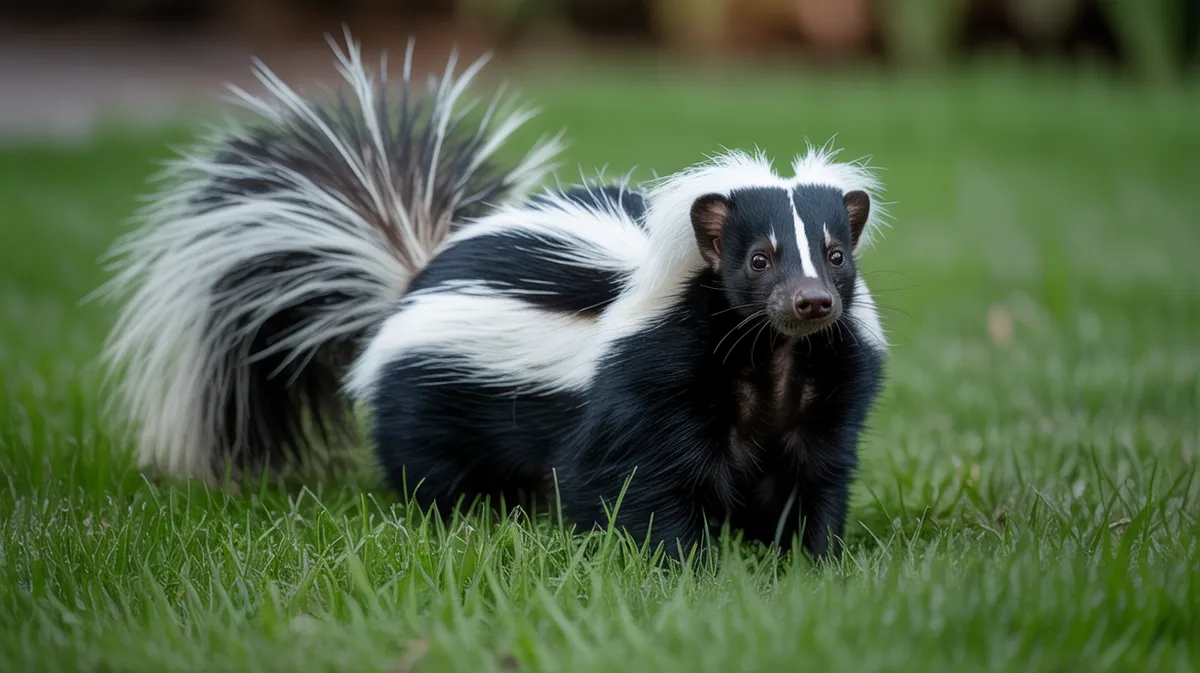
Skunks are famous for exactly one thing — the smell — and that fame has buried the truth about them under a pile of myths. We're told tomato juice cancels the spray, that skunks blast it at the slightest fright, and that they're aggressive little pests. None of it really holds up. This entry in our Animal Myths, Debunked series clears the air (so to speak) about one of nature's most reluctant chemical warriors.
Behind the stink is a docile, beneficial animal that would much rather warn you than spray you. Here are seven myths to put to rest. See also elephants and kangaroos in the series.
Myth 1: Tomato juice removes skunk spray
The classic remedy for a sprayed dog is a bath in tomato juice.
It doesn't actually work — it just overwhelms your nose temporarily, so the skunk smell seems to fade while the tomato scent is strong.
The real fix is a mixture of hydrogen peroxide, baking soda, and dish soap, which chemically breaks down the smelly compounds rather than masking them.
The peroxide mixture has to be used fresh and rinsed well, but it actually transforms the smelly sulphur compounds into near-odourless ones.
Myth 2: Skunks spray at the slightest fright
Skunks are imagined as trigger-happy, spraying anything that startles them.
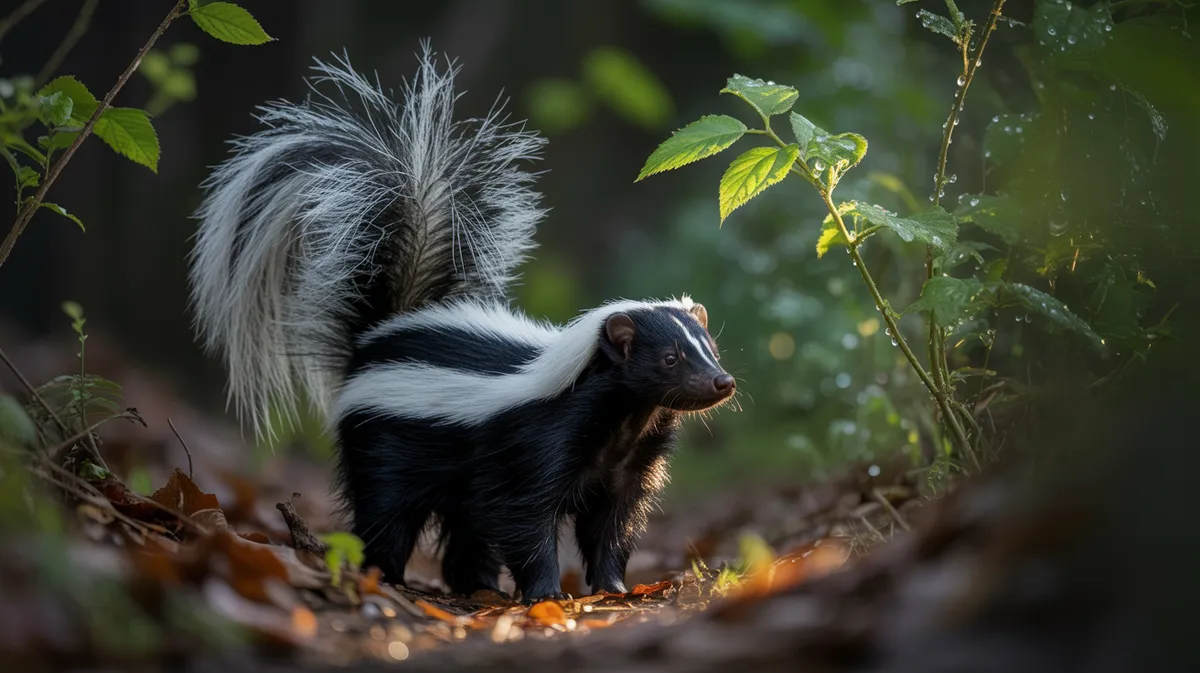
Spraying is actually a last resort. A skunk carries only enough for a few blasts and needs over a week to replenish the supply, so it doesn't waste it.
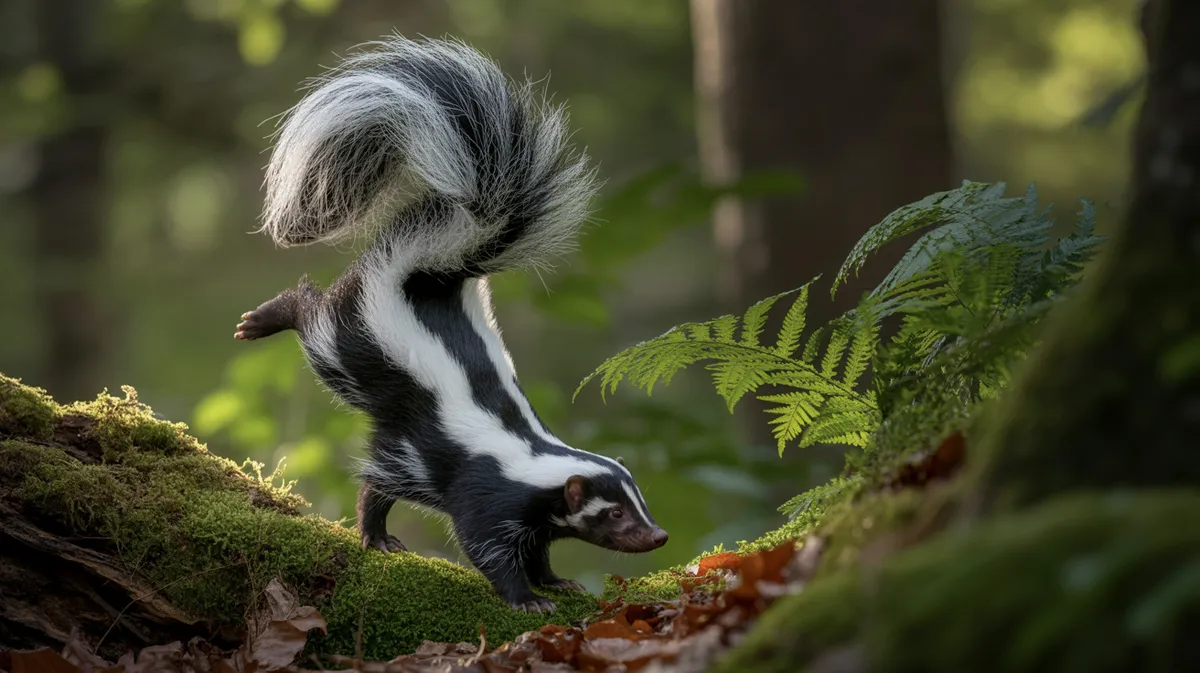
First it gives clear warnings — stamping its feet, hissing, raising its tail, and (in spotted skunks) even doing a dramatic handstand — hoping you'll simply leave.
A skunk can aim that spray with surprising accuracy up to around three metres, which is exactly why it would rather not waste a drop.
Myth 3: Skunks are blind
Their clumsy, trundling movements lead many to assume skunks can't see.
They aren't blind, though their eyesight is genuinely poor, especially at distance.
Skunks rely far more on excellent senses of smell and hearing to navigate and find food, which is why they can seem oblivious to things right in front of them.
This reliance on scent means a skunk may shuffle right up to your feet simply because it hasn't clearly seen you yet.
Myth 4: Skunk spray is harmless apart from the smell
The spray is often treated as merely unpleasant.
It's more than that. A direct hit to the eyes can cause intense stinging and temporary blindness, and the compounds can trigger nausea.
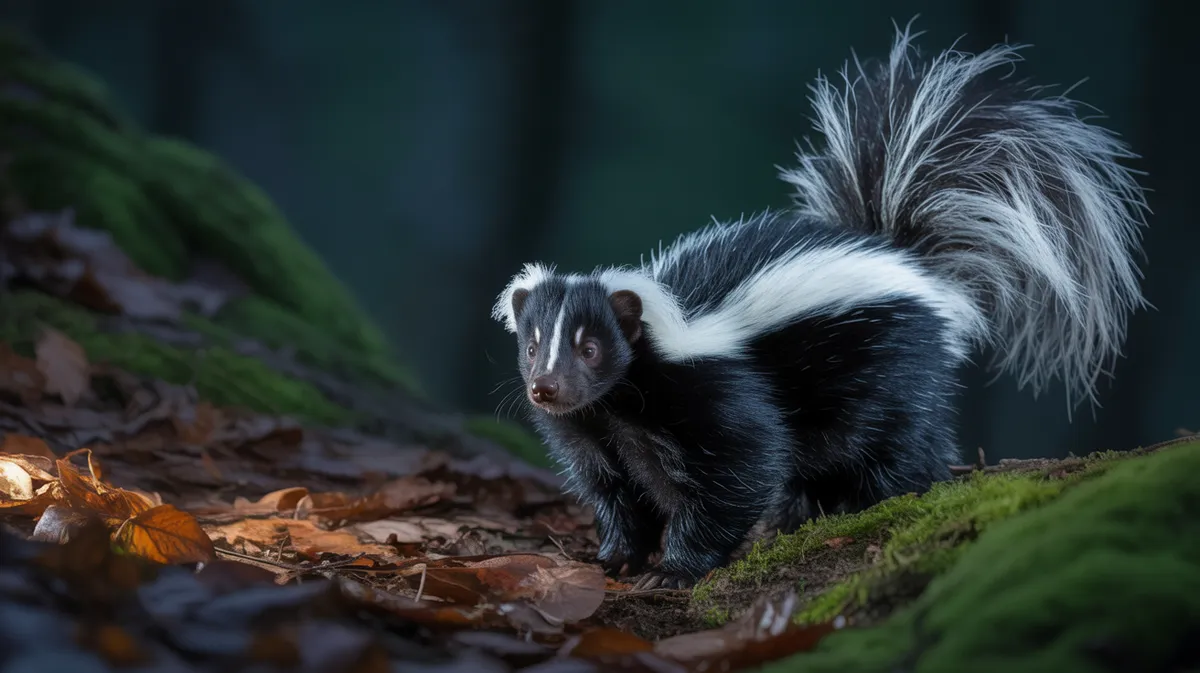
The effects pass, but they're a real deterrent — exactly why predators learn to give that raised tail a wide berth.
The smell itself is astonishingly persistent, clinging to fur and fabric for days, which is part of why it works so well as a deterrent.
Myth 5: Skunks are a type of rodent
Small, furry, and ground-dwelling, skunks get lumped in with rodents.
They aren't rodents at all. Skunks belong to their own family, Mephitidae, and were once grouped with the weasels.
They're carnivorans, more closely related to otters and badgers than to anything resembling a rat or mouse.
As members of the weasel-adjacent carnivores, skunks are clever, curious foragers, not the gnawing seed-eaters people imagine.
Myth 6: All skunks are black with white stripes
The black-and-white striped skunk is the only one most people picture.
Skunk coats are surprisingly varied. There are spotted skunks with swirling broken patterns, hooded skunks, and individuals in shades of brown and cream.
The bold colouring, whatever its exact pattern, is a warning signal — a living "stay back" sign to potential predators.
Spotted skunks are especially acrobatic, performing their warning handstand to look bigger before they ever resort to spraying.
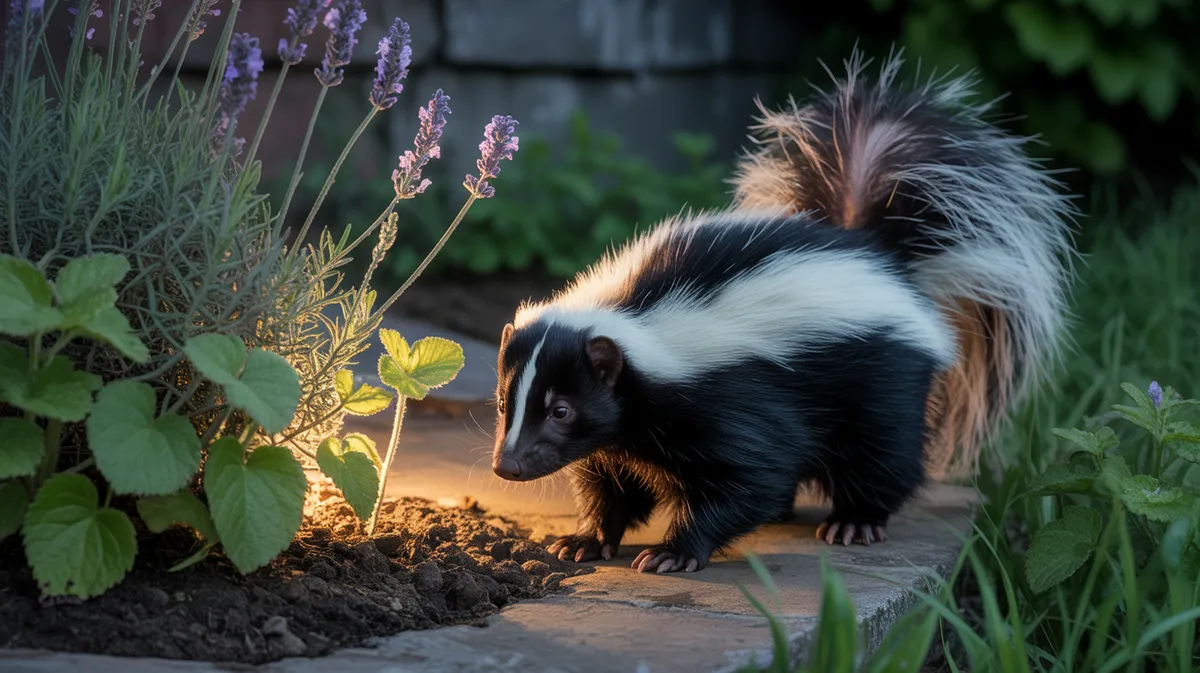
Myth 7: Skunks are aggressive pests
Their defensive reputation makes skunks sound hostile and troublesome.
In truth they're docile, slow-moving, and reluctant to confront anything, preferring to amble away from trouble.
They're also genuinely useful, eating large numbers of insect pests, grubs, and rodents — a gardener's quiet ally far more than an enemy.
Skunks are also important in controlling pests like beetle grubs and even venomous insects, quietly working the night shift in gardens and farmland.
Three more myths, quickly
"The spray comes out of the tail" — It comes from two glands beside the anus, which the skunk can aim with startling accuracy. The raised tail is simply the warning flag.
"Skunks hibernate through winter" — They do not truly hibernate. They enter a dormant, sleepy state and will often share a den with other skunks for warmth.
"The smell can never be removed" — A fresh mix of hydrogen peroxide, baking soda, and dish soap chemically neutralises it. Time and thorough airing finish the job.
Why skunks deserve a break
The skunk is a mild-mannered, beneficial animal that only deploys its famous defence when it absolutely must. Learn to read its warnings and the "stinky pest" turns into one of the most considerate creatures in the neighbourhood.
Frequently asked questions
Does tomato juice get rid of skunk smell? No — it only masks it. A peroxide, baking soda and dish soap mix actually neutralises it.
Do skunks spray easily? No — it's a last resort with limited supply; they give several warnings first.
Are skunks rodents? No — they have their own family, Mephitidae, related to weasels, otters and badgers.
How far can a skunk spray? Accurately up to around three metres — and the smell itself carries very much further.
What do skunks eat? Insects, grubs, rodents, eggs, and fruit. They are omnivores, and genuinely useful pest controllers.
How long do skunks live? Usually only two to three years in the wild.
Are skunks nocturnal? Mostly, though they are often seen out at dawn and dusk too.
How do I keep skunks out of my garden? Secure bins, remove food sources, and block gaps under decking. Skunks are opportunists, not invaders, and will simply move on.
What should I do if a skunk stamps its feet at me? Back away slowly and calmly. Foot-stamping is a clear final warning, and a skunk that feels safe will almost never spray.
That's three more myths busted. Revisit cats, bats, and hyenas — and watch for more in the Animal Myths, Debunked series.