
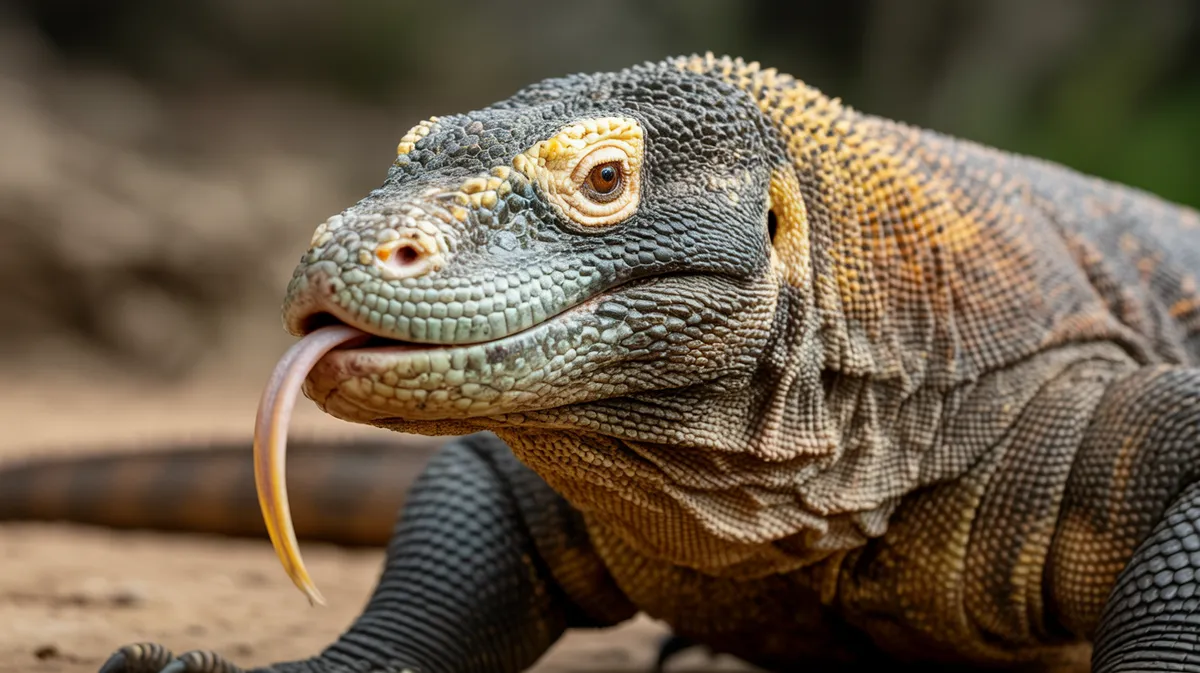
The Komodo dragon is the largest lizard on Earth, and its fearsome reputation has spawned just as many myths as facts. For decades we were told it kills with a filthy, bacteria-laden bite, that it's a lumbering scavenger, even a living dinosaur. Modern science has rewritten almost all of it. This entry in our Animal Myths, Debunked series separates the legend from the very real lizard.
The truth is arguably scarier and stranger than the myth: a fast, venomous ambush predator that can reproduce without a mate. Here are seven myths to retire — and when you're done, see what we got wrong about praying mantises and sloths.
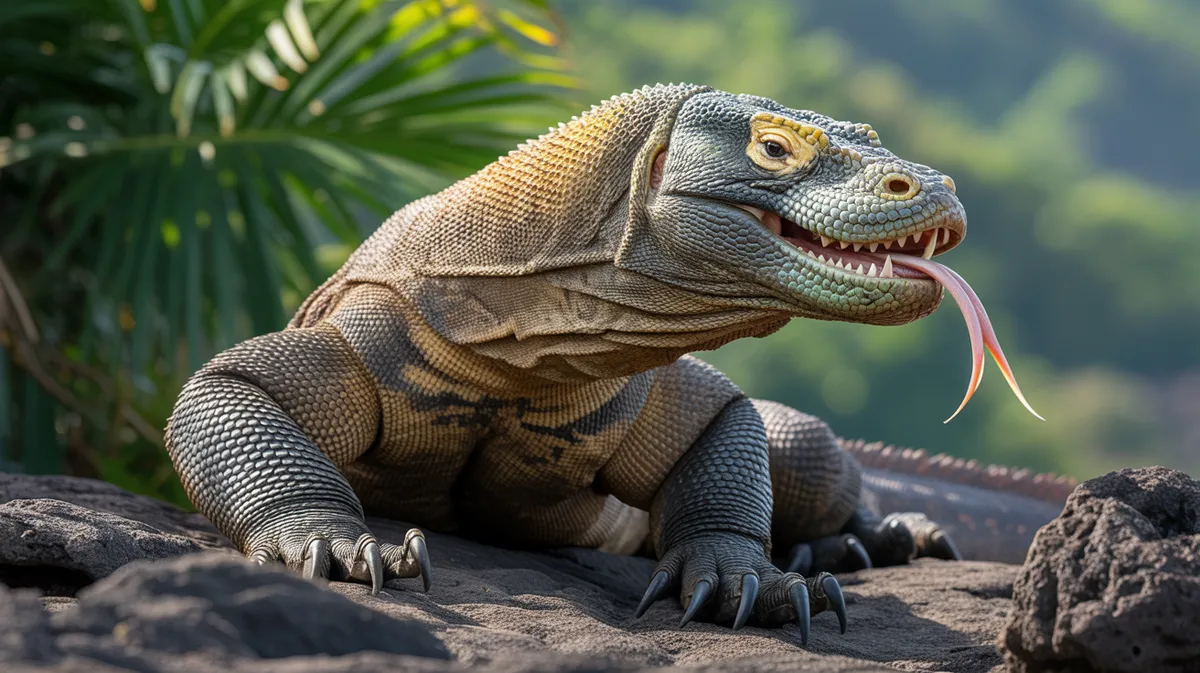
Myth 1: Komodo dragons kill with a dirty, bacteria-filled bite
For years the textbook story was that a Komodo's mouth teems with deadly bacteria, so a single bite slowly kills prey through infection.
Research has overturned that idea. In 2009 scientists discovered that Komodo dragons have genuine venom glands, delivering toxins that lower blood pressure and prevent clotting.
Studies of their mouths also found no exceptional bacterial cocktail — their oral flora is much like other carnivores'. The "septic bite" was a myth all along.
The discovery rewrote the textbooks — what was long held up as a classic case of bacterial weaponry turned out to be one of the largest venom systems in the animal kingdom.
Myth 2: Komodo dragons are slow and lumbering
Their heavy bodies and waddling walk make Komodos look ponderous.
In a short burst, a Komodo dragon can sprint up to around 20 km/h — faster than many people expect and more than enough to ambush unsuspecting prey.
They rely on a sudden explosive rush rather than a long chase, so that brief turn of speed is all they need.
They often lie motionless for hours to conserve energy, which makes that sudden burst all the more deadly to prey that assumed the dragon was harmless.
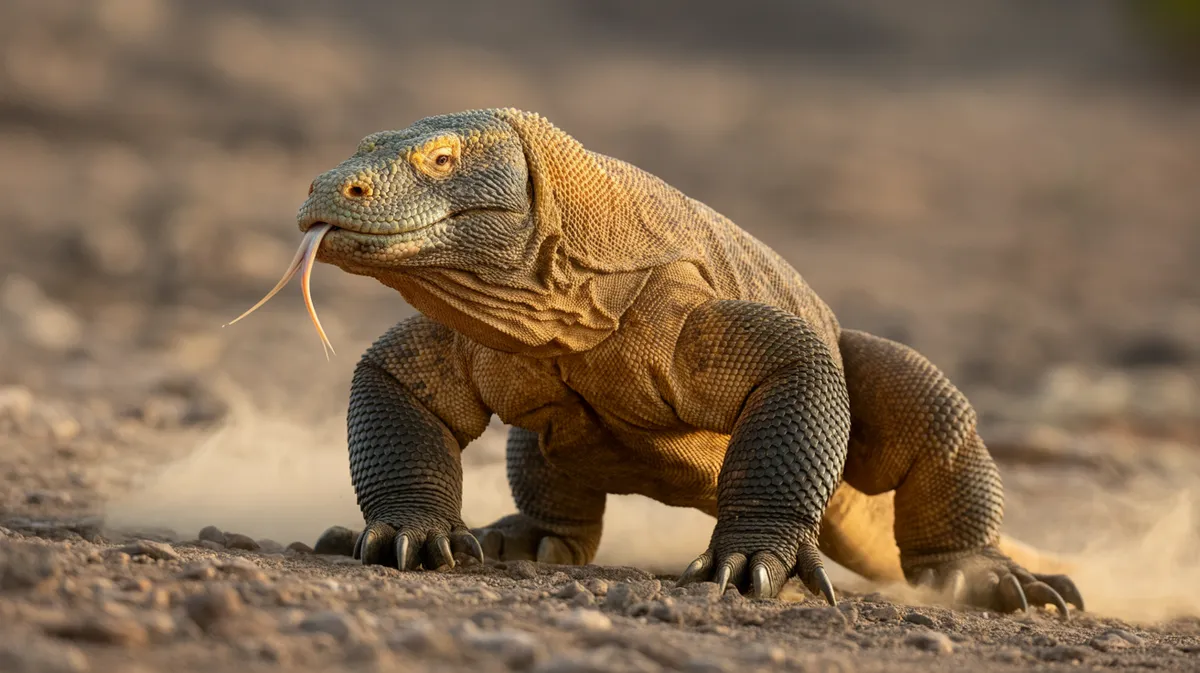
Myth 3: Komodo dragons are living dinosaurs
Their size and primeval look lead people to call them living dinosaurs.
They aren't. Komodo dragons are monitor lizards, part of a reptile lineage separate from the dinosaurs, which were a different group entirely.
They're ancient and impressive, but calling a Komodo a dinosaur is like calling a lizard a bird — related deep in the tree of life, but not the same branch.
Their lineage of giant monitor lizards is impressive in its own right, having produced even larger relatives in Australia's prehistoric past.
Myth 4: A Komodo bite means a slow death from infection
The septic-bite myth led to a grim follow-on belief: that bitten prey wanders off to die of infection days later.
In reality, prey usually dies far faster, from blood loss and the shock caused by the dragon's anticoagulant venom.
The Komodo often stays near its wounded victim or tracks it a short distance, then moves in once the venom and bleeding have done their work.
An adult's serrated teeth open deep wounds that the anticoagulant venom keeps bleeding, so even a water buffalo can succumb far faster than the old myth claimed.
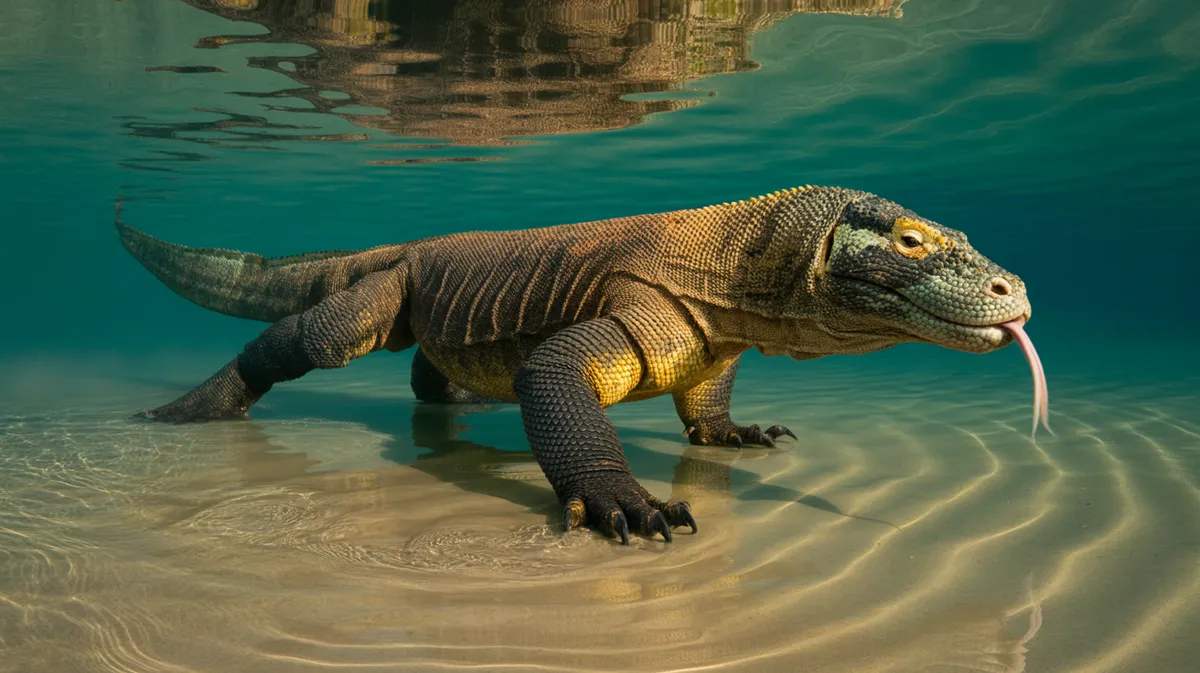
Myth 5: Komodo dragons can't swim
A bulky land lizard surely can't handle deep water — or so the assumption goes.
Komodo dragons are in fact strong swimmers, capable of crossing stretches of open sea between the Indonesian islands they call home.
That swimming ability helped them colonise their scattered island range in the first place.
They've even been seen briefly diving underwater, and that seafaring ability is why these giants are scattered across several small Indonesian islands.
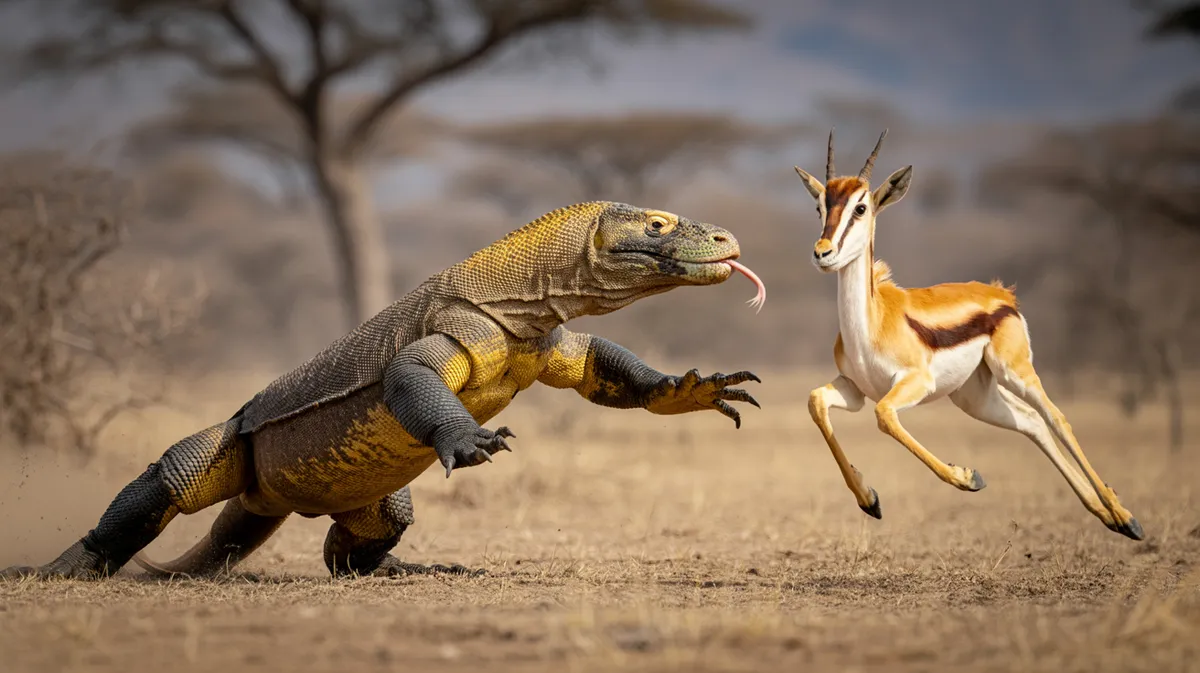
Myth 6: Komodo dragons are just scavengers
Because they'll happily eat carrion, Komodos are often dismissed as mere scavengers.
They are formidable active predators, ambushing deer, wild pigs, and even water buffalo many times their own weight.
Scavenging is simply a bonus for an opportunist — when there's living prey to ambush, the Komodo is very much a hunter.
A hunting Komodo lies hidden beside a game trail and explodes into a strike, using its powerful tail and claws as well as those venomous jaws.
Myth 7: A female needs a male to reproduce
Like most animals, Komodos are assumed to require a mate to produce young.
Remarkably, female Komodo dragons can reproduce through parthenogenesis, laying viable eggs without any male involvement at all.
This lets a lone female stranded on a new island potentially found an entire population by herself — a startling backup plan few large animals possess.
The genetics work out so that parthenogenetic eggs hatch as males, meaning a lone female could later breed with her own sons to start a colony.
Three more myths, quickly
"Komodos are the largest lizards that ever lived" — They are the largest alive today, but the extinct Megalania of Australia was considerably bigger — a monitor lizard several metres long.
"Komodo dragons live across Indonesia" — They survive on only a handful of small islands, one of the most restricted ranges of any large predator on Earth.
"A Komodo can run you down" — It is fast in a short burst but tires quickly. Its whole strategy is ambush, not pursuit — which is exactly why it lies in wait.
Why the Komodo's reputation needed updating
The Komodo dragon turned out to be even more extraordinary than its myths — venomous, fast, sea-crossing, and able to clone itself in a pinch. The real animal makes the old "dirty bite" story look almost tame.
Frequently asked questions
Do Komodo dragons kill with bacteria? No — that myth is debunked. They have venom glands, and their prey dies mainly from venom and blood loss.
Are Komodo dragons dinosaurs? No. They're monitor lizards, a separate reptile lineage from the dinosaurs.
Can Komodo dragons reproduce without a mate? Yes — females can reproduce asexually through parthenogenesis.
How big do Komodo dragons get? Up to around three metres long and 70 kilograms or more, making them the largest lizards alive.
Are Komodo dragons dangerous to humans? Attacks are rare but genuinely serious. They are wild apex predators and demand real distance and respect.
What do Komodo dragons eat? Deer, wild pigs, and water buffalo, along with carrion — and occasionally smaller Komodo dragons.
How long do they live? Roughly 30 years in the wild.
Next in the series: the ambush hunter of the insect world — 7 myths about praying mantises, and the misjudged slow-mover in 7 myths about sloths, debunked.