
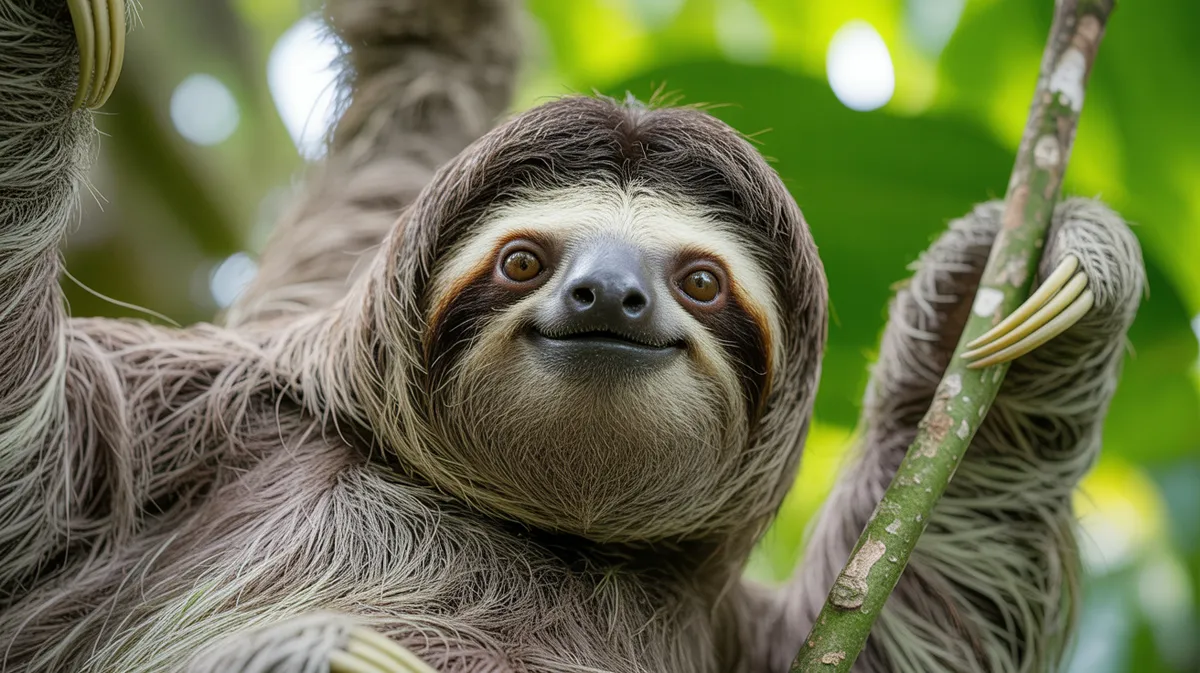
Sloths have become internet darlings, but their fame comes wrapped in misunderstanding. We call them lazy, assume they're stupid, picture them snoozing 20 hours a day, and file them somewhere near monkeys. Nearly all of it is wrong. This entry in our Animal Myths, Debunked series reveals the finely tuned survivor behind the sleepy smile.
A sloth's slowness isn't a flaw — it's a brilliant strategy for surviving on a diet that barely fuels anything. Here are seven myths to put to rest. See also Komodo dragons and praying mantises in the series.
Myth 1: Sloths are lazy
The sloth is practically a synonym for laziness.
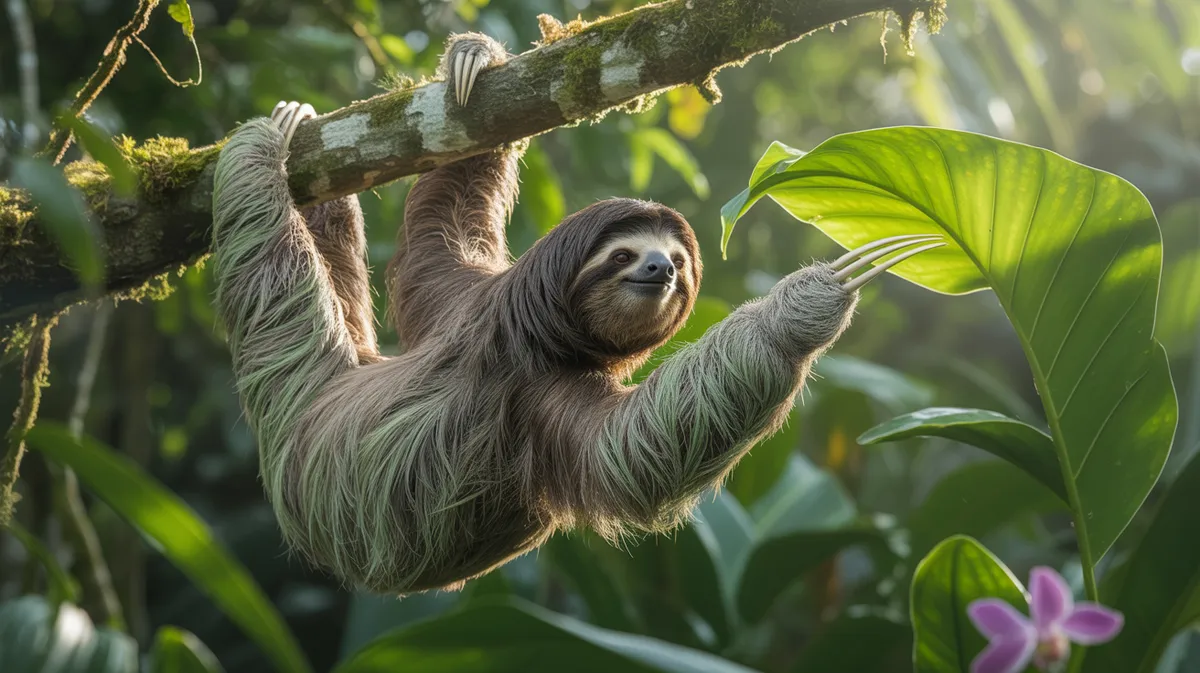
But its slowness is a precise adaptation, not a character flaw. Sloths live on a diet of leaves so low in calories that they must conserve every scrap of energy to survive.
Moving slowly, with one of the lowest metabolic rates of any mammal, is exactly how they make a near-worthless food source work.
Their digestion is just as unhurried — a single leafy meal can take weeks to break down in a multi-chambered stomach, so they simply can't afford to rush.
Myth 2: Sloths are slow because they're stupid
Slow movement gets mistaken for a slow mind.
Sloths are well-adapted, not dim. Their deliberate pace is a survival strategy — moving slowly makes them nearly invisible to predators that hunt by detecting motion.
They also navigate their territories with reliable memory, returning to favourite trees and routes through the canopy.
Two-toed and three-toed sloths have even been seen solving simple problems and recognising familiar caretakers in rehabilitation centres.
Myth 3: Sloths sleep around 20 hours a day
The "sloths sleep all day" claim is repeated everywhere.
That figure came from animals studied in captivity. When researchers measured wild sloths in their natural habitat, they slept closer to 8 to 10 hours a day — about the same as we do.
They're restful, but they're not the round-the-clock sleepers the myth suggests.
The captive figure was inflated partly by boredom and unnatural conditions; given a real forest, a sloth has foraging and travelling to do.
Myth 4: Sloths are a kind of monkey
Hanging in the trees of Central and South America, sloths are often mistaken for primates.
They're not even close. Sloths belong to a group called Xenarthra, which makes their nearest relatives the anteaters and armadillos.
Their tree-dwelling lifestyle is convergent with monkeys, but their family tree is entirely separate.
This ancient South American group once included the ground sloths — relatives the size of elephants that roamed the Americas until just a few thousand years ago.
Myth 5: Sloths are defenceless and can't move fast
A slow animal seems like it must be helpless.
On the ground a sloth is awkward, but it has a powerful grip and long, curved claws that make a serious weapon and an unbreakable hold on branches.
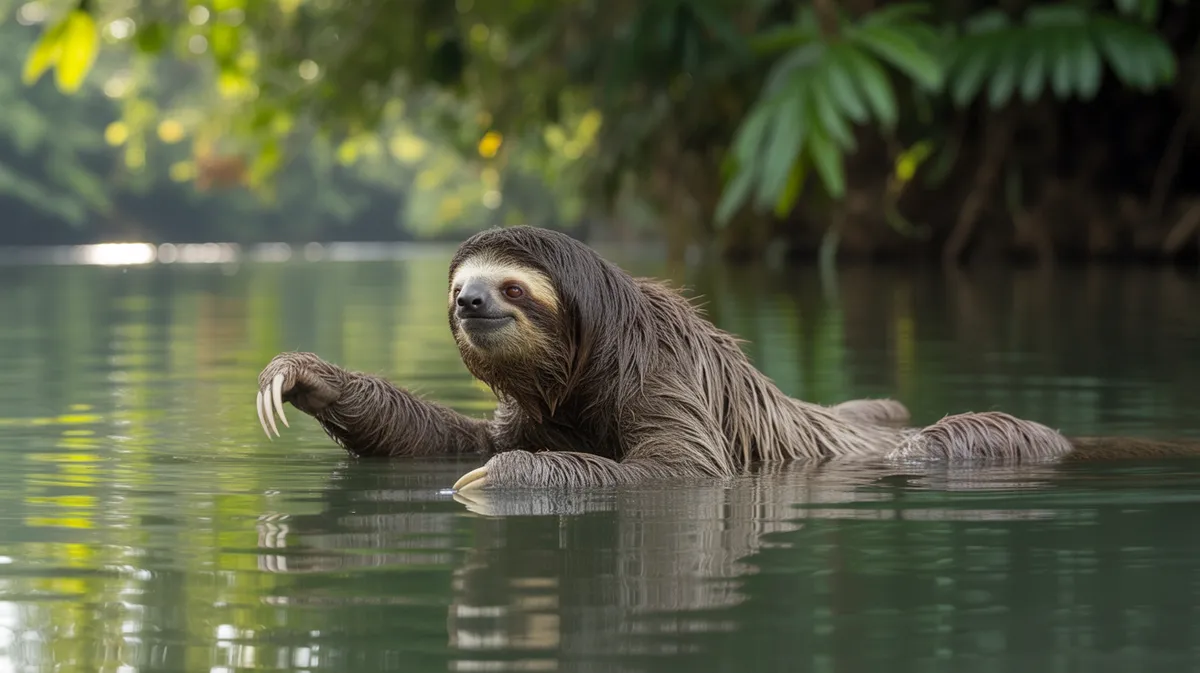
And they have a hidden talent: sloths are surprisingly capable swimmers, moving through water several times faster than they ever move on land.
The same claws that anchor them in the canopy can deliver a serious swipe, and in water their long limbs make them efficient, if unhurried, paddlers.
Myth 6: Sloths are dirty because of the algae in their fur
The greenish tinge of a sloth's coat looks like a sign of filth.
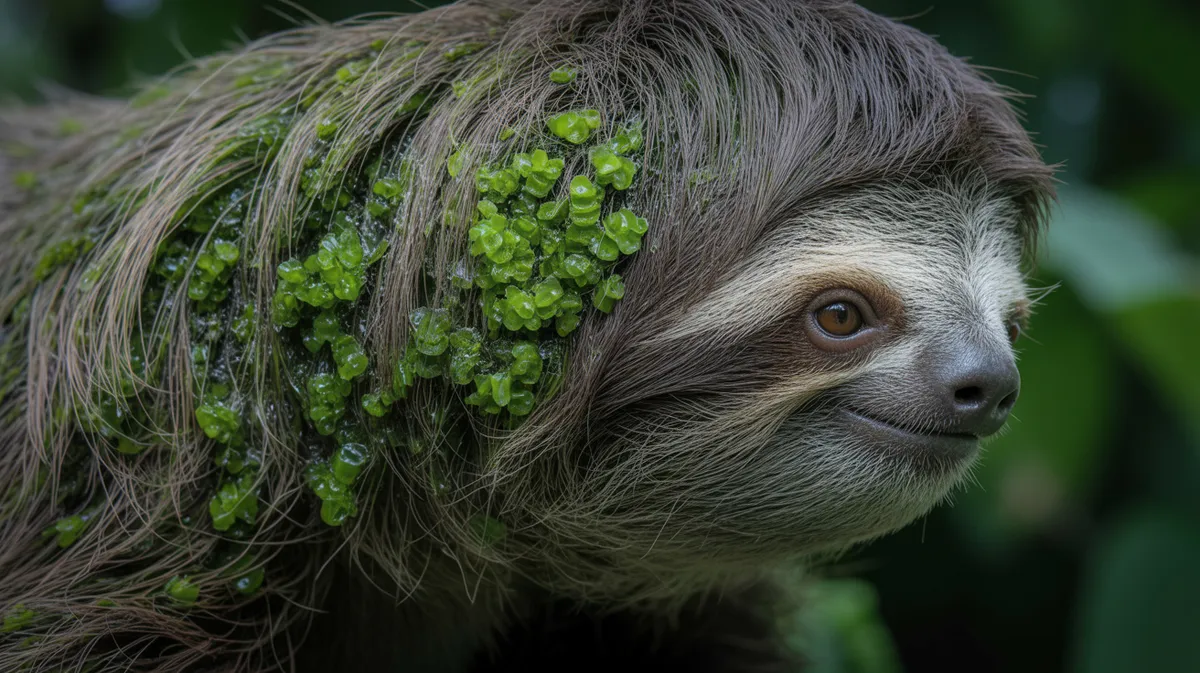
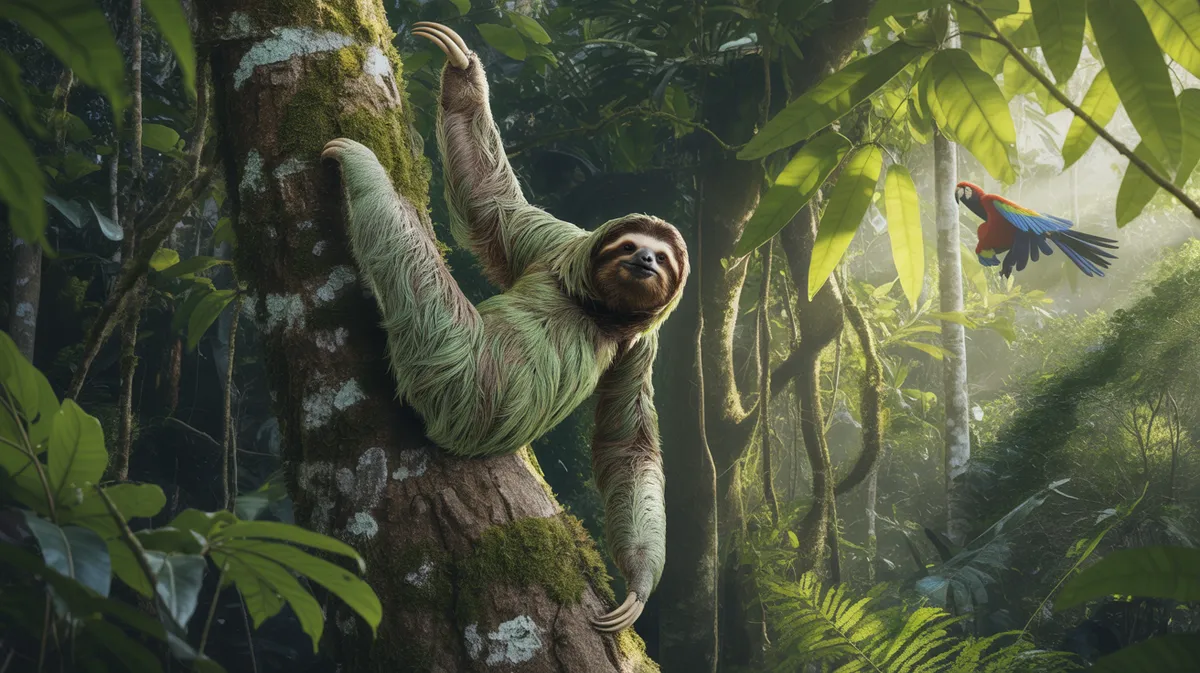
That algae is actually a partnership, not grime. It grows in special grooves in the sloth's hair and gives the animal a greenish camouflage among the leaves.
The fur is a tiny ecosystem in its own right, hosting moths and insects, and the algae may even provide the sloth with extra nutrients.
Some of the moths living in that fur exist nowhere else on Earth, making each sloth a walking habitat as well as a camouflaged leaf-eater.
Myth 7: Sloths just relieve themselves from up in the trees
Surely an animal that lives in the canopy wouldn't bother climbing down to go to the bathroom.
Astonishingly, sloths climb all the way to the forest floor to defecate, roughly once a week — one of the riskiest things they ever do.
This dangerous weekly trip exposes them to ground predators, and scientists still debate exactly why they take the gamble instead of simply going from above.
A sloth can shed up to a third of its body weight in a single visit, and the danger involved makes it one of the strangest routines in the animal kingdom.
Three more myths, quickly
"There is only one kind of sloth" — There are six species in two very different groups — two-toed and three-toed — which are not closely related and even differ in the number of neck vertebrae.
"Hanging upside down must crush their lungs" — Their organs are anchored to the ribcage precisely so that hanging inverted does not press down on the lungs — an adaptation unique among mammals.
"Sloths make good pets" — They are wild animals with highly specialised diets, and handling stresses them badly. The exotic pet trade is genuinely damaging to them.
Why sloths are quietly brilliant
The sloth isn't a lazy, dim-witted oddball — it's a masterclass in survival on almost no energy, complete with built-in camouflage and a swimmer's hidden talent. Slow, it turns out, is very smart.
Frequently asked questions
Are sloths lazy? No — their slowness conserves energy on a very low-calorie leaf diet. It's strategy, not laziness.
Do sloths sleep 20 hours a day? No. That came from captive animals; wild sloths sleep about 8–10 hours.
Are sloths related to monkeys? No — their closest relatives are anteaters and armadillos.
How slow is a sloth, really? On the ground they manage only a few metres a minute, though up in the canopy they are far more capable than they look.
What do sloths eat? Mostly leaves, plus some shoots and fruit — a diet so poor in energy that it dictates almost everything about them.
How long do sloths live? Often 20 to 30 years, which is remarkably long for an animal of their size.
Are sloths endangered? Most species are stable, but the pygmy three-toed sloth is critically endangered.
That's three more myths busted. Revisit frogs, snakes, and octopuses — and watch for more in the Animal Myths, Debunked series.